


















Gjør som tusenvis av andre bokelskere
Abonner på vårt nyhetsbrev og få rabatter og inspirasjon til din neste leseopplevelse.
Ved å abonnere godtar du vår personvernerklæring.Du kan når som helst melde deg av våre nyhetsbrev.

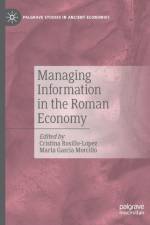
This volume studies information as an economic resource in the Roman World. Information asymmetry is a distinguishing phenomenon of any human relationship. From an economic perspective, private or hidden information, opposed to publicly observable information, generates advantages and inequalities; at the same time, it is a source of profit, legal and illegal, and of transaction costs. The contributions that make up the present book aim to deepen our understanding of the economy of Ancient Rome by identifying and analysing formal and informal systems of knowledge and institutions that contributed to control, manage, restrict and enhance information. The chapters scrutinize the impact of information asymmetries on specific economic sectors, such as the labour market and the market of real estate, as well as the world of professional associations and trading networks. It further discusses structures and institutions that facilitated and regulated economic information in the public andthe private spheres, such as market places, auctions, financial mechanisms and instruments, state treasures and archives. Managing Asymmetric Information in the Roman Economy invites the reader to evaluate economic activities within a larger collective mental, social, and political framework, and aims ultimately to test the applicability of tools and ideas from theoretical frameworks such as the Economics of Information to ancient and comparative historical research.
This open access book is a collection of research papers on COVID-19 by Germán Velásquez from 2020 and early 2021 that help to answer the question: How can an agency like the World Health Organization (WHO) be given a stronger voice to exercise authority and leadership? The considerable health, economic and social challenges that the world faced at the beginning of 2020 with COVID-19 continued and worsened in many parts of the world in the second-half of 2020 and into 2021. Many of these countries and nations wanted to explore COVID-19 on their own, sometimes without listening to the main international health bodies such as WHO, an agency of the United Nations system with long-standing experience and vast knowledge at the global level and of which all countries in the world are members. In this single volume, the chapters present the progress of thinking and debate ¿ particularly in relation to drugs and vaccines ¿ that wouldenable a response to the COVID-19 pandemic or to subsequent crises that may arise. Among the topics covered:COVID-19 Vaccines: Between Ethics, Health and EconomicsMedicines and Intellectual Property: 10 Years of the WHO Global StrategyRe-thinking Global and Local Manufacturing of Medical Products After COVID-19Rethinking R&D for Pharmaceutical Products After the Novel Coronavirus COVID-19 ShockIntellectual Property and Access to Medicines and VaccinesThe World Health Organization Reforms in the Time of COVID-19Vaccines, Medicines and COVID-19: How Can WHO Be Given a Stronger Voice? is essential reading for negotiators from the 194 member countries of the World Health Organization (WHO); World Trade Organization (WTO) and World Intellectual Property Organization (WIPO) staff participating in these negotiations; academics and students of public health, medicine, health sciences, law, sociology and political science; and intergovernmental organizations and non-governmental organizations that follow the issue of access to treatments and vaccines for COVID-19.
This book examines how IR's European realist tradition evolved in Europe and, due to emigration, in the United States in the 20th century.
This is the first book about the ¿Kenzan¿ method for scaffold-free biofabrication, which does not rely on biomaterials as scaffolds to ensure correct multicellular spheroid positioning for building three dimensional construct only made from cells. The book explains the basic principles and concepts of the microneedle-based (¿Kenzan¿) method of building surgically-implantable tissue constructs using robotic cell spheroid-based three-dimensional bioprinting, a novel technology that opens up unique opportunities for the bioengineering of tissues and organs.First book on the novel Kenzan method of tissue engineering;Explains basic concepts and applications for organ regeneration modeling;Introduces a unique robotic system for scaffold-free cell construction.
Solving nonsmooth optimization (NSO) problems is critical in many practical applications and real-world modeling systems. The aim of this book is to survey various numerical methods for solving NSO problems and to provide an overview of the latest developments in the field. Experts from around the world share their perspectives on specific aspects of numerical NSO. The book is divided into four parts, the first of which considers general methods including subgradient, bundle and gradient sampling methods. In turn, the second focuses on methods that exploit the problem¿s special structure, e.g. algorithms for nonsmooth DC programming, VU decomposition techniques, and algorithms for minimax and piecewise differentiable problems. The third part considers methods for special problems like multiobjective and mixed integer NSO, and problems involving inexact data, while the last part highlights the latest advancements in derivative-free NSO.Given its scope, the book isideal for students attending courses on numerical nonsmooth optimization, for lecturers who teach optimization courses, and for practitioners who apply nonsmooth optimization methods in engineering, artificial intelligence, machine learning, and business. Furthermore, it can serve as a reference text for experts dealing with nonsmooth optimization.
This volume delineates the ways in which key areas of healthcare, well-being, patient safety and organisational change overlap with and contribute to unhealthy workplaces for healthcare professionals.
This book introduces the concept of ¿healthy healthcare¿ and posits that this new concept is necessary in light of a shortage of healthcare staff in the near future. Healthy healthcare implies that healthcare systems are designed, managed and financed in balance with the available resources to improve workers¿ health and performance. Ultimately, a balanced perspective taking into account the patient, the staff and the complex healthcare system will lead to a more resource-efficient delivery of high-quality healthcare services.The book synthesizes evidence-based practice and research on the links between healthcare services, employee health and wellbeing, and quality of healthcare from an interdisciplinary perspective. Written by leading experts in this rapidly expanding field of inquiry, this is the first book ever compiled on the subject with such scope and breadth. It discusses how to conduct interventions and research on healthy healthcare with different populations and settings. The chapters critically examine the links between these pillars; and identify research gaps in both methodology and content from the perspectives of psychology, medicine, nursing, economy, law, technology, management and more. This innovative book is of interest to researchers and students of health sciences, public health, health economics and allied disciplines, as well as to stakeholders in the healthcare industry.Chapter 24 of this book is available open access under a CC-By NC-ND 4.0 license at link.springer.com
This book studies the vulnerability of wireless communications under line-of-sight (LoS) and non-LoS correlated fading environments. The authors theoretically and practically provide physical layer security analyses for several technologies and networks such as Fifth-Generation (5G) networks, Internet of Things (IoT) applications, and Non-orthogonal multiple access (NOMA). The authors have provided these under various practical scenarios, and developed theoretical aspects to validate their proposed applications.Presents physical layer security (PLS) under correlated fading environments, 5G wireless networks, and NOMA networks;Provides end-to-end analyses, combination of channel correlation and outdated CSI and their effects on PL;Includes contributions of PLS research written by global experts in academia and industry.
This two-volume set highlights the importance of Iberian shipbuilding in the centuries of the so-called first globalization (15th to 18th), in confluence with an unprecedented extension of ocean navigation and seafaring and a greater demand for natural resources (especially timber), mostly oak (Quercus spp.) and Pine (Pinus spp.). The chapters are framed in a multidisciplinary and interdisciplinary line of research that integrates history, Geographic Information Sciences, underwater archaeology, dendrochronology and wood provenance techniques. This line of research was developed during the ForSEAdiscovery project, which had a great impact in the academic and scientific world and brought together experts from Europe and America. The volumes deliver a state-of-the-art review of the latest lines of research related to Iberian maritime history and archaeology and their developing interdisciplinary interaction with dendroarchaeology. This synthesis combines ananalysis of historical sources, the systematic study of wreck-remains and material culture related to Iberian seafaring from the 15th to the 18th centuries, and the application of earth sciences, including dendrochronology. The set can be used as a manual or work guide for experts and students, and will also be an interesting read for non-experts interested in the subject.Volume 1 focuses on the history and archaeology of seafaring and shipbuilding in the Iberian early modern world, complemented by case studies on timber trade and supply for shipbuilding, analysis of shipbuilding treatises, and the application of Geographic Information Systems and Databases (GIS) to the study of shipwrecks.
This book explores human decision-making heuristics and studies how nudging and winking can help citizens to make rational choices.
This book presents the findings of research projects from the Transregional Collaborative Research Centre 73. These proceedings are the result of years of research into sheet-bulk metal forming. The book discusses the challenges posed by simulating sheet-bulk metal forming.
Employing a social justice framework, this book examines the effects of innovation incentives and policies in agriculture. It addresses access to the objects of innovation, the direction of science and the type of innovations that are available, opportunities to participate in research and development, as well as effects on future generations.
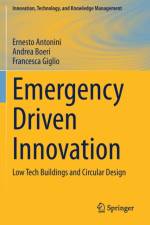
This book explores the relationship between the circular economy and the building technologies within the quintuple helix innovation model.
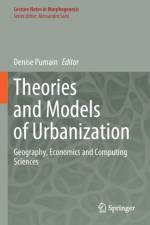
This book provides a thorough discussion about fundamental questions regarding urban theories and modeling. There are several chapters conveying the answers given by single authors to problems of conceptualization and modeling and others in which scholars reply to their conception and question them.
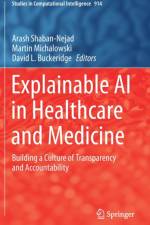
This book highlights the latest advances in the application of artificial intelligence and data science in health care and medicine.
This volume summarises recent developments and possible future directions for small molecule X-ray crystallography. Recent advances in the refinement and analysis of X-ray crystal structures are highlighted. In addition the recent developments in time resolved single crystal X-ray crystallography are discussed.
In this book, Sung Uk Lim examines the narrative construction of identity and otherness through ongoing interactions between Jesus and the so-called others as represented by the minor characters in the Gospel of John.
Divided into two sections, this book discusses timely topics such as the characterization of biomass feedstock, pretreatment and fractionation of biomass, and describes the process for conversion of biomass to value-added commodities.
This book is intended to give researchers and practitioners in the cross-cutting fields of artificial intelligence, machine learning (AI/ML) and cyber security up-to-date and in-depth knowledge of recent techniques for improving the vulnerabilities of AI/ML systems against attacks from malicious adversaries.
This collection of essays explores the literary legacy of medieval England by examining the writers, editors and exemplars of medieval English texts.
In quantum crystallography, quantum mechanical wavefunctions are used to extract information about bonding and properties from the measured X-ray structure factors. The advent of quantum crystallography has resulted in form and structure factors derived from quantum mechanics which have been used in advanced refinement and wavefunction fitting.
This book explores approaches to developing and using postdigital humans and the impact they are having on a postdigital world. The book examines conceptions of postdigital humans and studies the issue in connection with ethics and employment, as well as from perspectives such as philosophy and religion.
This book provides comprehensive coverage of state-of-the-art integrated circuit authentication techniques, including technologies, protocols and emerging applications.The authors first discuss emerging solutions for embedding unforgeable identifies into electronics devices, using techniques such as IC fingerprinting, physically unclonable functions and voltage-over-scaling. Coverage then turns to authentications protocols, with a special focus on resource-constrained devices, first giving an overview of the limitation of existing solutions and then presenting a number of new protocols, which provide better physical security and lower energy dissipation. The third part of the book focuses on emerging security applications for authentication schemes, including securing hardware supply chains, hardware-based device attestation and GPS spoofing attack detection and survival.Provides deep insight into the security threats undermining existing integrated circuit authentication techniques;Includes an in-depth discussion of the emerging technologies used to embed unforgeable identifies into electronics systems;Offers a comprehensive summary of existing authentication protocols and their limitations;Describes state-of-the-art authentication protocols that provide better physical security and more efficient energy consumption;Includes detailed case studies on the emerging applications of IC authentication schemes.
This book presents the various approaches in establishment the basic equations of one- and two-dimensional structural elements. Many contributions contain not only new theories, but also new applications, which makes the book interesting for researcher and graduate students.
This book provides an analysis of theoretical and empirical researches on the effects of remittances and brain drain on the development of less developed countries (LDCs).
This present book examines some of the key features of the interplay between legal history, authoritarian rule and political transitions in Brazil and other countries from the end of 20th Century until today. This book casts light on these aspects of the role of law and legal actors/institutions. In the context of transition from authoritarian rule to democratic state, Brazil has produced a significant literature on the challenges and shortcomings of the transition, but little attention has been given to the role of law and legal actors/institutions. Different approaches focus on the legal mechanisms, discourses and practices used by the military regime and by the players involved in the political transition process in Brazil. A comparative perspective that takes into account different political transitions ¿ and their legal consequences ¿ in Europe and Latin America complements the analysis. Part 1 (4 essays) discusses some of the central issues of political transition and legal history in contemporary Brazil, focusing on the time of the transition (and its effects on transitional justice) with different perspectives, from racial and gender issues to constitutional reform and police repression. Part 2 (3 essays) brings the comparative studies on South American experiences. Part 3 (4 essays) analyses different cases of transition to democracy in Chile, Portugal, Spain and Italy. Part 4 (3 essays) proposes a historiographical and methodological approach, considering the politics of time involved in the interplay between political transitions and legal history.
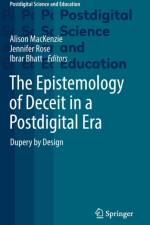
This edited book collection offers strong theoretical and philosophical insight into how digital platforms and their constituent algorithms interact with belief systems to achieve deception, and how related vices such as lies, bullshit, misinformation, disinformation, and ignorance contribute to deception. This inter-disciplinary collection explores how we can better understand and respond to these problematic practices. The Epistemology of Deceit in a Postdigital Era: Dupery by Design will be of interest to anyone concerned with deception in a ¿postdigital¿ era including fake news, and propaganda online. The election of populist governments across the world has raised concerns that fake news in online platforms is undermining the legitimacy of the press, the democratic process, and the authority of sources such as science, the social sciences and qualified experts. The global reach of Google, YouTube, Twitter, Facebook, and other platforms has shown thatthey can be used to create and spread fake and misleading news quickly and without control. These platforms operate and thrive in an increasingly balkanised media eco-system where networks of users will predominantly access and consume information that conforms to their existing worldviews. Conflicting positions, even if relevant and authoritative, are suppressed, or overlooked in everyday digital information consumption. Digital platforms have contributed to the prolific spread of false information, enabled ignorance in online news consumers, and fostered confusion over determining fact from fiction.The collection explores: Deception, what it is, and how its proliferation is achieved in online platforms. Truth and the appearance of truth, and the role digital technologies play in pretending to represent truth. How we can counter these vices to protect ourselves and our institutions from their potentially baneful effects. Chapter 15 is available open access under a Creative Commons Attribution 4.0 International License via link.springer.com.
Abonner på vårt nyhetsbrev og få rabatter og inspirasjon til din neste leseopplevelse.
Ved å abonnere godtar du vår personvernerklæring.