






















Gjør som tusenvis av andre bokelskere
Abonner på vårt nyhetsbrev og få rabatter og inspirasjon til din neste leseopplevelse.
Ved å abonnere godtar du vår personvernerklæring.Du kan når som helst melde deg av våre nyhetsbrev.

This monograph provides a concise point of research topics and reference for modeling correlated response data with time-dependent covariates, and longitudinal data for the analysis of population-averaged models, highlighting methods by a variety of pioneering scholars.
This is a brief textbook on complex analysis intended for the students of upper undergraduate or beginning graduate level. In the chapter on Riemann surfaces, several key results on compact Riemann surfaces are stated and proved in the first nontrivial case, i.e.
Advancing the experimental study of superfluids relies on increasingly sophisticated techniques. This has established foundational principles of superfluid circuitry that will impact the design of future transport experiments and new generation quantum devices, such as atomtronics circuits and superfluid sensors.
Next, the book presents the GeneTech tool (A technology mapping tool for genetic circuits) and the methods developed for optimization, synthesis, and technology mapping of genetic circuits. The concepts and algorithms are thoroughly described, enabling readers to improve the tools or use them as a starting point to develop new tools.
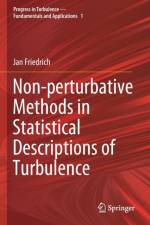
Furthermore, empirically observed multiscaling features and their impact on possible closure methods are discussed, and each is put into the context of its original field of use, e.g., the renormalization group method is addressed in relation to the theory of critical phenomena.
This textbook explains the physics of phase transformation and associated constraints from a metallurgical or materials science point of view, based on many topics including crystallography, mass transport by diffusion, thermodynamics, heat transfer and related temperature gradients, thermal deformation, and even fracture mechanics.
Three paradigms, the Empirical Paradigm, the Reference Paradigm and the Reflective Paradigm, are explained followed by a search for the Fourth Paradigm, the so-called Emergence Paradigm, which presents a route to radical innovation in organizations when plans, strategies and models fail.
Considered population dynamics models are still in the interest of researchers, and even this interest is increasing, especially now in the time of SARS-CoV-2 coronavirus pandemic, when models are intensively studied in order to help predict its behaviour within human population.
This book examines cross-chain control centers (4C), an ambitious concept in supply chain management and logistics that is intended to foster collaboration between different supply chains to increase efficiency.
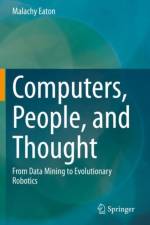
In this book the author discusses synergies between computers and thought, related to the field of Artificial Intelligence;
This thesis demonstrates the potential of two platforms to explore experimentally the emerging field of quantum thermodynamics that has remained mostly theoretical so far.
This state of the art book takes an applications based approach to teaching mathematics to engineering and applied sciences students. The book lays emphasis on associating mathematical concepts with their physical counterparts, training students of engineering in mathematics to help them learn how things work.
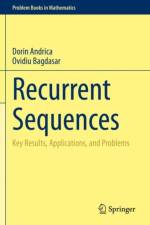
This self-contained text presents state-of-the-art results on recurrent sequences and their applications in algebra, number theory, geometry of the complex plane and discrete mathematics.
This book analyses and discusses bonds and bond portfolios. The transition from a single bond to a bond portfolio leads to the equation for the internal rate of return. The impact of different yield scenarios on a model bond portfolio is illustrated.
This book describes how Bayesian methods work. In addition to revealing the underlying simplicity of statistical methods, the book explains how to parameterise and compare models while accounting for uncertainties in data, model parameters and model structures. How exactly should data be used in modelling?
By projecting first to 13 and then 15 m HgCdTe growth, values of fundamental properties of the material that would minimize tunneling dark currents were determined through careful modeling of the dark current-reverse bias voltage curves, as well as the dark current-temperature curves.
This is the first book presenting dynamic responses and failure of polymer composite structures as they interact with internal and/or external fluid media.
It helps to structure models, to easily model complex constraints, to have a basic modeling guide for any multi-criteria system and to better understand models already existing in the literature.The book is structured in the same order as components of the methodology, established in a multi-criteria optimization problem.
This is a concise book with comprehensive information on coal and biomass ash generated from their combustion in thermal power plants.
This book introduces the basic methodologies for successful data analytics. The methodological overlap between data science and machine learning is emphasized by demonstrating how data science is used for classification as well as supervised and unsupervised learning.
In the introductory chapter, we present an overview of the theory behind HOTS, its definition, its relation to Bloom's Taxonomy, its two dimensions (critical thinking and reflective thinking), and the ideas of some influential thinkers in this area.
This book reviews the hydrogeology of karst systems, starting with the classifications from the applied point of view, and then the hydraulic parameters (porosity, permeability, and transmissivity).
Abonner på vårt nyhetsbrev og få rabatter og inspirasjon til din neste leseopplevelse.
Ved å abonnere godtar du vår personvernerklæring.