











Gjør som tusenvis av andre bokelskere
Abonner på vårt nyhetsbrev og få rabatter og inspirasjon til din neste leseopplevelse.
Ved å abonnere godtar du vår personvernerklæring.Du kan når som helst melde deg av våre nyhetsbrev.

Over the past decade, integrated STEM education research has emerged as an international concern, creating around it an imperative for technological and disciplinary innovation and a global resurgence of interest in teaching and learning to code at the K-16 levels. At the same time, issues of democratization, equity, power and access, including recent decolonizing efforts in public education, are also beginning to be acknowledged as legitimate issues in STEM education. Taking a reflexive approach to the intersection of these concerns, this book presents a collection of papers making new theoretical advances addressing two broad themes: Transdisciplinary Approaches in STEM Education and Bodies, Hegemony and Decolonization in STEM Education. Within each theme, praxis is of central concern including analyses of teaching and learning that re-imagines disciplinary boundaries and domains, the relationship between Art and STEM, and the design of learning technologies, spaces and environments.In addition to graduate research seminars at the Masters and PhD levels in Learning Sciences, Science Education, Educational Technology and STEM education, this book could also serve as a textbook for graduate and pre-service teacher education courses.
The book aims to provide a comprehensive understanding of the most recent developments in finite volume methods. Its focus is on the development and analysis of these methods for the two- and three-dimensional Navier-Stokes equations, supported by extensive numerical results. It covers the most used lower-order finite element pairs, with well-posedness and optimal analysis for these finite volume methods.The authors have attempted to make this book self-contained by offering complete proofs and theoretical results. While most of the material presented has been taught by the authors in a number of institutions over the past several years, they also include several updated theoretical results for the finite volume methods for the incompressible Navier-Stokes equations. This book is primarily developed to address research needs for students and academic and industrial researchers. It is particularly valuable as a research reference in the fieldsof engineering, mathematics, physics, and computer sciences.
This book reports on innovative research and developments in automation. Spanning a wide range of disciplines, including communication engineering, power engineering, control engineering, instrumentation, signal processing and cybersecurity, it focuses on methods and findings aimed at improving the control and monitoring of industrial and manufacturing processes as well as safety. Based on the International Russian Automation Conference, held on September 5¿11, 2021, in Sochi, Russia, the book provides academics and professionals with a timely overview of and extensive information on the state of the art in the field of automation and control systems, and fosters new ideas and collaborations between groups in different countries.
The book takes the inventory control perspective to tackle empty container repositioning logistics problems in regional transportation systems by explicitly considering the features such as demand imbalance over space, dynamic operations over time, uncertainty in demand and transport, and container leasing phenomenon. The book has the following unique features. First, it provides a discussion of broad empty equipment logistics including empty freight vehicle redistribution, empty passenger vehicle redistribution, empty bike repositioning, empty container chassis repositioning, and empty container repositioning (ECR) problems. The similarity and unique characteristics of ECR compared to other empty equipment repositioning problems are explained. Second, we adopt the stochastic dynamic programming approach to tackle the ECR problems, which offers an algorithmic strategy to characterize the optimal policy and captures the sequential decision-making phenomenon in anticipation of uncertainties over time and space. Third, we are able to establish closed-form solutions and structural properties of the optimal ECR policies in relatively simple transportation systems. Such properties can then be utilized to construct threshold-type ECR policies for more complicated transportation systems. In fact, the threshold-type ECR policies resemble the well-known (s, S) and (s, Q) policies in inventory control theory. These policies have the advantages of being decentralized, easy to understand, easy to operate, quick response to random events, and minimal on-line computation and communication. Fourth, several sophisticated optimization techniques such as approximate dynamic programming, simulation-based meta-heuristics, stochastic approximation, perturbation analysis, and ordinal optimization methods are introduced to solve the complex stochastic optimization problems.The book will be of interest to researchers and professionals in logistics, transport, supply chain,and operations research.
This book examines the origins of the IS-LM model, one of the most significant innovations in the history of economic thought. It shows that the complete IS-LM model, including the equations and diagram, was produced by a group of economists who contributed their respective mathematical models of Keynes¿s General Theory, including Champernowne, Reddaway, Harrod, and Meade, not to mention Hicks. Furthermore, the book discusses the implications of newly discovered archival material, including a previously overlooked document showing that John Maynard Keynes himself was the first to present the IS-LM model equations in a lecture he gave on December 4, 1933. It focuses on the implications of this material in terms of understanding the evolution of Keynes¿s approach from 1933 to 1937, later interpreters of his General Theory, and the ongoing debate between Keynesians and Post-Keynesians on the nature of his system. Given the revelations it presents, this book will transform the profession¿s understanding of the origins of the IS-LM model and modern macroeconomics.
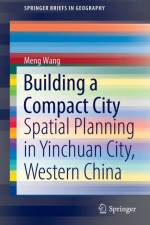
This book serves as a solid ground for seeking strategies to build the compact city that situated in a specific local area, based on the systematic examination of the effects of spatial planning system on urbanization control. Furthermore, the critical problems in the urban planning process are revealed, and the possible approaches to improve the local planning system toward effectively promoting more compact development are discussed. This book also provides a comprehensive picture for understanding the mutual influences between the planning, its implementation, and urban developments, particularly in the context of cities of western China, while these cities are experiencing dramatic urban growth in recent years but walking into a quite different development path comparing to the eastern mega cities.In nearly two decades, government officials, professional planners, scholars of urban studies, citizens who concern sustainable development are talking about the compact city,a promising vision for sustaining our growing or shrinking cities. Abundance of debates fall on the images, measurement and strengths of the compact city, while the substantializing of the vision in a specific city has been barely explored.
Today, the use of machine intelligence, expert systems, and analytical technologies combined with Big Data is the natural evolution of both disciplines. As a result, there is a pressing need for new and innovative algorithms to help us find effective and practical solutions for smart applications such as smart cities, IoT, healthcare, and cybersecurity.This book presents the latest advances in big data intelligence for smart applications. It explores several problems and their solutions regarding computational intelligence and big data for smart applications. It also discusses new models, practical solutions,and technological advances related to developing and transforming cities through machine intelligence and big data models and techniques. This book is helpful for students and researchers as well as practitioners.
Abonner på vårt nyhetsbrev og få rabatter og inspirasjon til din neste leseopplevelse.
Ved å abonnere godtar du vår personvernerklæring.