












Gjør som tusenvis av andre bokelskere
Abonner på vårt nyhetsbrev og få rabatter og inspirasjon til din neste leseopplevelse.
Ved å abonnere godtar du vår personvernerklæring.Du kan når som helst melde deg av våre nyhetsbrev.

A journey of new routes of healing with/by Indigenous and non-Indigenous participants is shared under the Two Eyed-Seeing Perspective of Elder Albert Marshall. The Universal Human Right of Indigenous self-determination and Relationality are the togetherness presented in a ¿mangrove tree¿ that lives between salty and sweet waters emerging as a protective place of rich ecosystems. The relatuhedron (shapes of relationality) a co-construction of a home, a Wigwam, Long House, Maloca, Ue, crystalizes knowledge and practices in the process of individual and community healing and cultural transactions. A set of neologisms such as relatuhedron, pedagomiologies, and social grammars, is proposed to challenge our views of mental health, healing, cultural transactions, stereotypes, recovery, and public policy and include simplicities and complexities required to support Indigenous well-being. It is a ¿machine of possibilities¿ for students and professionals working with/by and for Indigenous communities. In this book healing is presented as a process through scholarly practice and reflection. Healing is a process of emergence of meaning by improving relationality with the self, nature and others, in a practical approach to socio-cultural transformations. In sum, healing is based on individual and community processes both honoring and respective Indigenous knowledge and scientific research to create endless opportunities for well-being. This book presents healing as a process of growth, a complex, dynamic and evolutive journey of transforming how we stablish and maintain relationships with the self, nature and others inside of our cultural negotiations.
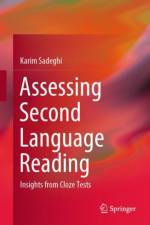
This book investigates the issue of cloze-validity as a measure of second language reading comprehension. It starts off by making a distinction between general reading ability and the more specific reading comprehension followed by a thorough review of the related research on L2 reading comprehension and sorting out the confusion in the literature in this categorization. A comprehensive account of cloze procedure is presented discussing its origin, different versions, its use for teaching and testing purposes, as well the latest research on cloze as measures of readability, language proficiency and second language reading. The book includes studies conducted at several stages on validating cloze as a measure of reading and interview and questionnaire techniques are applied to investigate the validity of eight cloze tests, criterion reading tests, and other cloze and reading tests in general. Two new cloze tests, i.e. reader-centered cloze test and phrase cloze test, are also introduced and researched as measures of reading ability. The book concludes with suggestions for developing tests that can better measure reading comprehension in light of recent research insights on the complex and dynamic nature of reading.This book will appeal to researchers, lecturers and graduate and post-graduate students taking a course in Second Language Acquisition, Applied Linguistics, TESOL, Language Assessment, and Educational Measurement.
With a focus on modified gravity this book presents a review of the recent developments in the fields of gravity and cosmology, presenting the state of the art, high-lighting the open problems, and outlining the directions of future research.General Relativity and the ¿CDM framework are currently the standard lore and constitute the concordance paradigm of cosmology. Nevertheless, long-standing open theoretical issues, as well as possible new observational ones arising from the explosive development of cosmology in the last two decades, offer the motivation and lead a large amount of research to be devoted in constructing various extensions and modifications. In this review all extended theories and scenarios are first examined under the light of theoretical consistency, and are then applied in various geometrical backgrounds, such as the cosmological and the spherical symmetric ones. Their predictions at both the background and perturbation levels, and concerning cosmology at early, intermediate and late times, are then confronted with the huge amount of observational data that astrophysics and cosmology has been able to offer in the last two decades. Theories, scenarios and models that successfully and efficiently pass the above steps are classified as viable and are candidates for the description of Nature, allowing readers to get a clear overview of the state of the art and where the field of modified gravity is likely to go.This work was performed in the framework of the COST European Action ¿Cosmology and Astrophysics Network for Theoretical Advances and Training Actions¿ - CANTATA.
Over the past decade, the tumor microenvironment has become one of the most important research areas in cancer biology, as cells within the tumor microenvironment, despite being outnumbered by healthy cells, are able to evade surveillance and immune-mediated destruction. While researchers have learned a great deal about the cellular and structural makeup of the tumor microenvironment, there has been a growing understanding of the metabolic interplay between the tumor micronenvironment¿s various cellular constituents and how each of them contributes to overall tumor growth and metastases. This new volume will guide researchers, students, oncologists and academics through a rapidly developing and changing field with a thorough understanding of tumor microenvironment biology from a cellular, structural, metabolic, and immunological perspective.
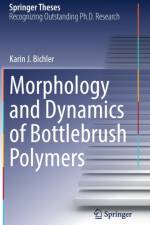
This thesis makes significant advances to the understanding of bottlebrush polymers. While bottlebrushes have received much attention due to the recent discovery of their unprecedented properties, including supersoftness, ultra-low viscosity, and hyperelasticity, this thesis is the first fundamental investigation at the molecular level that comprises structure and dynamics. Neutron scattering experiments, detailed within, reveal spherical or cylindrical shapes, instead of a random coil conformation. Another highlight is the analysis of the fast dynamics at the sub nm-length scale. The combination of three neutron spectrometers and the development of a new analysis technique enabled the calculation of the mean-square displacement over seven orders of magnitude in time scale. This unprecedented result can be applied to a broad class of samples, including polymers and other materials. The thesis is accessible to scientists from other fields, provides the reader with easily understandableguidelines for applying this analysis to other materials, and has the potential to make a significant impact on the analysis of neutron scattering data.
This book focuses on three essential elements of agricultural supply chains: Planting and Growing, Processing and Selling, and Government Interventions. For decades, most agricultural economists applied macro-economic theory in decisions pertaining to the optimization of food production and distribution. However, few researchers used micro-economic theory to examine how individual farmers respond to market information, incentive pricing mechanisms and different market structures in the trade of agricultural goods. Examining challenges in agricultural supply chain operations through the lens of micro-economic theory is imperative because it can enable policymakers and social enterprises to develop and design market information provision policy, incentive contracts and market structures for improving farmer and consumer welfare.In each chapter, contributing authors motivate their research questions by providing the context and articulating the importance of their questions. They present their analysis to examine the respective research questions and explain their results. At the end of each chapter, they provide a short list of future research questions.
This book presents selected papers from the 32nd Eurasia Business and Economics Society (EBES) Conference - Istanbul. Due to the COVID-19 restrictions, the conference presentation mode has been switched to ¿online/virtual presentation only¿. The theoretical and empirical papers gathered here cover diverse areas of business, economics and finance in various geographic regions, including not only topics from HR, management, finance, marketing but also contributions on public economics, political economy and regional studies.
This open access book contains observations, outlines, and analyses of educational robotics methodologies and activities, and developments in the field of educational robotics emerging from the findings presented at FabLearn Italy 2019, the international conference that brought together researchers, teachers, educators and practitioners to discuss the principles of Making and educational robotics in formal, non-formal and informal education.The editors¿ analysis of these extended versions of papers presented at FabLearn Italy 2019 highlight the latest findings on learning models based on Making and educational robotics. The authors investigate how innovative educational tools and methodologies can support a novel, more effective and more inclusive learner-centered approach to education. The following key topics are the focus of discussion: Makerspaces and Fab Labs in schools, a maker approach to teaching and learning; laboratory teaching and the maker approach,models, methods and instruments; curricular and non-curricular robotics in formal, non-formal and informal education; social and assistive robotics in education; the effect of innovative spaces and learning environments on the innovation of teaching, good practices and pilot projects.
This open access book contains observations, outlines, and analyses of educational robotics methodologies and activities, and developments in the field of educational robotics emerging from the findings presented at FabLearn Italy 2019, the international conference that brought together researchers, teachers, educators and practitioners to discuss the principles of Making and educational robotics in formal, non-formal and informal education.The editors¿ analysis of these extended versions of papers presented at FabLearn Italy 2019 highlight the latest findings on learning models based on Making and educational robotics. The authors investigate how innovative educational tools and methodologies can support a novel, more effective and more inclusive learner-centered approach to education. The following key topics are the focus of discussion: Makerspaces and Fab Labs in schools, a maker approach to teaching and learning; laboratory teaching and the maker approach, models, methods and instruments; curricular and non-curricular robotics in formal, non-formal and informal education; social and assistive robotics in education; the effect of innovative spaces and learning environments on the innovation of teaching, good practices and pilot projects.
This book provides a fascinating insight into the on-going process of self- reflection in the Science|Environment|Health (S|E|H) community. The basic vision of a new S|E|H pedagogy is to establish a transdisciplinary dialogue between the three educational fields of science education, environmental education, and health education. This approach finds growing interest among science educators. Since 2014, the ESERA special interest group S|E|H has united both experienced and junior researchers all over Europe in a burgeoning research community.This book presents a selection of results of these vibrant activities. Systems theory has turned out to be a stimulating theoretical framework for S|E|H. The limits of predictability in complex living systems result in structural uncertainty for decision-making, and they ask for emphasising and rethinking the role of pedagogical concepts like informed citizenship and scientific literacy. They challenge crude scientific determinism in environmental and health education, which all too often ends up with students¿ eco- and health depression. Instead, S|E|H conceives coping with uncertainty in terms of an interplay between cognitive and affective factors. The horizon of the future remains always open. Hope must never die in a new S|E|H pedagogy.Chapter 3 is available open access under a Creative Commons Attribution 4.0 International License via link.springer.com.
The book applies an interdisciplinary analytical framework, based on social psychology theories of inclusion and exclusion, to a discussion of legal discourse and the development of legal frameworks in Europe concerning migrants, asylum seekers, refugees, and European citizens. It adopts a psycho-historical perspective to discuss the evolution of international and European law with regard to the rights of citizens and asylum-seeking non-citizens, from the law¿s inception following the Second World War up to present-day laws and policies. The book reveals the embracing of a European identity based on human rights as the common feature in European treaties and institutions, one that is focused on European citizens and has inclusionary objectives. However, a cognitive dissonance can also be found, as this common identity-making runs counter to national proclivities, as well as securitized, threat-perception-oriented perspectives that can produce exclusionary manifestations concerning persons seeking asylum. In particular, a view of inclusion and exclusion via legal categorizations of status, as well as distributions of social and economic rights, draws attention to the links between social psychology and international law. What emerges in the analysis: a process of creating value is present both at its psychological roots and the expressions of value in the law. Fundamentally speaking, the emergence of laws and policies that center on human beings and human dignity, when understood from a psychological and emotion-based perspective, has the potential to transcend the dissonances identified.
This updated text collects all the introductory aspects of beer brewing science into one place for undergraduate brewing science courses. This expansive and detailed work is written in conversational style, walking students through all the brewing basics from the origin and history of beer to the brewing process to post-brew packaging and quality control and assurance. As an introductory text, this book assumes the reader has no prior knowledge of brewing science and only limited experience with chemistry, biology and physics. The text provides students with all the necessary details of brewing science using a multidisciplinary approach, with a thorough and well-defined program of in-chapter and end-of-chapter problems. As students solve these problems, they will learn how scientists think about beer and brewing and develop a critical thinking approach to addressing concerns in brewing science. As a truly comprehensive introduction to brewing science, Brewing Science: A Multidisciplinary Approach, Second Edition walks students through the entire spectrum of the brewing process. The different styles of beer, the molecular makeup and physical parameters, and how those are modified to provide different flavors are listed. All aspects of the brewery process, from the different setup styles to sterility to the presentation of the final product, are outlined in full. All the important brewing steps and techniques are covered in meticulous detail, including malting, mashing, boiling, fermenting and conditioning. Bringing the brewing process full circle, this text covers packaging aspects for the final product as well, focusing on everything from packaging technology to quality control. Students are also pointed to the future, with coverage of emerging flavor profiles, styles and brewing methods. Each chapter in this textbook includes a sample of related laboratory exercises designed to develop a student¿s capability to critically think about brewing science. These exercises assume that the student has limited or no previous experience in the laboratory. The tasks outlined explore key topics in each chapter based on typical analyses that may be performed in the brewery. Such exposure to the laboratory portion of a course of study will significantly aid those students interested in a career in brewing science.
Abonner på vårt nyhetsbrev og få rabatter og inspirasjon til din neste leseopplevelse.
Ved å abonnere godtar du vår personvernerklæring.