








Gjør som tusenvis av andre bokelskere
Abonner på vårt nyhetsbrev og få rabatter og inspirasjon til din neste leseopplevelse.
Ved å abonnere godtar du vår personvernerklæring.Du kan når som helst melde deg av våre nyhetsbrev.

This book represents the first comprehensive compilation of deliberations on botany; genetic resources; genetic diversity analysis; classical genetics & traditional breeding; in vitro culture & genetic transformation; detailed information on molecular maps & mapping of economic genes and QTLs; whole genome sequencing of the nuclear genome and sequencing of chloroplast genome; and elucidation of functional genomics. It also addresses alternate flowering, a unique problem in mango, and discusses currently available genomic resources and databases. Gathering contributions by globally reputed experts, the book will benefit the students, teachers, and scientists in academia and at private companies interested in horticulture, genetics, breeding, pathology, entomology, physiology, molecular genetics and breeding, in vitro culture & genetic engineering, and structural and functional genomics.
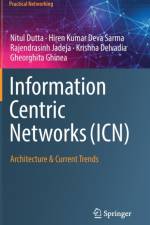
This book aimed at bringing an insight to the ICN network, particularly various architectures, issues and challenges in the new networking paradigm. The book starts with an introduction to the new promising concept of ICN and its origin along with the reason behind this interesting innovation. Different architectures proposed so far in support of implementing the ICN is also discussed in details. Few of the challenges of ICN implementation are enlisted as caching, naming, routing, and security. Each of these challenges with recent development is covered in individual chapters. Moreover, integration of current trends in communication and computing like software defined networking and machine learning approach are another area that this book is focusing. All these chapters highlight the recent developments reported in the area and also discusses the future trends. The book provides an overview of the recent developments in future internet technologies, bringing together the advancements that have been made in ICN. The book includes three unique chapters in the field of ICN research. The first, is the SDN framework for implementing ICN by decoupling data and control plan. The machine learning models for predicting future trends in network traffic and other management activities is another important chapter. This chapter includes the possibilities of using machine learning models for trend prediction to help network administrators and service providers to take care of unexpected sudden change traffic pattern and user behaviour. The third most vital chapter is the security issues in ICN. This chapter includes various facts that influences the security of ICN. Issues involved in naming, caching and routing are discussed separately along with few recent works in these areas. Various types of attacks in ICN are also part of the discussion. The stated book would be useful for researchers in this area and will work as a reference for future work. Moreover, the content of the book would also be suitable as a supporting material for undergraduate and graduate level courses in computer science and electrical engineering.
This book presents work on healthcare management and engineering using optimization and simulation methods and techniques. Specific topics covered in the contributed chapters include discrete-event simulation, patient admission scheduling, simulation-based emergency department control systems, patient transportation, cost function networks, hospital bed management, and operating theater scheduling. The content will be valuable for researchers and postgraduate students in computer science, information technology, industrial engineering, and applied mathematics.
This book presents methodologies for analysing large data sets produced by the direct numerical simulation (DNS) of turbulence and combustion. It describes the development of models that can be used to analyse large eddy simulations, and highlights both the most common techniques and newly emerging ones. The chapters, written by internationally respected experts, invite readers to consider DNS of turbulence and combustion from a formal, data-driven standpoint, rather than one led by experience and intuition. This perspective allows readers to recognise the shortcomings of existing models, with the ultimate goal of quantifying and reducing model-based uncertainty. In addition, recent advances in machine learning and statistical inferences offer new insights on the interpretation of DNS data.The book will especially benefit graduate-level students and researchers in mechanical and aerospace engineering, e.g. those with an interest in general fluid mechanics,applied mathematics, and the environmental and atmospheric sciences.
Abonner på vårt nyhetsbrev og få rabatter og inspirasjon til din neste leseopplevelse.
Ved å abonnere godtar du vår personvernerklæring.