








Gjør som tusenvis av andre bokelskere
Abonner på vårt nyhetsbrev og få rabatter og inspirasjon til din neste leseopplevelse.
Ved å abonnere godtar du vår personvernerklæring.Du kan når som helst melde deg av våre nyhetsbrev.

This book gathers the peer-reviewed proceedings of the 13th Annual Meeting of the Bulgarian Section of the Society for Industrial and Applied Mathematics, BGSIAM'18, held in Sofia, Bulgaria. The general theme of BGSIAM'18 was industrial and applied mathematics with particular focus on: mathematical physics, numerical analysis, high performance computing, optimization and control, mathematical biology, stochastic modeling, machine learning, digitization and imaging, advanced computing in environmental, biomedical and engineering applications.
This book is the highly anticipated sequel to the previous volume under the same title, dedicated to presenting a diverse range of timely and valuable contributions on the legal and policy related questions evoked by satellite constellations, including emerging mega-constellations. Given the proliferation of activities in the field of satellite constellations, and the critical roles they play in supporting and enabling communication, navigation, disaster monitoring, Earth observation, security and scientific activities, the insights of legal and policy experts from around the world have been gathered in this second volume to help expand the scientific literature in this precious field. Topics range from legal obstacles and opportunities facilitating small satellite enterprise for emerging space actors, international cooperation in the compatibility and interoperability of navigation systems, the designation of satellite constellations as critical space infrastructure, to an analysisof the paradigm shift which has occurred over the last decade to make the proliferation of small satellite constellations possible, and more.
This book intends to contribute to the consolidation of the new approach to lawmaking that has taken place in the last 20 years in legal philosophy and legal theory, spreading to other legal fields, especially criminal law. This new legislation science focusing on criminal problems has triggered a growing interest in the field, a dynamic which has led to a long-needed convergence of disciplines such as administrative law, criminal law, criminology, political science, sociology and, of course, legal philosophy to contribute to a more rational decision-making process for the construct of criminal laws.With the intention to continue on with the building of a solid ¿Criminal Legislation Science¿, this work presents scholars, lawmakers and students various emblematic approaches to enrich the discussion about different and promising tools and theoretical frameworks.
The book presents the proceedings of four conferences: The 19th International Conference on Security & Management (SAM'20), The 19th International Conference on Wireless Networks (ICWN'20), The 21st International Conference on Internet Computing & Internet of Things (ICOMP'20), and The 18th International Conference on Embedded Systems, Cyber-physical Systems (ESCS'20). The conferences took place in Las Vegas, NV, USA, July 27-30, 2020. The conferences are part of the larger 2020 World Congress in Computer Science, Computer Engineering, & Applied Computing (CSCE'20), which features 20 major tracks. Authors include academics, researchers, professionals, and students.Presents the proceedings of four conferences as part of the 2020 World Congress in Computer Science, Computer Engineering, & Applied Computing (CSCE'20);Includes the tracks on security & management, wireless networks, internet computing and IoT, and embedded systems as well as cyber-physical systems;Features papers from SAM¿20, ICWN¿20, ICOMP¿20 and ESCS¿20.
This book presents the outcomes of the trans- and interdisciplinary research project NEMo (Nachhaltige Erfüllung von Mobilitätsbedürfnissen im ländlichen Raum - Sustainable Fulfilment of Mobility Needs in Rural Areas). Due to demographic change, it is becoming increasingly difficult for rural districts and communities to maintain a basic set of public transport services such as bus and train transit without encountering issues regarding necessary social participation, sensible regional value creation and, last but not least, achievable environmental protection goals. At the same time, the demand for mobility in rural areas will continue to rise in the future, e.g. due to the concentration of medical care facilities and shopping centres close to cities.Focusing on the development of sustainable and innovative mobility services and business models, this book explains how new mobility offers can be created in which citizens themselves become mobility providers. To do so, it combines the findings of the individual research groups with external contributions from science and practice.
This book is a compendium of research efforts and findings on the sources, occurrences, hydrochemistry, and several operating variables that influence the presence of oxyanions in aqua system. The content of this book has been designed to provide an insightful account of an array of innovative technologies for the management of the impacts of oxyanions in water, the progress and drawbacks of these technologies and those that have been effectively deployed to transform oxyanions in water to beneficial species. This book further x-rays global laws and economic policies targeted at effectively curtailing the presence of harmful oxyanions in water, challenges facing these policies, and future perspectives on how best to reduce the level of these harmful oxyanions in water to safe limit. The book is relevant to water professionals, policy makers, academics, and research students.
This present book includes a set of selected revised and extended versions of the best papers presented at the 11th International Joint Conference on Computational Intelligence (IJCCI 2019) ¿ held in Vienna, Austria, from 17 to 19 September 2019. The authors focus on three outstanding fields of Computational Intelligence through the selected panel, namely Evolutionary Computation, Fuzzy Computation and Neural Computation. Besides presenting the recent advances of the selected areas, the book aims to aggregate new and innovative solutions for confirmed researchers and, on the other hand, to provide a source of information and/or inspiration for young interested researchers or learners in the ever-expanding and current filed of Computational Intelligence. It constitutes a precious provision of knowledge for individual researchers as well as represents a valuable sustenance for collective use in academic libraries (of universities and engineering schools) relating innovative techniques in various fields of applications.
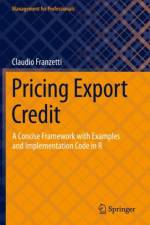
Pricing of export credit is a challenge in the globalised world trade. Annual premia represent billions of euros or dollars and may determine competition. This book develops a rigorous new framework for pricing export credit products, e.g. buyer and supplier credit insurance and performance and working capital guarantees , based on well-known financial and actuarial theories. It introduces the products, the theories and the different data sources in order to apply the mathematical and financial ideas, e.g. discounting, risk-neutral valuation and Merton type defaults. It shows the differences of historical experience and implicit market pricing assumptions. The well-known OECD Arrangement is used as a benchmark for some part of the framework. Short code snippets in R are given in order to re-perform the results and have a basis to try own ideas. Many unprecedented exhibits give new insights into the subject matter. The book is targeted at practitioners and actuaries in the field with agood quantitative background.
This book provides a detailed explanation of the cold spray process from a practical standpoint. Drawing on the authors¿ 36 years of research and development experience, it is firmly rooted in theory but also substantiated by empirical data and practical knowledge, offering potential users the information they need to recognize the advantages, as well as the limitations, of cold spray. This sets it apart from previous works on the subject, which have been purely academic. Cold spray technology has made great dramatic strides over the last 10 years and is now being used extensively in the aerospace, electronics, automotive, medical, and even the petrochemical industries. Most recently, cold spray of near-net shaped parts was accomplished ¿ something previously assumed to be impossible because of the limitations of commercially available cold spray systems and a lack of fundamental understanding regarding the process. The cost of cold spray has also declined, making it appealing to industry through the introduction of new powders, surface preparation techniques, and recovery systems tailored to the cold spray process.Though primarily intended for users of the technology, this handbook is also a valuable resource for researchers interested in advances in cold spray materials, improved feedstock powders, advanced hardware and software development, surface preparation techniques, and the numerous applications developed to date. For example, cold spray aluminum alloys have been developed that offer the strength and ductility of wrought material in the as-sprayed condition. This has yet to be achieved by conventional powder consolidation methods including laser sintering, electron beam, and ultrasonic techniques. Other topics covered include additive manufacturing, structural repair, nondestructive evaluation, advanced cold spray materials, qualification requirements, cold spray systems comparison, and, finally, helium recovery. Thanks to its practical focus, the book provides readers with everything they need to understand, evaluate, and implement cold spray technology.
This book focuses on software sustainability, regarded in terms of how software is or can be developed while taking into consideration environmental, social, and economic dimensions. The sixteen chapters cover various related issues ranging from technical aspects like energy-efficient programming techniques, formal proposals related to energy efficiency measurement, patterns to build energy-efficient software, the role of developers on energy efficient software systems and tools for detecting and refactoring code smells/energy bugs; to human aspects like its impact on software sustainability or the adaptation of ACM/IEEE guidelines for student and professional education and; and an economics-driven architectural evaluation for sustainability. Also aspects as the elements of governance and management that organizations should consider when implementing, assessing and improving Green IT or the relationship between software sustainability and the Corporate Social Responsibility of software companies are included. The chapters are complemented by usage scenarios and experience reports on several domains as cloud applications, agile development or e-Health, among others. As a whole, the chapters provide a complete overview of the various issues related to sustainable software development.The target readership for this book includes CxOs, (e.g. Chief Information Officers, Chief Executive Officers, Chief Technology Officers, etc.) software developers, software managers, auditors, business owners, and quality professionals. It is also intended for students of software engineering and information systems, and software researchers who want to know the state of the art regarding software sustainability.
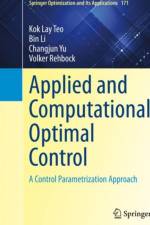
The aim of this book is to furnish the reader with a rigorous and detailed exposition of the concept of control parametrization and time scaling transformation. It presents computational solution techniques for a special class of constrained optimal control problems as well as applications to some practical examples. The book may be considered an extension of the 1991 monograph A Uni¿ed Computational Approach Optimal Control Problems, by K.L. Teo, C.J. Goh, and K.H. Wong. This publication discusses the development of new theory and computational methods for solving various optimal control problems numerically and in a unified fashion. To keep the book accessible and uniform, it includes those results developed by the authors, their students, and their past and present collaborators. A brief review of methods that are not covered in this exposition, is also included. Knowledge gained from this book may inspire advancement of new techniques to solve complex problemsthat arise in the future. This book is intended as reference for researchers in mathematics, engineering, and other sciences, graduate students and practitioners who apply optimal control methods in their work. It may be appropriate reading material for a graduate level seminar or as a text for a course in optimal control.
The scientific theme of the book concerns ¿Manufacturing as a Service (MaaS)¿ which is developed in a layered cloud networked manufacturing perspective, from the shop floor resource sharing model to the virtual enterprise collaborative model, by distributing the cost of the manufacturing infrastructure - equipment, software, maintenance, networking - across all customers.MaaS is approached in terms of new models of service-oriented, knowledge-based manufacturing systems optimized and reality-aware, that deliver value to customer and manufacturer via Big data analytics, Internet of Things communications, Machine learning and Digital twins embedded in Cyber-Physical System frameworks. From product design to after-sales services, MaaS relies on the servitization of manufacturing operations such as: Design as a Service, Predict as a Service or Maintain as a service.The general scope of the book is to foster innovation in smart and sustainable manufacturing and logistics systems and in this context to promote concepts, methods and solutions for the digital transformation of manufacturing through service orientation in holonic and agent-based control with distributed intelligence.The book¿s readership is comprised by researchers and engineers working in the manufacturing value chain area who develop and use digital control solutions in the ¿Industry of the Future¿ vision. The book also addresses to master and Ph.D. students enrolled in Engineering Sciences programs.
This book reviews principles, techniques and applications of metal, metal oxides, metal sulfides and metal-organic frameworks for removal and degradation of pollutants. Natural materials are often much more advanced than synthetic materials in terms of circularity and are functional, often biodegradable, recyclable and generate little waste. They are, therefore, a source of inspiration for new synthetic materials. In particular, recent research has focused on various types of functional materials such as organic, inorganic, nanostructured and composites for the remediation of environmental pollution.
This book includes chapters related to the analysis of cultural differences as a tool to enrich tacit knowledge and make processes more efficient, the factors that influence job satisfaction and the value of social capital as a competitive strategy to achieve productivity and competitiveness of organizations, in addition to research of the utmost importance to discover the facets of the diamond with respect to the symbolic capital of the organizations where Generation Z will work and how it will discover the best time to establish an innovation ecosystem that will influence its work trajectory. Industry 4.0 requires a major paradigm shift, since human capital is a source of competitive advantage. Being competitive enables to a company, a region, a society or a country the power to advance in different areas, contributing to the benefit of a social group, therefore, and organizations need to make efforts that lead to adding value and generate a competitive advantage. Industrial applications based on artificial intelligence can change our lives in just one generation. The chapters in this book show progress and challenges related to real-world applications, as well as the need to strengthen human capital to achieve systemic and comprehensive competitiveness required in the XXI century.
This book provides an opportunity for investigators, government officials, systems scientists, strategists, assurance researchers, owners, operators and maintainers of large, complex and advanced systems and infrastructures to update their knowledge with the state of best practice in the challenging domains whilst networking with the leading representatives, researchers and solution providers.Drawing on 12 years of successful events on information security, digital forensics and cyber-crime, the 13th ICGS3-20 conference aims to provide attendees with an information-packed agenda with representatives from across the industry and the globe. The challenges of complexity, rapid pace of change and risk/opportunity issues associated with modern products, systems, special events and infrastructures. In an era of unprecedented volatile, political and economic environment across the world, computer-based systems face ever more increasing challenges, disputes and responsibilities, and whilst the Internet has created a global platform for the exchange of ideas, goods and services, it has also created boundless opportunities for cyber-crime.As an increasing number of large organizations and individuals use the Internet and its satellite mobile technologies, they are increasingly vulnerable to cyber-crime threats. It is therefore paramount that the security industry raises its game to combat these threats. Whilst there is a huge adoption of technology and smart home devices, comparably, there is a rise of threat vector in the abuse of the technology in domestic violence inflicted through IoT too. All these are an issue of global importance as law enforcement agencies all over the world are struggling to cope.
This book integrates analytical and digital solutions through Alternative Transients Program (ATP) software, recognized for its use all over the world in academia and in the electric power industry, utilizing a didactic approach appropriate for graduate students and industry professionals alike.This book presents an approach to solving singular-function differential equations representing the transient and steady-state dynamics of a circuit in a structured manner, and without the need for physical reasoning to set initial conditions to zero plus (0+). It also provides, for each problem presented, the exact analytical solution as well as the corresponding digital solution through a computer program based on the Electromagnetics Transients Program (EMTP).Of interest to undergraduate and graduate students, as well as industry practitioners, this book fills the gap between classic works in the field of electrical circuits and more advanced works in the field of transients inelectrical power systems, facilitating a full understanding of digital and analytical modeling and solution of transients in basic circuits.
This book describes how a key signal/image processing algorithm ¿ that of the fast Hartley transform (FHT) or, via a simple conversion routine between their outputs, of the real¿data version of the ubiquitous fast Fourier transform (FFT) ¿ might best be formulated to facilitate computationally-efficient solutions. The author discusses this for both 1-D (such as required, for example, for the spectrum analysis of audio signals) and m¿D (such as required, for example, for the compression of noisy 2-D images or the watermarking of 3-D video signals) cases, but requiring few computing resources (i.e. low arithmetic/memory/power requirements, etc.). This is particularly relevant for those application areas, such as mobile communications, where the available silicon resources (as well as the battery-life) are expected to be limited. The aim of this monograph, where silicon¿based computing technology and a resource¿constrained environment is assumed and the data is real-valued in nature, has thus been to seek solutions that best match the actual problem needing to be solved.
Abonner på vårt nyhetsbrev og få rabatter og inspirasjon til din neste leseopplevelse.
Ved å abonnere godtar du vår personvernerklæring.