
















Gjør som tusenvis av andre bokelskere
Abonner på vårt nyhetsbrev og få rabatter og inspirasjon til din neste leseopplevelse.
Ved å abonnere godtar du vår personvernerklæring.Du kan når som helst melde deg av våre nyhetsbrev.

This book serves the purpose of documenting and promoting African experiences on sustainable development, which encompasses both, formal and non-formal education. Sustainable development is very important to Africa, but there is a paucity of publication which documents and promotes experiences from African countries. Due to their complexity, the interrelations between social, economic and political factors related to sustainable development, especially at universities, need to be better understood. There is also a real need to showcase successful examples of how African institutions are handling their sustainability challenges. It is against this background that this book has been produced. It is a truly interdisciplinary publication, useful to scholars, social movements, practitioners and members of governmental agencies and private companies, undertaking research and/or executing projects focusing on sustainability from across Africa. As African nations strive to pursue the UN Sustainable Development Goals, it is imperative to cater for the information needs seen across the continent and foster the dissemination of experiences and case studies, which may support both, on-going and future efforts. The scope of the book is deliberately kept wide, and we are looking for contributions across the spectrum of sustainable development from business and economics, to arts and fashion, administration, environment, languages and media studies.
This book is the first research collection by the Malaysian Society for Automatic Control Engineers (MACE). Numerous applications of control engineering, sensor, and instrumentation technology in robotics, industrial automation, and other mechatronic systems are presented in this book.The book begins by introducing control engineering in robotics and industrial automation. It progresses through a series of chapters, discussing the application of control engineering in various areas such as: brake-by-wire technology; web scrubber systems; robot localization; and, autonomous navigation systems. Coverage of swarm robotics behaviors and applications of sensor technology in the field of music, biomedical technology, and structural analysis takes the book beyond its core of mechatronic systems and demonstrates a more diverse application of the ideas it presents.Each chapter provides comprehensive and detailed coverage of the main ideas, design methods, and practical needs of its chosen topic, making this book accessible and useful to researchers, engineers, postgraduates, and undergraduate students.
This volume elaborates on the research and clinical implications of the hereditary and molecular basis of childhood cancers. The focus of the ¿disease-related¿ chapters of the book is to integrate what is known about the molecular basis of that particular clinical entity (or group of related entities) with the clinical manifestations, to relate the relationship of the molecular oncologic pathways with relevant developmental or non-human species biology in order to better understand the complexity of these systems. The resulting clinical implications of understanding this biology are elaborated on. Chapters 13-16 discuss the broader psychosocial, ethical and genetic counseling issues that arise and that are so critical to translating the knowledge gained from advances in molecular genetics into the clinic. Chapter 12 in particular provides a unique perspective of the application of this knowledge in less-developed nations where ¿modern¿ technologies may not be readily available, but where the clinical manifestations of these disorders are prevalent.
This book shows digital economy has become one of the most sought out solutions to sustainable development and economic growth of nations. This book discusses the implications of both artificial intelligence and computational intelligence in the digital economy providing a holistic view on AI education, economics, finance, sustainability, ethics, governance, cybersecurity, blockchain, and knowledge management. Unlike other books, this book brings together two important areas, intelligence systems and big data in the digital economy, with special attention given to the opportunities, challenges, for education, business growth, and economic progression of nations. The chapters hereby focus on how societies can take advantage and manage data, as well as the limitations they face due to the complexity of resources in the form of digital data and the intelligence which will support economists, financial managers, engineers, ICT specialists, digital managers, data managers, policymakers,regulators, researchers, academics, students, economic development strategies, and the efforts made by the UN towards achieving their sustainability goals.
Following the vexed codification attempts of the International Law Commission and the relevant jurisprudence of the International Court of Justice, this book addresses the permissibility of the practice of diplomatic asylum under general international law.In the light of a wealth of recent practice, most prominently the case of Julian Assange, the main objective of this book is to ascertain whether or not the practice of granting asylum within the premises of the diplomatic mission finds foundation under general international law. In doing so, it explores the legal framework of the Vienna Convention on Diplomatic Relations 1961, the regional treaty framework of Latin America, customary international law, and a possible legal basis for the practice on the basis of humanitarian considerations.In cases where the practice takes place without a legal basis, this book aims to contribute to bridging the legal lacuna created by the rigid nature of international diplomatic law with the absolute nature of the inviolability of the mission premises facilitating the continuation of the practice of diplomatic asylum even where it is without legal foundation. It does so by proposing solutions to the problem of diplomatic asylum.This book also aims to establish the extent to which international law relating to diplomatic asylum may presently find itself within a period of transformation indicative of both a change in the nature of the practice as well as exploring whether recent notions of humanity are superseding the traditional fundaments of the international legal system in this regard.
This open access book constitutes the refereed post-conference proceedings of the 9th IFIP WG 5.5 International Precision Assembly Seminar, IPAS 2020, held virtually in December 2020.The 16 revised full papers and 10 revised short papers presented together with 1 keynote paper were carefully reviewed and selected from numerous submissions. The papers address topics such as assembly design and planning; assembly operations; assembly cells and systems; human centred assembly; and assistance methods in assembly.
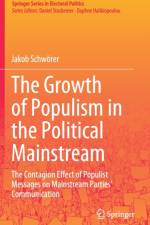
This book examines the populist communication of mainstream parties in Germany, Austria, Italy, and Spain. For a long time, populist and radical right parties have been the main subject of investigation in academic research. Yet, how mainstream parties react to the rise of such actors is less known. Scholars assume a ¿populist Zeitgeist¿, a populist contagion claiming that the political mainstream actively engages in populist and nativist discourses. The author tests this widespread assumption analyzing whether center-left and center-right mainstream parties adopt populist messages, as well as content related to the leftist and right-wing host ideologies of populist actors. Therefore, this book is a must-read for scholars, students, and researchers of political science and electoral studies, as well as policy-makers and practitioners interested in a better understanding of populism and populist communication.
This book addresses the process and principles of contract management in construction from an international perspective. It presents a well-structured, in-depth analysis of construction law doctrines necessary to understand the fundamentals of contract management.The book begins with an introduction to contract management and contract law and formation. It then discusses the various parties to a contract and their relevant obligations, whether they are engineers, contractors or subcontractors. It also addresses standard practices when drafting and revising contracts, as well as what can be expected in standard contracts general clauses. Two chapters are dedicated to contract clauses, with one focused on contract administration such as schedules, payment certificates and defects liability, and the other focused on contract management, such as terminations, dispute resolutions and claims.This book provides a useful reference to engineers, project managers and students within the field of engineering and construction management.
This book discusses dental healthcare professionals in the European Union and EU policy output and activities in the context of Europeanization and its impact on oral health care. Adopting a framework focused on an institution and its policies allows for discussion from the perspective of multiple actors, both national and international. The research is timely and significant because of the momentous changes that have taken and are taking place in healthcare delivery systems and professions in the Member States of the European Union.In the book, the author constructs a profile of the oral healthcare professions in the Member States; creates an inventory of challenges faced by these professions; illustrates the impact Europeanization and one of its organs, the European Union, have had on oral health care; demonstrates the way in which national traits and institutions exercise a role in the transposition of EU outputs; and catalogues the stages and views of some representatives of the dental team. Topics explored include:The First Stage of Professionalization: EducationDental Care Professionals: RegulationMember States: Healthcare ProvisionThe WorkplaceThe European Union and the Dental TeamReaders not only learn the fundamentals of oral health professions, their realities, and healthcare delivery, but also become familiar with the political concepts, institutions, and practice related to the field.The Dental Team in the European Union, having academic and general interest as well as practical value, appeals to diverse audiences. The book is an invaluable resource for researchers and practitioners in the social sciences and the healthcare and dental worlds. It also can be used as required or supplemental reading for students in the healthcare professions, public policy, and political science. Decision-makers at various levels of government and persons affiliated with funding agencies as well as scholarly and professional associations in the United States and abroad also would find this a useful text.
Offering an example for transnational cooperation and successful reduction of a neglected tropical disease, this volume shows how Chinese scientists and local physicians controlled schistosomiasis in Zanzibar. Over a four-year study, local medical specialists and the population of Zanzibar were taught how to diagnose the parasitosis caused by flukes (trematode worms) of the genus Schistosoma. Furthermore, methods to eliminate the disease and prevent new infections were established. The developed control system will avoid repeated increase of human schistosomiasis, which is still prevalent in the tropics and subtropics. Rural populations and poor communities lacking access to clean drinking water and adequate sanitation are most affected.This book is a blueprint of activities urgently needed to combat schistosomiasis in countries with low medical impact. The strategies outlined are particularly relevant to parasitologists and professionals in public health, physicians, medical personnel and also governmental, healthcare and pharmaceutical institutions.
This book collects several contributions presented at the 2019 meeting of the Italian Synchrotron Radiation Society (SILS), held in Camerino, Italy, from 9 to 11 September 2019.Topics included are recent developments in synchrotron radiation facilities and instrumentation, novel methods for data analysis, applications in the fields of materials physics and chemistry, Earth and environmental science, coherence in x-ray experiments. The book is intended for advanced students and researchers interested in synchrotron-based techniques and their application in diverse fields.
This book presents an unbiased, comprehensive examination of the state of knowledge for life cycle assessments (LCAs) of natural gas-fired electricity, covering a suite of environmental impact categories. An exploration of the life cycle environmental impacts of gas-fired electricity is used to introduce the field of LCA, advancements in methods and data, and the limitations thereof. Natural gas, particularly as a fuel for electricity generation, serves as a dichotomy within energy and environmental systems analysis. While the cleanest burning fossil fuel, it is not without impacts, making it an excellent case study for introducing life cycle assessment.This book introduces readers to the field of LCA using natural gas-fired electricity as a case study, as well as providing a comprehensive review of the state of the art in life cycle data, research, and scientific debate related to this product system. The author also elucidates data and methodological challenges inherent to the field of LCA, exemplified using published research. The text explores how to conduct LCA, describing the analysis from the perspective of a numerator and denominator. With each chapter, the complexity of undertaking a LCA of gas-fired power is unravelled beyond a simple fraction to the expansive network of infrastructure examined in this type of research. Students, instructors, LCA practitioners, and energy professionals will benefit from not only the introduction to data and methods, but also this useful summary of the state of the art in the field. Policymakers and the interested public can learn more about the implications of LCA results for decision-support and the commentary about the economics of natural gas and its role as a bridge fuel. This book provides not only a useful reference, but also a springboard for researchers and experts interested in specializing in LCA, natural gas, or both.
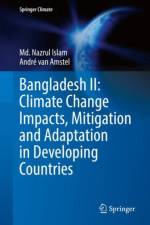
This volume aims to develop a framework for disaster and climate risk resilient livelihood system in Bangladesh using a policy oriented approach. It highlights the possible impacts of climate change on groundwater based irrigation in the country. Climate change is one of biggest challenges to society. It can lead to serious impacts on production, life and environment on a global scale. Higher temperatures and sea level rise will cause flooding and water salinity problems which will bring about negative effects on agriculture and high risks to industry and socio-economic systems in the future. Climate change will lead to many changes in global development and security especially energy, water, food, society, job, diplomacy, culture, economy and trade. The Intergovernmental Panel on Climate Change (IPCC) defines climate change as: ¿Any change in climate over time, whether due to natural variability or as a result of human activity.¿ Global climate change has emerged as a key issue in both political and economic arenas. It is an increasingly questioned phenomenon, and progressive national governments around the world have started taking action to respond to these environmental concerns.
Chinäs economy has been transforming rapidly over the last 25 years. As a result, Chinese conurbations have changed remarkably, with cities expanding both vertically and horizontally, and the physical environment acting as a medium for unprecedented urbanization. This has provided vast opportunities for investors, real estate developers, and service companies, but also presents huge challenges¿as traditional city spaces have been reconfigured, environmental risks and the volatility of real estate markets increased. However, as engagement with China is becoming strategically important for many, forming a synthesized lens through which to read China across the vicissitudes of its real estate sector bears historic significance.By offering an insightful framework and structure for understanding Chinäs variegated real estate dynamics, players, and markets, Understanding Chinäs Real Estate Markets codifies the principles and practices of real estate development, finance, and investment in China and builds foundations for future academic research and practical knowledge in shaping and engaging the urban environment within China and beyond.
This book is focused on the development of rigorous, yet practical, methods for the design of advanced process control systems to improve process operational safety and cybersecurity for a wide range of nonlinear process systems. Process Operational Safety and Cybersecurity develops designs for novel model predictive control systems accounting for operational safety considerations, presents theoretical analysis on recursive feasibility and simultaneous closed-loop stability and safety, and discusses practical considerations including data-driven modeling of nonlinear processes, characterization of closed-loop stability regions and computational efficiency. The text then shifts focus to the design of integrated detection and model predictive control systems which improve process cybersecurity by efficiently detecting and mitigating the impact of intelligent cyber-attacks. The book explores several key areas relating to operational safety and cybersecurity including:machine-learning-based modeling of nonlinear dynamical systems for model predictive control;a framework for detection and resilient control of sensor cyber-attacks for nonlinear systems; insight into theoretical and practical issues associated with the design of control systems for process operational safety and cybersecurity; and a number of numerical simulations of chemical process examples and Aspen simulations of large-scale chemical process networks of industrial relevance. A basic knowledge of nonlinear system analysis, Lyapunov stability techniques, dynamic optimization, and machine-learning techniques will help readers to understand the methodologies proposed. The book is a valuable resource for academic researchers and graduate students pursuing research in this area as well as for process control engineers.Advances in Industrial Control reportsand encourages the transfer of technology in control engineering. The rapid development of control technology has an impact on all areas of the control discipline. The series offers an opportunity for researchers to present an extended exposition of new work in all aspects of industrial control.
This thematic collection focuses on key parasites and their vectors in Southeast Asia. Up-to-date essays invite readers to discover parasite and vector morphology, genetic diversity as well as dynamic parasite communities linked to human land-use and climate change. The authors shed light on transmission pathways and explore tick-borne diseases, intestinal protozoa, cestodes, nematodes and the multiplicity of cryptic trematode species. Particular attention is given to mosquito vectors in changing environments and the dynamic biodiversity of vertebrate hosts, including mammals, birds and fish.The richly illustrated chapters are completed by new approaches in diagnostic methods, treatment and prevention to protect humans and animals from tropical parasite infections. Not only parasitologists and experts in tropical medicine but also public health officials and travelers will find this volume highly informative.
This book profiles various cases that are emerging in addressing global challenges in the context of SDGs for society in the era of climate change and covers case studies of projects being undertaken to tackle biodiversity, food security, climate change, energy and water security. The book is written by 37 authors, and will appeal to various stakeholders including academics working within the identified thematic areas, policy planners, development agencies, governments and United Nations agencies. The adoption of the Sustainable Development Goals (SDGs) in 2015 ushered a new era in the global development agenda as the world transitioned from the Millennium Development Goals (MDGs). The new era of SDGs that are all-inclusive, unlike the MDGs with the focus now being on ensuring human success that is predicated on environmental protection. The year 2020 marked five years post the adoption of the SDGs with increased calls for stock-taking of progress made amid strong calls for a decadeof action to accelerate the delivery of the SDGs by 2030. These calls have been louder now given the impact of the COVID-19 pandemic, which reset the global economy and increased intensity of extreme weather events across the world. Since climate change has emerged as one of the biggest threats to the achievement of the SDGs, there has been growing concerns on its impact on biodiversity loss and the extinction of some species. There are also concerns regarding increased food insecurity at the household level in some parts of the world, particularly in Asia and Africa. With the demand for climate change action on the increase, there have also been growing calls for the big carbon emitters to drastically cut their emissions and invest in clean energy to save the planet by following development pathways making emissions stay under the 1.5°C increase in temperature.
Abonner på vårt nyhetsbrev og få rabatter og inspirasjon til din neste leseopplevelse.
Ved å abonnere godtar du vår personvernerklæring.