













Gjør som tusenvis av andre bokelskere
Abonner på vårt nyhetsbrev og få rabatter og inspirasjon til din neste leseopplevelse.
Ved å abonnere godtar du vår personvernerklæring.Du kan når som helst melde deg av våre nyhetsbrev.

This book presents the human, cultural, and scientific contributions of professor Eliano Pessa, who recently passed away. His research interests and activities were varied, some of which included quantum physics, cognitive science and psychology, systems science, artificial intelligence, and alpinism. They were never disciplinary-separated issues, but rather some coherent dimensions of his interests in life. He lived and not only practiced interdisciplinarity and multiple dimensions; he considered it unacceptable to do only one thing in life. The contributors in this volume consider, discuss, interpret, and represent the multiplicity and interdisciplinarity experienced, lived and applied by Pessa. The chapters are inspired by, rebuild, and retrace such networked interests lived by him from the personal, cultural, and scientific points of view of the authors. This is true interdisciplinarity and usage of non-equivalences, honoring the richness of Pessa's contributions.
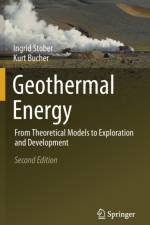
The internal heat of the planet Earth represents an inexhaustible reservoir of thermal energy known as Geothermal Energy. The 2nd edition of the book covers the geologic and technical aspects of developing all forms of currently available systems using this "renewable" green energy. The book presents the distribution and transport of thermal energy in the Earth. Geothermal Energy is a base load energy available at all times independent of climate and weather. The text treats the efficiency of diverse shallow near surface installations and deep geothermal systems including hydrothermal and petrothermal techniques and power plants in volcanic high-enthalpy fields. The book also discusses environmental aspects of utilizing different forms of geothermal energy, including induced seismicity, noise pollution and gas release to the atmosphere. Chapters on hydraulic well tests, chemistry of deep hot water, scale formation and corrosion, development of geothermal probes, well drilling techniques and geophysical exploration complete the text. This book, for the first time, covers the full range of utilization of Geothermal Energy.
This book is the first overview on Deep Learning (DL) for biomedical data analysis. It surveys the most recent techniques and approaches in this field, with both a broad coverage and enough depth to be of practical use to working professionals. This book offers enough fundamental and technical information on these techniques, approaches and the related problems without overcrowding the reader's head. It presents the results of the latest investigations in the field of DL for biomedical data analysis. The techniques and approaches presented in this book deal with the most important and/or the newest topics encountered in this field. They combine fundamental theory of Artificial Intelligence (AI), Machine Learning (ML) and DL with practical applications in Biology and Medicine. Certainly, the list of topics covered in this book is not exhaustive but these topics will shed light on the implications of the presented techniques and approaches on other topics in biomedical data analysis. The book finds a balance between theoretical and practical coverage of a wide range of issues in the field of biomedical data analysis, thanks to DL. The few published books on DL for biomedical data analysis either focus on specific topics or lack technical depth. The chapters presented in this book were selected for quality and relevance. The book also presents experiments that provide qualitative and quantitative overviews in the field of biomedical data analysis. The reader will require some familiarity with AI, ML and DL and will learn about techniques and approaches that deal with the most important and/or the newest topics encountered in the field of DL for biomedical data analysis. He/she will discover both the fundamentals behind DL techniques and approaches, and their applications on biomedical data. This book can also serve as a reference book for graduate courses in Bioinformatics, AI, ML and DL. The book aims not only at professional researchers and practitioners but also graduate students, senior undergraduate students and young researchers. This book will certainly show the way to new techniques and approaches to make new discoveries.
This book on flexible formwork for fluid architecture is a multi-faceted research that covers a broad field: from design to material and technology, and from history to future developments. It offers a pragmatic approach that can be extended with more cases, materials, techniques and methods for fluid architecture, and provides a better understanding of the main aspects of fluid architecture and to help them find the most suitable combinations of all aspects.The book is a challenging experience with many new discoveries, including two patents: one on moulding of fluid surfaces and one on 3D printing of fibre¿reinforced ice. It also features two world records: the larges span (30 meters) and the highest thin shell structure (30,5 meters) in ice as well as a method for the construction of a fully laminated shell structure in insulated glass.
Process Plant Operating Procedures presents an introduction to the theory and applications of procedure synthesis that is primarily concerned with the task of conjecturing the sequence of controller (or operator) actions needed to achieve designated operational goals in a given system. In order to facilitate practical implementation, the formal problem statement, two alternative approaches, their validation methods and a series of realistic examples are provided.The authors explore Petri nets and automata to identify the best paths leading to the specified goal of operation. The model-building methods for characterising all components in the given system, as well as the required control specifications, are explained with simple examples. The sequential control actions and the corresponding time schedule can then be identified accordingly.This book exposes practitioners to an important area of plant operations, teaching them effective approaches for procedure synthesis, enabling them to construct and solve scheduling models, and providing them with tools for simulation and validation of procedures and schedules. It is written for readers with a basic understanding of process design and control activities, and it will appeal to engineers in diverse fields with an interest in synthesizing operating procedures in process plants.Advances in Industrial Control reports and encourages the transfer of technology in control engineering. The rapid development of control technology has an impact on all areas of the control discipline. The series offers an opportunity for researchers to present an extended exposition of new work in all aspects of industrial control.
This book presents different techniques and methodologies that used to help improve the decision-making process and increase the likelihood of success in sector as follows: agriculture, financial services, logistics, energy services, health and others. This book collects and consolidates innovative and high-quality research contributions regarding the implementation techniques and methodologies applied in different industrial sectors. The scope is to disseminate current trends knowledge in the implementation of artificial intelligence techniques and methodologies in different fields as follows: supply chain, business intelligence, e-commerce, social media and others. The book contents are useful for Ph.D., Ph.D. students, master and undergraduate students, and professional and students in industrial engineering, computer science, information systems, data analytics and others.
This second edition of the outstanding monograph on coherent states by Combescure and Robert published in 2012 is enriched with figures, historical information and numerical simulations and enlarged with five new chapters presenting important rigorous results obtained in the recent years. The new chapters include various applications such as to the time dependent Schroedinger equation and the Ehrenfest time, to the growth of norms and energy exchanges, to chaotic systems and classical systems with quantum ergodic behavior, and to open quantum systems, and to adiabatic decoupling for multicomponent systemsOverall, this book presents the various types of coherent states introduced and studied in the physics and mathematics literature and describes their properties together with application to quantum physics problems. It is intended to serve as a compendium on coherent states and their applications for physicists and mathematicians, stretching from the basic mathematicalstructures of generalized coherent states in the sense of Perelomov via the semiclassical evolution of coherent states to various specific examples of coherent states (hydrogen atom, quantum oscillator, etc.). It goes beyond existing books on coherent states in terms of a rigorous mathematical framework
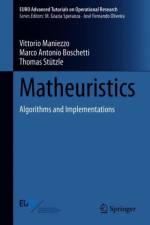
This book is a collection of the most recent approaches that combine metaheuristics and machine learning. Some of the methods considered in this book are evolutionary, swarm, machine learning, and deep learning. The chapters were classified based on the content; then, the sections are thematic. Different applications and implementations are included; in this sense, the book provides theory and practical content with novel machine learning and metaheuristic algorithms.The chapters were compiled using a scientific perspective. Accordingly, the book is primarily intended for undergraduate and postgraduate students of Science, Engineering, and Computational Mathematics and is useful in courses on Artificial Intelligence, Advanced Machine Learning, among others. Likewise, the book is useful for research from the evolutionary computation, artificial intelligence, and image processing communities.
This book recapitulates the major developments in Decision Support Systems (DSS) over the last 30 years in order to evaluate the research areas of decision making and in which direction the field should proceed. As it attempts to find a consensus about the next steps for the future of DSS research, the book also enforces the trends and new technologies currently in use. The book examines topics such as decision analysis for enterprise systems and non-hierarchical networks, integrated solutions for decision support and knowledge management in distributed environments, decision support system evaluation and analysis through social networks, and e-learning and its application to real environments. It clearly presents the evidence to support their cases and attempts to promote an extensive and objective discussion. In addition, the book also reflects on approaches to dead-end ideas and failures in DSS to better understand the lessons learned.The contributions for this book have been written by thought leaders and influential researchers from the EURO Working Group of Decision Support Systems (EWG-DSS).
This book covers the subject of digital manufacturing. It provides a practical guide for readers on using computer aided design (CAD), computer aided engineering (CAE) and computer aided manufacturing (CAM) and other computer assistive tools for the design of products, machines, processes and system integrations through the case studies of engineering projects.The book introduces a thorough theoretical foundation and discussion of the historical development, and enabling technologies of digital manufacturing. It also covers a broad range of computer aided tools for a variety of applications including:geometric modelling;assembly modelling;motion simulation;finite element analysis;manufacturing process simulation;machining programming;product data management; and,product lifecycle management.Practical Guide to Digital Manufacturing uses many real-world case studies to illustrate the discussed applications, making it easily readable for undergraduate and graduate students, as well as engineers with the needs of computer-aided design and manufacturing knowledge and skills.
This volume outlines emerging issues for research and practice related to agile coping dynamics in the digital era. Chapters in this book report on current research on the key constructs and processes underlying coping dynamics in multi-disciplinary domains and across the life-span. Chapters compare current research trends in terms of future potential directions for research on coping dynamics in the digital era. The book also critically evaluates the relevance, applicability and utility of the research findings and theoretical premises in various classical, current and potential emerging issues for research and practice in the smart digital technological world of work for employee across their careers.Among the topics discussed:The digital era: contextual issues and copingIssues for organizational practiceIssues for individualsCoping within the employability contextAgile Coping in the Digital Era provides theoretical premises and research perspectives, while also evaluating the practical utility of theory and research ideas for management and employee practices in Industry 4.0 organizational contexts.
Mitochondrial diseases comprise a clinically and genetically heterogeneous group of rare disorders that may affect virtually any system of the body at any age. Due to their complexity, understanding and diagnosing these diseases requires a multidisciplinary approach.This book provides an update on the major features of human mitochondrial diseases: genetic bases, pathophysiology, diagnosis, and treatment, and of the new technologies involved in the diagnosis and on the characterization of patients. The 11 chapters examine the unique complex interactions between the mitochondrial and the nuclear genomes involved in the biogenesis and the regulation of the mitochondrial respiratory chain, and their relevance to human disease. We discuss the traditional biochemical and genetic approaches, as well as the new omic technologies, and the cellular and animal models used in mitochondrial research. The last chapter is dedicated to the current treatment options.Authors are worldwide experts in these fields and integrate expertise in both basic science and clinical research.This book is particularly important for both scientists and clinicians interested in the diagnosis and treatment of these diseases.
This book provides a bi-national portrait of dementia in the rapidly aging Mexican-origin population in Mexico and the United States. It provides a comprehensive overview of critical conceptual and methodological issues in the study of cognitive aging and related mental and physical conditions. The book examines the sources of vulnerability and their consequences for Mexican-origin and for ¿aging in place¿. By providing a combination of new knowledge, empirical evidence, and fresh approaches of dementia support in later life, this book will contribute to moving the field of Mexican-origin aging and health forward. By focusing on the serious challenges in old-age support for older people with dementia and neurocognitive disorders in two different contexts, this book will deepen academics, researchers, students and young investigators understanding of what is necessary to achieve optional care.
This book contains selected, peer-reviewed papers presented at the 11th International Conference on Energy Efficiency in Motor Systems (EEMODS'19), held in Tokyo, Japan from 17-19 September 2019. As with previous conferences in this series, EEMODS¿19 provided a scientific forum to discuss and debate the latest developments and impacts of electrical motor systems on energy and the environment, energy efficiency policies and programmes adopted and planned, standards (including ISO 50.001), and the technical and commercial advances made in the dissemination and penetration of energy-efficient motor systems. Topics covered include: technologies, research and innovation in the areas of electric motors from life cycle costing to 3D printing to artificial intelligence/machine learning-based monitoring systems; emerging motor technologies; power electronics and drives; pump systems, including life cycle costing, energy efficiency improvements, maintenance, and operation for industrial, water supply and treatment, building, and irrigation; compressed air systems; fans /exhaust systems; refrigeration systems maintenance and operation; mechanical power transmission; motors in household appliances and HVAC (residential and commercial); motors and drives for transport applications including policies, programmes, regulation, and international standards; industrial management policies and standards; motor system audit and verification; policies, programmes and financing: analysis of motor system energy use and greenhouse gas emissions for motor systems, e-vehicles and related charging infrastructure; harmonization of global motor efficiency test standards; evaluation of utility programmes for improving energy efficiency in motor systems; and policy implementation, market surveillance and enforcement mechanisms, including case studies. The conference is international by nature and aims to attract high quality and innovative contributions from all corners of the globe, while the papers facilitate the development of new technologies, policies and strategies to increase energy efficiency.
This volume wholeheartedly engages with the current climate in higher education and provides not only a thorough analysis of the foundational elements constituting higher education but also a critical discussion of possible connections to societal and cultural domains and policy debates.Today, higher education institutions and programs are beset with multiple, and often conflicting, pressures and demands. Higher education is regarded by societies in general, and at the political level in particular, as a pathway to securing continued economic growth and ensuring cultural growth in surrounding societal contexts. Future academics are expected to become experts within their disciplines and at the same time to acquire and develop generic competences and transferable skills directly translatable into job market and professional contexts. These conflicting and fragmented policy approaches to higher education leaves academic leaders, teacher, researchers, and students with an incoherent curriculum and a confused and eroded academic identity and societal outlook. Much literature within higher education research that engages with similar topics are dominated by a backwards-looking and heavy critique of current political and educational conditions for the university and higher education. This volume suggests a new tack that is defined by openness and optimism towards possibilities for a transformative higher education curriculum ¿ that at the same time stays firmly rooted within the foundational academic soil. By drawing on, and contributing to, the emerging research field the philosophy and theory of higher education, the book combines critique with a constructive and future-oriented approach and outlook on higher education. Further, it combines and links philosophical discussions on the idea of the future university with societal responsibility and a curricular and formational awareness.
Cereal-Based Foodstuffs: The Backbone of the Mediterranean provides an overview of cereal-based products in the Mediterranean region, illustrating the spectrum of products from past to present and their various processing methods. The text explores new and understudied market trends in cereal-based products, such as cereal-pulse blends, pulse pastas, and flat breads. Chapters cover products originating in North Africa, such as bulgur and couscous, which are consumed worldwide but underrepresented in the scientific literature. Contributing authors also offer a legislative perspective on issues of food safety, the European Food Safety Association¿s definition of ¿novel foods,¿ and the position of traditional foods in the Mediterranean food industry. This wide-ranging text thus serves members of both the scientific and industrial community seeking better coverage of global cereal product trends.
This book has been produced as a part of the project ¿Social-Ecological Systems at the Indian Rural-Urban Interface: Functions, Scales, and Dynamics of Transition¿. It addresses transition processes in agriculture and society triggered by urbanization, focusing on Bengaluru as an example of a rapidly growing megacity in India. Adopting a holistic, multidisciplinary approach embedded within a social-ecological systems research framework, it explores how the physical and socio-economic landscapes have led to changes in economic priorities, which have overpowered ecological and traditional priorities with regard to ecosystem governance. Allowing readers to gain a deeper understanding of this unexplored dimension of socio-ecological systems, this book is a valuable resource for international researchers, scholars and master¿s students in the field of environmental science, socio-ecology, forestry and agriculture.
Abonner på vårt nyhetsbrev og få rabatter og inspirasjon til din neste leseopplevelse.
Ved å abonnere godtar du vår personvernerklæring.