















Gjør som tusenvis av andre bokelskere
Abonner på vårt nyhetsbrev og få rabatter og inspirasjon til din neste leseopplevelse.
Ved å abonnere godtar du vår personvernerklæring.Du kan når som helst melde deg av våre nyhetsbrev.

This book summarizes the most relevant published paleontological information, supplemented by our own original work, on the record of Mesozoic mammals¿ evolution, their close ancestors and their immediate descendants. Mammals evolved in a systematically diverse world, amidst a dynamic geography that is at the root of the 6,500 species living today. Fossils of Mesozoic mammals, while rare and often incomplete, are key to understanding how mammals have evolved over more than 200 million years. Mesozoic mammals and their close relatives occur in a few dozen localities from Argentina, Brazil, Chile, Bolivia, and Peru spanning from the Mid- Triassic to the Late Cretaceous, with some lineages surviving the cataclysmic end of the Cretaceous period, into the Cenozoic of Argentina. There are roughly 25 recognized mammalian species distributed in several distinctive lineages, including australosphenidans, multituberculates, gondwanatherians, eutriconodonts, amphilestids and dryolestoids, among others. With its focus on diversity, systematics, phylogeny, and their impact on the evolution of mammals, there is no similar book currently available.
This book explores the multiple challenges that the global technology shift is posing to the EU. It raises the question of how European societies will mobilize the positive effects of the rapid technological advancement in digitalization, robotization, and artificial intelligence, while mitigating the negative consequences in terms of job losses, cybercrime, and social and political polarization. From the vantage point of experts from economics, law, and political science, this book provides insights into the role that the EU is and ought to be playing in regulating global platform companies, addressing taxation in the digital economy, mitigating job displacements on the labour market, and tackling ethical concerns of artificial intelligence and the prospect of digital democracy. All chapters are based on up-to-date research findings, succinct assessment of the current state of affairs and ongoing debates. They conclude with policy recommendations for policy makers on European and national levels.¿This volume has a solid foundation in the highly topical question of technological change. More importantly, the individual chapters are written by qualified scholars whose analytically advanced contributions are likely to interest a wide audience. I can strongly recommend this book for scholars and students in political science, law, and economics.¿¿Carl Fredrik Bergström, Professor of European Law, Uppsala University, Sweden¿When the Commission took office in 2019, it put forward its vision as to how Europe¿s digital future could be ¿shaped¿ in a way that makes the digital transition enrich people¿s lives and make sure that European businesses fully benefit from the opportunities offered by digital technologies. Then COVID drastically accelerated the take up of digital solutions. As the digital transformation affects every single one of us it is important that we have the widest possible debateon its inherent risks and opportunities. This is why I warmly recommend this book. It brings together an inter-disciplinary set of scholars able to analyse the multifaceted implications of the technological shift. And I could not agree more with the book¿s main takeaway, i.e. that we need to create an adaptive regulatory framework capable of harnessing the positive effects of technological changes while buttressing the negative impact on European society and citizens.¿¿Ambassador Kim Jørgensen, Head of Cabinet to Commissioner and Executive Vice-President Margrethe Vestager, European Commission
This book examines the direction of the BRICS association. Beginning with historical analyses of the broader Global South and the fundamental composition of the BRICS countries and then moving on to present trends, The BRICS Order evaluates the variables that will influence the association¿s future. While the BRICS as a forum emerged as a result of the visible fragmentation of the post-1945 world order, it itself remains dogged by issues emanating from internal divergences among member states and from external factors. The contributors interrogate the extent to which this formation of ¿emerging economies¿ is indicative of a challenge to the West, or in fact a complimentary relation. Integral to these studies ¿ which encompass examinations of such diverse areas as governance systems, issues in bilateral relations, security threats, multilateral institution building, the transnational creation and dissemination of knowledge, and technological innovation ¿ are patterns ofconvergence and divergence which render the countries not a formal alliance, but as signifiers of a multilateral future in which the West is itself to become more heterogeneous and thus become occasionally complemented depending on the vacillating consensus within the BRICS association and on the interests of the BRICS countries at different points in time.
Emerging economies arguably have different socio-fiscal dynamics compared to developed economies. On one side they have the need for corporate interventions in national development, on the other hand, they do not have enough research to support the agenda. In recent times there has been a conscious effort to legislate Corporate Social Responsibility (CSR) in some of these countries in order to bring about sustainable development. Yet, it is this legislation, which is debated among many others.This book provides its readers with a comprehensive interpretation of the various CSR perspectives in emerging economies through academic research and case studies from practice. It not only points out the challenges, the debates, but also the dynamics of implementation and the impact of such CSR spent. This book therefore is targeted both towards academics as well as practitioners in an attempt to bring about an active academic-industry interface as CSR as a management function is partof dynamic social science.
In the past few decades, it has been realized through research that fungal siderophores epitomize the uptake of iron as well as other essential elements like zinc, magnesium, copper, nickel and arsenic. Understanding the chemical structures of different fungal siderophores and the membrane receptors involved in uptake of mineral ions has opened new areas for research. In this edited volume, recent research is presented on fungal siderophores in one comprehensive volume to provide researchers a strong base for future research. Siderophores are the low molecular weight, high affinity iron-chelating compounds produced by bacteria and fungi. They are responsible for transporting iron across the cell membrane. Fungi produce a range of hydroxamate siderophores involved in the uptake of essential elements in almost all microorganisms and plants. In recent years, siderophores have been used in molecular imaging applications to visualize and understand cellular functions,which thus provide an opportunity to identify new drug targets. Therefore, knowledge of fungal siderophores has become vital in current research. Siderophores have received much attention in recent years because of their potential roles and applications in various research areas. Their significance in these applications is because siderophores have the ability to bind a variety of metals in addition to iron, and they have a wide range of chemical structures and specific properties. For instance, siderophores function as biocontrols, biosensors, and bioremediation and chelation agents, in addition to their important role in weathering soil minerals and enhancing plant growth.This book focuses on siderophores with the following significant points. It discusses leading, state-of-the-art research in all possible areas on fungal siderophores. The contributors are well-known and recognized authorities in the field of fungal siderophores. It discusses aprojection of practical applications of fungal siderophores in various domains. This is the first book exclusively on fungal siderophores.In this comprehensive, edited volume, we show leading research on fungal siderophores and provide the most recent knowledge of researchers' work on siderophores. This book presents in-depth knowledge on siderophores to researchers working in areas of health sciences, microbiology, plant sciences, biotechnology, and bioinformatics.
This book addresses and explores recent trends in the field of local and urban governance. It focuses on three domains: institutional reforms in local government; inter-municipal cooperation; and citizen participation in local governance. In the last decades, in different regions of the world, there is ample evidence that sub-national government, in particular the field of local governance, is in a permanent state of change and reflux, although with differences that reflect national particularities. Since these institutional changes have an impact in the local policy process, in the delivery of public services, in the local democracy, and in the quality of life, it is mandatory to monitor these continued institutional changes, to learn and develop with these changes, if possible before these experiences are transferred and replicated in other countries. The editor and contributors address issues of interest for a wide audience, comprising of students and researchers in various disciplines, and policy makers at both national and sub-national tiers of government.
This richly illustrated book provides an overview of the Neoproterozoic Pan-African Belt of Egypt (PABE), which represents the northwestern continuation of the Arabian-Nubian Shield (ANS) and the East African Orogen (EAO). The first chapter offers an introduction to the Turin Papyrus Map and the historical background of the PABE, while the second addresses how the PABE is related to the ANS and EAO. Rock succession of the PABE is dealt with in Chapter 3, while Chapter 4 focuses on Sinai Metamorphic Core Complexes and implications on the break-up of Rodinia. Subsequent chapters discuss a broad range of topics, e.g. ophiolite-dominated suprastructural rocks; volcanosedimentary succession, Neoproterozoic volcanism and volcanic rocks in Egypt; enigmatic issues concerning granite, Dokhan and Hammamat sediments; the lithospheric mantle beneath the Northeast African continent and the mantle section of Neoproterozoic ophiolites from the PABE; sutures, megashears and petrogenetic evolution of the Neoproterozoic rocks of Egypt; and metallic and non-metallic mineral deposits in the PABE, which are covered in extensive detail. The book¿s closing chapters discuss the application of remote sensing techniques and anisotropy of magnetic susceptibility (AMS) to decipher the tectonic evolution of the PABE, as well as the use of geophysical data to map structural features and hydrothermal alteration zones in the PABE.
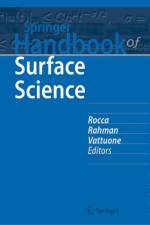
This handbook delivers an up-to-date, comprehensive and authoritative coverage of the broad field of surface science, encompassing a range of important materials such metals, semiconductors, insulators, ultrathin films and supported nanoobjects.Over 100 experts from all branches of experiment and theory review in 39 chapters all major aspects of solid-state surfaces, from basic principles to applications, including the latest, ground-breaking research results. Beginning with the fundamental background of kinetics and thermodynamics at surfaces, the handbook leads the reader through the basics of crystallographic structures and electronic properties, to the advanced topics at the forefront of current research. These include but are not limited to novel applications in nanoelectronics, nanomechanical devices, plasmonics, carbon films, catalysis, and biology.The handbook is an ideal reference guide and instructional aid for a wide range of physicists, chemists, materials scientists and engineers active throughout academic and industrial research.
Abonner på vårt nyhetsbrev og få rabatter og inspirasjon til din neste leseopplevelse.
Ved å abonnere godtar du vår personvernerklæring.