










Gjør som tusenvis av andre bokelskere
Abonner på vårt nyhetsbrev og få rabatter og inspirasjon til din neste leseopplevelse.
Ved å abonnere godtar du vår personvernerklæring.Du kan når som helst melde deg av våre nyhetsbrev.

The increasingly crucial role of companies¿ non-financial disclosure (NFD) and integrated reporting (IR) has led to a lively debate among academics, practitioners, and regulators on the approaches, framework, contents, principles, and standards that should oversee these forms of reporting. Through several expert contributions, conducted both with qualitative and quantitative methodologies, this book provides an up-to-date portrait of the debate by exploring corporate NFD either in its mandated contents or voluntary information. Contributing authors provide studies that encompass the different lines of NFD, namely non-financial risk reporting, sustainability reporting, and intellectual capital reporting, as well as the integration of financial and non-financial information through IR, the assurance of the NFD and IR through auditing activities, and the role of management and CFOs in NFD and IR.
This book analyzes the impact of Covid-19 in different areas such as corporate social responsibility and legislation in SMEs, insolvency law, behavioral finance, government interventions in markets, financial disclosure, the emergence of unregulated financial sectors, the increase of coronavirus-related crimes, and the development of banking regulations in the Covid-19 pandemic, among others.The coronavirus epidemic, which has spread throughout the world, has highlighted the inadequacies of the health and social systems of all states, even the most advanced. The health emergency has required extraordinary measures, especially at the level of laws that are essential for the preservation of lives, health, and livelihoods. The priority for governments and even the international community was, from the outset, to prevent infections and care for those affected. Such a strategy required an unusual increase in health spending, even though it exceeded the State's financial capacity and lacked fiscal space. In addition to this challenge, which has not yet been overcome, there is another, that of redressing the consequences of the measures taken (general containment). It should be pointed out that during health crises, the state may have to review the requirement for transparency because of the emergency, but not free itself from it. The urgency could never be an alibi for a violation of citizens' rights and freedoms.With urgency, financial management systems must be flexible and responsive to all occurrences, while ensuring optimal use of resources and minimizing the risks of fraud and corruption.
This book discusses the effect that artificial intelligence (AI) and Internet of Things (IoT) have on industry. The authors start by showing how the application of these technologies has already stretched across domains such as law, political science, policy, and economics and how it will soon permeate areas of autonomous transportation, education, and space exploration, only to name a few. The authors then discuss applications in a variety of industries. Throughout the volume, the authors provide detailed, well-illustrated treatments of each topic with abundant examples and exercises. This book provides relevant theoretical frameworks and the latest empirical research findings in various applications. The book is written for professionals who want to improve their understanding of the strategic role of trust at different levels of the information and knowledge society, that is, trust at the level of the global economy, of networks and organizations, of teams and work groups, of information systems and, finally, trust at the level of individuals as actors in the networked environments.Presents research in various industries and how artificial intelligence and Internet of Things is changing the landscape of business and management;Includes new and innovative features in artificial intelligence and IoT that can help in raising economic efficiency at both micro and macro levels;Examines case studies with tried and tested approaches to resolution of typical problems in each application of study.
Traditional Mediterranean fruits (i.e., be grapes, oranges, apples, pears, peaches, cherries, plums, figs, melons, watermelon and dates) are of major commercial and nutritional value to the region. Processing of such fruits, however, results in large amounts of bio-waste material. Efficient, inexpensive and environmentally friendly use of fruit industry waste is thus highly cost-effective and minimizes environmental impact. The natural antioxidants and bioactive compounds found in Mediterranean fruit bio-wastes could play a major role in the alleged health benefits of the Mediterranean diet, and could be used in pharmaceuticals as well as novel food applications. This book presents a multidisciplinary forum of discussion on the chemistry, functional properties and health-promoting effects of bioactive compounds in Mediterranean fruit bio-wastes, as well as novel food and non-food applications. The text provides the scientific fundamentals of the health-promoting benefitsand applications of Mediterranean fruit bio-wastes, reviews the relevant recovery issues and explores different techniques to develop new applications. With a diversity of perspectives, from food science to environmental chemistry and horticultural research, this volume provides comprehensive, up-to-date knowledge to researchers and industry professionals working in the areas of food waste valorization.
Many of the most challenging problems in the applied sciences involve non-differentiable structures as well as partial differential operators, thus leading to non-smooth distributed parameter systems. This edited volume aims to establish a theoretical and numerical foundation and develop new algorithmic paradigms for the treatment of non-smooth phenomena and associated parameter influences. Other goals include the realization and further advancement of these concepts in the context of robust and hierarchical optimization, partial differential games, and nonlinear partial differential complementarity problems, as well as their validation in the context of complex applications. Areas for which applications are considered include optimal control of multiphase fluids and of superconductors, image processing, thermoforming, and the formation of rivers and networks.Chapters are written by leading researchers and present results obtained in the first funding phase of the DFG Special Priority Program on Nonsmooth and Complementarity Based Distributed Parameter Systems: Simulation and Hierarchical Optimization that ran from 2016 to 2019.
This book focuses on the enforcement aspect of tobacco control policy, and argues that the intense regulation of the tobacco market will never be successful as long as it can be circumvented by the availability of illicit tobacco products. Yet, current efforts to combat illicit tobacco trade are insufficient, suffering from several flaws and gaps at the regulatory and operational levels. The aim of this book is to provide an analysis of the legal framework and practice of enforcement with regard to illicit tobacco products. Combining criminological and legal perspectives, it presents and critically analyses the phenomenon of illicit tobacco trade, as well as the policies, legal frameworks and practices in six EU countries with regard to combatting this phenomenon, assessing the strengths and weaknesses of their approaches. Furthermore, it studies the relationship between the EU and third countries (e.g. Ukraine) in terms of how the EU can influence policy and enforcement in these countries in order to counter illicit tobacco trafficking. Not exclusively focusing on the EU, the book also includes an analysis of enforcement against illicit tobacco products in the US. The EU Member States analysed in the book (Belgium, Germany, Italy, Latvia, the Netherlands and Poland) reflect the range of currently available approaches. Some of them have ratified the WHO Protocol against tobacco smuggling; others have not. They belong to different legal traditions and face different challenges due to their respective border situations. While Belgium and the Netherlands are key entry ports to the EU, Poland and Latvia represent the Eastern land border of the EU, with various regional challenges. Italy has a long maritime border, where trafficking is possible from Northern Africa and from the Middle East. It also has significant experience in fighting organised crime. Lastly, Germany is the largest market in Europe and situated in the middle of these trafficking routes.
Plants produce chemicals as part of their normal metabolic activities. These include primary metabolites found in all plants, such as sugars and fats, as well as secondary metabolites, which can have therapeutic effects in humans and be refined to produce drugs. Plants synthesize a bewildering variety of phytochemicals, but most are derivatives of a few biochemical motifs. Numerous herbal-derived substances have been evaluated for their therapeutic potential. These include alkaloids, coumarins, saponins, plant pigments and flavonoids. Flavonoids, carotenoids and anthocyanins are probably the best known of these substances due to their antioxidant properties.Carotenoids: Structure and Function in the Human Body presents comprehensive coverage of carotenoids. The text covers the scientific literature and clinical significance of this organic pigment, with an emphasis on its therapeutic potential. The authors approach carotenoids from arange of perspectives, from their structural and physicochemical properties to their distribution in nature, interaction with the human metabolism, and use as a coloring agent in various products. The intake, metabolism and secretion of anthocyanins in the human body are covered in-depth, as are the biosynthetic pathways through which these compounds are synthesized in the natural system. Factors affecting stability and extraction are listed, and health-related uses and biological activities are covered in great detail. Present and future trends in carotenoid research are also presented. This book provides a solid background in carotenoids for researchers and professionals in food science, food technology, nutrition, biology, chemistry and medical sciences.
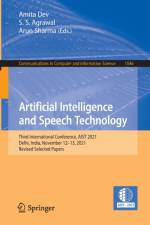
This volume constitutes selected papers presented at the Third International Conference on Artificial Intelligence and Speech Technology, AIST 2021, held in Delhi, India, in November 2021. The 36 full papers and 18 short papers presented were thoroughly reviewed and selected from the 178 submissions. They provide a discussion on application of Artificial Intelligence tools in speech analysis, representation and models, spoken language recognition and understanding, affective speech recognition, interpretation and synthesis, speech interface design and human factors engineering, speech emotion recognition technologies, audio-visual speech processing and several others.
The Protein Reviews series serves as a publication vehicle for reviews that focus on crucial contemporary and vital aspects of protein structure, function, evolution and genetics. Volume 20, Purinergic Receptors, has ten chapters. The first five chapters deal with various aspects of membrane binding. The first chapter focuses on the phox-homology (PX) domain, which is a phosphoinositide-binding domain conserved in all eukaryotes and present in forty-nine human proteins. The next chapter deals with the modeling of PH domains/phosphoinositides interactions. This is followed by a chapter on BAR domain proteins regulate Rho GTPase signaling. The BAR (Bin¿Amphiphysin¿Rvs) domain is a membrane lipid binding domain present in a wide variety of proteins, often proteins with a role in Rho-regulated signaling pathways. The fourth article presents AP180 N-terminal homology (ANTH) and Epsin N-terminal homology (ENTH) domains and discusses their physiological functions and involvement in disease. The fifth article reviews the polyphosphoinositide-binding domains and presents insights from peripheral membrane and lipid-transfer proteins. This is followed by a chapter on the physiological functions of phosphoinositide-modifying enzymes and their interacting proteins in Arabidopsis, then by a chapter on the molecular mechanisms of Vaspin action in various tissues such as adipose tissue, skin, bone, blood vessels, and the brain. The eighth chapter deals with exceptionally selective substrate targeting by the metalloprotease anthrax lethal factor followed by an article on Salmonella, E. coli, and Citrobacter type III secretion system effector proteins that alter host innate immunity. The last chapter presents New techniques to study intracellular receptors in living cells, with insights into RIG-I-like receptor signaling. Volume 20 is intended for research scientists, clinicians, physicians and graduate students in the fields of biochemistry, cell biology, molecular biology, immunology and genetics.
Abonner på vårt nyhetsbrev og få rabatter og inspirasjon til din neste leseopplevelse.
Ved å abonnere godtar du vår personvernerklæring.