


















Gjør som tusenvis av andre bokelskere
Abonner på vårt nyhetsbrev og få rabatter og inspirasjon til din neste leseopplevelse.
Ved å abonnere godtar du vår personvernerklæring.Du kan når som helst melde deg av våre nyhetsbrev.

This book investigates the sustainability performance of system that use microgrids in desalination processes. Climate change may be especially dramatic in its effects on island environments. In these environments, aquifers and wells could become over exploited resulting the use of desalination plans. The synergies between water, energy, and food sectors have been identified as vital in achieving the United Nation¿s Sustainable Development Goals.The book explores desalination and microgrids technically as well the economic and legal aspects that must be considered in order explore their techno-economic feasibility - analyzing how to improve the desalination process, proposing a method to locate and size a microgrid. Other synergies between the water, energy, and food system are discussed and the benefits to society that might result in these systems. Also, the lessons learned are highlighted in the context of how they may apply to other sustainable enterprises.
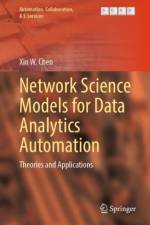
This book explains network science and its applications in data analytics for critical infrastructures, engineered systems, and knowledge acquisition. Each chapter describes step-by-step processes of how network science enables and automates data analytics through examples. The book not only dissects modeling techniques and analytical results but also explores the intrinsic development of these models and analyses. This unique approach bridges the gap between theory and practice and channels¿ managerial and problem-solving skills.Engineers, researchers, and managers would benefit from the extensive theoretical background and practical examples discussed in this book. Advanced undergraduate students and graduate students in mathematics, statistics, engineering, business, public health, and social science may use this book as a one-semester textbook or a reference book. Readers who are more interested in applications may skip Chapter 1 and peruse through the rest of the book with ease.
This book introduces several novel contributions into the current literature. Firstly, given that microgrid topologies are paramount in theoretical analysis, the author has proposed a rigorous method of computing the network¿s admittance matrix and developed to facilitate the stability analysis of DC microgrids supplying nonlinear loads. This unique approach enabled the factorisation of the admittance matrix in a particular way that facilitates a rigorous theoretical analysis for deriving the stability conditions.Secondly, author has proposed a unified control structure at the primary control layer that maintains the widely accepted droop-based approaches and additionally ensures crucial current- and voltage-limiting properties, thus offering an inherent protection to distributed energy resources. He has formalised the control design proofs using Lyapunov methods and nonlinear ultimate boundedness theory, for both parallel and meshed microgrid configurations. Moreover, he has developed a distributed secondary controller using a diffusive coupling communication network, on top of the primary control, to achieve voltage restoration and improve the power sharing. In this way, the author has formulated the complete hierarchical control scheme.In this high-order nonlinear setting, he has analytically proven closed-loop system stability of the overall system, for the first time, using two-time scale approaches and singular perturbation theory, by formulating rigorous theorems that introduce straightforward conditions that guide the system and control design and demonstrate system stability at the desired equilibrium point. In addition, the author has provided a straightforward algorithm for simple testing of system stability and explored from a graphical perspective by giving an interpretation to the effect of the nonlinear load onto the system performance and stability.
Effective risk management is a crucial part of the success of any organization. In scholarly research, numerous publications have been written on the design of complex enterprise risk management systems, however very little consideration has been given to the effectiveness of implemented management solutions. This book seeks to fill this important gap.Based on a study featuring a representative group of 722 companies, the author presents the various determinants of risk management effectiveness, including behavioural determinants (such as attitude to risk) as well as internal and external determinants (such as human and financial resources and the environment in which the organization operates). Along with a theoretical and practical overview of the various considerations from an international perspective, the reader will gain an insight into the implications for practice. Ultimately, this book formulates conclusions and recommendations for the improvement of tools and systems of enterprise risk management.
This book puts forward a new model of acculturation combining psychological, sociolinguistic and identity theories to study Turkish immigrants across the globe. The authors argue that such a multidisciplinary perspective is very important in understanding acculturation processes in migrants, particularly for pivotal aspects such as language and identity. Studying one group or several groups within a country is the most common methodological approach in acculturation studies. The authors argue on the basis of their extensive ethnographic work that focusing on one immigrant ethnic group across countries instead provides deeper insights into interactive acculturation orientations of both the receiving societies and immigrant groups. They therefore synthesize findings from their work on Turkish immigrants in Australia and several countries in Europe. Moreover, they include extensive accounts of acculturation across several generations of Turkish migrants, thereby giving readers insights into the long-term acculturation process. The book critically discusses language maintenance and shift, child-rearing practices and socialization beliefs, and educational achievement in Turkish immigrants, and uses a mixed-methods approach. It is meant for researchers and policy makers interested in acculturation and the role of the acculturation context.In a nutshell, the book stresses the dynamic and ever-evolving nature of linguistic habits and cultural integration tendencies and convinces the reader about the complexity of the background factors that play a role in shaping the behaviour of immigrant minorities. Anyone who reads the book will be equipped with the skills to critically assess research on immigrant language maintenance.
The International Scientific and Technical Conference ¿Integrated Computer Technologies in Mechanical Engineering¿ ¿ Synergetic Engineering (ICTM) was established by National Aerospace University ¿Kharkiv Aviation Institute¿. The Conference ICTM¿2021 was held in Kharkiv, Ukraine, during October 28¿29, 2021. During this conference, technical exchanges between the research community were carried out in the forms of keynote speeches, panel discussions, as well as special session. In addition, participants were treated to a series of receptions, which forge collaborations among fellow researchers. ICTM¿2021 received 203 papers submissions from different countries. Target Groups ICTM was formed to bring together outstanding researchers and practitioners in the field of information technology in the design and manufacture of engines; creation of rocket space systems, aerospace engineering from all over the world to share their experience andexpertise.
This book presents a novel unified treatment of inverse problems in optimal control and noncooperative dynamic game theory. It provides readers with fundamental tools for the development of practical algorithms to solve inverse problems in control, robotics, biology, and economics. The treatment involves the application of Pontryagin's minimum principle to a variety of inverse problems and proposes algorithms founded on the elegance of dynamic optimization theory. There is a balanced emphasis between fundamental theoretical questions and practical matters. The text begins by providing an introduction and background to its topics. It then discusses discrete-time and continuous-time inverse optimal control. The focus moves on to differential and dynamic games and the book is completed by consideration of relevant applications.The algorithms and theoretical results developed in Inverse Optimal Control and Inverse Noncooperative Dynamic Game Theory provide new insights into information requirements for solving inverse problems, including the structure, quantity, and types of state and control data. These insights have significant practical consequences in the design of technologies seeking to exploit inverse techniques such as collaborative robots, driver-assistance technologies, and autonomous systems. The book will therefore be of interest to researchers, engineers, and postgraduate students in several disciplines within the area of control and robotics.
The book examines management strategies for developing and implementing strategic resilience and sustainability plans for sustainable and climate-resilient communities and organizations. It examines trends in resilience and sustainability planning, highlighting best practices and case studies. The book explores Quadruple Bottom Line strategies and methods to implement resilience and sustainability-related initiatives in organizations and communities. It also examines diverse perspectives on climate resilience, climate preparedness and readiness, greenhouse gas emission reductions policies, climate adaptation and mitigation, disaster preparedness and readiness, and sustainable energy policies and projects. Additionally, the book offers insights on strategic resilience and sustainability planning during a pandemic as well as private sector perspectives on strategic resilience and sustainability. In chapter one, the author presents expanded definitions of strategic resilience and sustainability as well as mechanisms reshaping communities and organizations. Chapter two examines strategic planning processes for communities and organizations and lays out planning steps. Chapter three offers insights into community and organizational level engagement, looking at internal and external stakeholders, organizers, partners, collaborators, and implementers of distinct stages of strategic resilience and sustainability planning. Chapter four outlines measurements and tactics to track and improve strategic resilience and sustainability reporting mechanisms using the quadruple bottom line strategy. It offers a resilience progress report to ensure accountability, answerability, transparency, and good governance. Chapter five details the implementation of a strategic resilience and sustainability plan, describing programs and initiatives to achieve resilient and sustainable communities and organizations. Chapter six extensively examines the theoretical and practical intersection between climate change, resilience, and sustainability. Chapter seven reviews resources available for strategic resilience and sustainability plans to aid communities and organizations. Chapter eight assesses the current and future state of resilience and sustainability in communities and organizations, including concerns surrounding climate change, pandemics, disaster resilience, and emergency management and preparedness.
This book presents works detailing the application of processing and visualization techniques for analyzing the Earth¿s subsurface. The topic of the book is interactive data processing and interactive 3D visualization techniques used on subsurface data. Interactive processing of data together with interactive visualization is a powerful combination which has in the recent years become possible due to hardware and algorithm advances in. The combination enables the user to perform interactive exploration and filtering of datasets while simultaneously visualizing the results so that insights can be made immediately. This makes it possible to quickly form hypotheses and draw conclusions.Case studies from the geosciences are not as often presented in the scientific visualization and computer graphics community as e.g., studies on medical, biological or chemical data. This book will give researchers in the field of visualization and computer graphics valuable insight into theopen visualization challenges in the geosciences, and how certain problems are currently solved using domain specific processing and visualization techniques. Conversely, readers from the geosciences will gain valuable insight into relevant visualization and interactive processing techniques.Subsurface data has interesting characteristics such as its solid nature, large range of scales and high degree of uncertainty, which makes it challenging to visualize with standard methods. It is also noteworthy that parallel fields of research have taken place in geosciences and in computer graphics, with different terminology when it comes to representing geometry, describing terrains, interpolating data and (example-based) synthesis of data.The domains covered in this book are geology, digital terrains, seismic data, reservoir visualization and CO2 storage. The technologies covered are 3D visualization, visualization of large datasets, 3D modelling, machine learning, virtual reality, seismic interpretation and multidisciplinary collaboration. People within any of these domains and technologies are potential readers of the book.
This book adopts a multidimensional approach to analyze both the historical and emerging factors that contribute to make Latin America and the Caribbean the most unequal region in the world. Social inequality is a historical characteristic of the region, but at the beginning of the 21st century, a handful of progressive governments seemed to be adopting policies that could reduce this historical trend. Many of these efforts, however, were blocked or reversed by the COVID-19 pandemic, which both exposed the persistence of historical trends and contributed to the emergency of new forms of inequality in the region.The different chapters in this contributed volume adopt a multidimensional, intersectional, perspective to analyze both the persistence and the emergency of social devices of production and reproduction of inequalities in the diverse Latin American and Caribbean temporal spatialities. The issues analyzed in the different chapters revolve around four main axes: a) persistence of generational and intergenerational inequalities; b) structural gender inequality; c) intertwined social inequalities: race, class and social structure and; c) historical and economic dimension of inequality. Persistence and Emergencies of Inequalities in Latin America: A Multidimensional Approach will be of interest to researchers interested in the study of social inequality and social justice in different fields of the human and social sciences, such as sociology, political science, history, economics, anthropology and education. It will also be a valuable tool for policy makers and social activists engaged in the discussion, advocacy and implementation of public policies aimed at reducing social inequalities.
This contributed volume is a follow-up to the 2013 volume of the same title, published in honor of noted Algebraist David Eisenbud's 65th birthday. It brings together the highest quality expository papers written by leaders and talented junior mathematicians in the field of Commutative Algebra. Contributions cover a very wide range of topics, including core areas in Commutative Algebra and also relations to Algebraic Geometry, Category Theory, Combinatorics, Computational Algebra, Homological Algebra, Hyperplane Arrangements, and Non-commutative Algebra.The book aims to showcase the area and aid junior mathematicians and researchers who are new to the field in broadening their background and gaining a deeper understanding of the current research in this area. Exciting developments are surveyed and many open problems are discussed with the aspiration to inspire the readers and foster further research.
This volume contains twenty-four essays by the British/Australian analytic metaphysician, Brian Garrett. These essays are followed by four short dialogues that emphasize and summarize some of the main points of the essays and discuss new perspectives that have emerged since their original publication.The volume covers topics on the metaphysics of time, the nature of identity, and the nature and importance of persons and human beings. The chapters constitute the fruits of almost four decades of philosophical research, from Brian¿s two award-winning essays, published in Analysis in 1983 and The Philosophical Quarterly in 1992, to his latest ideas about Fatalism and the Grandfather Paradox.This book will be of interest to students and professional philosophers in the field of analytic philosophy.
This updated second edition of Molecular Typing in Bacterial Infections, presented in two volumes, covers both common and neglected bacterial pathogenic agents, highlighting the most effective methods for their identification and classification in the light of their specific epidemiology. New chapters have been included to add new species, as well as another view of how bacterial typing can be used. These books are valuable resources for the molecular typing of infectious disease agents encountered in both research and hospital clinical laboratory settings, as well as in culture collections and in the industry. Each of the 21 chapters provides an overview of specific molecular approaches to efficiently detect and type different bacterial pathogens. The chapters are grouped in five parts, covering respiratory and urogenital pathogens (Volume I), and gastrointestinal and healthcare-associated pathogens, as well as a new group of vector-borne and Biosafety level 3 pathogens including adescription of typing methods used in the traditional microbiology laboratory in comparison to molecular methods of epidemiology (Volume II). Comprehensive and updated, Molecular Typing in Bacterial Infections provides state-of-the-art methods for accurate diagnosis and for the correct classification of different types which will prove to be critical in unravelling the transmission routes of human pathogens.
Abonner på vårt nyhetsbrev og få rabatter og inspirasjon til din neste leseopplevelse.
Ved å abonnere godtar du vår personvernerklæring.