















Gjør som tusenvis av andre bokelskere
Abonner på vårt nyhetsbrev og få rabatter og inspirasjon til din neste leseopplevelse.
Ved å abonnere godtar du vår personvernerklæring.Du kan når som helst melde deg av våre nyhetsbrev.

This book is the second Volume of the INPUT2020 Conference Proceedings on ¿Innovation in Urban and Regional Planning¿. The 11th International Conference INPUT was held at the University of Catania (Italy) on September 8-10th 2021 and allowed gathering international scholars in the fields of planning, civil engineering and architecture, ecology and social science, to strengthen the knowledge on nature-based solutions and to enhance the implementation and replication of these solutions in different contexts. INPUT2020 Conference stressed the basic idea that using components that mimic natural processes in the built environment can generate a wide number of benefits in cities, and produced more equal, safe and livable urban environment. The book provides additional reflections and proposals on empirical frameworks for nature-based solutions. Computational tools, technologies, data and hybrid models are explored for providing innovative spatial planning modeling methodologies. Furthermore, prospective roles of nature-based solutions in planning science and practice are investigated in the light of peripheralisation risks, rural landscapes and innovation in cultural heritage.
This book explores the interplay between liberalism and imperialism in Second Empire France. By examining the political dimension of imperial expansion and the power of words in shaping public opinion, it sheds light on the ways in which liberal ideas developed in the nineteenth century. In contrast to Britain, French imperialism in the third quarter of the nineteenth century was fostered by a Bonapartist regime that liberals needed to fight in order to build their own political brand. The author argues that the 1860s were not so much a period of ¿liberal empire¿ in France as has traditionally been suggested, since liberals were in fact more conveyers of political change rather than supporters of the regime. To demonstrate how French liberals succeeded in configuring an alternative political option, the book explores their attitudes to the expanding colonial empire of Napoleon III in the 1850s and 60s through the analysis of parliamentary debates, the press and published texts. Providing three in-depth case studies on Bonapartist expansion projects in Algeria, Cochinchina and Mexico, the book provides new insights on the foundations of the liberal position on imperialism, and the intellectual outlooks and belief systems that informed these views. Analysing discourses and ideas, as opposed to facts and policies, this book presents a new perspective on the nature of the French Second Empire and illustrates how this shaped a specific liberal political culture in France.
This book presents the pioneering role of the women chemists at the London School of Medicine for Women (LSMW). The account is placed within the framework of the long-forgotten background to the founding of this unique Institution, and the individuals whose lives came together to make it happen: Sophia Jex-Blake; Elizabeth Garrett Anderson; Edith Pechey; and Isabel Thorne. The London School of Medicine for Women (LSMW) was the first School in Britain to enable women to gain medical qualifications. Though its pioneering medical role is beginning to be recognized, the Chemistry Department at the School has been totally overlooked. All first-year students at the LSMW had to spend a significant portion of their time taking theoretical and practical chemistry, taught by dedicated women chemistry instructors. In this book, particular attention is given to each of these exceptionally-talented women chemists who found a haven at, and devoted their lives to, the LSMW. This book also covers theenthusiasm of the women medical students which becomes evident through the chemistry prose and poetry which they wrote. This book will appeal to a wide readership interested in the early role of women in science, and it is particularly relevant to those interested in the lives and contributions of pioneering women chemists.
Why is it so difficult for a great power or a hegemon to retrench its overseas military power? Specifically, why are U.S. military bases and troops still largely where they were five years ago, twenty years ago, or even seventy years ago? Through developing a theory of great-power persistence, this book offers an explanation. Closely aligned with neoclassical realism, the theory argues that the murkiness of the anarchic international system combines with specific psychological inclinations of individuals to produce ¿better-safe-than-sorry¿ policies. In the United States, decisions on troop deployments are powerfully influenced by the broader foreign-policy community. Its members tend to be risk-averse and highly sensitive to the possibility that even minor troop withdrawals might set off harmful geopolitical chain reactions. Preferring the status quo over any uncertain alternative, they want their country to continue to maximize its influence and project its military power abroad inorder to steady wobbling geopolitical ¿dominoes.¿ The theory is put to the empirical test through a systematic analysis of U.S. overseas troop deployments, withdrawal attempts, and retrenchment resistance during the presidency of Donald Trump, which represents an ideal test case for these mechanisms. Even if U.S. voters elected a retrenchment advocate as president, and despite that the United States is a gradually declining power, the period saw very little change in U.S. overseas troop deployments. The book concludes that, barring any dramatic, unforeseeable international event, the vast network of overseas U.S. military bases and troops is likely to persist for a long time to come.
This book contains a collection of peer-reviewed papers from the 2020 Conference on Multidisciplinary Engineering and Technology (COMET 2020) held online on December 15¿16, 2020. It contains twenty-five papers covering energy harvester, thermodynamics, vibration, dynamic of mechanics, manufacturing process, computer-aided manufacturing (CAM), CFD analysis, electronics, and microcontroller.
This open access book addresses communicative aspects of the current COVID-19 pandemic as well as the epidemic of misinformation from the perspective of argumentation theory. Argumentation theory is uniquely placed to understand and account for the challenges of public reason as expressed through argumentative discourse. The book thus focuses on the extent to which the forms, norms and functions of public argumentation have changed in the face of the COVID-19 pandemic. This question is investigated along the three main research lines of the COST Action project CA 17132: European network for Argumentation and Public PoLicY analysis (APPLY): descriptive, normative, and prescriptive. The volume offers a broad range of contributions which treat argumentative phenomena that are directly related to the changes in public discourse in the wake of the outburst of COVID-19. The volume additionally places particular emphasis on expert argumentation, given (i) the importance expert discourse has had over the last two years, and (ii) the challenges that expert argumentation has faced in the public sphere as a result of scientific uncertainty and widespread misinformation. Contributions are divided into three groups, which (i) examine various features and aspects of public and institutional discourse about the COVID-19 pandemic, (ii) scrutinize the way health policies have been discussed, debated, attacked and defended in the public sphere, and (iii) consider a range of proposals meant to improve the quality of public discourse, and public deliberation in particular, in such a way that concrete proposals for argumentative literacy will be brought to light. Overall, this volume constitutes a timely inquiry into all things argumentative in pandemic discourse. This volume is of interest to a broad readership including philosophers, linguists, communication and legal scholars, and members of the wider public who seek to better understand the discourse surrounding communicative phenomena in times of crisis.COST (European Cooperation in Science and Technology) is a funding organisation for research and innovation networks. For more information: www.cost.eu
A longstanding goal of haptic engineering is to develop haptic interfaces that can provide realistic sensations of touch. A fundamental step towards this goal is to understand what mechanical tactile signals the hand feels during daily touch interactions. This book reveals the complex patterns of mechanical waves propagating throughout the hand that can be elicited even by simple touch interactions, which helps in expanding existing knowledge of tactile function beyond the region of near skin-object contact and inspires new designs for haptic sensing and feedback technologies.The first part of this book describes new methods for capturing dynamic, spatially distributed tactile signals in the whole hand during natural hand interactions. The second part characterizes these signals and evaluates how well and how efficiently they encode the information of touch, relating to the transmission of mechanical waves in hand tissues. The final part demonstrates how these findings can be utilized to create novel haptic effects and tactile displays.Tactile Sensing, Information, and Feedback via Wave Propagation provides a unique view of tactile sensing and feedback and will appeal to researchers, engineers, and students who are interested in learning cutting-edge haptic science and technology.
This book offers an unprecedented study of the influence of the skepticism of the New Platonic Academy on David Hume¿s and Immanuel Kant¿s critiques of metaphysics. By demonstrating how the skeptical teachings of the Academy affected these authors¿ Enlightened attacks on traditional metaphysics, this book deepens and broadens the burgeoning scholarship on the role that the Ancients schools of skepticism played in the configuration of Modern skeptical outlooks. It bolsters the newfound recognition that we must reconsider the conventional view that the revival of Pyrrhonism in the sixteenth and seventeenth centuries gave birth to Modern skepticism by incorporating the influence of Academic skepticism in the analysis.Giving a new impetus to this line of research, the author argues that Academic ideas and methods informed Hume¿s and Kant¿s critique of metaphysics in substantial and thus far unacknowledged ways. Specifically, she demonstrates the centrality of Academic skepticismto Hume¿s epistemology and critique of religion through a detailed analysis of his theory of belief in the Treatise and the first Enquiry as well as of its application in the Dialogues concerning Natural Religion. Likewise, her analysis reveals how Kant¿s anti-metaphysical stance, developed in the Transcendental Dialectic of the Critique of Pure Reason, contains many skeptical insights of Academic inspiration, bequeathed to him by Hume.
This book examines students with limited or interrupted education (SLIFE) in the context of English learners and teacher preparation courses from a cultural and social lens. The book is divided into five parts. Part I frames the conversation and contributions in this edited volume; Part II provides an overview of SLIFE, Part III focuses on teacher preparation programs, Part IV discusses the challenges faced by SLIFE in K-12 learning environments and Part V examines SLIFE in adult learning environments. This book is unique in that it offers practical instructional tools to educators, thus helping to bridge theory and practice. Moreover, it retains a special focus on K-12 and adult SLIFE and has an inclusive and international perspective, which includes a novel theoretical framework to support the mental, emotional, and instructional needs of LGBTQ+ refugee students. The book is of interest to teacher educators, in-service and pre-service teachers, Englishliteracy educators, graduate students, tutors, facilitators, instructors, and administrators working in organizations serving SLIFE in K-12 and adult learning environments.
This book uses new ideas and language for understanding how self-organization and complexity trend toward increased efficiency. Different measures for efficiency from multiple disciplines are used to probe the ones that provide the most insight. One major goal is to seek a common framework to trace the increase of efficiency as a measure of the level of organization and evolutionary stage of a complex system. The chapters come from a satellite meeting hosted at the Conference on Complex Systems, in Cancun, 2017. The contributions will be peer-reviewed and contributors from outside the conference will be invited to submit chapters to ensure full coverage of the topics. This text will appeal to students and researchers working on complex systems and efficiency.
This surgical atlas, now in its second edition, provides superbly illustrated step-by-step descriptions of a wide range of open head and neck procedures, including radical and conservative approaches, aesthetic and reconstructive surgeries with the use of axial and free flaps, and surgery within the narrow confines of the skull base. Individual chapters are dedicated to surgery of the nose and paranasal sinuses, larynx and trachea, thyroid, salivary glands, mandible, face and lips, and head and neck, the repair of external nose defects, the use of axial and free flaps, and surgical treatment of temporal bone malignancies. The new edition, written by experts from across the world, covers a number of additional topics, such as pediatric head and neck surgery, laser surgery, and robotic surgery. It also features improved surgical photographs, enhanced descriptions of essential procedures, identification of pitfalls, many practical tips and best references available for each procedure to assist readers. The atlas will be a comprehensive practical reference for clinicians in all specialties involved in head and neck surgery, including otolaryngologists, head and neck surgeons, plastic surgeons, maxillofacial surgeons, and surgical oncologists.
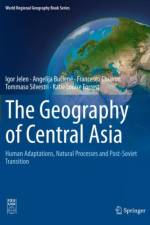
This book provides a profound geographical description and analysis of Central Asia. The authors take a synthetic approach in a period of critical transformation in the post-soviet time. The monograph analyzes comprehensively the physical and human geography as well as human-nature interactions of Central Asia with focus on Kazakhstan, Uzbekistan, Turkmenistan, Kyrgyzstan and Tajikistan. Natural processes are described at a systemic scale, focusing on ecological impacts and consequences and contemporary human adaptations and organization. It also discusses in which ways the human organizations try to apply solutions for their needs such as security, territorial management and resources renewability, material and functional needs, identity elaborations, culture and communication.The Geography of Central Asia appeals to scientists and students of regional geography and interested academics from other areas such as social, political, economic and environmental studies within the context of Central Asia. The book is also a very useful resource for field trips into this area.
This book presents the state of the art for the studies of strategies and tactics for the procurement of preys in Argentina in different regions and chronologies (from the end of the Pleistocene until historic moments). The chapters are related to the performance of these practices in hunter-gatherer, shepherd and farmer societies. From the environmental point of view, they show cases in diverse areas such as plains, mountains, forests, sea coast, steppes and puna. Likewise, the range of preys considered includes ungulates (camelids and deer), runner birds (Rhea pennata) and minor prey (mammals and fish). The book is aimed at professionals and students of archaeology interested in the analysis of tactics and strategies for prey capture. Every chapter offers an important contribution in theoretical, methodological and technical terms. In addition, these works possess a high comparative value on study cases of very different chronologies and environments of the Southern hemisphere.This book is a result of the 1st Workshop "Strategies and tactics in order to obtain preys in the past: its discussion from the integration of different lines of evidence" which was conducted in San Rafael, Mendoza, Argentina, between the 8th and 10th of August, 2018.
This edited book explores the use of technology to enable us to visualise the life sciences in a more meaningful and engaging way. It will enable those interested in visualisation techniques to gain a better understanding of the applications that can be used in visualisation, imaging and analysis, education, engagement and training. The reader will also be able to learn about the use of visualisation techniques and technologies for the historical and forensic settings.The reader will be able to explore the utilisation of technologies from a number of fields to enable an engaging and meaningful visual representation of the biomedical sciences.In this volume, there are chapters which examine forensic and historical visualisation techniques and digital reconstruction, ultrasound, virtual learning resources and patient utilised software and hardware. The use of HoloLens as a disruptive technology is discussed as well as historical items as a feature in a modern medical curriculum. It concludes with a fascinating chapter on pulse extraction from facial videos. All in all, this volume has something for everyone whether that is faculty, students, clinicians and forensic practitioners, patients, or simply having an interest in one or more of these areas.
This book is a sister volume to Volume 20 of the Handbook of Environmental Engineering Series, "Integrated Natural Resources Management", and expands on the themes of that volume by addressing the conservation and protection of natural resources in an environmental engineering context through state-of-the-art research methodologies and technologies. With a focus on water and wastewater treatment, the book takes a multidisciplinary approach to provide readers with an understanding of developments in natural resources technology over the last few decades, and how technology and industry methods will progress to ensure cleaner and sustainable methods of natural resources management. The key topics covered include biological activated carbon treatment for recycling biotreated wastewater, composting for food processing wastes, treatment of wastewater from chemical industries, agricultural waste as a low-cost adsorbent, and the invention, design and constructionof potable water dissolved air flotation and filtration plants. The book will be useful to environmental resources engineers, researchers, water treatment plant managers, chemical engineers, industrial plant managers, and environmental conservation agencies.
Abonner på vårt nyhetsbrev og få rabatter og inspirasjon til din neste leseopplevelse.
Ved å abonnere godtar du vår personvernerklæring.