
























Gjør som tusenvis av andre bokelskere
Abonner på vårt nyhetsbrev og få rabatter og inspirasjon til din neste leseopplevelse.
Ved å abonnere godtar du vår personvernerklæring.Du kan når som helst melde deg av våre nyhetsbrev.

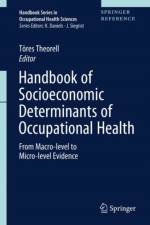
This anthology provides readers of scientific literature on socioeconomic factors and working conditions with the newest knowledge in this field. Since our world is subjected to constant change in accelerating speed, scientific reviews and updates are needed. Fortunately, research methodology in epidemiology, physiology, psychology and sociology is also developing rapidly and therefore the scientific community can provide politicians and policy makers with increasingly sophisticated and exact descriptions of societal factors in relation to work. The anthology starts in the macro level sphere ¿ with international perspectives and reviews related to working conditions in relation to political change (the fall of the Soviet Union) gender, age, precarious employment, national economy and retirement. Two chapters relate to national policies and activities in international organizations. The second part of the book relates to the meso level sphere ¿ with reviews onsocial patterns in distributions of psychosocial and physical risks at work in general as well as reviews on noise, shift work, under/overemployment, occupational physical activity, job intensity (which may be a particularly important problem in low income countries), digitization in modern work, climate change, childhood determinants of occupational health in adult years and theoretical models currently used in occupational epidemiology - demand/control, effort/reward, organizational justice, psychosocial safety climate, conflicts, bullying/harassment. This part of the book ends with two chapters on interventions (one chapter on the use of cultural interventions and one on interventions and their evaluation in general) and two chapters on financial aspects of poor/good work environments and evaluations of interventions.In the third part of the book the micro level is addressed. Here mechanisms translating working conditions into physiology are discussed. This starts in general theory relating basic theories regarding energy storage and release to psychosocial theory (extension of demand control theory). It also includes regeneration physiology, autonomic nervous system function, immunology and adverse behaviour.Sections in the Handbook: Macro-level determinants of occupational health: Akizumi Tsutsumi, Meso-level determinants of occupational health: Morten Wahrendorf and Jian Li, Micro-level determinants of occupational health: Bradley J. Wright
Published annually since 1985, the Handbook series provides a compendium of thorough and integrative literature reviews on a diverse array of topics of interest to the higher education scholarly and policy communities. Each annual volume contains chapters that discuss salient dimensions of scholarly and policy inquiries on topics pertaining to college students and faculty, organization and administration, curriculum and instruction, policy, diversity issues, economics and finance, history and philosophy, community colleges, advances in research methodology and more. Each chapter provides a comprehensive review of research findings on a selected topic, critiques the research literature in terms of its conceptual and methodological rigor and sets forth an agenda for future research intended to advance knowledge on the chosen topic. The series is fortunate to have attracted annual contributions from distinguished scholars throughout the world.
This book describes recent research findings on response and integrity of thick section composite and sandwich structures. In particular, it deals with these structures for marine applications under static and dynamic loads such as shock and slamming loads in severe sea environment including sea water, temperature extremes, hydrostatic pressure and Arctic conditions. Three-dimensional constitutive equations and failure criteria for structural response and integrity are considered. The book serves as an excellent repository of major advances in research on response and integrity of composite and sandwich structures made through research grants sponsored by the U.S. Office of Naval Research in the past decade. Collects major advances in response and integrity research;Emphasizes phenomena within severe environments;Illustrates underwater fluid-structure interactions, shock/blast loads, and slamming loads.
This volume is a compilation of studies on interactions of changes in land cover, land use and climate with people, societies and ecosystems in drylands of Greater Central Asia. It explores the effects of collapse of socialist governance and management systems on land use in various parts of Central Asia, including former Soviet Union republics, Mongolia and northern drylands of China. Often, regional land-atmosphere feedbacks may have large global importance. Remote sensing is a primary tool in studying vast dryland territories where in situ observations are sporadic. State-of-the-art methods of satellite remote sensing combined with GIS and models are used to tackle science questions and provide an outlook of current changes at land surface and potential scenarios for the future. In 10 chapters, contributing authors cover topics such as water resources, effects of institutional changes on urban centers and agriculture, landscape dynamics, and the primary drivers of environmental changes in dryland environment. Satellite observations that have accumulated during the last five decades provide a rich time series of the dynamic land surface, enabling systematic analysis of changes in land cover and land use from space. The book is a truly international effort by a team of scientists from the U.S., Europe and Central Asia. It is directed at the broad science community including graduate students, academics and other professionals at all levels within natural and social sciences. In particular, it will appeal to geographers, environmental and social scientists, economists, agricultural scientists, and remote sensing specialists.
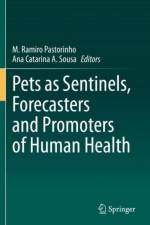
This book provides an up-to-date overview of the current knowledge and research concerning domestic pets as sentinels, forecasters and promoters of human health. Written by leading specialists in the fields of medicine, veterinary, environment, analytical chemistry, sociology and behavioral science, this volume provides a comprehensive understanding of the capabilities of pets in what regards to human health. The first seven chapters are devoted to the use of pets as sentinels for their human companions, in terms of exposure to different classes of environmental chemicals. The following five chapters address the use of pets as models for human diseases and promoters of human health. The final two chapters highlight the psycho-social and psychophysiological aspects of human-animal interactions. The book offers an integrated approach to the One Health concept, providing, in a truly holistic manner, tools to assess the equilibrium between the environment, menand animals. This exercise will highlight and reshape our position towards the planet that despite being ¿a microscopic dot on a microscopic dot lost in the unimaginable infinity of the Universe¿ is still our own. At the end of the day, pets will always be there to help us.
This edited volume is an extensive collection of methods for investigating plant litter dynamics in ecosystems. Particular emphasis is placed on litter decomposition in streams and rivers. The presented methods range from analyses of chemical and physical litter properties to the taxonomic and functional characterization of microbial decomposers, both fungi and bacteria, assessments of litter-consuming invertebrates, and procedures to determine litter dynamics at the stream ecosystem level. Several chapters addressing general topics of data analysis are also included. This second edition of the book has been greatly expanded. Its now 63 chapters cover both well-established and recently elaborated techniques, some of which have not yet been applied to decomposing litter in streams. Modern molecular techniques ranging from next-generation sequencing to proteomics receive special attention among the 20 chapters that are entirely new. Numerous methods on characterizing litter consumers have also been added to fill an evident gap of the first edition. However, the basic original concept and all of the previous chapters have been retained, although most of them have been thoroughly updated. Typical contributions provide step-by-step protocols that are preceded by brief reviews of the ecological significance and the principles underlying the method. Where available, short compilations of published data have been added in overview tables to provide background information on the range of results to expect. Useful hints, a discussion of potential weaknesses, and key references are provided at the end. Hands-on material useful to implement several of the presented methods (e.g. computer code, calculation sheets) is available online. The book is written for students embarking on studies of plant litter dynamics and for established researchers wishing to expand the scope of their methodological toolbox to study litter decomposition and themicrobial decomposers and invertebrates involved in the process. The primary intended audience is aquatic ecologists, since many of the methods presented in the book focus on streams and stream organisms. However, the great majority of the protocols can be easily adapted or even directly applied to coastal and terrestrial ecosystems. Consequently, they should be of equal interest to scientists investigating plant litter dynamics in habitats such as mangroves and salt-marshes, terrestrial grasslands and forests.
This edited volume is an extensive collection of methods for investigating plant litter dynamics in ecosystems. Particular emphasis is placed on litter decomposition in streams and rivers. The presented methods range from analyses of chemical and physical litter properties to the taxonomic and functional characterization of microbial decomposers, both fungi and bacteria, assessments of litter-consuming invertebrates, and procedures to determine litter dynamics at the stream ecosystem level. Several chapters addressing general topics of data analysis are also included. This second edition of the book has been greatly expanded. Its now 63 chapters cover both well-established and recently elaborated techniques, some of which have not yet been applied to decomposing litter in streams. Modern molecular techniques ranging from next-generation sequencing to proteomics receive special attention among the 20 chapters that are entirely new. Numerous methods on characterizing litter consumers have also been added to fill an evident gap of the first edition. However, the basic original concept and all of the previous chapters have been retained, although most of them have been thoroughly updated. Typical contributions provide step-by-step protocols that are preceded by brief reviews of the ecological significance and the principles underlying the method. Where available, short compilations of published data have been added in overview tables to provide background information on the range of results to expect. Useful hints, a discussion of potential weaknesses, and key references are provided at the end. Hands-on material useful to implement several of the presented methods (e.g. computer code, calculation sheets) is available online. The book is written for students embarking on studies of plant litter dynamics and for established researchers wishing to expand the scope of their methodological toolbox to study litter decomposition and themicrobial decomposers and invertebrates involved in the process. The primary intended audience is aquatic ecologists, since many of the methods presented in the book focus on streams and stream organisms. However, the great majority of the protocols can be easily adapted or even directly applied to coastal and terrestrial ecosystems. Consequently, they should be of equal interest to scientists investigating plant litter dynamics in habitats such as mangroves and salt-marshes, terrestrial grasslands and forests.
Abonner på vårt nyhetsbrev og få rabatter og inspirasjon til din neste leseopplevelse.
Ved å abonnere godtar du vår personvernerklæring.