







Gjør som tusenvis av andre bokelskere
Abonner på vårt nyhetsbrev og få rabatter og inspirasjon til din neste leseopplevelse.
Ved å abonnere godtar du vår personvernerklæring.Du kan når som helst melde deg av våre nyhetsbrev.

This volume provides a broad perspective on the state of the art in the philosophy and conceptual foundations of quantum mechanics. Its essays take their starting point in the work and influence of Itamar Pitowsky, who has greatly influenced our understanding of what is characteristically non-classical about quantum probabilities and quantum logic, and this serves as a vantage point from which they reflect on key ongoing debates in the field. Readers will find a definitive and multi-faceted description of the major open questions in the foundations of quantum mechanics today, including: Is quantum mechanics a new theory of (contextual) probability? Should the quantum state be interpreted objectively or subjectively? How should probability be understood in the Everett interpretation of quantum mechanics? What are the limits of the physical implementation of computation? The impact of this volume goes beyond the exposition of Pitowsky's influence: it provides a unique collection of essays by leading thinkers containing profound reflections on the field.Chapter 1. Classical logic, classical probability, and quantum mechanics (Samson Abramsky)Chapter 2. Why Scientific Realists Should Reject the Second Dogma of Quantum Mechanic (Valia Allori)Chapter 3. Unscrambling Subjective and Epistemic Probabilities (Guido Bacciagaluppi)Chapter 4. Wigner's Friend as a Rational Agent (Veronika Baumann, C¿aslav Brukner)Chapter 5. Pitowsky's Epistemic Interpretation of Quantum Mechanics and the PBR Theorem (Yemima Ben-Menahem)Chapter 6. On the Mathematical Constitution and Explanation of Physical Facts (Joseph Berkovitz)Chapter 7. Everettian probabilities, the Deutsch-Wallace theorem and the Principal Principle (Harvey R. Brown, Gal Ben Porath)Chapter 8. 'Two Dogmas' Redu (Jeffrey Bub)Chapter 9. Physical Computability Theses (B. Jack Copeland, Oron Shagrir)Chapter 10. Agents in Healey's Pragmatist Quantum Theory: A Comparison with Pitowsky's Approach to Quantum Mechanics (Mauro Dorato)Chapter 11. Quantum Mechanics As a Theory of Observables and States and, Thereby, As a Theory of Probability (John Earman, Laura Ruetsche)Chapter 12. The Measurement Problem and two Dogmas about Quantum Mechanic (Laura Felline)Chapter 13. There Is More Than One Way to Skin a Cat: Quantum Information Principles In a Finite World(Amit Hagar)Chapter 14. Is Quantum Mechanics a New Theory of Probability? (Richard Healey)Chapter 15. Quantum Mechanics as a Theory of Probability (Meir Hemmo, Orly Shenker)Chapter 16. On the Three Types of Bell's Inequalities (Gäbor Hofer-Szabo¿)Chapter 17. On the Descriptive Power of Probability Logic (Ehud Hrushovski)Chapter 18. The Argument against Quantum Computers (Gil Kalai)Chapter 19. Why a Relativistic Quantum Mechanical World Must be Indeterministic (Avi Levy, Meir Hemmo) Chapter 20. Subjectivists about Quantum Probabilities Should be Realists about Quantum States (Wayne C. Myrvold)Chapter 21. The Relativistic Einstein-Podolsky-Rosen Argument (Michael Redhead)Chapter 22. What price statistical independence? How Einstein missed the photon.(Simon Saunders)Chapter 23. How (Maximally) Contextual is Quantum Mechanics? (Andrew W. Simmons)Chapter 24. Roots and (Re)Sources of Value (In)Definiteness Versus Contextuality (Karl Svozil) Chapter 25: Schrödinger's Reaction to the EPR Paper (Jos Uffink)Chapter 26. Derivations of the Born Rule (Lev Vaidman)Chapter 27. Dynamical States and the Conventionality of (Non-) Classicality (Alexander Wilce).
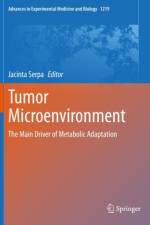
The way a cell undergoes malignant transformation should meet their capacity of surviving in the microenvironment of the organ where the cancer will develop. Metabolic adaptation is for sure one of the criteria that must be accomplished, driven by metabolic plasticity that allows the adaptation of cancer cells to the availability of energy and biomass sources that will sustain cell survival and proliferation. Each human organ has a particular microenvironment which depends on several cell types and in some cases also on symbiotic microorganisms. These biological partners are constantly sharing organic compounds and signaling molecules that will control mitogenesis, cell death and differentiation, accounting for the organ's function. Nevertheless, cancer cells are capable of taking advantage of this metabolic and signaling microenvironmental dynamics.In this book, we intend to present the different components of the microenvironment driving the metabolic fitness of cancer cells. Themetabolic changes required for establishing a tumor in a given microenvironment and how these metabolic changes limit the response to drugs will generally be the major items addressed. It is important to mention not only aspects of the microenvironment that stimulate metabolic changes and that select better adapted tumor cells, but also how this regulation of cell plasticity is made. Thus, the signaling pathways that orchestrate and are orchestrated throughout this panoply of metabolic rearrangements will also be addressed in this book.The subjects will be presented from the conceptual point of view of the cross-cancer mechanisms and also particularizing some models that can be examples and enlightening within the different areas.
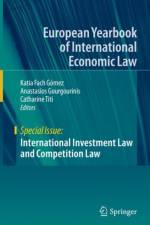
This EYIEL special issue examines the interaction between international investment law and competition law. Although issues related to both international investment law and competition law arise regularly in international legal practice and are examined together, scholarly analysis largely treats them as parallel universes. As a result their actual and potential overlap has yet to be sufficiently explored. In this light, International Investment Law and Competition Law discusses a variety of topics at the intersection of investment and competition, including the interaction between competition-related provisions and investment protection standards in free trade agreements; investors¿ anti-competitive behaviour and illegal investments; state aid schemes and foreign investors¿ legitimate expectations; EU member States¿ compliance with investment awards as (illegal) state aid under EU law; State-owned enterprises and competitive neutrality; and interactions between public procurement, investment and competition law.
Until recently, the prevailing view of marine life at high latitudes has been that organisms enter a general resting state during the dark Polar Night and that the system only awakens with the return of the sun. Recent research, however, with coordinated, multidisciplinary field campaigns based on the high Arctic Archipelago of Svalbard, have provided a radical new perspective. Instead of a system in dormancy, a new perspective of a system in full operation and with high levels of activity across all major phyla is emerging. Examples of such activities and processes include: Active marine organisms at sea surface, water column and the sea-floor. At surface we find active foraging in seabirds and fish, in the water column we find a high biodiversity and activity of zooplankton and larvae such as active light induced synchronized diurnal vertical migration, and at seafloor there is a high biodiversity in benthic animals and macroalgae. The Polar Night is a period for reproductionin many benthic and pelagic taxa, mass occurrence of ghost shrimps (Caprellides), high abundance of Ctenophores, physiological evidence of micro- and macroalgal cells that are ready to utilize the first rays of light when they appear, deep water fishes found at water surface in the Polar night, and continuous growth of bivalves throughout the winter.These findings not only begin to shape a new paradigm for marine winter ecology in the high Arctic, but also provide conclusive evidence for a top-down controlled system in which primary production levels are close to zero. In an era of environmental change that is accelerated at high latitudes, we believe that this new insight is likely to strongly impact how the scientific community views the high latitude marine ecosystem. Despite the overwhelming darkness, the main environmental variable affecting marine organisms in the Polar Night is in fact light. The light regime during the Polar Night is unique with respect to lightintensity, spectral composition of light and photoperiod.
Until recently, the prevailing view of marine life at high latitudes has been that organisms enter a general resting state during the dark Polar Night and that the system only awakens with the return of the sun. Recent research, however, with coordinated, multidisciplinary field campaigns based on the high Arctic Archipelago of Svalbard, have provided a radical new perspective. Instead of a system in dormancy, a new perspective of a system in full operation and with high levels of activity across all major phyla is emerging. Examples of such activities and processes include: Active marine organisms at sea surface, water column and the sea-floor. At surface we find active foraging in seabirds and fish, in the water column we find a high biodiversity and activity of zooplankton and larvae such as active light induced synchronized diurnal vertical migration, and at seafloor there is a high biodiversity in benthic animals and macroalgae. The Polar Night is a period for reproduction in many benthic and pelagic taxa, mass occurrence of ghost shrimps (Caprellides), high abundance of Ctenophores, physiological evidence of micro- and macroalgal cells that are ready to utilize the first rays of light when they appear, deep water fishes found at water surface in the Polar night, and continuous growth of bivalves throughout the winter.These findings not only begin to shape a new paradigm for marine winter ecology in the high Arctic, but also provide conclusive evidence for a top-down controlled system in which primary production levels are close to zero. In an era of environmental change that is accelerated at high latitudes, we believe that this new insight is likely to strongly impact how the scientific community views the high latitude marine ecosystem. Despite the overwhelming darkness, the main environmental variable affecting marine organisms in the Polar Night is in fact light. The light regime during the Polar Night is unique with respect to light intensity, spectral composition of light and photoperiod.
The first issue of the Balkan Yearbook of European and International Law (BYEIL) focuses on international commercial and investment arbitration as one of the fastest developing fields of law in Southeast Europe. Covering a range of topics, the contributions analyze transparency and confidentiality in international commercial and investment arbitration in national, EU and international contexts. In addition, it compares the commercial arbitration laws and rules in Bosnia and Herzegovina with the international developments in this area.The papers published in the permanent sections on European Law and International Law explore contemporary challenges in public and private law disciplines, offering new perspectives on old concepts.
The book presents high-quality research papers presented at the 2nd American University in the Emirates International research conference, AUEIRC'18, organized by the American University in the Emirates, Dubai, held on November 13th-15th, 2018. The book is broadly divided into four sections: Sustainability and Smart Technology, Sustainability and Social Responsibility, Sustainability, Human Security and Legislation, Sustainability and Education. The topics covered under these sections are sustainable smart technology such as developing green curriculum for information technology, use ultrasonic velocity to predict quality of wheat, improve security features for visa system, factors affecting the cost of production of electricity and desalination plants, impact of smart traffic sensing in smart cities, smart healthcare system, simulation of Grey wolf optimization algorithm in painting digital forensics. The topics covered for sustainability and creative industries such as sustainable concrete production, multimedia applications in digital transformation art, integrating biomimicry principles in sustainable architecture. Sustainability, human security and legislation covered topics of urban performance and sustainable environment, Eco-certification as response on climate change, the criminal offence of tax evasion in law: case study, skills engineering in sustainable counter defense against Cyber extremism, the international law and challenges of trans-boundary water resources governance, the legal status of nuclear energy: case study, sustainable energy development and nuclear energy legislation in UAE, corruption specific safety challenge, environmental management and sustainability, sustainable farming models for desert agro-ecosystems, future directions of climate change, earth and built environment towards new concept of sustainability, institution building from emotional intelligence perspective, virtue ethics, technology and sustainability, the role of humor ina sustainable education, HEIs practices and strategic decisions toward planning for sustainable education programs, TQM in higher education for sustainable future. The papers in this book present high-quality original research work, findings and practical development experiences.
This volume ¿ for pharmacologists, systems biologists, philosophers and historians of medicine ¿ points to investigate new avenues in pharmacology research, by providing a full assessment of the premises underlying a radical shift in the pharmacology paradigm. The pharmaceutical industry is currently facing unparalleled challenges in developing innovative drugs. While drug-developing scientists in the 1990s mostly welcomed the transformation into a target-based approach, two decades of experience shows that this model is failing to boost both drug discovery and efficiency. Selected targets were often not druggable and with poor disease linkage, leading to either high toxicity or poor efficacy. Therefore, a profound rethinking of the current paradigm is needed. Advances in systems biology are revealing a phenotypic robustness and a network structure that strongly suggest that exquisitely selective compounds, compared with multitarget drugs, may exhibit lower than desired clinical efficacy. This appreciation of the role of polypharmacology has significant implications for tackling the two major sources of attrition in drug development, efficacy and toxicity. Integrating network biology and polypharmacology holds the promise of expanding the current opportunity space for druggable targets.
This book describes and analyses the diversity of possible approaches and policy pathways to implement sustainable groundwater development, based on a comparative analysis of numerous quantitative management case studies from France and Australia.This unique book brings together water professionals and academics involved for several decades in groundwater policy making, planning or operational management to reflect on their experience with developing and implementing groundwater management policy. The data and analysis presented accordingly makes a significant contribution to the empirical water management literature by providing novel, real world insights unpublished elsewhere. The originality of the contributions also lies in the different disciplinary perspectives (hydrogeology, economics, planning and social sciences in particular) adopted in many chapters. The book offers a unique comparative analysis of France, Australia and experiences in countriessuch as Chile and the US to identify similarities, but also fundamental differences, which are analysed and presented as alternative policy options ¿ these differences being mainly related to the role of the state, the community and market mechanisms in groundwater management.
¿This book analyzes and evaluates the growing field of light-emitting nanoprobes as contrast agents for in vivo imaging and sensing. It is a comprehensive resource that critically analyzes the state of the art in an interdisciplinary manner, with a special focus on the shift of emission wavelengths into the near-infrared (NIR) spectral region (ranging from 0.7 to 2 microns), which has greatly contributed to the latest advances in biomedical imaging and sensing. This book discusses merits of different contrast agents at nanoscale, and how their unique chemical and structural properties lead to the emission and interaction of light within the NIR window. Both the NIR-emitting materials and various surface modification strategies governing their interactions with the biological system at the ¿nanö level are discussed. Furthermore, different experimental techniques and protocols for NIR-light-based in vivo imaging and sensing are addressed to shed light on further understanding of the advantages and limitations of each category of these nanoprobes. Assembles the state of the art heretofore appearing in scientific literature into a comprehensive, multi-perspective guidebook on near infrared-emitting nanomaterials in an assortment of biomedical applications;Explains the physical, chemical, and biological phenomena underlying near infrared-emitting nanomaterials for biomedical applications;Presents conceptual and experimental approaches surrounding a unique spectral range of light emission from nanosized contrast agents, while offering a clear explanation of basic and general phenomena regarding the interaction between light and biological tissues, such as absorption, scattering and autofluorescence.
Abonner på vårt nyhetsbrev og få rabatter og inspirasjon til din neste leseopplevelse.
Ved å abonnere godtar du vår personvernerklæring.