







Gjør som tusenvis av andre bokelskere
Abonner på vårt nyhetsbrev og få rabatter og inspirasjon til din neste leseopplevelse.
Ved å abonnere godtar du vår personvernerklæring.Du kan når som helst melde deg av våre nyhetsbrev.

This collection presents papers from a symposium on extraction of rare metals as well as rare extraction processing techniques used in metal production. Rare metals include strategic metals that are in increasing demand and subject to supply risks. Metals represented include neodymium, dysprosium, scandium and others; platinum group metals including platinum, palladium, iridium, and others; battery related metals including lithium, cobalt, nickel, and aluminum; electronics-related materials including copper and gold; and refectory metals including titanium, niobium, zirconium, and hafnium. Other critical materials such as gallium, germanium, indium and silicon are also included. Papers cover various processing techniques, including but not limited to hydrometallurgy (solvent extraction, ion exchange, precipitation, and crystallization), electrometallurgy (electrorefining and electrowinning), pyrometallurgy, and aeriometallurgy (supercritical fluid extraction). Contributions are focusedon primary production as well as secondary production through urban mining and recycling to enable a circular economy.¿A useful resource for all involved in commodity metal production, irrespective of the major metalProvides knowledge of cross-application among industriesExtraction and processing of rare metals that are the main building block of many emerging critical technologies have been receiving significant attention in recent years.The technologies that rely on critical metals are prominent worldwide, and finding a way to extract and supply them effectively is highly desirable and beneficial.
This collection gives broad and up-to-date results in the research and development of materials characterization and processing. Topics covered include advanced characterization methods, minerals, mechanical properties, coatings, polymers and composites, corrosion, welding, magnetic materials, and electronic materials. The book explores scientific processes to characterize materials using modern technologies, and focuses on the interrelationships and interdependence among processing, structure, properties, and performance of materials.
This contributed volume reviews the latest advances on relevant 3D tissue engineered in vitro models of disease making use of biomaterials and microfluidics. The main focus of this book is on advanced biomaterials and microfluidics technologies that have been used in in vitro mimetic 3D models of human diseases and show great promise in revolutionizing personalized medicine. Readers will discover important topics involving biomaterials and microfluidics design, advanced processing techniques, and development and validation of organ- and body-on-a-chip models for bone, liver, and cancer research. An in depth discussion of microfabrication methods for microfluidics development is also provided. This work is edited by two truly multidisciplinary scientists and includes important contributions from well-known experts in their fields. The work is written for both early stage and experienced researchers, and well-established scientists enrolled in thefields of biomaterials, microfluidics, and tissue engineering, and is especially suited to those who wish to become acquainted with the principles and latest developments of in vitro models of diseases, such as professionals working in pharma, medicine, and engineering.
This contributed volume reviews the latest advances on relevant 3D tissue engineered in vitro models of disease making use of biomaterials and microfluidics. The main focus of this book is on advanced biomaterials and microfluidics technologies that have been used in in vitro mimetic 3D models of human diseases and show great promise in revolutionizing personalized medicine. Readers will discover important topics involving biomaterials and microfluidics design, advanced processing techniques, and development and validation of organ- and body-on-a-chip models for bone, liver, and cancer research. An in depth discussion of microfabrication methods for microfluidics development is also provided. This work is edited by two truly multidisciplinary scientists and includes important contributions from well-known experts in their fields. The work is written for both early stage and experienced researchers, and well-established scientists enrolled in the fields of biomaterials, microfluidics, and tissue engineering, and is especially suited to those who wish to become acquainted with the principles and latest developments of in vitro models of diseases, such as professionals working in pharma, medicine, and engineering.
In recent years, global metallurgical industries have experienced fast and prosperous growth. High-temperature metallurgical technology is the backbone to support the technical, environmental, and economical needs for this growth. This collection features contributions covering the advancements and developments of new high-temperature metallurgical technologies and their applications to the areas of processing of minerals; extraction of metals; preparation of refractory and ceramic materials; sintering and synthesis of fine particles; treatment and recycling of slag and wastes; and saving of energy and protection of environment. The volume will have a broad impact on the academics and professionals serving the metallurgical industries around the world.
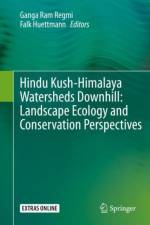
This book describes the myriad components of the Hindu Kush-Himalaya (HKH) region. The contributors elaborate on challenges, failures, and successes in efforts to conserve the HKH, its indigenous plants and animals, and the watershed that runs from the very roof of the planet via world-rivers to marine estuaries, supporting a human population of some two billion people. Readers will learn how the landforms, animal species and humans of this globally fascinating region are connected, and understand why runoff from snow and ice in the world¿s tallest mountains is vital to inhabitants far downstream. The book comprises forty-five chapters organized in five parts. The first section, Landscapes, introduces the mountainous watersheds of the HKH, its weather systems, forests, and the 18 major rivers whose headwaters are here. The second part explores concepts, cultures, and religions, including ethnobiology and indigenous regimes, two thousand years of religious tradition,and the history of scientific and research expeditions. Part Three discusses policy, wildlife conservation management, habitat and biodiversity data, as well as the interaction of animals and humans. The fourth part examines the consequences of development and globalization, from hydrodams, to roads and railroads, to poaching and illegal wildlife trade. This section includes studies of animal species including river dolphins, woodpeckers and hornbills, langurs, snow leopards and more. The concluding section offers perspectives and templates for conservation, sustainability and stability in the HKH, including citizen-science projects and a future challenged by climate change, growing human population, and global conservation decay.A large assemblage of field and landscape photos, combined with eye-witness accounts, presents a 50-year local and wider perspective on the HKH. Also included are advanced digital topics: data sharing, open access, metadata, web portal databases, geographic information systems (GIS) software and machine learning, and data mining concepts all relevant to a modern scientific understanding and sustainable management of the Hindu Kush-Himalaya region.This work is written for scholars, landscape ecologists, naturalists and researchers alike, and it can be especially well-suited for those readers who want to learn in a more holistic fashion about the latest conservation issues.
This book describes the myriad components of the Hindu Kush-Himalaya (HKH) region. The contributors elaborate on challenges, failures, and successes in efforts to conserve the HKH, its indigenous plants and animals, and the watershed that runs from the very roof of the planet via world-rivers to marine estuaries, supporting a human population of some two billion people. Readers will learn how the landforms, animal species and humans of this globally fascinating region are connected, and understand why runoff from snow and ice in the world¿s tallest mountains is vital to inhabitants far downstream. The book comprises forty-five chapters organized in five parts. The first section, Landscapes, introduces the mountainous watersheds of the HKH, its weather systems, forests, and the 18 major rivers whose headwaters are here. The second part explores concepts, cultures, and religions, including ethnobiology and indigenous regimes, two thousand years of religious tradition, and the history of scientific and research expeditions. Part Three discusses policy, wildlife conservation management, habitat and biodiversity data, as well as the interaction of animals and humans. The fourth part examines the consequences of development and globalization, from hydrodams, to roads and railroads, to poaching and illegal wildlife trade. This section includes studies of animal species including river dolphins, woodpeckers and hornbills, langurs, snow leopards and more. The concluding section offers perspectives and templates for conservation, sustainability and stability in the HKH, including citizen-science projects and a future challenged by climate change, growing human population, and global conservation decay.A large assemblage of field and landscape photos, combined with eye-witness accounts, presents a 50-year local and wider perspective on the HKH. Also included are advanced digital topics: data sharing, open access, metadata, web portal databases, geographic information systems (GIS) software and machine learning, and data mining concepts all relevant to a modern scientific understanding and sustainable management of the Hindu Kush-Himalaya region.This work is written for scholars, landscape ecologists, naturalists and researchers alike, and it can be especially well-suited for those readers who want to learn in a more holistic fashion about the latest conservation issues.
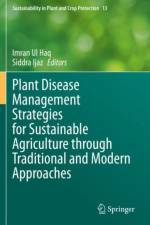
This book provides an account of the classical and recent trends in plant sciences, which have contributed for disease management strategies in plants for sustainable agriculture. Advancements in the disciplines of biological sciences like biotechnology, microbiology, bioinformatics as well as information and communication technology etc has given the new dimensions for the development of new plant disease management strategies. By keeping this perspective in view, the editors collected and compiled the useful, practical and recent information regarding plant disease management from a diverse group of authors from different countries associated with well-reputed scientific, teaching and research organizations with the objective to update and equip the researchers with comprehensive and latest knowledge of plant disease management. This book is based on the knowledge of traditional and modern approaches for plant disease management. It has 15 chapters, each chapter describingthe pillar strategies, which may be the possible way for crop protection from diseases.This effort deals with the history and recent trends in plant disease control, plant genetics and physiology in disease prognosis, conventional plant breeding program for disease resistance, synthetic chemicals: major component of plant disease management, biological antagonism: expected safe and sustainable way to manage plant diseases , soil microbes and plant health, conventional and modern technologies for the management of post-harvest diseases, nanobiotechnology, an innovative plant disease management approach, transgenic approaches in plants: strategic control for disease management, exploiting RNAi mechanism in plants for disease resistance, genome editing technologies for resistance against phytopathogens: principles, applications and future prospects, plant health clinics in Pakistan: operations and prospects, precision agriculture technologies for management of plant disease, quarantine and regulations and development and implementation of IDM program for annual and perennial crops.
Abonner på vårt nyhetsbrev og få rabatter og inspirasjon til din neste leseopplevelse.
Ved å abonnere godtar du vår personvernerklæring.