


Gjør som tusenvis av andre bokelskere
Abonner på vårt nyhetsbrev og få rabatter og inspirasjon til din neste leseopplevelse.
Ved å abonnere godtar du vår personvernerklæring.Du kan når som helst melde deg av våre nyhetsbrev.

This book presents state-of-the-art methodologies for the design and analysis of buried steel pipelines subjected to severe ground-induced action, including tectonic (quasi-static) effects, slope movements (landslides), liquefaction-induced actions or excavation-induced settlements. The text is an amended version of the final deliverables of the GIPIPE project, sponsored by the European Commission (Research Fund for Coal and Steel programme, 2011-2014).Geohazards and Pipelines presents an integrated investigation of this subject, using advanced and innovative experimental techniques, high-performance numerical simulations and novel analytical methodologies, which account for the particularities of buried steel pipelines with an emphasis on soil-pipeline interaction.Geohazards and Pipelines will be of use to professionals working in the field of pipeline engineering, including design consultants and industrial practitioners involved in projects related to pipeline infrastructure. Structural engineers, mechanical engineers, geotechnical engineers, geologists and seismologists may also find this book of interest, as may graduate students and researchers in these areas.
The edition will cover proceedings of the second International conference on digital health Technologies (ICDHT 2019). The conference will address the topic of P4 medicine from the information technology point of view, and will be focused on the following topics: - Artificial Intelligence for health. Knowledge extraction . Decision-aid systems . Data analysis and risk prediction. Machine learning, deep learning - Health data processing. Data preprocessing, cleaning, management and mining. Computer-aided detection. Big data analysis, prediction and prevention. Cognitive algorithms for healthcare handling dynamic context management. Augmented reality, Motion detection and activity recognition - Devices, infrastructure and communication. Wearable & connected devices. Communication infrastructures, architectures and standards Blockchain for e-Health. Computing/storage infrastructures for e-Health. IoT devices & architectures for Smart Healthcare - Health information systems. Telemedicine, Teleservices. Computing/storage infrastructures for e-Health. Clinical Data Visualisation Standards - Security and privacy for e-health. Health data Analytics for Security and Privacy. E-health Software and Hardware Security. Embedded Security for e-health - Applications in P4 medicine
Sustainability and mobile computing embraces a wide range of Information and Communication Technologies [ICT] in recent times. This book focuses more on the recent research and development works in almost all the facets of sustainable, ubiquitous computing and communication paradigm. The recent research efforts on this evolving paradigm help to advance the technologies for next-generation, where socio-economic growth and sustainability poses significant challenges to the computing and communication infrastructures. The main purpose of this book is to promote the technical advances and impacts of sustainability and mobile computing to the informatics research. The key strands of this book include green computing, predictive models, mobility, data analytics, mobile computing, optimization, Quality of Service [QoS], new communicating and computing frameworks, human computer interaction, Artificial Intelligence [AI], communication networks, risk management, Ubiquitouscomputing, robotics, smart city and applications. The book has also addressed myriad of sustainability challenges in various computing and information processing infrastructures.
Sustainability and mobile computing embraces a wide range of Information and Communication Technologies [ICT] in recent times. This book focuses more on the recent research and development works in almost all the facets of sustainable, ubiquitous computing and communication paradigm. The recent research efforts on this evolving paradigm help to advance the technologies for next-generation, where socio-economic growth and sustainability poses significant challenges to the computing and communication infrastructures. The main purpose of this book is to promote the technical advances and impacts of sustainability and mobile computing to the informatics research. The key strands of this book include green computing, predictive models, mobility, data analytics, mobile computing, optimization, Quality of Service [QoS], new communicating and computing frameworks, human computer interaction, Artificial Intelligence [AI], communication networks, risk management, Ubiquitouscomputing, robotics, smart city and applications. The book has also addressed myriad of sustainability challenges in various computing and information processing infrastructures.
International scholarship is increasingly aware that the ¿geographical tradition¿ is a contentious and contested field: while critical reflections on the imperial past of the discipline are still ongoing, new tendencies including de-colonial studies and geographies of internationalism are focusing on the progressive aspects of plural geographical traditions. This volume contains selected papers presented at two Symposia of the Commission on the History of Geography of the International Geographical Union within the 25th International Congress of History of Science and Technology which took place in Rio de Janeiro in July 2017.The papers address processes of ¿decolonising¿ and ¿internationalising¿ science in the 19th and 20th century, with a special emphasis on geography. Internationalization, circulation and dissemination of geographical concepts and ideas are in the focus. The volume includes case studies on Latin America, tropical regions as well as Europe and Japan. Thereis also an emphasis on the history of international congresses and organizations and on the international circulation of knowledge.
International scholarship is increasingly aware that the ¿geographical tradition¿ is a contentious and contested field: while critical reflections on the imperial past of the discipline are still ongoing, new tendencies including de-colonial studies and geographies of internationalism are focusing on the progressive aspects of plural geographical traditions. This volume contains selected papers presented at two Symposia of the Commission on the History of Geography of the International Geographical Union within the 25th International Congress of History of Science and Technology which took place in Rio de Janeiro in July 2017.The papers address processes of ¿decolonising¿ and ¿internationalising¿ science in the 19th and 20th century, with a special emphasis on geography. Internationalization, circulation and dissemination of geographical concepts and ideas are in the focus. The volume includes case studies on Latin America, tropical regions as well as Europe and Japan. There is also an emphasis on the history of international congresses and organizations and on the international circulation of knowledge.
This volume explores the effects of aquatic contaminants on ecological subsidies and food web exposure at the boundary of aquatic and terrestrial ecosystems. It provides the first synthesis of the findings and principles governing the ¿dark side¿ of contaminant effects on ecological subsidies. Furthermore, the volume provides extensive coverage of the tools being developed to help managers and researchers better understand the implications of contaminants movement and their effects on natural resources and ecosystem processes. Aquatic and terrestrial ecosystems are linked through movements of energy and nutrients which subsidize recipient food webs. As a result, contaminants that concentrate in aquatic systems because of the effects of gravity on water and organic matter have the potential to impact both aquatic and terrestrial ecosystem processes. Within the last decade, increased attention has been paid to this phenomenon, particularly the effectsof aquatic contaminants on resource and contaminant export to terrestrial consumers, and the potential implications for management. This volume, curated and edited by three field leaders, incorporates empirical results, management applications and theoretical synthesis and is a key reference for academics, government researchers and consultants.
This edited volume highlights the geographies of six European Mediterranean countries: France, Spain, Italy, Portugal, Turkey and Greece. The book provides a balanced overview on what the geographers of these six countries have investigated and reflected in recent decades. This thematically arranged book takes into account the national differences of the authors, but also highlights the main contributions of Mediterranean geographies on a global scale. It reinforces a perception of common problems and debates in Southern Europe. This book appeals to the institutionalized geographical community of Mediterranean countries but also to a global audience of scholars of geography, territorial and spatial studies, social sciences and history.
This comprehensive volume surveys an important but neglected period of Chinese intellectual history: Xuanxue (Neo-Daoism). It provides a holistic approach to the philosophical and religious traits of this movement via the concepts of non-being, being, and oneness. Thinkers and texts on the periphery of Xuanxue are also examined to show readers that Xuanxue did not arise in a vacuum but is the result of a long and continuous evolution of ideas from pre-Qin Daoism.The 25 chapters of this work survey the major philosophical figures and arguments of Xuanxue, a movement from the Wei-Jin dynastic period (220-420 CE) of early-medieval China. It also examines texts and figures from the late-Han dynasty whose influence on Xuanxue has yet to be made explicitly clear. In order to fully capture the multifaceted nature of this movement, the contributors brilliantly highlight its more socially-oriented characteristics. Overall, this volumepresents an unrivaled picture of this exciting period. It details a portrait of intellectual and cultural vitality that rivals, if not surpasses, what was achieved during the Warring States period. Readers of the Yijing, Daodejing, and Zhuangzi will feel right at home with the themes and arguments presented herein, while students and those coming to Xuanxue for the first time will acquire a wealth of knowledge.
This comprehensive volume surveys an important but neglected period of Chinese intellectual history: Xuanxue (Neo-Daoism). It provides a holistic approach to the philosophical and religious traits of this movement via the concepts of non-being, being, and oneness. Thinkers and texts on the periphery of Xuanxue are also examined to show readers that Xuanxue did not arise in a vacuum but is the result of a long and continuous evolution of ideas from pre-Qin Daoism.The 25 chapters of this work survey the major philosophical figures and arguments of Xuanxue, a movement from the Wei-Jin dynastic period (220-420 CE) of early-medieval China. It also examines texts and figures from the late-Han dynasty whose influence on Xuanxue has yet to be made explicitly clear. In order to fully capture the multifaceted nature of this movement, the contributors brilliantly highlight its more socially-oriented characteristics. Overall, this volumepresents an unrivaled picture of this exciting period. It details a portrait of intellectual and cultural vitality that rivals, if not surpasses, what was achieved during the Warring States period. Readers of the Yijing, Daodejing, and Zhuangzi will feel right at home with the themes and arguments presented herein, while students and those coming to Xuanxue for the first time will acquire a wealth of knowledge.
This second edition provides a comprehensive discussion of contemporary materials used in biomedical research and development. The pedagogical writing style and structure provides students with an understanding of the fundamental concepts necessary to pursue research and industrial work in this growing area of biomedical science, including characteristics of biomaterials, biological processes, biocompatibility, and applications of materials in implants and medical instruments. Written by leading researchers in the field, this volume highlights important topics associated with biomedical engineering, medicine and surgery. The revised text contains updates that reflect recent technological advances in biomedical materials. It contains information on new characterization methods and applications for biomedical materials and incorporates suggestions that were offered by readers and educators using the first edition over the years. This textbook takes the reader tothe forefront of biomedical materials development, providing graduate students with a taste of how the field is changing, while also serving as a useful reference to physicians and engineers.
This book provides comparative data on fish ecology and small-scale fisheries between Tapajos (clear water) and Negro (black water) rivers, in the Brazilian Amazon. These rivers are less studied than white water rivers and few books on Amazon fishes have addressed more than one river basin. These data can serve as a baseline to check future changes or impacts in these rivers, which can be affected by development projects, such as highways, deforestation, mining and dams. Besides information on fish biology, the book also discusses fish uses, fisheries and its importance for riverine people, comparing these data for each fish species between sites located inside and outside conservation units. The book is an outcome of the research project ¿Linking sustainability of small-scale fisheries, fishers¿ knowledge, conservation and co-management of biodiversity in large rivers of the Brazilian Amazon¿, which was coordinated by the editor of this volume and funded by United States Agency for International Development (USAID) and National Academies of Science, Engineering and Medicine (NAS).
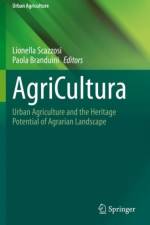
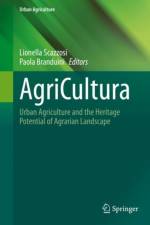
This book explains how cultural heritage can be a tool for enhancing urban agriculture and improving landscape and life quality. It cuts across the existing literature and fills the gaps between urban agriculture, considered as a food, social and environmental opportunity and cultural heritage, considered as resource.It focuses the role of the countryside for urban areas, in the history of the city and today. Its attention is on the quality for all areas, both outstanding, ordinary and degraded, as well as large, little or fragmented (European landscape convention 2000). It considers agricultural landscape as a system of tangible and intangible heritage components and relationships, to be retained, enhanced and transmit, in a process of inevitable but appropriate dynamic conservation and management over time (ICOMOS-IFLA Principles 2017).This book can benefit the collaboration among local players ¿ such as farmers, citizens, associations,public institutions, stakeholders ¿ in conserving and enhancing agrarian heritage and reinforcing the identity of places and people. It can strengthen collective action and generate positive effects on good large and local -scale management.The first part has a methodological character in order to enlighten the integrated approach between cultural heritage and urban agriculture. The second part exemplifies cases where the heritage has been recognised but not yet translated into concrete action. The third Part discloses ongoing process of co-construction, where policies have recognized the cultural, environmental and social meaning of urban agriculture as heritage.This book aims to reach scholars, local administrations, professionals, farmers and citizens. It involves many authors, many of whom are directly engaged with action-research in safeguarding and implementing the mutual interaction between urban agriculture activities and agrarian heritage.
This book explains how cultural heritage can be a tool for enhancing urban agriculture and improving landscape and life quality. It cuts across the existing literature and fills the gaps between urban agriculture, considered as a food, social and environmental opportunity and cultural heritage, considered as resource.It focuses the role of the countryside for urban areas, in the history of the city and today. Its attention is on the quality for all areas, both outstanding, ordinary and degraded, as well as large, little or fragmented (European landscape convention 2000). It considers agricultural landscape as a system of tangible and intangible heritage components and relationships, to be retained, enhanced and transmit, in a process of inevitable but appropriate dynamic conservation and management over time (ICOMOS-IFLA Principles 2017).This book can benefit the collaboration among local players ¿ such as farmers, citizens, associations, public institutions, stakeholders ¿ in conserving and enhancing agrarian heritage and reinforcing the identity of places and people. It can strengthen collective action and generate positive effects on good large and local -scale management.The first part has a methodological character in order to enlighten the integrated approach between cultural heritage and urban agriculture. The second part exemplifies cases where the heritage has been recognised but not yet translated into concrete action. The third Part discloses ongoing process of co-construction, where policies have recognized the cultural, environmental and social meaning of urban agriculture as heritage.This book aims to reach scholars, local administrations, professionals, farmers and citizens. It involves many authors, many of whom are directly engaged with action-research in safeguarding and implementing the mutual interaction between urban agriculture activities and agrarian heritage.
Abonner på vårt nyhetsbrev og få rabatter og inspirasjon til din neste leseopplevelse.
Ved å abonnere godtar du vår personvernerklæring.