

















Gjør som tusenvis av andre bokelskere
Abonner på vårt nyhetsbrev og få rabatter og inspirasjon til din neste leseopplevelse.
Ved å abonnere godtar du vår personvernerklæring.Du kan når som helst melde deg av våre nyhetsbrev.

This volume encompasses the range of issues encountered by language scholars who teach and research in departments of languages and cultures within the higher education system, predominantly in Australia, but touching other universities worldwide. Related studies on language planning, methodology or pedagogy have focused on one or more of these same issues, but rarely on their totality. Intersections as a metaphor running discreetly through the essays in this volume, connects them all to a lived reality. The field of languages and cultures, as it is practised and reflected upon in Australian universities, is essentially an interdisciplinary and interconnecting space - one in which linguistic and disciplinary diversities meet and join forces, rather than collide or disperse along different pathways. The international and local studies featured here focus on language planning, new pedagogies and language reclamation and link to meeting points and commonalities. They show that language scholars are increasingly finding themselves on common ground as they tackle issues of policy and practice affecting their field, whether within their institutions, within the tertiary system, or within the framework of government policy.
Lipids are responsible not just for constituting cellular membrane but also for storing energy, transducing signaling, and modifying proteins. Bioactive lipids, or lipid mediators, transduce signaling as intracellular messenger like phosphoinoitides, and also regulate cell-cell communication through G protein-coupled receptors (GPCRs) that are potentially valuable drug targets in many diseases. Until now, about 40 GPCRs within ~300 rhodopsin-like (class A) GPCRs, are identified as lipid GPCRs. Advances of lipid research have enabled to develop novel small molecules targeting lipid GPCRs for several diseases. Most notably, fingolimod (FTY720), a sphingosine 1-phosphate (S1P) receptor modulator, became the first FDA-approved medicine as an orally bioavailable drug for treating relapsing forms of multiple sclerosis (MS). In addition to fingolimod, other drugs targeting lipid GPCRs had been developed such as latanoprost (prostaglandin F2a analogue, used for ocular hypertension and glaucoma), epoprostenol and treprostinil (prostaglandin I2 analogue, used for pulmonary arterial hypertension), montelukast and pranlukast (cysteinyl leukotriene receptor antagonist, used for asthma and allergies), etc. Novel drugs are also expected like lysophosphatidic acid (LPA) receptor antagonist for treatment of pulmonary fibrosis. Drug development targeting lipid signalling pathways are backdated to more than a century, when aspirin was synthesized and selling by Bayer, while the basic mechanism of aspirin's effects (block prostanoid synthesis by inhibiting cyclooxygenases) had not been discovered until 1970s. Nowadays, non-steroidal anti-inflammatory drugs (NSAIDs) like aspirin and ibuprophen are commonly used as antipyretic analgesics and available readily over-the-counter oral drugs. Both upstream and downstream enzymes, such as phospholipase A2s and prostaglandin E synthases, respectively, are also potential therapeutic targets for inflammatory diseases. Recent studies of lipid metabolism expand the lipid biology field from pro-inflammatory lipid mediators to anti-inflammatory epoxy fatty acids (epoxyeicosatrienoic acids), and also omega-3 fatty acid-derived pro-resolving lipid mediators (lipoxin, resolvin, and neuroprotectin). These bioactive lipids, their metabolic pathways and receptors are of great interest in developing next-generation anti-inflammatory and pro-resolving drugs for a wide variety of diseases including. This book summarizes not only historical overview of lipid signaling pathways but also provides summary of cutting-edge studies that may provide some hints of novel ¿druggable¿ lipid signaling targets.
Lipids are responsible not just for constituting cellular membrane but also for storing energy, transducing signaling, and modifying proteins. Bioactive lipids, or lipid mediators, transduce signaling as intracellular messenger like phosphoinoitides, and also regulate cell-cell communication through G protein-coupled receptors (GPCRs) that are potentially valuable drug targets in many diseases. Until now, about 40 GPCRs within ~300 rhodopsin-like (class A) GPCRs, are identified as lipid GPCRs. Advances of lipid research have enabled to develop novel small molecules targeting lipid GPCRs for several diseases. Most notably, fingolimod (FTY720), a sphingosine 1-phosphate (S1P) receptor modulator, became the first FDA-approved medicine as an orally bioavailable drug for treating relapsing forms of multiple sclerosis (MS). In addition to fingolimod, other drugs targeting lipid GPCRs had been developed such as latanoprost (prostaglandin F2a analogue, used for ocular hypertension and glaucoma), epoprostenol and treprostinil (prostaglandin I2 analogue, used for pulmonary arterial hypertension), montelukast and pranlukast (cysteinyl leukotriene receptor antagonist, used for asthma and allergies), etc. Novel drugs are also expected like lysophosphatidic acid (LPA) receptor antagonist for treatment of pulmonary fibrosis. Drug development targeting lipid signalling pathways are backdated to more than a century, when aspirin was synthesized and selling by Bayer, while the basic mechanism of aspirin's effects (block prostanoid synthesis by inhibiting cyclooxygenases) had not been discovered until 1970s. Nowadays, non-steroidal anti-inflammatory drugs (NSAIDs) like aspirin and ibuprophen are commonly used as antipyretic analgesics and available readily over-the-counter oral drugs. Both upstream and downstream enzymes, such as phospholipase A2s and prostaglandin E synthases, respectively, are also potential therapeutic targets for inflammatory diseases. Recent studies of lipid metabolism expand the lipid biology field from pro-inflammatory lipid mediators to anti-inflammatory epoxy fatty acids (epoxyeicosatrienoic acids), and also omega-3 fatty acid-derived pro-resolving lipid mediators (lipoxin, resolvin, and neuroprotectin). These bioactive lipids, their metabolic pathways and receptors are of great interest in developing next-generation anti-inflammatory and pro-resolving drugs for a wide variety of diseases including. This book summarizes not only historical overview of lipid signaling pathways but also provides summary of cutting-edge studies that may provide some hints of novel ¿druggable¿ lipid signaling targets.
This book sheds light on the effects of the financial and economic crisis in a diverse set of countries of Southern and Mediterranean Europe. Drawing on case studies from Greece, Italy, Portugal, Spain, and Turkey, this book presents a broad and integrative perspective on the impact of the crisis in different rural territories, discussing the similarities and dissimilarities of those impacts together with the resilience strategies adopted in each context. The impacts of the crisis in rural restructuring processes are also taken in consideration in this volume. Based on diverse theoretical and methodological approaches, the book discusses the challenges presented by the new socioeconomic contexts emerging from the crisis, as well as the resilience strategies adopted in rural territories by old and new actors. The book compiles nine empirical chapters dealing with the different cases and a final chapter devoted to the discussion of the shared and dissimilar processes ofrural change. This book is a useful and valuable resource for scholars and post-graduate students from different disciplines, such as rural sociology, geography, anthropology, regional planning and agricultural studies.
This book includes representative research from the state¿of¿the¿art in the emerging ¿eld of soft robotics, with a special focus on bioinspired soft robotics for underwater applications. Topics include novel materials, sensors, actuators, and system design for distributed estimation and control of soft robotic appendages inspired by the octopus and seastar. It summarizes the latest findings in an emerging ¿eld of bioinspired soft robotics for the underwater domain, primarily drawing from (but not limited to) an ongoing research program in bioinspired autonomous systems sponsored by the O¿ce of Naval Research. The program has stimulated cross¿disciplinary research in biology, material science, computational mechanics, and systems and control for the purpose of creating novel robotic appendages for maritime applications. The book collects recent results in this area.
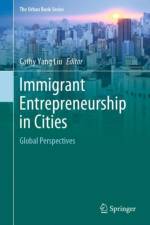
This book draws on evidence from global cities around the world and explores various dimensions of immigrant entrepreneurship and urban development. It provides a substantive contribution to the existing literature in several ways. First of all, it pursues a comparative approach, with case studies from both the global north and global south, so as to broaden the theoretical framework in this area especially as pertinent to emerging economies. Second, it covers multiple scales, from local community place-making, to urban contexts of reception, to transnational networks and connections. Third, it combines approaches and research methods from numerous disciplines, investigating entry dynamics, trends and patterns, business performance, challenges, and the impact of immigrant entrepreneurship in urban areas. Finally, it pays particular attention to current international experiences regarding urban policies on immigrant entrepreneurship. Given its scope, the book will be an enlightening read for anyone interested in immigration, entrepreneurship and urban development issues around the globe.As global cities around the world continue to attract both domestic migrants and international migrants to their bustling metropolises, immigrant entrepreneurship is emerging as an important urban phenomenon that calls for careful examination. From Chinatown in New York, to Silicon Valley in San Francisco, to Little Africa in Guangzhou, immigrant-owned businesses are not only changing the business landscape in their host communities, but also transforming the spatial, economic, social, and cultural dynamics of cities and regions.
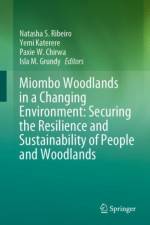
Based on work by the Miombo Network in southern Africa, this book helps decision-makers and general readers alike improve their understanding of the socio-ecology of the Miombo woodlands across southern Africa. It also highlights the importance of and the need for further research on the unique Miombo ecology and its link with economic development. One major challenge facing these woodlands is the influence that direct (both natural and anthropogenic) and indirect drivers of change, as well as interactions between these, have had over the centuries. As such the book explores the socio-economic and ecological interactions that occur in these woodlands and discusses the need for further research to provide a better understanding of these interactions.Drawing on data and information from numerous studies conducted in the last 20 years, the book presents a comparative analysis of policy changes and management experiences in the countries concerned. It also addresses issues of global climate change, since they have an impact on Miombo ecosystem management and restoration, and provides future projections based on an assessment of how climate change has affected the Miombo woodlands in the past.
This volume examines problem solving and applied systems aimed at improving performance and management of organizations. The book¿s eight chapters are integrated into two parts: methodologies and techniques that discuss complex dynamic analysis of the organizations, participative processes for building trend scenarios, consultancy as a systemic intervention process, processes to promote innovative goals in organizations, and analytical processes and solid mathematical representation systems. The authors also include a model to urban parks location, an analytic model to urban services location, and a system to forecast demand with fussy sets.Describes methodologies to analyze processes in complex dynamic organizations, including as participative, interventional, innovative, and analytical approaches;Clarifies a strategies for providing structure to complex organizations and applying analytical methods to decision making;Illustrates problem holistic solving strategies;Explains how to approach several problems from a holistic point of view and how analyze the subjacent processes to make decisions.
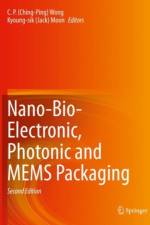
This book shows how nanofabrication techniques and nanomaterials can be used to customize packaging for nano devices with applications to electronics, photonics, biological and biomedical research and products. It covers topics such as bio sensing electronics, bio device packaging, MEMS for bio devices and much more, including:Offers a comprehensive overview of nano and bio packaging and their materials based on their chemical and physical sciences and mechanical, electrical and material engineering perspectives;Discusses nano materials as power energy sources, computational analyses of nano materials including molecular dynamic (MD) simulations and DFT calculations;Analyzes nanotubes, superhydrophobic self-clean Lotus surfaces;Covers nano chemistry for bio sensor/bio material device packaging.This second edition includes new chapters on soft materials-enabled packaging for stretchable and wearable electronics, state of the art miniaturization for active implantable medical devices, recent LED packaging and progress, nanomaterials for recent energy storage devices such as lithium ion batteries and supercapacitors and their packaging. Nano- Bio- Electronic, Photonic and MEMS Packaging is the ideal book for all biomedical engineers, industrial electronics packaging engineers, and those engaged in bio nanotechnology applications research.
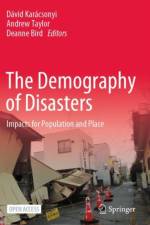
This open access book provides worldwide examples demonstrating the importance of the interplay between demography and disasters in regions and spatially. It marks an advance in practical and theoretical insights for understanding the role of demography in planning for and mitigating impacts from disasters in developed nations.Both slow onset (like the of loss polar ice from climate change) and sudden disasters (such as cyclones and man-made disasters) have the capacity to fundamentally change the profiles of populations at local and regional levels. Impacts vary according to the type, rapidity and magnitude of the disaster, but also according to the pre-existing population profile and its relationships to the economy and society. In all cases, the key to understanding impacts and avoiding them in the future is to understand the relationships between disasters and population change.In most chapters in this book we compare and contrast studies from at least twocases and summarize their practical and theoretical lessons.
Abonner på vårt nyhetsbrev og få rabatter og inspirasjon til din neste leseopplevelse.
Ved å abonnere godtar du vår personvernerklæring.