












Gjør som tusenvis av andre bokelskere
Abonner på vårt nyhetsbrev og få rabatter og inspirasjon til din neste leseopplevelse.
Ved å abonnere godtar du vår personvernerklæring.Du kan når som helst melde deg av våre nyhetsbrev.

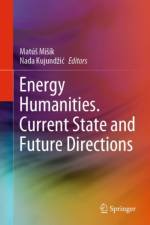
This edited book explicitly deals with the energy humanities, summarising existing knowledge in the area and outlining possible future directions for the nascent field. Assuming a variety of disciplinary stances and using a plethora of methodologies to address a number of pressing energy-related issues, the individual contributions showcase the crucial importance of including the humanities and social sciences into the current discussion on energy. Furthermore, they illustrate one of the central claims of the energy humanities, namely, that energy permeates all aspects of our contemporary modes of existence, and is inextricably linked with historical, political, social, ideological, and cultural issues, relationships, and practices.Through numerous case studies, Energy Humanities and Energy Transition looks to the past, present, and future in search of examples of best practices and possible models for pathways to a successful energy transition and life ¿after oil¿. While much of existing research on energy humanities has been criticised for its excessive focus on oil, this book considers a wide range of energy resources, including nuclear energy, renewables, and natural gas. Furthermore, it brings to the forefront under-researched topics such as the colonial legacy inscribed in energy infrastructure and the energy history of the humanities. The contributions in this volume explore not only how the perspectives and expertise of the humanities and social sciences can alter the discourse on energy transition, and our way of thinking about possible solutions and future scenarios, but also how their new focus on energy affects the disciplines themselves.Energy Humanities and Energy Transition presents a variety of theories, methods, topics, and disciplinary angles, meaning it will be of interest to a wide audience, from practitioners and policy makers, to students and researchers working across the humanities and social sciences. The thematically oriented structure, distinct focus of each individual chapter, and the comprehensive introduction and conclusion that contextualize the contributions within the wider framework of energy transition, make this edited book accessible to readers from many different fields and suitable for various university programs.
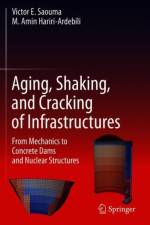
This self-contained book focuses on the safety assessment of existing structures subjected to multi-hazard scenarios through advanced numerical methods. Whereas the focus is on concrete dams and nuclear containment structures, the presented methodologies can also be applied to other large-scale ones.The authors explains how aging and shaking ultimately lead to cracking, and how these complexities are compounded by their random nature. Nonlinear (static and transient) finite element analysis is hence integrated with both earthquake engineering and probabilistic methods to ultimately derive capacity or fragility curves through a rigorous safety assessment.Expanding its focus beyond design aspects or the state of the practice (i.e., codes), this book is composed of seven sections:Fundamentals: theoretical coverage of solid mechnics, plasticity, fracture mechanics, creep, seismology, dynamic analysis, probability and statisticsDamage: that can affect concrete structures, such as cracking of concrete, AAR, chloride ingress, and rebar corrosion,Finite Element: formulation for both linear and nonlinear analysis including stress, heat and fracture mechanics,Engineering Models: for soil/fluid-structure interaction, uncertainty quantification, probablilistic and random finite element analysis, machine learning, performance based earthquake engineering, ground motion intensity measures, seismic hazard analysis, capacity/fragility functions and damage indeces,Applications to dams through potential failure mode analyses, risk-informed decision making, deterministic and probabilistic examples,Applications to nuclear structures through modeling issues, aging management programs, critical review of some analyses,Other applications and case studies: massive RC structures and bridges, detailed assessment of a nuclear containment structure evaluation for license renewal. This book should inspire students, professionals and most importantly regulators to rigorously apply the most up to date scientific methods in the safety assessment of large concrete structures.
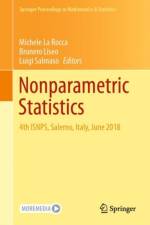
Highlighting the latest advances in nonparametric and semiparametric statistics, this book gathers selected peer-reviewed contributions presented at the 4th Conference of the International Society for Nonparametric Statistics (ISNPS), held in Salerno, Italy, on June 11-15, 2018. It covers theory, methodology, applications and computational aspects, addressing topics such as nonparametric curve estimation, regression smoothing, models for time series and more generally dependent data, varying coefficient models, symmetry testing, robust estimation, and rank-based methods for factorial design. It also discusses nonparametric and permutation solutions for several different types of data, including ordinal data, spatial data, survival data and the joint modeling of both longitudinal and time-to-event data, permutation and resampling techniques, and practical applications of nonparametric statistics.The International Society for Nonparametric Statistics is a unique global organization, and its international conferences are intended to foster the exchange of ideas and the latest advances and trends among researchers from around the world and to develop and disseminate nonparametric statistics knowledge. The ISNPS 2018 conference in Salerno was organized with the support of the American Statistical Association, the Institute of Mathematical Statistics, the Bernoulli Society for Mathematical Statistics and Probability, the Journal of Nonparametric Statistics and the University of Salerno.
This book includes 16 selected contributions presented at the 23rd Evolutionary Biology Meeting, which took place in Marseille in September 2019. The annual Evolutionary Biology Meetings in Marseille serve to gather leading evolutionary biologists and other scientists using evolutionary biology concepts, e.g. for medical research. The aim of these meetings is to promote the exchange of ideas to encourage interdisciplinary collaborations. Offering an up-to-date overview of recent findings in the field of evolutionary biology, this book is an invaluable source of information for scientists, teachers and advanced students.
This richly illustrated book is a wide-ranging guide to modern diagnostics and treatment planning in orthodontics, which are mandatory prior to the initiation of any type of comprehensive treatment. The importance of three-dimensional (3D) imaging techniques has been increasingly recognized owing to the shortcomings of conventional two-dimensional imaging in some patients, such as those requiring complex adult treatment and those with temporomandibular joint dysfunctions or sleep disturbances. In the first part of this book, readers will find clear description and illustration of the diagnostic role of the latest 3D imaging techniques, including cone beam computed tomography, intra-oral scanning, and magnetic resonance imaging. The second part explains in detail the application of 3D techniques in treatment planning for orthodontic and orthognathic surgery. Guidance is also provided on the use of image fusion software for the purposes of accurate diagnosis and precise design of themost appropriate biomechanical approach in patients with malocclusions.
This book provides a broad clinical overview of primary and secondary immunodeficiencies nested in clinical cases that will help the reader understand the approach to evaluation, diagnosis, and management of these challenging cases. Chapters begin with a comprehensive overview of immunodeficiencies to ground the reader in practical knowledge of the field and these complex conditions. Chapters cover B lymphocyte immunodeficiency, T cell immunodeficiency, immune dysregulation syndromes, and innate immune defects. They discuss a range of treatment options including gene therapy or bone marrow transplant. The book continues with a discussion on secondary immunodeficiencies and their treatment. Each chapter was written by authors with expertise related to different immunodeficiency disorders and provide a succinct overview of pathomechanisms, diagnosis, and treatment of a specific condition. Primary and Secondary Immunodeficiency will be an excellent resource for practicing allergists, hematologists, clinical immunologists, fellows, residents, and other clinicians who work with immunodeficiency patients.
The use of non-standard technologies such as superconductivity, cryogenics and radiofrequency pose challenges for the safe operation of accelerator facilities that cannot be addressed using only best practice from occupational safety in conventional industry. This book introduces readers to different occupational safety issues at accelerator facilities and is directed to managers, scientists, technical personnel and students working at current or future accelerator facilities. While the focus is on occupational safety ¿ how to protect the people working at these facilities ¿ the book also touches on ¿machine safety¿ ¿ how to prevent accelerators from doing structural damage to themselves. This open access book offers a first introduction to safety at accelerator facilities. Presenting an overview of the safety-related aspects of the specific technologies employed in particle accelerators, it highlights the potential hazards at such facilities and current prevention and protection measures. It closes with a review of safety management and organization at accelerator facilities.
This book is reflective of a science-based vision of the future development paradigm of economic and social systems. It deals with the digitization as the technological basis for the future development of economic and social systems and presents a review of groundbreaking technologies and prospects for their application. The specific character of the industry and prospects for the application of digital technologies in business are analyzed. A rationale is provided for future prospects for the sustainable development of economic and social systems in a digital economy. The authors determine the process of the formation and development of the information-oriented society, social and educational aspects of the digitization, as well as the institutional framework of the digital future of social and economic systems. The book combines the best works following the results of the 12th International Research-to-Practice Conference ¿Artificial Intelligence: Anthropogenic Nature vs. Social Origin¿ that was held by the Institute of Scientific Communications (ISC) in cooperation with the Siberian Federal University and the Krasnoyarsk Regional Fund of support of scientific and scientific¿technical activities on 5¿7 December 2019, in Krasnoyarsk, Russia, as well as following the results of the 3rd International Research-to-Practice Conference ¿Economic and Social Systems: Paradigms for the Future¿ that was held by the ISC in cooperation with the Pyatigorsk State University on 5¿6 February 2020. The target audience of the book consists of representatives of the academic community concerned with the future prospects for the development of economic and social systems, as well as economic agents engaged in the digitization of business processes, and representatives of public agencies regulating the development of business systems for their progressivity, sustainability and competitiveness.
This open access book presents the major outcomes of the fourth edition of the Future of Higher Education ¿ Bologna Process Researchers Conference (FOHE-BPRC 4) which was held in January 2020 and which has already established itself as a landmark in the European higher education environment. The conference is part of the official calendar of the European Higher Education Area (EHEA) for events that promote and sustain the development of EHEA. The conference provides a unique forum for dialogue between researchers, experts and policy makers in the field of higher education, all of which is documented in this proceedings volume. The book focuses on the following five sub-themes: - Furthering the Internationalization of Higher Education: Particular - Challenges in the EHEA - Access and Success for Every Learner in Higher Education - Advancing Learning and Teaching in the EHEA: Innovation and Links With Research - The Future of the EHEA - Principles, Challenges and Ways Forward - Bologna Process in the Global Higher Education Arena. Going Digital? While acknowledging the efforts and achievements so far at EHEA level, the Paris Ministerial Communiqué highlights the need to intensify crossdisciplinary and cross-border cooperation. One of the ways to achieve this objective is to develop more efficient peer-learning activities, involving policymakers and other stakeholders from as many member states as possible for which this book provides a platform. It acknowledges the importance of a continued dialogue between researchers and decisionmakers and benefits from the experience already acquired, this way enabling the higher education community to bring its input into the 2020. European Higher Education Area (EHEA) priorities for 2020 onwards. European Higher Education Area: Challenges for a New Decade marks 21 years of Bologna Process and 10 years of EHEAand brings together an unique collection of contributions that not only reflect on all that has been achieved in these years, but more importantly, shape directions for the future. This book is published under an open access CC BY license.
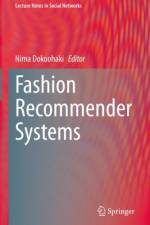
This book includes the proceedings of the first workshop on Recommender Systems in Fashion 2019. It presents a state of the art view of the advancements within the field of recommendation systems with focused application to e-commerce, retail and fashion. The volume covers contributions from academic as well as industrial researchers active within this emerging new field.Recommender Systems are often used to solve different complex problems in this scenario, such as social fashion-based recommendations (outfits inspired by influencers), product recommendations, or size and fit recommendations. The impact of social networks and the influence that fashion influencers have on the choices people make for shopping is undeniable. For instance, many people use Instagram to learn about fashion trends from top influencers, which helps them to buy similar or even exact outfits from the tagged brands in the post. When traced, customers¿ social behavior can be a very useful guide for online shopping websites, providing insights on the styles the customers are really interested in, and hence aiding the online shops in offering better recommendations and facilitating customers quest for outfits. Another well known difficulty with recommendation of similar items is the large quantities of clothing items which can be considered similar, but belong to different brands. Relying only on implicit customer behavioral data will not be sufficient in the coming future to distinguish between for recommendation that will lead to an item being purchased and kept, vs. a recommendation that might result in either the customer not following it, or eventually return the item. Finding the right size and fit for clothes is one of the major factors not only impacting customers purchase decision, but also their satisfaction from e-commerce fashion platforms. Moreover, fashion articles have important sizing variations. Finally, customer preferences towards perceived article size and fit for their body remain highly personal and subjective which influences the definition of the right size for each customer.The combination of the above factors leaves the customers alone to face a highly challenging problem of determining the right size and fit during their purchase journey, which in turn has resulted in having more than one third of apparel returns to be caused by not ordering the right article size. This challenge presents a huge opportunity for research in intelligent size and fit recommendation systems and machine learning solutions with direct impact on both customer satisfaction and business profitability.
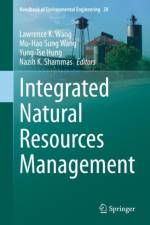
This edited book has been designed to serve as a natural resources engineering reference book as well as a supplemental textbook. This volume is part of the Handbook of Environmental Engineering series, an incredible collection of methodologies that study the effects of resources and wastes in their three basic forms: gas, solid, and liquid. It complements two other books in the series including "Natural Resources and Control Processes" and "Environmental and Natural Resources Engineering". Together they serve as a basis for advanced study or specialized investigation of the theory and analysis of various natural resources systems.The purpose of this book is to thoroughly prepare the reader for understanding the topics of global warming, climate change, glacier melting, salmon protection, village-driven latrines, engineers without borders (USA), surface water quality analysis, electrical and electronic wastes treatment, water quality control, tidal rivers and estuaries, geographic information systems, remote sensing applications, water losses investigations, wet infrastructure, lake restoration, acidic water control, biohydrogen production, mixed culture dark anaerobic fermentation, industrial waste recycle, agricultural waste recycle, recycled adsorbents, heavy metals removal, magnetic technology, recycled biohydrogen materials, lignocellulosic biomass, extremely halotolerant bacterial communities, salt pan and salt damaged soil. The chapters provide information on some of the most innovative and ground-breaking advances in resources conversation, protection, recycling, and reuse from a panel of esteemed experts.
This 3rd edition of Modern Mathematical Statistics with Applications tries to strike a balance between mathematical foundations and statistical practice. The book provides a clear and current exposition of statistical concepts and methodology, including many examples and exercises based on real data gleaned from publicly available sources. Here is a small but representative selection of scenarios for our examples and exercises based on information in recent articles: Use of the ¿Big Mac index¿ by the publication The Economist as a humorous way to compare product costs across nationsVisualizing how the concentration of lead levels in cartridges varies for each of five brands of e-cigarettesDescribing the distribution of grip size among surgeons and how it impacts their ability to use a particular brand of surgical staplerEstimating the true average odometer reading of used Porsche Boxsters listed for sale on www.cars.comComparing head acceleration after impact when wearing a football helmet with acceleration without a helmetInvestigating the relationship between body mass index and foot load while running The main focus of the book is on presenting and illustrating methods of inferential statistics used by investigators in a wide variety of disciplines, from actuarial science all the way to zoology. It begins with a chapter on descriptive statistics that immediately exposes the reader to the analysis of real data. The next six chapters develop the probability material that facilitates the transition from simply describing data to drawing formal conclusions based on inferential methodology. Point estimation, the use of statistical intervals, and hypothesis testing are the topics of the first three inferential chapters. The remainder of the book explores the use of these methods in a variety of more complex settings.This edition includes manynew examples and exercises as well as an introduction to the simulation of events and probability distributions. There are more than 1300 exercises in the book, ranging from very straightforward to reasonably challenging. Many sections have been rewritten with the goal of streamlining and providing a more accessible exposition. Output from the most common statistical software packages is included wherever appropriate (a feature absent from virtually all other mathematical statistics textbooks). The authors hope that their enthusiasm for the theory and applicability of statistics to real world problems will encourage students to pursue more training in the discipline.
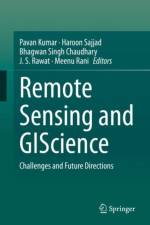
This book covers several themes related to forestry, agriculture, water, soil, urban, and atmospheric research. GIScience technology systems have increased in significance in recent decades and have the ability to acquire information at ground level with a higher spectral resolution using a field radio-spectrometer, which is a great improvement compared to other remote sensing systems. GIScience technology systems are widely used for solving and understanding the concept of forestry, crop, water resources, and related research themes. This book aims to advance the scientific understanding of GIScience technology and applications. The chapters present GIScience data integration with other sources such as LiDAR, Multi-spectral data and their applications in forestry, crop assessment, soil assessment, mineral mapping and related themes. The book will be of interest to geospatial experts, modellers, foresters, agricultural scientists, hyperspectral remote sensing and space community, ecologists and conservation communities, environmental consultants, big data compilers, and computing experts.
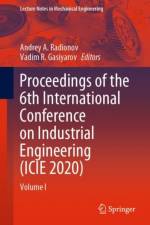
This book highlights recent findings in industrial, manufacturing and mechanical engineering, and provides an overview of the state of the art in these fields, mainly in Russia and Eastern Europe. A broad range of topics and issues in modern engineering are discussed, including the dynamics of machines and working processes, friction, wear and lubrication in machines, surface transport and technological machines, manufacturing engineering of industrial facilities, materials engineering, metallurgy, control systems and their industrial applications, industrial mechatronics, automation and robotics. The book gathers selected papers presented at the 6th International Conference on Industrial Engineering (ICIE), held in Sochi, Russia in May 2020. The authors are experts in various fields of engineering, and all papers have been carefully reviewed. Given its scope, the book will be of interest to a wide readership, including mechanical and production engineers, lecturers in engineeringdisciplines, and engineering graduates.
This book highlights recent findings in industrial, manufacturing and mechanical engineering, and provides an overview of the state of the art in these fields, mainly in Russia and Eastern Europe. A broad range of topics and issues in modern engineering are discussed, including the dynamics of machines and working processes, friction, wear and lubrication in machines, surface transport and technological machines, manufacturing engineering of industrial facilities, materials engineering, metallurgy, control systems and their industrial applications, industrial mechatronics, automation and robotics. The book gathers selected papers presented at the 6th International Conference on Industrial Engineering (ICIE), held in Sochi, Russia in May 2020. The authors are experts in various fields of engineering, and all papers have been carefully reviewed. Given its scope, the book will be of interest to a wide readership, including mechanical and production engineers, lecturers in engineeringdisciplines, and engineering graduates.
Abonner på vårt nyhetsbrev og få rabatter og inspirasjon til din neste leseopplevelse.
Ved å abonnere godtar du vår personvernerklæring.