







Gjør som tusenvis av andre bokelskere
Abonner på vårt nyhetsbrev og få rabatter og inspirasjon til din neste leseopplevelse.
Ved å abonnere godtar du vår personvernerklæring.Du kan når som helst melde deg av våre nyhetsbrev.

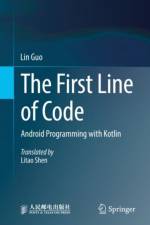
The First Line of Code is a must-have for developers who want to learn Android and Kotlin, and the best-seller in China. Knowledge between Android and Kotlin is interspersed in a way that readers are easy to understand and get start:· Android part covers all the important aspects of the Android platform, such as activity, service, content provider, broadcast receiver, fragment, basic UI, data storage, network, Jetpack and other application-level knowledge. · Kotlin part covers various aspects of Kotlin, such as standard grammar, common skills, higher-order functions, generics, coroutines, DSL and other language-level knowledge. In addition, The First Line of Code is a very practicing book, illustrating concepts with a complete weather forecast program. You can use and practice all the knowledge comprehensively after learning and see the actual result for what you have learned through the book.All contents of the book are quite easy to understand. It might be a good choice for both beginners and experienced developers. Also suitable for college students, college teachers, etc.
This book presents qualitative research narratives on children¿s engagement and learning in play and arts experiences. Using The Artground Singapore - a registered arts charity that offers interactive visual art spaces for children - as a site of study, the book also offers reflective and practical insights into the professional development and incubation of art practitioners dedicated to the creation and implementation of works for young audiences. With reference to other such purpose-built arts spaces specifically dedicated to the engagement and learning of young audiences through play and varied arts experiences, such as The Ark in Dublin and ArtPlay in Melbourne, the authors show how these spaces are also dedicated to the development and creation of new quality works for young audiences through various professional development programmes. The Artground Singapore was developed along similar lines of interest, and provides a dedicated arts space for children and their caretakers to explore, play and create together through its interactive visual arts play space, as well as arts programmes that include music, theatre and dance, amongst others. Sharing critical insights into the aesthetical, logistical, and management aspects of providing a dedicated arts space for children, this book will be of interest to arts practitioners, child educators, and cultural studies scholars interested in dance, drama and music performance and pedagogy.
This book examines the making of the Goddess Durga both as an art and as part of the intangible heritage of Bengal. As the ¿original site of production¿ of unbaked clay idols of the Hindu Goddess Durga and other Gods and Goddesses, Kumartuli remains at the centre of such art and heritage. The art and heritage of Kumartuli have been facing challenges in a rapidly globalizing world that demands constant redefinition of ¿art¿ with the invasion of market forces and migration of idol makers. As such, the book includes chapters on the evolution of idols, iconographic transformations, popular culture and how the public is constituted by the production and consumption of the works of art and heritage and finally the continuous shaping and reshaping of urban imaginaries and contestations over public space. It also investigates the caste group of Kumbhakars (Kumars or the idol makers), reflecting on the complex relation between inherited skill and artistry. Further, it explores how the socialconstruction of art as ¿art¿ introduces a tangled web of power asymmetries between ¿art¿ and ¿craft¿, between an ¿artist¿ and an ¿artisan¿, and between ¿appreciation¿ and ¿consumption¿, along with their implications for the articulation of market in particular and social relations in general. Since little has been written on this heritage hub beyond popular pamphlets, documents on town planning and travelogues, the book, written by authors from various fields, opens up cross-disciplinary conversations, situating itself at the interface between art history, sociology of aesthetics, politics and government, social history, cultural studies, social anthropology and archaeology. The book is aimed at a wide readership, including students, scholars, town planners, heritage preservationists, lawmakers and readers interested in heritage in general and Kumartuli in particular.
This book divides the history of China's rural-urban relations into three stages: antagonism, integration and re-antagonism, and demonstrates that the two coupled variables i.e., policy-culture and coast-trade are the most crucial to urbanization and rural-urban governance in China from ancient times till now. From the perspective of a combination of history and geography, this book puts forward a new theory which is mainly based on Adam Smith's theory and other theories about rural-urban relationship and reinterprets the process and driving forces of evolutionary history of rural-urban relationship over 5,000 years in China. It is useful for researchers and scholars specialized in such fields as rural and urban studies, economics, geography, management and planning for reference.
This book presents the select proceedings of the International Conference on Advanced Production and Industrial Engineering (ICAPIE) - 2021 held at Delhi Technological University, Delhi, during June 18-19, 2021. The book covers the recent advances and challenges in the area of production and industrial engineering. Various topics covered include artificial intelligence and expert systems, CAD/CAM Integration Technology, CAD/CAM, automation and robotics, computer-aided geometric design and simulation, construction machinery and equipment, design tools, cutting tool material and coatings, dynamic mechanical analysis, optimization and control, energy machinery and equipment, flexible manufacturing technology and system, fluid dynamics, bio-fuels, fuel cells, high-speed/precision machining, laser processing technology, logistics and supply chain management, machinability of materials, composite materials, material engineering, mechanical dynamics and its applications, mechanical power engineering, mechanical transmission theory and applications, non-traditional machining processes, operations management, precision manufacturing and measurement, precision manufacturing and measurement, reverse engineering and structural strength and robustness. This book is useful for various researcher mainly mechanical and allied engineering discipline.
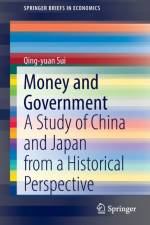
This is the first book to focus comparatively on the development processes of finance in China and Japan during the prewar period. The key issue is how to evaluate the role of government in the establishing of modern financial system. Both China and Japan started from a similar pre-modern situation in the middle of 19th century in that the monetary conditions were primitive and complicated, the traditional financial institutions were money-exchange-based, and above all, both countries had faced serious challenging pressure from the Western powers. International or domestic military affairs largely affected the development processes in both countries. While Japan succeeded in establishing its modern financial system that consistently supported its economic growth, China failed to modernize its money and banking system effectively at least until the end of World War II and the government had to change hands to the socialists, which further delayed the financial development. The experience of Japan suggests that the establishment of modern financial system may not simply be as a result of "e;spontaneous order"e;, a concept used by Hayek, at least for the case of a catching-up country. The evolution process of money and banking in China shows that the role of government, especially its enforcement ability of and compliance to the rule of law may be more important than the "e;legal origins"e;.
This is an Open Access book. This book is a must-have for healthcare providers and researchers, public health specialists and policy makers who are interested and involved in cancer care in the Arab world. The Arab world consists of 22 countries, which are members of the Arab League and spanning over 13,132,327 km2 with over 423,000,000 population. Over the past few decades, the Arab world has witnessed a swift evolution in healthcare provision. Nonetheless, Arab countries have considerable variability in economic capabilities, resource allocation, and intellectual talent that inevitably reflect on access to modern cancer care and prevention. This book is authored by experts from the Arab world who provide vital information on cancer statistics and risk factors, available clinical care pathways and infrastructure, and prevention programs in their individual countries. The chapters also address specific challenges in each country andinsights into future directions to achieve optimal care with conventional and novel diagnostics and therapies to keep up with the era of precision medicine. Special topics of interest and unique to the Arab world are also discussed, such as out of the country¿s medical tourism for cancer care and cancer care during war and conflict.Other special chapters include: Cancer research in the Arab world, Radiation therapy in Arab World and Pediatric Oncology in the Arab WorldCancer in the Arab World is the first comprehensive book that addresses cancer care in depth in all Arab countries and it is endorsed by the prestigious Emirates Oncology Society.
Abonner på vårt nyhetsbrev og få rabatter og inspirasjon til din neste leseopplevelse.
Ved å abonnere godtar du vår personvernerklæring.