






Gjør som tusenvis av andre bokelskere
Abonner på vårt nyhetsbrev og få rabatter og inspirasjon til din neste leseopplevelse.
Ved å abonnere godtar du vår personvernerklæring.Du kan når som helst melde deg av våre nyhetsbrev.

People live in indoor environment about 90% of lifetime and an adult inhales about 15 kg air each day, over 75% of the human body's daily mass intake (air, food, water). Therefore, indoor air quality (IAQ) is very important to human health. This book provides the basic knowledge of IAQ and highlights the research achievements in the past two decades. It covers the following 12 sections: introduction, indoor air chemicals, indoor air particles, measurement and evaluation, source/sink characteristics, indoor chemistry, human exposure to indoor pollutants, health effects and health risk assessment, IAQ and cognitive performance, standards and guidelines, IAQ control, and air quality in various indoor environments. It provides a combination of an introduction to various aspects on IAQ studies, the current state-of-knowledge, various advances and the perspective of IAQ studies. It will be very helpful for the researchers and technicians in the IAQ and the related fields. It is also useful for experts in other fields and general readers who want to obtain a basic understanding of and research advances in the field of IAQ.A group of experts in IAQ research have been recruited to write the chapters. Their research interests and experience cover the scope of the book. In addition, some experienced experts in IAQ field have been invited as advisors or reviewers to give their comments, suggestions and revisions on the handbook framework and the chapter details. Their contribution guarantees the quality of the book. We are very grateful to them. Last but not least, we express our heartfelt thanks to Prof. Spengler, Harvard University, for writing the foreword of the current Handbook of Indoor Air Quality both as a pioneer scientist who contributed greatly to indoor air science and as an Editor-in-chief of Handbook of Indoor Air Quality 2001, 1st ed. New York: McGraw-Hill. In addition to hard copies, the book is also published online and will be updated by the authors as needed to keep it aligned with current knowledge. These salient features can make the handbook fresh with the research development.
This volume results from the Eighth Basic Symposium held by the Institute of Food Technologists in Anaheim, California on June 8-9, 1984. The theme of the symposium was "Chemical Changes in Food during Processing." The speakers included a mix of individuals from academic institu- tions, governmental agencies, and the food industry. Twenty speakers discussed topics ranging from the basic chemistry relating to food constituents to the more applied aspects of chemical changes in food components during food processing. It was the intent of the organizers to bring together a group of speakers who could address the chemistry of changes in food compo- nents during processing from a mechanistic point of view. As a con- sequence, the proceedings of this symposium emphasize the basic chemistry of changes in food constituents from a generic perspective which is intended to provide the reader with a background to address more specific problems that may arise.
Once again the gastroenterologists of northwestern Canada have come out with a series of essays advancing important modem concepts. As indefatigable as ever, they bring together the latest in clinical-pathophysiological considera- tions for the clinician. The topics run the gamut from the lovely liver to HIV infection, from the pathophysiology of bile flow to comments on antigens in colorectal cancer. It is always easy to publish a first volume, for enthusiasm is high and everyone is anxious to win a place. Bringing out a second volume, the carrying forward of a good idea, is so much harder. In many ways this second volume in the series marks the coming of age of Canadian gastroenterology, as 11 of the 21 contributors currently reside in Canada. Still, the contributions from the United Kingdom and the United States make this an Anglo-American festival. Reading the chapters will make you appreciate the care with which the contributors have garnered recent references to give up-to-date practical infor- mation for us all. I enjoyed all that I read. My congratulations to Drs. Shaffer and Thomson for a job well done. Howard M. Spiro, M.D. New Haven, Connecticut ix Preface This book is based on papers presented at the third symposium on Recent Ad- vances in Gastroenterology held by the Canadian Association of Gastroenter- ology. The proposed audience for this volume is the internist and the general surgeon, as well as those in the specialties of gastroenterology and hepatology.
It is impossible to trisect angles with straightedge and compass alone, but many people try and think they have succeeded. This book is about angle trisections and the people who attempt them. Its purposes are to collect many trisections in one place, inform about trisectors, to amuse the reader, and, perhaps most importantly, to reduce the number of trisectors. This book includes detailed information about the personalities of trisectors and their constructions. It can be read by anyone who has taken a high school geometry course.
The HACCP Training Resource Pack is a ready-made training program aimed at food companies who wish to run their own in-house HACCP training programs. Created by the authors of HACCP: A Practical Approach, Second Edition, the Pack includes both print and electronic material addressing every element of running a successful training program. In addition, a copy of HACCP: A Practical Approach, second edition, is included in every Pack. Covering both introductory and advanced levels of HACCP training, this Pack is an extremely flexible and useful program, allowing continual customization for content, depth of coverage, and time. Both the International HACCP Alliance and the Royal Institute of Public Health and Hygiene have approved the Pack.
This book highlights the environmental footprints and best practices in sustainable agriculture. This first volume includes forty-four interesting chapters that present agriculture in the light of food security, circular economy, sustainability, food exports and imports written by leading experts in the field. It provides and interesting read for researchers, policy makers and professionals in the area of agriculture and economy.
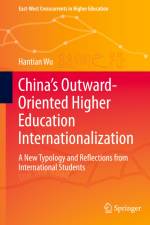
This book introduces a new typology of ¿inward- and outward-oriented¿ higher education internationalization, and investigates Chinäs current situation of shifting from a mainly ¿inward-oriented¿ higher education internationalization to a more balanced approach. It describes the gap between Chinäs soft power goals of using higher education internationalization for image and influence enhancement and the reality, and examines the three major dimensions of Chinäs ¿outward-oriented¿ higher education internationalization (i.e. the Confucius Institute program based on Sino-foreign higher education collaboration, international development aid in higher education, and higher education level international student recruitment) based on reflections provided by international graduate students in English instruction programs in education-related majors in three Chinese universities. Providing both theoretical insights and real-world examples, this book is suitable for higher education researchers, graduate students in the relevant fields, administrators of higher education institutions, and policymakers in the government sector.
This book presents the performance management efforts of selected governments across the globe. It largely focuses on how the Government of India and some state governments have adopted performance management systems in order to enhance the performance of government functionaries on one hand and raise the standards of citizen services on the other. As performance management is fast being adopted in government agencies across all the levels, the book offers the best global practices in a single volume, serving as a point of reference for all those interested in government performance management. It creates greater awareness among the practicing government functionaries and encourages further research into government performance management. It clearly elaborates on various government performance management practices and also the best practices that have ushered in a new era of public governance where great importance is placed on accountability and transparency.
This thesis proposes new approaches for modelling contacting interactions and electrostatic interactions between microparticles in the framework of the discrete element method and presents a systematic investigation on the agglomeration, migration and deposition of microparticles in presence of electrostatic and flow fields. It reports an exponential-form scaling for the size distribution of early-stage agglomerates in homogeneous isotropic turbulence and formulate the agglomeration and deagglomeration rates. The evolution of spherical clouds of charged particles that migrate under the action of an external electrostatic field is then investigated. Scaling laws of cloud radius and particle number density are obtained by solving a continuum convection equation. Finally, it investigates the deposition of charged particles on a flat plane and fibers. A dimensionless adhesion parameter is constructed to predict the structure of deposits. The temporal evolution of the deposit structure, particle capture efficiency, and the pressure drop are displayed with varying values of Coulomb repulsion and adhesion magnitudes.
This book draws on extensive first-hand material to provide a fresh and detailed analysis of a decade that was highly significant in shaping the new perceptions of Chinese contemporary art at home and abroad. Written in a language that is both poetic and philosophically insightful, it offers a meaningful exploration of a language of criticism indigenous to the Chinese art community, which won Zhu Zhu, the author, the 2011 CCAA Art Critic Award.
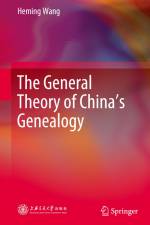
This book offers the first comprehensive and systematic introduction to the origins and development of Chinäs genealogy, as well as its fundamental role in eugenics, ethics, politics and culture throughout Chinäs history. This book is divided into two parts: chronological research and thematic research. The first part explains the definition, origin, birth, development, transformation, optimization, popularization and contemporary status of Chinäs genealogy, while the second addresses its styles, content, quantity, family names, format and value, illustrations, functions and other related issues. The book, for the first time in Chinäs genealogy, proposes several new concepts and perspectives, such as dividing the history of Chinäs genealogy into seven stages; redefining genealogy; and analyses of the transformation, popularization and value of Chinäs genealogy. Given its scope, the book offers a groundbreaking and authoritative resource for a broad readership.
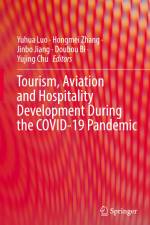
This book provides a snapshot of the COVID-19 pandemic situation from the perspective of the tourism, aviation and hospitality industries. The book analyzes the challenges and possible strategies for recovery to meet the urgent needs of the industry to deal with this catastrophic health crisis. A good part of the book discusses the negative effect of the pandemic to these industrial sectors and the strategies to reduce it. The book also explores other aspects of the tourism and hospitality development as the base for recovery such as applying more flexible business models, understanding the resident's perception and emotion experience, strengthening the human resource management, and improving the destination image for marketing, etc. Some long-term issues are also discussed such as management education and environment protection education. The book is highly recommended for tourism and aviation researchers, policy makers, industry practitioners, and graduate students. This book is a collection of selected papers from the 10th International Conference on Tourism and Hospitality between China and Spain (www.china-spain.org).
This book traces the trajectory of traditional Chinese ethics from West Zhou Dynasty (1046¿771 BC) through Qing Dynasty (1616¿1912) and covers a myriad of Chinese philosophers who have expressed their ideas about the relationships between Heavenly Dao vs. Earthly Dao, Good vs. Evil, Morality vs. Legality, Knowledge vs. Behavior, Motive vs. Result, Righteousness vs. Profitability, Rationality vs. Animality. In this book, the readers can find Confucius¿s discussion on Rite and Benevolence, Lao Zi¿s meditation on Inaction of Great Dao, Zhuang Zi¿s elaboration on ¿Transcendental Freedom¿, Mohist utilitarian ¿Universal Love¿, and Mencian theory of ¿Primordial Good Humanity¿, to name just a few phenomenal figures. A compact yet elaborate, panoramic yet profound guidebook to traditional Chinese ethical thought, this book is an excellent window to showcase traditional Chinese mental and spiritual legacy. Composed, translated, and proofread by brilliant scholars,it produces a fluent and coherent English discourse of Chinese morality and ethics, nimbly spinning together the threads of Confucianism, Taoism, Buddhism, and other ideological schools with brief references to the historical situation. Consequently, it provides English readers, especially those curious about Chinese psychology and rationality, with thought-provoking and horizon-expanding perspectives, and provides Chinese readers, especially those of philosophy and translation, with a great number of typical and characteristic quotes of archaic Chinese that have never been translated before. Ultimately, it is a fundamental threshold to learning about Chinese people, Chinese culture, Chinese morality, Chinese mentality, Chinese policy, and Chinese diplomacy.
Abonner på vårt nyhetsbrev og få rabatter og inspirasjon til din neste leseopplevelse.
Ved å abonnere godtar du vår personvernerklæring.