
















Gjør som tusenvis av andre bokelskere
Abonner på vårt nyhetsbrev og få rabatter og inspirasjon til din neste leseopplevelse.
Ved å abonnere godtar du vår personvernerklæring.Du kan når som helst melde deg av våre nyhetsbrev.

This book features high-quality, peer-reviewed papers from the 2021 6th International Conference on Intelligent Transportation Engineering (ICITE 2021), held in Beijing, China, on October 29-31, 2021. Presenting the latest developments and technical solutions in Intelligent Transportation engineering, it covers a variety of topics, such as intelligent transportation, traffic control, road networking, intelligent automobile and vehicle operation & management. The book will be a valuable reference for graduate and postgraduate audiences, researchers and engineers, working in Intelligent Transportation Engineering.
The book discusses Society 5.0 which fills the gap between cyber and physical space by providing a balanced environment between economic and social needs. The book is divided into two parts; part A focuses on various concepts related to Society 5.0 such as cyber space, physical space, information management and digital transformation. Part B discusses various integrated fields in Society 5.0, such as super-smart healthcare system, super-smart hospitality system, smart building, and transport management system. It also illustrates the concepts of big data, real-time analytics for smart Society 5.0 with an insight of real-time case studies.
This book focuses on piano teachers and the many pains they encounter in their careers. These pains play an essential role in blocking the musical inspiration of their students. The author identifies with the sensitivities of the teachers, aiming at the inspiration permeated and safer playing of their students.The book penetrates the protective mechanisms of the teachers that, on the one hand, maintain their professional functioning, while on the other hand, block refreshing ideas. It combines exploration of secure and culturally informed inspired playing, coping with exaggerated anxiety and understanding the interaction of piano actions with pianist's physiology.This book helps to open teachers' perceptions of the ways to enable more secure and more inspired performances while remembering the inner feelings of the piano teachers.
This book examines the background of fourth-generation biofuel production, use of genetically modified microalgae for production of fourth-generation biofuels; cultivation and harvesting of genetically modified microalgae; residue from biofuel extraction; health and environmental concerns of fourth-generation biofuels; regulations on cultivation and processing of the genetically modified algae; carbon dioxide sequestration; water footprint and current status and key challenges. The topic caters to academic researchers and industrial experts, who work in the field of biofuels as source of alternative fuel to achieve environmental and economic sustainability.
The book brings out several unique perspectives of impacts of COVID-19 on the environment with special emphasis on the risk and remediation of emerging contaminants. Idea is to work out under the one health framework and comprehend not only scientific and technical aspects but also environmental, legal and policy aspects for water resources management. The obvious stress is given to the occurrence, fate and transport of geogenic, microbial and anthropogenic contaminants of emerging concern under the preview of the fact that antibiotic and antiviral use has been unprecedented during the global pandemic of COVID-19. At the same time, this edited volume touches upon the broader framework of integrated water resource management, as well as mitigation and removal strategies to put forward a holistic picture to the readers and policymakers. These contents are divided into three sections: a) monitoring, occurrence, distribution and fate of emerging contaminants; b) source and effects of these contaminants on the total environment; and c) treatment strategies, natural attenuation and mitigation.
This book includes both theoretical conceptualization and practical applications in the fields of product design, architecture, engineering, and materials. The book aimed to inspire scholars and professionals to look at nature as a source of inspiration for developing new project solutions. Moreover, being one of the literature's first direct associations of bionics with sustainability, the book can be used as a reference for those who seek to know more about the theory of bioinspired applications, as well as new technologies, methods, materials, and processes.
This book presents comprehensive information on various aspects of ecology with special reference to insects, to form a platform to design an ecologically sound insect pest management. Insects are the most dominant and diverse group of living organism on earth. Owing to their smaller size, smaller space and food requirements, more number of generation per unit time, insects serves as one of the best subject matter for studies on various ecological aspects such as chemical ecology, population dynamics, predator/parasitoid-prey interactions etc. The knowledge on various aspects of insect ecology helps in formulating an effective environmentally benign insect pest management. This book is of interest and use to the post graduate students and researchers working on various aspects of insect ecology with special emphasis on population dynamics, chemical ecology, tri tropic interactions, ecological engineering and Ecological Insect pest management.
This book focuses on the relationship between urban land redevelopment and traffic systems and discusses the related research. Consisting of three main parts, the first analyzes the interaction between land redevelopment and traffic congestion as well as the mechanisms and causes of traffic congestion. The second part presents strategies for the prevention and control of traffic congestion under urban land redevelopment, proposing a two-stage evaluation system of traffic congestion pre-inspection and traffic impact analysis in the planning and implementation stages of land redevelopment. Lastly, the third section includes an application case analysis of the proposed traffic congestion management strategy.
This book discusses an interdisciplinary field which combines two major domains: healthcare and data analytics. It presents research studies by experts helping to fight discontent, distress, anxiety and unrealized potential by using mathematical models, machine learning, artificial intelligence, etc. and take preventive measures beforehand. Psychological disorders and biological abnormalities are significantly related with the applications of cognitive illnesses which has increased significantly in contemporary years and needs rapid investigation. The research content of this book is helpful for psychological undergraduates, health workers and their trainees, therapists, medical psychologists, and nurses.
This book discusses chemometric methods for spectroscopy analysis including NIR, MIR, Raman, NMR, and LIBS, from the perspective of practical applied spectroscopy. It covers all aspects of chemometrics associated with analytical spectroscopy, including representative sample selection algorithm, outlier detection algorithm, model updating and maintenance algorithm and strategy and calibration performance evaluation methods.To provide a systematic and comprehensive overview the latest progress of chemometric methods including recent scientific research and practical applications are presented. In addition the book also highlights the improvement of classical algorithms and the extension of common strategies. It is therefore useful as a reference book for researchers engaged in analytical spectroscopy technology, chemometrics, analytical instruments and other related fields.
This book covers major areas of device and data security and privacy related to the Internet of Things (IoT). It also provides an overview of light-weight protocols and cryptographic mechanisms to achieve security and privacy in IoT applications. Besides, the book also discusses intrusion detection and firewall mechanisms for IoT. The book also covers topics related to embedded security mechanisms and presents suitable malware detection techniques for IoT. The book also contains a unique presentation on heterogeneous device and data management in IoT applications and showcases the major communication-level attacks and defense mechanisms related to IoT.
The book is a practical guide for the various steps in the post-harvest technology of frozen shrimps. Shrimps are one of the most common and popular types of seafood consumed globally. The book discusses some of the most sought-after shrimps such as Penaeus monodon, P. vannamei, and Macrobrachium rosenbergii. Good-quality shrimp is a prerequisite for the seafood business as it is used for human consumption. Lack of proper knowledge in raw materials handling and post-harvest processing is the main obstacle in quality shrimp production. Complex business policy, commitment break in both parties (buyers and sellers), competition with other seafood-producing countries, and fluctuation of currency in international seafood market are the factors affecting international seafood business. This book closes this gap in literature and facilitates the production of excellent-quality exportable frozen shrimp through informed practices from experts. The book includes information about packaging of frozen shrimp, inspection, and shipment. It also compiles different mathematical calculations which are in practiced in the processing industries. The book is essential reading for professionals in the shrimp producing and processing industries. It is also useful for researchers in fisheries science, aquaculture, food technology, and food microbiology.
Two-stage single-phase converters, including two-stage single-phase dc-ac inverters and two-stage single-phase PFC converters, are interfacing power converters between dc and ac voltage/current sources, which have been widely applied for dc-ac and ac-dc power conversion. For the two-stage single-phase converter, the ac-side power pulsates at twice the ac voltage frequency, resulting in second harmonic current (SHC) which might flow into the dc-dc converter, the dc voltage source, and dc load. This book clarifies the generation, propagation, and side-effects of this SHC and proposes the SHC reduction control schemes for the dc-dc converter, with different topologies and/or different operating modes, in the single-phase converter. On this basis, the second harmonic current compensator (SHCC) is proposed to compensate the SHC, significantly reducing the dc bus capacitance. In doing so, the electrolytic capacitors, with short lifetimes, are removed from the two-stage single-phase converter, leading to extended system lifetime and enhanced system stability. For having flawless SHC compensation performance, the port-current control schemes are proposed for the SHCC. Additionally, the stability analysis is carried out for the two-stage single-phase converter with the addition of SHCC. This book is a monograph combining theoretical analysis and engineering design, which could not only be a reference book for master students, Ph.D. students, and teachers majoring in power electronics but also be a handbook for the electrical engineers working on the research and development of LED drivers, EV on-board chargers, railway auxiliary power supplies, aviation power supplies, renewable energy generation systems, etc.
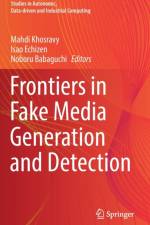
The book presents recent advances in the generation and detection of fake multimedia. It also presents some frontiers in defensive techniques in front of skillfully cloned media. The ultimate purpose of the research direction presented by this book is to build up a trustworthy media network benefited by an iron dome in front of media clones' attacks. The book focusses on (1) applications of deep generative models in the generation of fake multimedia, and (2) cyber-defensive and detective techniques in front of cyberattacks. The book is composed of three parts: (i) introduction, (ii) fake media generation, and (iii) fake media detection.
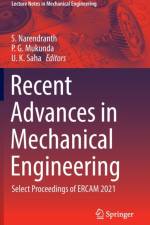
The book presents the select proceedings of the Third International Conference on Emerging Research in Civil, Aeronautical and Mechanical Engineering (ERCAM 2021) and focuses on the broad themes of mechanical and aeronautical engineering. The book covers research developments in the field of materials, mechanics, structures, systems and sustainability. Various topics covered in this book include smart and multifunctional composite materials, nano materials, computational mechanics, solid mechanics, kinematics and dynamics, fatigue, fracture and life cycle analysis, smart structures-vibration and noise control, vibration, acoustics and condition monitoring, thermal/fluid systems and analysis. The book will be useful for students, researchers and professionals working in the various areas of mechanical engineering.
This book presents experimental as well as simulation methodologies for analysis and development of nanostructures for introducing the desirable effects through modifications in the basic structure of select nanomaterials. The initial chapters in this book focus on exploring the basic aspects of nanomaterials, e.g., distinguishing features, synthesis, processing, characterization, simulation and application dimensions, or nanostructures that enable novel/enhanced properties or functions. The chapters also cover the size-dependent electronic, optical, and magnetic properties of nanomaterials in exposing the specific properties essential for applications in nanophotonics, nanoplasmonics, nanosystems (e.g., biological, medical, chemical, catalytic, energy, and environmental applications), and nanodevices (e.g., electronic, photonic, magnetic, imaging, diagnostic, and sensor applications). This book is a useful resource for students, researchers, and technologists in gathering recent knowledge on novel nanostructures and their use in different application areas.
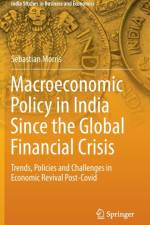
This book discusses the Indian economic crisis and brings out what went wrong and the correction necessary for getting the economy back to high growth trajectory, leading to economic transformation. To do so, the book covers trends in performance of Indian economy since the Global Financial Crisis to the COVID-19 effect, bringing out factors that have determined the same.The book questions the approach to macroeconomic policy of both the RBI and the government and brings out what it takes for macroeconomic policy to be supportive of high growth. It contains revealing contrasts with East Asia and China, although India has the same potential to grow with an expansion of manufacturing. Overall, it argues that macroeconomic policies (as much as structural, industrial, and trade policies) have been deficient and even good initiatives on the industrial policy and trade flounder for the lack of a strategic approach to macroeconomics. The book highlights the special opportunities present in an emerging economy with vast under and utilised labour and the macroeconomic policy initiatives that can take advantage of this key feature.It covers the macroeconomic data on growth using multiple indicators, then the external shocks and the internal policy measures/responses; besides, GVA/GDP, credit, exports, external transactions, interest and policy rates, yields, exchange rates, money, capital flows, indices of industrial sector, price indices and inflation, government expenditures, tax rates, fiscal deficits, market uncertainty measures to present a holistic picture of the economy and the shocks and policy actions that have followed. The book uses an innovative method of presentation and the consistency of the trends/stances of both monetary and fiscal policy using these large number of variables. It discusses the debate on overestimation of GDP/GVA growth estimates over the years from 2011-12 to about 2016-17 comprehensively. There is special coverage of GST with a comparison with China. Coverage also includes performance since the COVID-19 crisis again using a large number of indicators and an explanation for the same in terms of the limitations of the government's initiatives to counteract.The book is a quick and ready reference of what has happened in macroeconomic terms to those interested in the relevant facts. It is of interest to international economists, policy analysts, and investors whose need to understand that the Indian economy in macroeconomic terms and in terms of the stances and penchant of the government and the RBI is of value.
This book addresses and compensates for the lack of poverty measurement research in China. With regard to the multi-dimensional measurement of poverty, it is clear that the situation of Chinese farmers is problematic in terms of five major aspects: sanitation facilities, health insurance, durable consumer goods, productive assets and modern fuels. Based on these criteria, the book provides a clear direction for policy intervention to comprehensively improve farmers' standard of living and tackle the key problems of poverty alleviation and development in the region. In addition, its analysis of poverty among ethnic minorities, the elderly and children offers valuable reference material for poverty alleviation and the development of special groups.
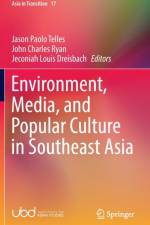
This book addresses the increasingly important subject of ecomedia by critically examining the interconnections between environment, ecology, media forms, and popular culture in the Southeast Asian region, exploring methods such as textual analysis, thematic analysis, content analysis, participatory ethnography, auto ethnography, and semi-structured interviewing. It is divided into four sections: I. Activism, Environment, and Indigeneity; II. Political, Ecologies and Urban Spaces; III. Narratives, Discourses, and Aesthetics; and IV. Imperialism, Nationalism, and Islands, covering topics such as broadcast media (radio and TV) and the environment; green cinema and ecodocumentaries, ecodigital art, digital environmental literature. It is of great interest to researchers, students, practitioners and scholars working in the area of humanities, media, communications, cultural studies, environmental humanities, environmental studies, and sustainability.
This book is an easy-to-read reference providing a link between functional analysis and diffusion processes. More precisely, the book takes readers to a mathematical crossroads of functional analysis (macroscopic approach), partial differential equations (mesoscopic approach), and probability (microscopic approach) via the mathematics needed for the hard parts of diffusion processes. This work brings these three fields of analysis together and provides a profound stochastic insight (microscopic approach) into the study of elliptic boundary value problems.The author does a massive study of diffusion processes from a broad perspective and explains mathematical matters in a more easily readable way than one usually would find. The book is amply illustrated; 14 tables and 141 figures are provided with appropriate captions in such a fashion that readers can easily understand powerful techniques of functional analysis for the study of diffusion processes in probability.The scope of the author's work has been and continues to be powerful methods of functional analysis for future research of elliptic boundary value problems and Markov processes via semigroups. A broad spectrum of readers can appreciate easily and effectively the stochastic intuition that this book conveys. Furthermore, the book will serve as a sound basis both for researchers and for graduate students in pure and applied mathematics who are interested in a modern version of the classical potential theory and Markov processes.For advanced undergraduates working in functional analysis, partial differential equations, and probability, it provides an effective opening to these three interrelated fields of analysis. Beginning graduate students and mathematicians in the field looking for a coherent overview will find the book to be a helpful beginning. This work will be a major influence in a very broad field of study for a long time.
The present monograph further develops the study, via the techniques of combinatorial anabelian geometry, of the profinite fundamental groups of configuration spaces associated to hyperbolic curves over algebraically closed fields of characteristic zero.The starting point of the theory of the present monograph is a combinatorial anabelian result which allows one to reduce issues concerning the anabelian geometry of configuration spaces to issues concerning the anabelian geometry of hyperbolic curves, as well as to give purely group-theoretic characterizations of the cuspidal inertia subgroups of one-dimensional subquotients of the profinite fundamental group of a configuration space.We then turn to the study of tripod synchronization, i.e., of the phenomenon that an outer automorphism of the profinite fundamental group of a log configuration space associated to a stable log curve induces the same outer automorphism on certain subquotients of such a fundamental group determined by tripods [i.e., copies of the projective line minus three points]. The theory of tripod synchronization shows that such outer automorphisms exhibit somewhat different behavior from the behavior that occurs in the case of discrete fundamental groups and, moreover, may be applied to obtain various strong results concerning profinite Dehn multi-twists.In the final portion of the monograph, we develop a theory of localizability, on the dual graph of a stable log curve, for the condition that an outer automorphism of the profinite fundamental group of the stable log curve lift to an outer automorphism of the profinite fundamental group of a corresponding log configuration space. This localizability is combined with the theory of tripod synchronization to construct a purely combinatorial analogue of the natural outer surjection from the etale fundamental group of the moduli stack of hyperbolic curves over the field of rational numbers to the absolute Galois group of the field of rational numbers.
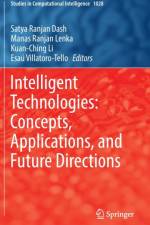
This book discusses automated computing systems which are mostly powered by intelligent technologies like artificial intelligence, machine learning, image recognition, speech processing, cloud computing, etc., to perform complex automated tasks which are not possible by traditional computing systems. The chapters are extended version of research works presented at first Ph.D. Research Symposium in various advanced technologies used in the field of computer science. This book provides an opportunity for the researchers to get ideas regarding the ongoing works that help them in formulating problems of their interest. The academicians can also be benefited to know about the current research trends that smooth the way to guide their students to carry out research work in the proper direction. The industry people will be also facilitated to know about the current advances in research work and materialize the research work into industrial applications.
An innovative feature of this book is its econocentric structure, focusing on digital designs. From the outset, econocentrism is assumed to be a core engine of capitalism, like money. The new coronavirus pandemic has changed lifestyles worldwide, which are unlikely ever to return in their original form. This great transformation will change the nature of the socio-economic system itself and will be centered on digital designs. At present, money already is beginning to undergo a major revolution in that sense. Many books dealing with digital designs and innovations have been published, but few if any of them focus on monetary and analytical methods in the way that this present volume does.The book then contains 6 parts: Evolution of money and thinking complexities in the AI era; Goods market and the future of labor market; Computational social approaches to social dilemmas, smart city, cryptocurrencies; Artificial market experiments; The randomness and high frequencies in financial data; Other trading strategy issues and the effects of AI usage. These issues may be indispensable subjects in our age. Study these subject, and have a step forward to the future society!
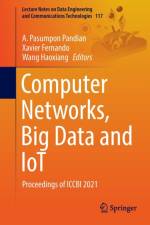
This book presents best selected research papers presented at the International Conference on Computer Networks, Big Data and IoT (ICCBI 2021), organized by Vaigai College Engineering, Madurai, Tamil Nadu, India, during December 9-10, 2021. The book covers original papers on computer networks, network protocols and wireless networks, data communication technologies and network security. The book is a valuable resource and reference for researchers, instructors, students, scientists, engineers, managers and industry practitioners in those important areas.
This book covers the latest research on applications of nanomaterials in the field of energy systems and devices. It provides an overview of the state-of-art research in this rapidly developing field. It discusses the design and fabrication of nanostructured materials and their energy applications. Various topics covered include nanomaterials for perovskite solar cells, transition metal dichalcogenides (TMDs) nanocomposites based supercapacitors, battery materials and technologies, major challenges toward development of efficient thermoelectric materials for energy efficient devices, extraction and experimentation of biodiesel produced from leachate oils of landfills coupled with nano-additives aluminium oxide and copper oxide on diesel engine and many more. It has contributions from world-renowned specialists in the fields of nanomaterials and energy devices. The book will be useful for students, researchers and professionals working in the area of nanomaterials and energy systems & devices.
This contributory volume is a comprehensive collection on the mangrove forest eco-system and its ecology, the resources and potentials of mangroves, conservation efforts, mangrove eco-system services and threats to conservation. The book is an all-inclusive compilation on the status, conservation and future of mangroves. Mangroves are a unique ecosystem providing several ecosystem services. They are formed in the inter-tidal areas of large rivers and coastal islands. Mangroves thrives due to constant interaction with the terrestrial and marine ecosystem. These are the species dynamics, varying tidal amplitudes, plant succession, changing floral pattern of the channels of the estuary, the varying sediment transportation. There was 20% decline in mangrove forest area in the last 25 years due mainly to conversion and coastal development. Lengthy recovery periods required for the degraded mangrove forests. Hence there is an urgent need to take stock of the updated information on these mangroves at global level. It is of immense value to scientific community involved in teaching, research and extension activities related to mangrove conservation.
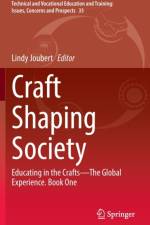
This book focusses on the role of craft as a continuing cultural practice and the revival of disappearing skills in contemporary society. It includes twenty-five essays by highly regarded artisans, academics, technologists, entrepreneurs, businesspeople, curators, and researchers from many countries representing a wide range of global craft traditions and innovations.The authors explain their professional practices and creative pathways with knowledge, experience, and passion. They offer insightful analyses of their traditions within their culture and in the marketplace, alongside the evolution of technology as it adapts to support experimentation and business strategies. They write about teaching and research informing their practice; and they explain the importance of their tools and materials in function and form of the objects they make. The essays reveal a poignant expression of their successes, disappointments, and opportunities.This book offers case studies of how artisans have harnessed the traditions of the past alongside the latest design technologies. The authors reveal how global craft is not only a vehicle for self-expression and creativity, but also for being deeply relevant to the world of work, community and environmental sustainability. The book makes the vital link between skills, knowledge, education, and employment, and fills a much-needed niche in Technical, Vocational Education and Training TVET.
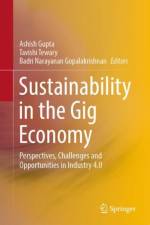
This book provides a comprehensive and contemporary source of reference for the gig economy for sustainable businesses with a focus on Industry 4.0. It covers the theoretical and practical implications of the rise of an alternative system in the era of technology-driven business entities; and explains the emergence of the gig economy as a crucial factor in devising approaches that will help in ensuring better decision making.As the COVID-19 pandemic rages on, investors and corporations are attempting to overcome the turbulence in financial markets over the past few months. Governments and economists are scrambling to mitigate the impacts of lockdowns. Many businesses have transferred to a remote working system, and the critical challenge remains to make this form of work and business productive, efficient, and sustainable. Against this backdrop, the book provides an overview of the gig economy from varied perspective such as general business and economics; ethics, governance, and legal issues; diffusion of IT in the workplace; sustainability; future of workforce and workplaces during and post-pandemic scenarios. This edited volume also highlights several challenges and opportunities for managing the diverse workforce in the prevailing situation which has no precedence.With its discussions on the impact of the gig economy on the business world, the book carries appeal for scholars in the business, human resource professionals, industry practitioners, corporates, and policy advocates interested in learning about evolution, automation, marketing, and sustainability in the gig economy.
Biportal endoscopic spine surgery has been rapidly developed recently, and Unilateral biportal endoscopic spine (UBE) surgery may be new stream in spine surgery. UBE surgery is a new concept of surgery that is different from the existing one portal endoscopic surgery, and has the advantage of being familiar with spinal surgeons as the surgical anatomy is similar to a general surgical method, and the learning curve period is short. The 4mm diameter endoscope provides a very clear image, and it can be safely operated under magnified and clear endoscopic view. It is also available to use general surgical instruments in addition to endoscopic surgical instruments during UBE approaches. Currently it is being performed not only in the lumbar spine, but also in the cervical and thoracic spine. In addition, simple laminectomy, disc removal, and spinal fusion are possible. With the advancement of UBE surgery, spinal surgeons from various countries have been performing UBE in recent years, and it is gradually spreading to the world. This will be the first book summarizing from basic to advanced techniques with abundant illustrations and video aid for easy understanding.
Abonner på vårt nyhetsbrev og få rabatter og inspirasjon til din neste leseopplevelse.
Ved å abonnere godtar du vår personvernerklæring.