








Gjør som tusenvis av andre bokelskere
Abonner på vårt nyhetsbrev og få rabatter og inspirasjon til din neste leseopplevelse.
Ved å abonnere godtar du vår personvernerklæring.Du kan når som helst melde deg av våre nyhetsbrev.

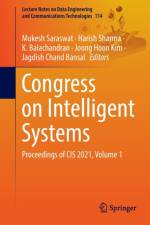
This book is a collection of selected papers presented at the Second Congress on Intelligent Systems (CIS 2021), organized by Soft Computing Research Society and CHRIST (Deemed to be University), Bengaluru, India, during September 4 - 5, 2021. It includes novel and innovative work from experts, practitioners, scientists, and decision-makers from academia and industry. It covers topics such as Internet of things, information security, embedded systems, real-time systems, cloud computing, big data analysis, quantum computing, automation systems, bio-inspired intelligence, cognitive systems, cyber physical systems, data analytics, data/web mining, data science, intelligence for security, intelligent decision making systems, intelligent information processing, intelligent transportation, artificial intelligence for machine vision, imaging sensors technology, image segmentation, convolutional neural network, image/video classification, soft computing for machine vision, pattern recognition, human-computer interaction, robotic devices and systems, autonomous vehicles, intelligent control systems, human motor control, game playing, evolutionary algorithms, swarm optimization, neural network, deep learning, supervised learning, unsupervised learning, fuzzy logic, rough sets, computational optimization, and neuro-fuzzy systems.
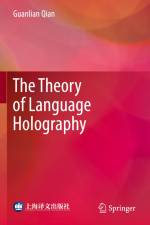
This book presents a method of linking the ordered structure of the cosmos with human thoughts: the theory of language holography. In the view presented here, the cosmos is in harmony with the human body and language, and human thoughts are holographic with the cosmos at the level of language. In a word, the holographic relation is nothing more than the bridge by means of which Guanlian Qian connects the cosmos, human, and language. This is a vitally important contribution to linguistic and philosophical studies that cannot be ignored.The book has two main focus areas: outer language holography and inner language holography. These two areas constitute the core of the dynamic and holistic view put forward in the theory of language holography. The book¿s main properties can be summarized into the following points: First and foremost, it is a book created in toto by a Chinese scholar devoted to pragmatics, theoretical linguistics, and philosophy of language.Secondly, the book was accepted by a top Chinese publisher and was republished the second year, which reflected its value and appeal. Thirdly, in terms of writing style, the book is characterized by succinctness and logic. As a result, it reads fluidly and smoothly without redundancies, which is not that common in linguistic or even philosophical works. Lastly, as stated by the author in the introduction, ¿Creation is the development of previous capacities, but it is also the generation of new ones¿; this book can be said to put this concept into practice. Overall, the book offers a unique resource to readers around the world who want to know more about the truly original and innovative studies of language in Chinese academia.
This book provides a new framework for conducting qualitative research into Asylum Seeking Refugees based on Emmanuel Levinas¿ ethic of the face-to-face encounter. The methodology originates in the term Midrash¿a narrative form that exposes; investigates; searches. It reconceptualises encounters between Asylum Seeking Refugees and those researching their experiences in a manner that moves beyond the possibility of ¿Othering¿ and the removal of ¿voice¿ that can characterise research into refugees. This methodology allows a complex and rich multidimensional text, with heterogeneity of voices, experiences, and subjects. As a phenomenological method of research, the internal phenomena of the researcher¿feeling, intuition, and personal perception¿are legitimate sites of knowledge and understanding, and are not considered separate from the external, objectively observable world. While the researcher is not researching herself, she is also not separate from the research field and data. TheMidrash methodology is an honest and explicit method of research designed to (re)invigorated the passion of academics and researchers.
This book provides a comprehensive overview of Private Equity (PE) financing in the infrastructure and real estate sectors. In doing so, it analyzes the impact of such investments in the two sectors, evaluates the types of financing strategies, and explores the value created by such investments. Infrastructure and Real Estate have emerged as a significant asset class for PE investors. In the last three decades, PE firms have invested significant amounts of capital in infrastructure and real estate ¿ sectors which did not feature in their radar before 2000. Between 2000 and 2009, PE firms invested more than USD 200 billion in infrastructure. Real estate sector also witnessed investments of a similar scale as that of infrastructure. Fundraising for infrastructure and real estate was about USD 100 billion and USD 150 billion respectively in 2019, setting new records and reaching all-time highs. This book examines such PE investments ¿ both at a global level and at an emerging economy level, to identify how PE firms have created an impact with their investments, to provide both ready capital and value-addition to sectors which seem to urgently need both. The book is divided into three sections ¿ impact of PE investments, strategies used by PE firms, and value created by such investments. The findings of this research and the corresponding best practices are useful and applicable to students, academicians, researchers, financial institutions, policy makers and law makers, commercial banks and funding agencies, practitioners, the Government, and other parties who are directly or indirectly associated with the development of infrastructure and real estate; and could aid funding agencies, practitioners and policy makers who are directly responsible for creating and developing infrastructure and real estate for their economies.
This book provides acomprehensive overview of cell signalling pathways and morphogens in the genesis of brain tumours. It also explains the role of brain tumour stem cells in the brain tumour progression. It also elucidates the novel early biomarkers that can be utilized to diagnose brain tumours. It presents the basic developmental pathways and morphogens, including retinoic acid and TGF-b that promote brain tumorigenesis. The chapters illustrate the role of stem cells and stem cells mediated cell signalling pathways including, Sonic hedgehog, Notch, Wnt in the brain tumour growth. The chapters also emphasize the role of transcription factors, mainlyNanog, Sox, BMI1, HIF1 and Pax6 in the brain tumouriogensis. It highlights the role of NF-kb, Myc and neurotrophins in the brain tumour development. Finally, the book summarizes the potential early therapeutic targets and targeted drug discovery for brain tumours.
Using a cultural studies approach, this book explores how the Spanish colonization of North Africa continues to haunt Spain's efforts to articulate a national identity that can accommodate both the country's diversity, brought about by immigration from its old colonies, and the postnational demands of its integration in the European Union.
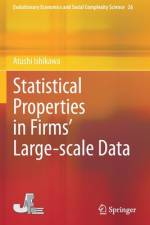
This is the first book to provide a systematic description of statistical properties of large-scale financial data. Specifically, the power-law and log-normal distributions observed at a given time and their changes using time-reversal symmetry, quasi-time-reversal symmetry, Gibrat's law, and the non-Gibrat's property observed in a short-term period are derived here. The statistical properties observed over a long-term period, such as power-law and exponential growth, are also derived. These subjects have not been thoroughly discussed in the field of economics in the past, and this book is a compilation of the author's series of studies by reconstructing the data analyses published in 15 academic journals with new data. This book provides readers with a theoretical and empirical understanding of how the statistical properties observed in firms' large-scale data are related along the time axis. It is possible to expand this discussion to understand theoretically and empirically how the statistical properties observed among differing large-scale financial data are related. This possibility provides readers with an approach to microfoundations, an important issue that has been studied in economics for many years.
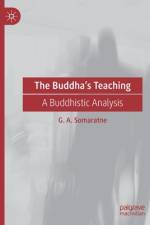
This book approaches the Dhamma, the Buddha's teaching, from a Buddhistic perspective, viewing various individual teachings presented in hundreds of early discourses of Pali canon, comprehending them under a single systemic thought of a single individual called the Buddha. It explicates the structure of this thought, going through various contextual teachings and teaching categories of the discourses, treating them as necessary parts of a liberating thought that constitutes the right view of one who embraces the Buddha's teaching as his or her sole philosophy of life. It interprets the diverse individual dhammas as being in congruence with each other; and as contributory to forming the whole of the Buddha's teaching, the Dhamma. By exploring some selected topics such as ignorance, configurations, not-self, and nibbana in thirteen chapters, the book enables readers to understand the whole (the Dhamma) in relation to the parts (the dhammas), and the parts in relation to the whole, while realizing the importance of studying every single dhamma category or topic not for its own sake but for understand the entirety of the teaching. This way of viewing and explaining the teachings of the discourses enables readers to clearly comprehend the teaching of the Buddha in early Buddhism.
Abonner på vårt nyhetsbrev og få rabatter og inspirasjon til din neste leseopplevelse.
Ved å abonnere godtar du vår personvernerklæring.