





Gjør som tusenvis av andre bokelskere
Abonner på vårt nyhetsbrev og få rabatter og inspirasjon til din neste leseopplevelse.
Ved å abonnere godtar du vår personvernerklæring.Du kan når som helst melde deg av våre nyhetsbrev.

This book offers case study of the tridimensional exploration in whole exploration cycle with comprehensive and systematic geological and geophysical studies in the Bongor Basin. Focused on the typical intensively inversed rift basin¿the Bongor Basin in Chad, this book establishes petroleum geology model, accumulation model of the typical intensively inversed rift basin and ensemble exploration techniques by studying comprehensively through the lens of structural geology, petrology, geochronology, sedimentology, paleontology, petroleum geochemistry, petroleum geology, and hydrocarbon accumulation dynamics studies on both granite buried hill and sandstone reservoir. Based on the cases in whole exploration cycle and abundant primary research resource (some are first published in public) in the Bongor Basin, this book is a valuable reference for researchers, managers, instructors, and students who engaged in petroleum exploration.
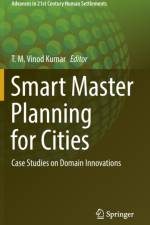
This book, based on international collaborative research, presents a state-of-the-art design for "e;Smart Master Planning"e; for all metropolises, megacities and meta cities as well as at sub-city zonal and community and neighborhood level. Smart Master Planning accepts that all cities are a smart city in making in a limited way as far as the six components for Smart Cities; namely, smart people, smart economy, smart environment, smart mobility and smart Governance are concerned. Smart Master Planning in any city can only be designed and executed by active roles of Smart People and Smart City Government and is a joint and synchronous effort of E-Democracy, E-Governance and ICT-IOT system in a 24 hour 7-day framework on all activities. In addition to use of Information and Communication Technologies, and Remote Sensing, the design of smart Master Planning utilizes domain specific tools of many aspects of a city to realize the coordinated, effective and efficient planning, management, development and conservation that improve ecological, social, biophysical, psychological and economic well-being in an equitable manner without compromising the sustainability of development ecosystems and stakeholders. This book will present 12 case studies covering more than 12 cities or more cities centered on domain-specific smart planning components.Case studies of Domain Innovations include Urban Land management, Master Planning for Water Management, Comprehensive Master Planning Innovations, Smart Use of Master Plan basics, Integrated Smart Master Planning, and Citizen-Centric Master Planning.
This open access handbook offers a one-stop-shop for both new and established researchers, educators, policy makers and administrators in the field of open, distance and digital education (ODDE) to gain a comprehensive overview of the history, theory and practice at all levels of ODDE, and at the same time stimulates in-depth discussions on various themes and issues of ODDE for today and future. Researchers, scholars and students in the field of ODDE can use this handbook as a major reference to conduct their own research and learning agendas.To cover the field comprehensively, the handbook is structured following the 3M framework developed by one of the chief editors Zawacki-Richter. The 3M framework categorizes the major research areas and issues in ODDE on three levels. Accordingly, the handbook is divided into six sections in total, two section at each of the three levels: 1) Macro Level ¿ ODDE Systems and Theories, 2) Meso Level - Institutional Perspectives, Management and Organization, and 3) Micro Level ¿ Learning and Teaching in ODDE.This is an open access book.
This book analyses several aspects of Hybrid Annuity Model (HAM), a form of hybrid public-private partnership (PPP) for development of roads sector in India. The book covers contractual, financing, taxation and accounting aspects of the HAM based PPP projects in India and provides a complete multi-dimensional view for readers. It is a comprehensive guide for multiple stakeholders involved in the development of infrastructure projects in developing economies across globe. The book is authored by professionals having hands-on advisory experience for HAM PPP projects in India. Given that these are long-term concession agreements (around 15 years), there are inherent complications and the authors have tried to provide clarity on practical issues. The book adopts a novel case-study approach. Based on detailed financial and commercial assumptions for a road project in India, the authors have used around 100 numerical illustrations to provide a quantitative and qualitative understanding for readers. Another highlight of the book is use of international case-studies to provide key learnings in areas of project preparation and structuring for such hybrid PPP models. The risk allocation framework is also contrasted with the HAM PPP model to highlight the key differences. The international case studies have been selected from transport and water sector to illustrate the applicability of hybrid PPPs across multiple sectors to support sustainable infrastructure development.The target audience for this book include private sector developers, government agencies, deal practitioners, advisors, researchers and academia . This book will also serve as a useful guide for commercial lenders, development finance institutions (DFIs) and institutional investors who are looking to finance such infrastructure projects in the long term.
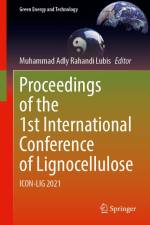
This book presents the selected papers from the 1st International Conference of Lignocellulose, held as a virtual conference in Bogor, Indonesia, on September 13-14, 2021. The papers include contributions from researchers, scientists, academia, and practitioners covering topics from the field of biomass conversion, bio-based smart materials, forest, and environment, enhancing mitigation for climate change, radar and atmospheric science, and socio-economy in sustainable development goals. This event was organized by Japan Society for the Promotion of Science (JSPS) Alumni Association of Indonesia in collaboration with Research Center for Biomaterials, Indonesian Institute of Sciences, Indonesia.
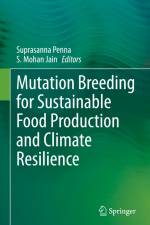
This book highlights the recent progress on the applications of mutation breeding technology in crop plants. Plant breeders and agriculturists are faced with the new challenges of climate change, human population growth, and dwindling arable land and water resources which threaten to sustain food production worldwide. Genetic variation is the basis which plant breeders require to produce new and improved cultivars. The understanding of mutation induction and exploring its applications has paved the way for enhancing genetic variability for various plant and agronomic characters, and led to advances in gene discovery for various traits. Induced mutagenesis has played a significant role in crop improvement and currently, the technology has resulted in the development and release of more than 3600 mutant varieties in most of the crop plants with great economic impact. The field of ¿mutation breeding¿ has come long way to become an important approach for crop improvement. This book covers various methodologies of mutation induction, screening of mutants, genome editing and genomics advances and mutant gene discovery. The book further discusses success stories in different countries and applications of mutation breeding in food crops, horticultural plants and plantation crops.This informative book is very useful to plant breeders, students and researchers in the field of agriculture, plant sciences, food science and genetics.
This book is open access and illustrates the spatial distribution of the global change risk of population and economic systems with the maps of environment, global climate change, global population and economic systems, and global change risk. The risks of global change are mapped at 0.25 degree grid unit. The risk results and their contribution rates of the world at national level are unprecedentedly derived and ranked. The book can be a good reference for researchers and students in the field of global climate change and natural disaster risk management, as well as risk managers and enterpriser to understand the global change risk of population and economic systems.
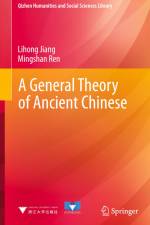
This book systematically outlines the development of ancient Chinese. Consisting of 20 chapters, the self-contained work presents macro-level discussions on a broad range of topics, including: philology, phonology, exegetics, certain words¿ special meanings, sentence types, the flexible use of words, different grammars in ancient and modern times, and rhetoric. Though chiefly focusing on vocabulary, the book also addresses grammar, and points out grammar problems that differ considerably from those in modern Chinese, in addition to combining morphology and syntax. Further, unlike the majority of textbooks on the subject, it pays more attention to the rhetoric used in ancient Chinese literary works. Rather than simply analyzing linguistic phenomena, the book also (and more importantly) provides a meaningful approach to the study of ancient Chinese. Accordingly, it offers a valuable asset for researchers, graduate students, and everyone else who is interested in ancient Chinese.
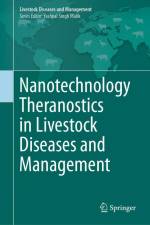
This book reviews various applications of nanotechnology in the prophylactic, diagnostic, and therapeutic management of livestock diseases. The initial section discusses the strategies for the synthesis of nanomaterials and characterization of different nanomaterials. The subsequent chapters explore the role of nanoparticles in the diagnosis of diseases caused by pathogenic microorganisms, including bacteria, viruses, protozoans, and fungi. The book also examines the nano sensors that are used for point-of-care diagnosis of various livestock diseases.Additionally, it highlights nanoparticles-based vaccines and vaccine delivery systems to combat bacterial livestock diseases. Lastly, the book entails the strategies for developing nanotherapeutics for the treatment of bacterial, viral, fungal diseases, metabolic disorders, and cancer in livestock animals. The content of this book is useful for researchers and practitioners interested in understanding the applications of nanotechnology in diagnostics and therapeutics of livestock diseases.
Abonner på vårt nyhetsbrev og få rabatter og inspirasjon til din neste leseopplevelse.
Ved å abonnere godtar du vår personvernerklæring.