





Gjør som tusenvis av andre bokelskere
Abonner på vårt nyhetsbrev og få rabatter og inspirasjon til din neste leseopplevelse.
Ved å abonnere godtar du vår personvernerklæring.Du kan når som helst melde deg av våre nyhetsbrev.

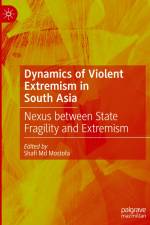
This book offers a comprehensive analysis of the multifaceted dimensions of violent extremist groups in South Asia, attending especially to the relationships between the local and regional forces influencing their emergence and activities. In addition, research in the book shows how political, security-sensitive events and processes are framed, and the factors responsible for such framing. Similarly, it discusses prevalent discourses on anti-violent extremism policy and the on-the-ground militarized preventive/reactive interventions they guide, which are inspired by ideologies that increasingly reflect controversial understandings of the experiences of people within conditions of state fragility. In doing so, the book balances attention to local conditions that frame the rise and fall, or persistency, of incidences of violent extremism. The systems-based ecological framing of issues in the book is influenced by a concern for the broader questions of securitization, global governance, poverty, (under)development, and armed conflicts in South Asia.
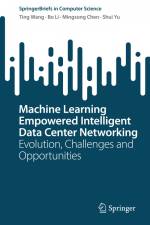
An Introduction to the Machine Learning Empowered Intelligent Data Center NetworkingFundamentals of Machine Learning in Data Center Networks. This book reviews the common learning paradigms that are widely used in data centernetworks, and offers an introduction to data collection and data processing in data centers. Additionally, it proposes a multi-dimensional and multi-perspective solution quality assessment system called REBEL-3S. The book offers readers a solid foundation for conducting research in the field of AI-assisted data center networks.Comprehensive Survey of AI-assisted Intelligent Data Center Networks. This book comprehensively investigates the peer-reviewed literature published in recent years. The wide range of machine learning techniques is fully reflected to allow fair comparisons. In addition, the book provides in-depth analysis and enlightening discussions on the effectiveness of AI in DCNs from various perspectives, covering flow prediction, flow classification, load balancing, resource management, energy management, routing optimization, congestion control, fault management, and network security.Provides a Broad Overview with Key Insights. This book introduces several novel intelligent networking concepts pioneered by real-world industries, such as Knowledge Defined Networks, Self-Driving Networks, Intent-driven Networks and Intent-based Networks. Moreover, it shares unique insights into the technological evolution of the fusion of artificial intelligence and data center networks, together with selected challenges and future research opportunities.
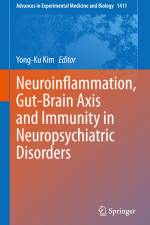
This book reviews the relationship between cytokines, glia, and neurons in the pathophysiology of neuropsychiatric disorders and examines the mechanisms of action of the drugs used for the treatment of these disorders. Increasing evidence has suggested that glia perform important roles in various brain functions, but much remains to be learned about these crucial cells and their interplay with neurons. In addition, a better understanding of the interaction between inflammatory mediators, such as cytokines, and the activated immune response will be of critical importance for the development of new therapeutic strategies. These key areas are the focus of this book, which documents the latest research findings in the field. Evidence is provided for the role of inflammation-induced toxic metabolites from the tryptophan pathway in a wide range of neuropsychiatric disorders, including depression, schizophrenia, and Alzheimer's disease. In presenting state of the art knowledge on the interactions between cytokines, glia, and neurons, the book will help to pave the way for the development of novel targets for the prevention and treatment of neuropsychiatric disorders.
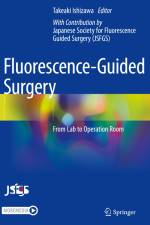
This volume is a practical guide of theranostics using intraoperative fluorescence imaging technology, as an all-out effort by the Japanese Society for Fluorescence Guided Surgery. It describes the various approaches the technique is being used such as vascular imaging, identification of lymphatic vessels by intratissue injection, lymph node imaging, and imaging for identification of anatomical structures. The book is organized into three major parts and the first one delivers the basics, introducing the use of the technology in clinical settings and initial setups. Next comes the description of clinical applications where chapters illustrate perfusion assessment, cancer localization, anatomy visualization, and lymph nodes/ducts mapping. Each chapter is devoted to the specific surgical field and disease areas, presenting images and videos of case studies. The last part presents some upcoming techniques for treatments. The Editor and the authors wish the ideas presented here will behints to bridge the knowledge between surgeons and basic researchers for further innovation and practicality. It is important to stay up-to-date since intraoperative fluorescence imaging has been applied to clinical settings in various surgical fields and at the same time, novel techniques improving the efficacy of the technology have also been developed actively. Fluorescence-Guided Surgery ¿ From Lab to Operation Room is recommended for surgeons, operating nurses, medical experts, basic researchers and, industry engineers worldwide beyond boundaries of specialties. Edited and written by experts of The Japanese Society for Fluorescence-Guided Surgery, those who are the founders of the technology, it describes the accurate development history and cutting-edge techniques based on the knowledge accumulated over the years. ¿
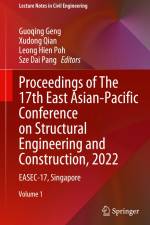
This book presents articles from The 17th East Asian-Pacific Conference on Structural Engineering and Construction, 2022, organized by National University of Singapore. These peer-reviewed articles, authored by professional engineers, academics and researchers, highlight the recent research and developments in structural engineering and construction, embracing the theme- ¿Towards a Resilient and Sustainable City¿. The papers presented in this proceeding provide in-depth discussions with key insights into the future research, development and engineering translation in structural engineering and construction.
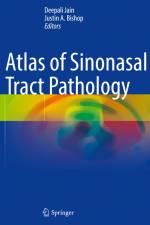
This book reviews normal anatomy and immunohistochemical profile of sinonasal tract (SNT) and covers histomorphology of infections some of which are unique to Asia, tumor-like lesions, and rapidly evolving spectrum of benign and malignant tumors of SNT. It describes all the entities with the help of over 200 full color photomicrographs with their detailed descriptions. The book includes relevant clinical and radiology photographs and anatomical drawings complemented by short bulleted legends describing the picture and providing relevant information. In addition to surgical pathology, it includes a chapter on the cytology of SNT lesions, which is described rarely in available books and literature. It serves as a concise and informative resource for easy understanding.The book is written by leading experts in pathology around the world from USA, Europe and Asia. It highlights the expanded role of pathologists in patient care of SNT lesions.This book is suitable for clinicians, practicing pathologists, faculty, pathology residents and students. This will help the post-graduate students in pathology to understand this area in detail and to be able to answer questions on SNT resection/biopsy cases asked in their board exams of residency.
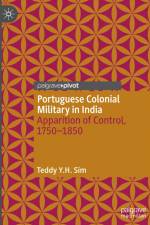
This book explores and analyzes developments in the military institution, military engagements as well as the larger security environment of (including non-war violence and maritime regions linking to) the Portuguese Empire in India. These developments occurred under the onslaught of the early modern globalization. The research shows that far from being dilapidated or archaic, the Portuguese colonial military there kept up with some developments in technology and organization in a competitive environment. Although the colonial military was not the most important reason in accounting for the survival of the Portuguese Estado da Índia, nor was the military profession the most lucrative occupation, the Portuguese experience gave indication of how a colonial state and society was able to survive against coalescing threats from the position of weakness. Located in the period and geographical region of the wax and waning of the Mughal and Maratha empires, Portuguese India was not necessarilya more violent place than the surrounding territories although resistance to and uprising against the Portuguese was usually underestimated. Beginning from the attempt at political and military centralization (and standardization) in the eighteenth century, the abolition of the army of the Estado da Índia in the nineteenth marked nominally the end of an era that may have a reverberation on the pacifist perception of Goa today.
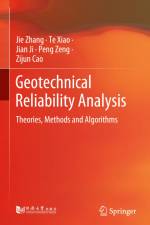
This textbook systematically introduces the theories, methods, and algorithms for geotechnical reliability analysis. There are a lot of illustrative examples in the textbook such that readers can easily grasp the concepts and theories related to geotechnical reliability analysis. A unique feature of the textbook is that computer codes are also provided through carefully designed examples such that the methods and the algorithms described in the textbook can be easily understood. In addition, the computer codes are flexible and can be conveniently extended to analyze different types of realistic problems with little additional efforts.
This Handbook deals with theoretical and empirical evidence on the economics of discrimination and affirmative action across the world, assessed over a variety of social identities, such as caste, race, ethnicity, gender, disability, age, tribal status. It also outlines methodological advances in this area, with plenty of additional references for the interested reader. It combines theoretical frameworks developed in the West with historical writings about discrimination and social justice from primarily Indian philosophers, aspects which are typically not found under one roof. It offers the reader a combination of insights into theories across a range of disciplines, as well as evidence, data ¿both quantitative and qualitative, in addition to the latest methodological advances in the estimation of discrimination ¿ econometric, experimental, mixed-methods.
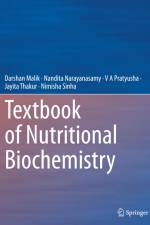
This textbook for undergraduate students aims at providing an in-depth understanding of the relationship between diet, nutrients, health, diseases, and drug treatment. The book presents a comprehensive but detailed view of the field of Nutritional Biochemistry; balancing the historical with contemporary findings, the descriptive with the experimental, structure with function as well as the mechanistic and the clinical aspects of any particular nutrient. Though the major emphasis of the book is on Nutritional Biochemistry, the book also attempts to provide an insight into other related and relevant areas. Amongst the topics that are covered are: nutraceuticals, food, and nutrient interactions; the newly emerging field of the human microbiome, its interdependence on diet and human health as well as the public health concerns which is a looming burden of non-communicable diseases. Each chapter begins with an insight into the history of discovery and structure of the nutrient, its absorption, and metabolism, physiological functions, ending with diseases associated with nutrient deficiency/toxicity along with a clinical perspective. Apart from this, the book emphasizes the biochemical basis of physiological responses and correlates the same with symptoms identifying the pathophysiology. This textbook caters to students of undergraduate courses like Biochemistry, Biomedical Sciences, Biological Sciences, Life Sciences, Home Science; Nutrition and Dietetics, Clinical Nutrition and Dietetics, and Nursing.¿
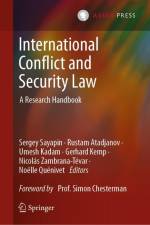
This unique two-volume book covers virtually the whole spectrum of international conflict and security law. It proceeds from values protected by international law (Part I), through substantive rules in which these values are embodied (Part II), to international and domestic institutions that enforce the law (Part III). It subsequently deals with current challenges in the application of rules of international conflict and security law (Part IV), and crimes as the most serious violations of those rules (Part V). Finally, in the section on case studies (Part VI), lessons learnt from a number of conflict situations are discussed.Written by an international team of experts representing all the major legal systems of the world, the book is intended as a reference work for students and researchers, domestic and international judges, as well as for legal advisers to governments and international and non-governmental organisations.Sergey Sayapin is Associate Professor and Associate Dean at KIMEP University, School of Law in Almaty, Kazakhstan.Rustam Atadjanov is Assistant Professor at KIMEP University, School of Law in Almaty, Kazakhstan.Umesh Kadam is formerly Additional Professor at the National Law School of India University, Bangalore, India and Legal Adviser with the International Committee of the Red Cross.Gerhard Kemp is Professor of Law at the University of Derby in the United Kingdom. Nicolás Zambrana-Tévar is Associate Professor at KIMEP University, School of Law in Almaty, Kazakhstan.Noëlle Quénivet is Professor in International Law at the University of the West of England, Bristol Law School in the United Kingdom.
Abonner på vårt nyhetsbrev og få rabatter og inspirasjon til din neste leseopplevelse.
Ved å abonnere godtar du vår personvernerklæring.