



Gjør som tusenvis av andre bokelskere
Abonner på vårt nyhetsbrev og få rabatter og inspirasjon til din neste leseopplevelse.
Ved å abonnere godtar du vår personvernerklæring.Du kan når som helst melde deg av våre nyhetsbrev.

This book discusses the most recent developments in the WTO regime. Issues such as E-commerce, security exception clause, China's compliance with the WTO obligations, sustainability development, IP protection in FTZs, trade controls and etc., are at the forefront of WTO studies. These issues strongly influence people's understanding of the current role of WTO and provides possible way to revitalize the function of WTO. Meanwhile, as the world's second largest economy, the world's largest trading nation and the holder of the world's largest foreign exchange reserves, China is apparently a powerful figure in leading these issues. Therefore, this book explores extensively these issues from a Chinese perspective to see what China could do to reboost the world trade.
This book emphasizes on cutting-edge next-generation smart plant breeding approaches for maximizing the use of genomic resources generated by high-throughput genomics in the post-genomic era. Through this book the readers would learn about the recent development in the genomic approaches such as genotype by sequencing (GBS) for genomic analysis (SNPs, Single Nucleotide Polymorphism), whole-genome re-sequencing (WGRS) and RNAseq for transcriptomic analysis (DEGs, Differentially Expressed Genes). To maximize the genetic gains in the cereal/food crops, the book covers topics on transgenic breeding, genome editing, high-throughput phenotyping, reliable/precision phenotyping and genomic information-based analysis. In the era of climate change and the ever-increasing population, food security and nutritional security are the primary concern of plant breeders, growers, and policymakers to address the UN¿s sustainable development goals. Chapters of this book cohere around these goals and covers techniques such as (QTL mapping, association studies, candidate gene identification), omics, RNAi [through micro RNA (miRNA), small interfering RNA (siRNA) and artificial micro RNA (amiRNA)]. It also covers other genomic techniques like antisense technology, genome editing (CRISPR/cas9, base editing) and epigenomics that assist the crop improvement programmes to fulfil the UNs sustainable development goals. It explores the influence of rapidly available sequencing data assisting in the next generation breeding programmes. This volume is a productive resource for the students, researchers, scientists, teachers, public and private sector stakeholders involved in the genetic enhancement of cereal crops.
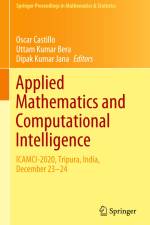
This book contains select papers presented at the International Conference on Applied Mathematics and Computational Intelligence (ICAMCI-2020), held at the National Institute of Technology Agartala, Tripura, India, from 19¿20 March 2020. It discusses the most recent breakthroughs in intelligent techniques such as fuzzy logic, neural networks, optimization algorithms, and their application in the development of intelligent information systems by using applied mathematics. The book also explains how these systems will be used in domains such as intelligent control and robotics, pattern recognition, medical diagnosis, time series prediction, and complicated problems in optimization. The book publishes new developments and advances in various areas of type-3 fuzzy, intuitionistic fuzzy, computational mathematics, block chain, creak analysis, supply chain, soft computing, fuzzy systems, hybrid intelligent systems, thermos-elasticity, etc. The book is targeted to researchers, scientists, professors, and students of mathematics, computer science, applied science and engineering, interested in the theory and applications of intelligent systems in real-world applications. It provides young researchers and students with new directions for their future study by exchanging fresh thoughts and finding new problems.
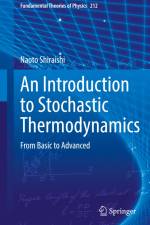
This book presents the fundamentals of stochastic thermodynamics, one of the most central subjects in non-equilibrium statistical mechanics. It also explores many recent advances, e.g., in information thermodynamics, the thermodynamic uncertainty relation, and the trade-off relation between efficiency and power.The content is divided into three main parts, the first of which introduces readers to fundamental topics in stochastic thermodynamics, e.g., the basics of stochastic processes, the fluctuation theorem and its variants, information thermodynamics, and large deviation theory. In turn, parts two and three explore advanced topics such as autonomous engines (engines not controlled externally) and finite speed engines, while also explaining the key concepts from recent stochastic thermodynamics theory that are involved.To fully benefit from the book, readers only need an undergraduate-level background in statistical mechanics and quantum mechanics; no backgroundin information theory or stochastic processes is needed. Accordingly, the book offers a valuable resource for early graduate or higher-level readers who are unfamiliar with this subject but want to keep up with the cutting-edge research in this field. In addition, the author¿s vivid descriptions interspersed throughout the book will help readers grasp ¿living¿ research developments and begin their own research in this field.
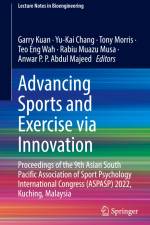
This book presents the proceedings of the 9th Asian South Pacific Association of Sport Psychology International Congress (ASPASP) 2022, Kuching, Malaysia, which entails the different sporting innovation themes, namely, Applied Sport and Social Psychology, Health and Exercise, Motor Control and Learning, Counselling and Clinical Psychology, Biomechanics, Data Mining and Machine Learning in Sports amongst others. It presents the state-of-the-art technological advancements towards the aforesaid themes and provides a platform to shape the future direction of sport science, specifically in the field sports and exercise psychology. ¿
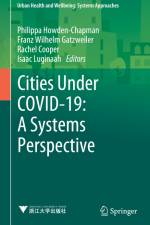
The 15 international authors of this book live in Brazil, Canada, Cameroon, China, Cuba, European Union, Finland, Gaza Strip, India, Nepal, New Zealand, Nigeria, Sri Lanka, United Kingdom and the United States of America. The authors are linked to the International Science Council¿s Urban Health and Wellbeing Programme. In this book the authors analyse the management of COVID-19, which started in late 2019, in their cities. They explain their city¿s political, social and economic context, the dynamics of how the pandemic unfolded, drawing on quantitative and visual data, and their reflections on how it was managed. The book concludes with an analysis of the similarities and differences among COVID-19 outcomes in these cities. Using a systems perspective to learn from these experiences can help all cities to improve the governance of pandemics and be better prepared for likely future ones.
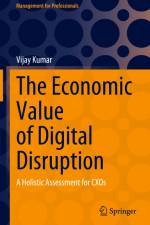
This book is a holistic impact study, replete with real-world examples, of digital transformation enhancing businesses and influencing managers' thinking. It links economic value with digital disruptions, arguing that these disruptions deliver economic benefits, boost shareholder value, and provide societal value. The central discourse is on the ability of digitization to make the world a better place to live in. The book analyses wealth creation due to digital disruption with a global span. It extensively incorporates anecdotal examples of disruptive digitization across countries, accentuating the impact of major digital disruptions. It is targeted at any professional interested in studying digitization's holistic impact. The book provides a discourse on digital topography to make business students industry-ready. Given the pervasive digital economy and a rapidly evolving business world, the book helps practicing managers better appreciate their digital environments. Management students who not only have to survive in this digital landscape but also thrive and chart out a lucrative career will benefit significantly from the book.
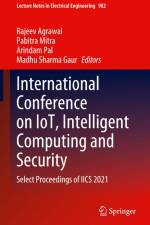
This book comprises select peer-reviewed papers from the International Conference on IoT, Intelligent Computing and Security, IICS 2021. The contents focus on the latest research in artificial intelligence, IoT, intelligent computing, and leading technological convergence security challenges. The book also discusses AI-driven automation of highly connected smart devices across the globe presenting the fast technological shift with the futuristic scenario, bursting perspective of IoT, computational intelligence, and security concerns. This book supports the transfer of vital knowledge to the next generation of researchers, students, and practitioners in academia and industry.
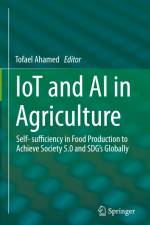
This book reviews recent innovations in the smart agriculture space that use the Internet of Things (IoT) and sensing to deliver Artificial Intelligence (AI) solutionsto agricultural productivity in the agricultural production hubs. In this regard, South and Southeast Asia are one of the major agricultural hubs of the world, facing challenges of climate change and feeding the fast-growing population. To address such challenges, a transboundary approach along with AI and BIG data for bioinformatics are required to increase yield and minimize pre- and post-harvest losses in intangible climates to drive the sustainable development goal (SDG) for feeding a major part of the 9 billion population by 2050 (Society 5.0 SDG 1 & 2). Therefore, this book focuses on the solution through smart IoT and AI-based agriculture including pest infestation and minimizing agricultural inputs for in-house and fields production such as light, water, fertilizer and pesticides to ensure food security aligns with environmental sustainability. It provides a sound understanding for creating new knowledge in line with comprehensive research and education orientation on how the deployment of tiny sensors, AI/Machine Learning (ML), controlled UAVs, and IoT setups for sensing, tracking, collection, processing, and storing information over cloud platforms for nurturing and driving the pace of smart agriculture in this current time. The book will appeal to several audiences and the contents are designed for researchers, graduates, and undergraduate students working in any area of machine learning, deep learning in agricultural engineering, smart agriculture, and environmental science disciplines. Utmost care has been taken to present a varied range of resource areas along with immense insights into the impact and scope of IoT, AI and ML in the growth of intelligent digital farming and smart agriculture which will give comprehensive information to the targeted readers.
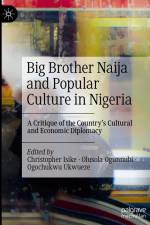
This book is about Big Brother Naija (BBN), which is a Nigerian version of the Big Brother franchise featured in more than 50 countries of the world with its major concept drawn from George Orwell ¿s novel, Nineteen Eigther-Four . It is organised and starred by Nigerians but viewed in many parts of the world. The book critically engages this relatively new phenomenon in Nigeria which apparently lacks scholarly attention. It proffers insights into the show¿s significance and implications for the nation with relation to mental health, morality, cultural di
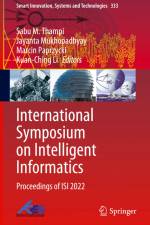
This book constitutes thoroughly refereed post-conference proceedings of the 7th International Symposium on Intelligent Informatics (ISI 2022), from August 31 to September 1¿2, 2022, Trivandrum, India. The revised papers presented are carefully reviewed and selected from several initial submissions. The scope of the Symposium includes AI, machine learning, cognitive computing, soft computing, security informatics, data science, computer vision, pattern recognition, intelligent software engineering, intelligent networked systems, IoT, cyber-physical systems, and NLP. The book is directed to the researchers and scientists engaged in various fields of intelligent informatics.
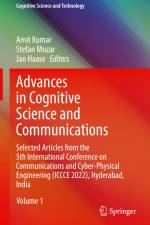
This book includes selected peer reviewed articles from The 5th International Conference on Communications and Cyber-Physical Engineering (ICCCE 2022), held on 29th and 30th April 2022 in Hyderabad, India. Articles presented here relate to next generation cognitive systems, neuroscience, cyber physical systems and their impact on communication technologies. The book includes content related to cognitive disorders, computational intelligence, fuzzy logics, evolutionary computing that are important for deriving a roadmap for future research on cognitive science/systems and communications. ICCCE is one of the most prestigious conferences conceptualized in the transdisciplinary field of cognitive science and communication technology areas like methods of linguistics, computer science, philosophy, and neuroscience. This edition of the conference was attended by several Industry professionals and academicians, and Government agencies to cover a broad range of perspectives, practices, and technical expertise related to cognitive technologies and next generation communications. Articles presented cover innovations from industry, outcome of implementations and cutting-edge research outcomes from cognitive science/technology areas and their impact on communication technology and cyber physical engineering. ¿
Abonner på vårt nyhetsbrev og få rabatter og inspirasjon til din neste leseopplevelse.
Ved å abonnere godtar du vår personvernerklæring.