
























Gjør som tusenvis av andre bokelskere
Abonner på vårt nyhetsbrev og få rabatter og inspirasjon til din neste leseopplevelse.
Ved å abonnere godtar du vår personvernerklæring.Du kan når som helst melde deg av våre nyhetsbrev.

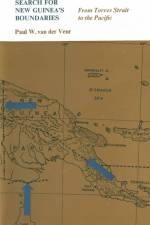
1 Introduction.- 2 New Guinea Annexations.- 3 Papua Irredenta.- 4 The Former Anglo-German Boundary.- 5 The Irian Boundary.- 6 Epilogue.- Appendixes.- I Some Notes on Administrative Nomenclature.- II The Spelling of Place Names.- III Sources used in the Compilation of the Maps.- References.
Encyclopaedias - Biographies - Bibliography - Typography.- Economics - Social Sciences - Economic History.- Political Science - Law - International Law.- History and Geography.- General.- France.- Netherlands, Belgium.- Central and Northern Europe.- Eastern Europe, Balkans.- Africa - America - Asia.- Africa.- The Americas.- Asia.- Philosophy - Psychology - Theology - Ecclesiastical History.- Literature - Linguistics - Folklore.- Germanic.- Romance.- Slavic.- Music - Theatre.- Fine Arts - Architecture - Archaeology.
I Einleitung: Der Monarchische Konstitutionalismus - Ein 'Dilatorischer Kompromiss'?.- A. Konstitutionelles und parlamentarisches System.- B. Die Aufgaben des Reiches vor 1914.- C. Die Führungsschwäche der monarchischen Kanzlerregierung.- D. Der Antiparteienaffekt als Stabilisierungsfaktor.- E. Entwicklungstendenzen im Parteiensystem der Vorkriegszeit.- I Die Stellung der Deutschen Parteien Zur Verfassungsreform 1907-1914.- A. Die Sozialdemokratische Partei.- 1. Der Stand der Parlamentarismusdebatte am Beginn der Blockperiode.- 2. Das Vordringen der reformistischen Haltung zum Parlamentarismus 1907-1913.- 3. Das parlamentarische System als Verfassungsziel der SPD.- 4. Das theoretische Verständnis des parlamentarischen Systems.- B. Die Linksliberalen.- 1. Verfassungsforderungen und Verfassungspolitik.- 2. Das theoretische Verständnis des parlamentarischen Systems.- C. Die Nationalliberalen.- 1. Verfassungsziele und Verfassungspolitik.- 2. Die Motive für die Ablehnung des parlamentarischen Systems durch die Nationalliberalen.- D. Das Zentrum.- 1. Verfassungsziele und Verfassungspolitik.- 2. Die Ideologie der wechsebden Mehrheiten.- E. Die Konservativen.- F. Die Faktoren der Stabilisierung der konstitutionellen Monarchie im Parteiensystem.- II Realität und Ideologie des Verfassungswandels im Weltkriege.- A. Triebkräfte des Verfassungswandels 1914-1917.- 1. Veränderungen im Parteiensystem.- a. Die SPD gewinnt eine Schlüsselstellung.- b. Die Schwenkung der Nationalliberalen in der Verfassungsfrage als Folge des Kriegszielstreites.- c. Die Wendung des Zentrums vom Burgfneden zur Friedensresolution.- d. Die FVP im Wandel des Parteiensystems.- e. Der Widerstand der Konservativen gegen die Verfassungsreform.- 2. Der Zusammenbruch der monarchischen Kanzlerregierung im Juli 1917.- B. Die Ursachen für das Zögern der Parteien beim Griff nach der parlamentarischen Regierung im Juli 1917.- 1. Erwägungen der politischen Strategie und Taktik.- 2. Die Kritik an den westlichen Verfassungsmodellen.- 3. Das Gegenbild der 'deutschen' Demokratie.- C. Taktik und Ideologie in der Verfassmgspolitik 1917-1918.- 1. Parlament und Regierung unter der 'deutschen Form des Parlamentarismus'.- 2. Die Verfassungsdiskussion in SPD und USPD.- 3. Die Verfassungsdiskussion in der FVP.- 4. Die Verfassungsdiskussion in der Nationalliberalen Partei.- 5. Die Verfassungsdiskussion im Zentrum.- 6. Die Verfassungsdiskussion bei den Konservativen.- III Zusammenfassung und Ausblick.- A. Hindernisse und Chancen für den Übergang zur parlamentarischen Regierung im deutschen Parteiensystem vor.- B. Belastungen der Weimarer Demokratie.- Quellen und Literatur.
I. The Prose of Pushkin.- II. The Snowstorm.- III. The Nest of Gentlefolk and the "Poetry of Marriage and the Hearth".- IV. Pushkin's "Monument".- V. Adam Mickiewicz: Poland's Romantic Ambassador to the Court of Realism.- VI. Mickiewicz at the Collège de France.- VII. Ex Oriente Lux (Mickiewicz and Pushkin).- VIII. Pushkin's Tazit and Mickiewicz's Konrad Wallenrod.- IX. Goethe and the Russian and Polish Romantics.- X. Henryk Sienkiewicz (1846-1946).- A Vanished Glory.- The Lighthouse.- The Positivist.- Letters from America.- The Trilogy.- Without Dogma and The Polaniecki Family.- Quo Vadis? and The Teutonic Knights.- Politics and Morality.- Sienkiewicz as I saw him then and now.
European History.- Foreign Literature and Linguistics.- Netherlands Literature.- Shipbuilding and Navigation Astronomy Etc..- Theology and Philosophy.- Voyages and Geography General.- Africa.- America.- Asia and Australia.- Supplement.
I. A Short History of Patani.- II. The Hikayat Patani and Related Texts.- III.The Structure of the Malay Text Its Authors, Date, Language.- IV. Hikayat Patani (Malay Text).- V. The Story of Patani (Translation).- VI. Commentary.- VII.Conclusion.- Plates. Facsimiles of Pages from the Abdullah Manuscript.
Dikes, improvement of rivers, windmills, sluices, etc..- Rivers, canals, polders, etc. General.- Rivers, canals, polders, etc. arranged after provinces.- Floods.
I German and Jew.- II Literature and the Theater.- III Bismarck and the Founding of the Zukunft.- IV The New Course.- V The Eulenburg Affair.- VI Colleagues, Friends, and Enemies.- VII Germany's Future.- VIII War and Democracy.- IX The Weimar Republic and the End of the Zukunft.- X The Last Years.- Conclusion.- Bibliographical Note.
I. Preliminaries.- II. Theories of Logicians.- 1. Mill.- 2. Frege.- 3. Russell.- 4. Some More Recent Talk on Proper Names.- (i) Ziff.- (ii) Strawson.- (iii) Ayer.- (iv) Searle.- (v) Shawyder.- (vi) Kneale.- III. Theories of Linguists.- 1. Gardiner.- 2. Sørensen.- 3. Syntactic Regularities: Jespersen, Chomsky, Gardiner.- IV. A Constructive Move.- 1. On Dictionary Definition.- 2. The Pragmatic Dimension.- 3. The Need for Identification.- 4. Referring Expressions.- 5. Proper Names and Definite Descriptions.- 6. Identifying - Referring and Distinguishing.- 7. The Referent.- 8. Overlapping Categories.- 9. A Use - Mention Confusion.- 10. Transformation to Common Names.- 11. The Protean Use of Proper Names.- 12. Same Person - Same Name.- 13. Name-Givers.- 14. Why Name?.- 15. Conventions.- 16. Problems of Translation.- V. Conclusion.
I / General considerations on the economic policy of the central government and the intervention of the local authorities and their specialized finance institutions therein.- The trade cycle in general.- Prosperity.- The transition from prosperity to recession.- Contraction.- The transition to recovery.- The background of economic policy.- The instruments and points of application of present-day economic policy.- The responsibility and organs for economic policy.- The instruments for economic policy.- Monetary instruments.- The monetary policy of the central bank.- The monetary policy of the central authorities.- Non-monetary instruments.- Local authorities and economic policy.- The influence of local authorities' activities on the economic situation.- The influence of the economic policy of the central authorities on the local authorities' economies.- The co-operation of the local authorities in the economic policy of the central authorities.- Local authority credit institutions and economic policy.- II / The economic policy of the central government and the intervention of the local authorities and their specialized finance institutions therein in different countries.- Austria.- Responsibility for and the bodies involved in the economic policy.- The central bank.- The Federal Government.- The Chambers.- The Austrian Federation of Trade Unions and the Austrian Association of Industrialists.- The Joint Prices and Wages Commission.- The Consultative Committee for Economic and Social Matters.- The Austrian Institute for Economic Research.- The instruments for the economic policy.- Monetary instruments.- Monetary instruments of the central bank.- Bank-rate policy.- Open market policy.- Minimum deposit policy.- Credit restriction.- Other instruments.- Monetary instruments of the central authorities.- Non-monetary instruments.- Budgetary policy.- Budget expenditure.- Budget revenues.- Transfer and subsidy policy.- Wage policy.- Price policy.- The municipalities and the economic policy.- The institutions for local credit and the economic policy.- Belgium.- Responsibility for the economic policy.- The bodies involved in the economic policy.- The Government.- The Economic Planning Bureau.- The Central Council of the Economy.- The Banque Nationale.- The Interest Fund.- Local authorities.- The instruments for the economic policy.- Direct controls.- Price controls.- Wage controls.- Quantity controls.- The public finances.- Budgetary policy.- Fiscal measures.- Public expenditure.- Credit.- The municipalities and the economic policy.- Subsidy policy.- Spreading of local works.- The Crédit Communal de Belgique and the economic policy.- Denmark.- Responsibility for the economic policy.- The bodies involved in the economic policy.- The central Government.- The National Bank of Denmark.- The local authorities.- The Economic Co-ordination Council.- The instruments for the economic policy.- Monetary instruments.- Monetary policy of the National Bank.- Monetary policy of the central Government.- Non-monetary instruments.- Regulation of government expenditure and revenue.- Transfer.- Wage-fixing.- Government control of building operations.- The municipalities and the economic policy.- Local authority credit institutions and the economic policy.- Federal Republic of Germany.- Responsibility for the economic policy.- The bodies involved in the economic policy.- The instruments for the economic policy.- The instruments of the central bank.- Bank rate policy.- Minimum reserve policy.- Open market policy.- Other instruments of the Deutsche Bundesbank.- The administration's instruments of economic policy.- Preliminary comment.- Foreign economic policy.- Wage policy.- Price policy.- Financial policy.- Policy of moral suasion.- The municipalities and the economic policy.- The local authority credit institutions and the economic policy.- France.- Bodies responsible for the economic policy.- The preparation of the economic policy.- Procedure for adopting t
Petronius, A Portrait of the Artist.- Comments on Petronius' Portrayal of Character.- Themes of Concealment and Pretence in Petronius' Satyricon.- Petronius, Priapus and Priapeum LXVIII.- The Comparison of Petronius with Three Moderns.- Tacitus' Biography of Petronius.- Eating People is Right.- Did Tacitus quote Petronius?.- Short Bibliography.
At head of title: Europa Institute, University of Amsterdam.
I Fundamentals of Electron Theory.- 1 Introduction.- 2 The Wave-Particle Duality.- 3 The Schrödinger Equation.- 4 Solution of the Schrödinger Equation for Four Specific Problems.- 5 Energy Bands in Crystals.- 6 Electrons in a Crystal.- II Electrical Properties of Materials.- 7 Electrical Conduction in Metals and Alloys.- 8 Semiconductors.- 9 Electrical Conduction in Polymers, Ceramics, and Amorphous Materials.- III Optical Properties of Materials.- 10 The Optical Constants.- 11 Atomistic Theory of the Optical Properties.- 12 Quantum Mechanical Treatment of the Optical Properties.- 13 Applications.- IV Magnetic Properties of Materials.- 14 Foundations of Magnetism.- 15 Magnetic Phenomena and Their Interpretation-Classical Approach.- 16 Quantum Mechanical Considerations.- 17 Applications.- V Thermal Properties of Materials.- 18 Introduction.- 19 Fundamentals of Thermal Properties.- 20 Heat Capacity.- 21 Thermal Conduction.- 22 Thermal Expansion.- Appendices.- App. 1. Periodic Disturbances.- App. 2. Euler Equations.- App. 3. Summary of Quantum Number Characteristics.- App. 4. Tables.- App. 5. About Solving Problems.
Abonner på vårt nyhetsbrev og få rabatter og inspirasjon til din neste leseopplevelse.
Ved å abonnere godtar du vår personvernerklæring.