


Gjør som tusenvis av andre bokelskere
Abonner på vårt nyhetsbrev og få rabatter og inspirasjon til din neste leseopplevelse.
Ved å abonnere godtar du vår personvernerklæring.Du kan når som helst melde deg av våre nyhetsbrev.

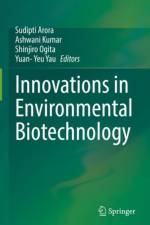
The book has 2 sections; Section A focuses on Environmental Sustainability and Green Technology and Section B covers Emerging Technologies in Environmental Biotechnology. The book introduces Environmental biotechnology as a tool to progress towards sustainable development goals and covers green technologies such as Bio-plastics, Third generation hybrid technology for algal biomass production, wastewater treatment and greenhouse gas mitigation, Green vaccination, Bio-fuels, Microbial enzymes, Bioelectrical systems, eco-friendly handmade paper production, nature based sanitation solutions, and greener ways to tackle air pollution along with the application of GIS to monitor & manage COVDI19 pandemic. The Section B covers emerging & innovative technologies such as vermifiltration, Small scale PVA gel based innovative solution for wastewater treatment, Cyclic technology based sequencing batch reactors (SBR) and role of Role of Bio-selectors in Performing Simultaneous Nitrification and Denitrification in SBR's. It holistically covers essential information on Enzymatic Biotransformation and Biopolymer based nanocomposites for dye waste treatment, Arbuscular Mycorrhizal Fungi assisted Bioremediation of heavy metals, Coir Retting and Duckweeds: The Tiny Creatures for Resolving the Major Environmental Issues. It is a promising book for researchers, academicians, teachers, students, industrial enterprises, policy makers, public health officials and general users. The book is closely aligned to curricula of post graduate courses in biotechnology, microbiology, environmental biotechnology and environmental science.
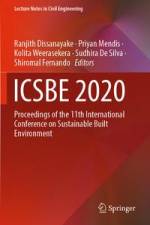
This book highlights the latest knowledge and innovations in the field of civil engineering and construction industry striving for a sustainable built environment. It includes recent innovative findings from the proceedings of the 11th ICSBE 2020 under the themes of sustainable tall buildings, sustainable bridge construction and maintenance, waste in construction industry, sustainable manufacturing and recycling, disaster risk reduction for sustainable built environment, green innovations and entrepreneurship, sustainable water management in developing countries, water pollution and CKDu, sustainable urban environment and social well-being, and many greener and sustainable resource and energy-efficient innovative research findings.
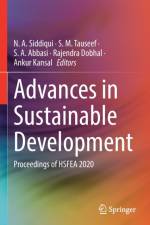
This book comprises selected papers on advances in the field of health and environment safety that were presented at the International Conference on Advances in the field of Health, Safety, Fire, Environment, Allied sciences and engineering (HSFEA 2020). This book presents a number of research papers which focuses on basic concept of sustainable development and its role in modern world for clean development technology. The book also presents methods that can be used to effectively monitor and measure climate change and global warming. Further, the contents of this work stress the importance of maintaining safety and healthy work environments that are free of occupational health hazards. This book will be of interest to researchers, professionals, and policy makers alike.
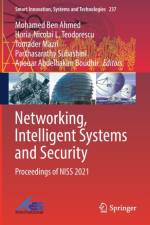
This book gathers best selected research papers presented at the International Conference on Networking, Intelligent Systems and Security, held in Kenitra, Morocco, during 01-02 April 2021. The book highlights latest research and findings in the field of ICT, and it provides new solutions, efficient tools, and techniques that draw on modern technologies to increase urban services. In addition, it provides a critical overview of the status quo, shares new propositions, and outlines future perspectives in networks, smart systems, security, information technologies, and computer science.
This book comprehensively discusses the effects of digital technology on the way work is disseminated and the resulting challenges concerning the fair use of copyright. It also analyzes so-called fairness by examining theories on the system of fair use, demonstrating the "e;system changes that will be brought about by technological changes"e; from the perspective of economics, i.e., the problem of modification faced by the system of fair use of copyright.Exploring the nature and function of fair use and repositioning the fair use system, the book proposes a better design for China's system of limitation on copyright and a readjustment of the copyright system.Lastly, in addition to analyzing the reconfigurations of fair use from an economic standpoint, the book describes in detail the interactions between legal systems and cultures.
This book presents the recent computational developments inspired by swarms in art known as swarm art and discusses applying swarm intelligence concepts in architecture. Non-human art is a great leap in the evolution of contemporary art, removing the requirement of an artist's production from the creative process. Furthermore, it is a critical declaration in opposition to the anthropomorphic vision which is so destructive for all other life forms and the planet's ecology. When accepted and integrated into human culture, non-human art done by artificial systems or machines boosts creativity and stimulates innovative fusions. We analyze 120 swarm systems with unique and diverse conceptual contexts, agent design, and audience engagement that can be utilized as inspiration for future projects or to design new swarm algorithms by artists, architects, or computer scientists.
This book is an essential guide on surrogacy, discussing various legal issues that arise in surrogacy cases. It provides a comprehensive coverage to various issues pertaining to surrogacy arrangements due to failure to meet the needs of those involved in surrogacy, be it the intended parents or the surrogate mother, with special emphasis on the most vulnerable party -- the surrogate child. In the wake of this existing imbalance, the call to reform the practice of surrogacy has also increased. The book provides a comprehensive coverage to various laws and policy regulations in existence dealing with surrogacy, and unravels the latest trends and developments happening around the world as surrogacy gains importance. The international perspectives highlight policies and practices being adopted and followed by various nations with regard to surrogacy regulation and associated parenthood rules. This book also analyses some of the significant cross-border disputes revolving around surrogacy, and explores briefly the jurisprudence of the European Court of Human Rights on matters of parentage and citizenship for children born of trans-national surrogacy with special reference to the prospects of a convention on international surrogacy currently being studied by The Hague Conference on Private International Law. Further, it highlights the issues and questions relating to surrogacy arrangements that are so far unresolved and unanswered and suggests measures for improvements to the existing proposed surrogacy legislation in India and need for uniform international regulation. The book is a great resource for legal practitioners, academics, students, policy-makers, infertility clinics, and charitable organizations working on this issue.
This reference book comprehensively reviews the significance of DNA technology in forensic science. After presenting the theory, basic principles, tools and techniques that are used in forensic DNA typing, it summarizes various techniques, including autosomal STR, Y-STR, X-STR, mitochondrial DNA and NGS, used in solving both criminal as and civil cases, such as paternity disputes, identification of mutilated remains, and culprit identification in sexual assault and murder cases. It also provides an overview of DNA-based genetic diagnostics for various diseases, and discusses the role of DNA typing in drug reactions, as well as the application of non-human DNA profiling of animals and plants in forensic science investigations. Lastly, the book examines the role of internal quality control in maintaining the high quality of DNA profiling.
This edited book investigates how life is affected by the increasingly authoritarian regime in Bangladesh.Earlier a flawed but real electoral democracy, over the last several years Bangladesh has been characterised as a 'hybrid regime' in The Economist's Democracy Index. Today it is a country in which law still rules and leaders are still chosen - but only on paper. The uniqueness of this book is not in defining regime type or investigating trajectories. It is in its efforts to study how these changes affect everyday life. All chapters are based on intimate knowledge of a field, on first-hand experience, and on interviews and ethnography. This book will interest political scientists and scholars of Bangladesh, the Islamic world and beyond, with findings of broad relevance to hybrid regimes.
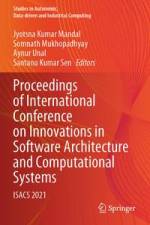
This book gathers a collection of high-quality peer-reviewed research papers presented at First International Conference on Innovations in Software Architecture and Computational Systems (ISACS 2021), held at Guru Nanak Institute of Technology, Kolkata, India, during 2 - 3 April 2021. The book primarily focuses on developing artificial intelligence-based algorithms and methodologies for enabling intelligent hardware and software systems. This book brings together the latest findings on efficient technological solutions for developing intelligent and hybrid systems, intelligent software architecture, machine intelligence-based analytical tools and also smart sensors and networks. The prime focus is on solving technological problems using state-of-the-art research finding like fuzzy computing, evolutionary and hybrid frameworks, neuro-computing, etc., along with other AI-based computation platforms. The book offers a valuable resource for all undergraduate, postgraduate students and researchers interested in exploring solution frameworks for social good problems using artificial intelligence.
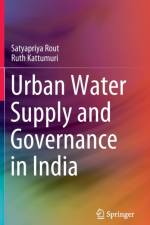
This book investigates institutional dimensions of urban water supply in India, with a specific focus on institutional capabilities to provide drinking water to urban households in an efficient, equitable and sustainable manner. This book has been developed through empirical research within the context of growing urbanisation and increasing water needs of Indian cities, and the wider developmental goal of achieving universal and equitable access to safe and affordable water for all - as envisaged in goal 6 of the SDGs.This study revolves around three important aspects of urban water supply and governance. Firstly, it attempts to understand household water service delivery scenarios in urban India, drawing from case studies based on our household survey in four cities - Ahmedabad, Bangalore, Kochi and Hyderabad. Secondly, it examines the question of existing socio-economic inequality and access to water in an urban context in India. While dealing with the issue of inequality and access to water, it attempts to explore the question of whether access to water and water scarcity is socially neutral; whilst also analysing the mechanisms employed by the urban poor to manage their daily water needs. Thirdly, this book explores the role of institutions for efficient and effective delivery of water in urban India. The institutional analysis from a comparative perspective provides important insights to guide current reforms in domestic water supply in India, especially in a neo-liberal context. The book is a valuable resource for academicians, policy makers and practitioners involved in water governance in general and domestic (drinking) water supply in particular. Besides, it is of great interest to those working in the area of urban development, urban planning and household water management. The book is an outcome of a collaborative research project by the authors sponsored jointly by University Grants Commission (UGC), New Delhi and UK-India Education and Research Initiative (UKIERI).
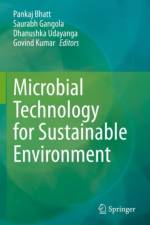
Microorganisms are ubiquitous on earth. These microorganisms are able to perform various functions in the environment. Microbial applications are used as biofertilizers, bioremediation, biofortification and other sustainable approaches of environmental development. Indigenous microbial cultures have the potential to perform various functions that are beneficial to achieve the sustainable goals. To date, different strains have been commercialized for the industrial and common applications for the sustainable environment. This book will cover different aspects of microbial technology for sustainable development.
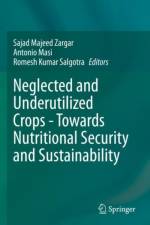
This book covers important topics on various neglected and underutilised crops (vegetables, cereals, fruit crops). It gives an overview of the potential, availability of genetic and genomic resources, and the future prospects of these food crops. The book presents different chapters on the importance of underutilised crops with respect to sustainable agriculture and describes the approaches that must be followed for improving the yield and production of these crops. It covers a wide range of food crops such as millet, buckwheat, underutilised spices, underutilised vegetables and underutilised fruit crops. It also provides insights on what smart foods are? And, whether these neglected crops qualify as smart foods?This up-to-date and informative book is meant for food scientists, geneticists, breeders and biotechnologists. It is of interest to students, researchers and course instructors in these fields.
This book introduces the research process and principles of the controlled super-coupling nuclear fusion experiment at the Experimental Advanced Superconducting Tokamak (EAST) nuclear fusion reactor in Hefei, China. It uses straightforward language to explain how nuclear fusion can provide safe, environmentally friendly, clean, and inexhaustible energy in future. EAST is the world's first fully superconducting, non-circular cross-section tokamak nuclear fusion experimental device, independently developed by the Chinese Academy of Sciences. This book helps demonstrate China's cutting-edge scientific and technological advances to the rest of the world, helps spread the scientific spirit to people around the globe, and promotes prosperity and development. The book is intended for all non-experts who would like to learn more about nuclear energy and related technologies.
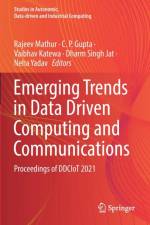
This book includes best selected, high-quality research papers presented at International Conference on Data Driven Computing and IoT (DDCIoT 2021) organized jointly by Geetanjali Institute of Technical Studies (GITS), Udaipur, and Rajasthan Technical University, Kota, India, during March 20-21, 2021. This book presents influential ideas and systems in the field of data driven computing, information technology, and intelligent systems.
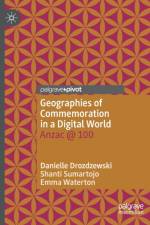
This book reframes commemoration through distinctly geographical lenses, locating it within experiential and digital worlds. It interrogates the role of power in representations of memory and shows how experiences of commemoration sit within, alongside and in contrast to its official normative forms. The book charts how memories, places and experiences of commemoration play out and have, or have not, changed in and through a digital world. Key to the book's exploration is a new epistemology of memory, underpinned by an embodied research approach.
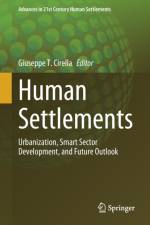
The answers to the questions of why and how people live where they live as well as how they maintain and integrate with one another are fundamental human settlement issues rooted in history and culture. Human settlements are historically linked to resource availability, fortification, and the mythos of civilizations. Cities play a central role in redefining the interface between human beings and nature. They have revolutionized the human experience by taming natural surroundings and building environments that are human-centric-often narrowing human life outside the experience of wilderness or the untamed. This book is divided into three parts, it examines urban development trends, explores perspectives in energy efficiency and agriculture security, and considers policy development and future scenarios in human-nature relations. It is a compendium of multidisciplinary work that challenges the directions of modernity and offers reference to alternatives. Authors come from a diverse background and international context to address common overarching theories facing current geography-specific problems. An interconnected overtone of the book attempts to link accelerated urbanization and settlement location to how societies are maintained and integrated. Human settlements are shaped by human ecology and the relationship between humans and their interaction with their environment. Two sectors central to human survival are specifically explored: energy and agriculture. Cutting-edge, smart development looks at the latest findings that reflect the on-going debate facing these sectors. A human settlement metric is envisioned in terms of the past, present, and future. This book is a unique attempt to combine a rethinking about human settlements for scientists, policy-makers, public officials, and people committed to improving urban life, society-wide. Possible agents to resolving human settlement problems include international cooperation and various mechanisms that interlace the international community. Methodological and applied aspects of sustainable management focus on topics such as adaptive knowledge sharing, renewable energy, climate change, agricultural planning, and policy development. An emphasis on scientific and technological advancement, from a bottom-up mapping of society, elucidates a better understanding of the role of knowledgeable societies in which need is considered alongside how such need can be sustained-advancing towards a more promising future.
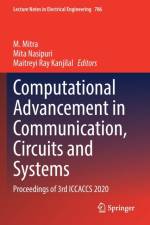
This book gathers the proceedings of the Third International Conference on Computational Advancement in Communication Circuits and Systems (ICCACCS 2020), organized virtually by Narula Institute of Technology, Kolkata, India. The book presents peer-reviewed papers that highlight new theoretical and experimental findings in the fields of electronics and communication engineering, including interdisciplinary areas like advanced computing, pattern recognition and analysis, and signal and image processing. The respective papers cover a broad range of principles, techniques, and applications in microwave devices, communication and networking, signal and image processing, computations and mathematics, and control.
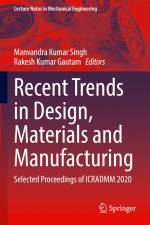
The book presents the select proceedings of the International Conference on Recent Advances in Design, Materials and Manufacturing (ICRADMM 2020). The topics covered include structural mechanics, kinematics and dynamics of machines, mechanical structures and stress analysis, noise and vibration analysis, fault detection and condition monitoring, optimization techniques, mechatronics & robotics, product design and development, tribology. The book also discusses various properties and performance attributes of modern-age design in mechanical engineering including their durability, workability, and carbon footprint. The book will be a valuable reference for researchers and professionals interested in sustainable development in mechanical engineering design and allied fields.
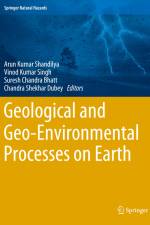
This edited volume dedicated to late Prof. P.S. Saklani addresses the multidisciplinary themes pertaining to role of tectonism and magmatism in Crustal Evolution and global distribution of metallic and non metallic mineral deposits. It gives valuable information on geodynamic evolution, structural, petrological, isotopic, metamorphic, geochemical and geochronological attributes of continental and oceanic crust and is challenging reassessments of the existing paradigms. It addresses the implication of magmatism, metallogeny and application of geochronological ages (U-Pb SHRIMP age, Lu-Hf isotopic system; detrital zircons). This book also advocates the role of tectonics in contamination of ground water, and control on drainage pattern and geothermal systems. It explores the vulnerability of earth towards natural hazards viz. earthquakes, floods, cyclones, tsunami, volcanism, cyclones and drought. This volume throws light on the applications of remote sensing, GIS (Geographical Information System) and SRTM data for evaluation of the morphometric and morphotectonic parameters and exploring the susceptibility of river basins toward erosion and flood. It will be beneficial to graduate and post-graduate students as well as professionals and researchers.
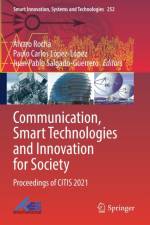
This book gathers high-quality papers presented at International Conference on Science, Technology and Innovation for Society (CITIS 2021), held in Guayaquil, Ecuador, on May 26-28, 2021. This book will present the recent research trends in the fields of software engineering, big data analysis, cloud computing, data engineering, data management and data mining, machine learning, deep learning, artificial intelligence, smart systems, robotics and automation, mechatronic design, and industrial processes design.
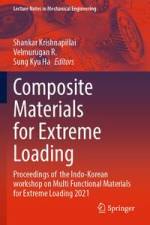
This book presents the select proceedings of the Indo-Korean workshop on Multi Functional Materials for Extreme Loading, 2021. The book mainly focuses on the very important emerging area of response to extreme loading of composites as well as other materials involving characterization studies, failure mechanisms conditions under quasi static to high strain rates, impact loads, blast loads, crash analysis, and other thermal and fatigue loads. The book also includes other important areas related to special materials and techniques such as 3D printing, nano-composites, multifunctional materials, and high temperature materials. The contents of this book are useful for beginners, industrial designers, academic researchers, and graduate students.
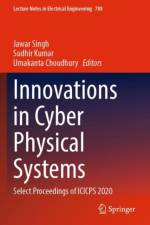
The book presents a collection of peer-reviewed articles from the International Conference on Innovations in Cyber Physical Systems (ICICPS 2020). The conference provided opportunities for the presentation of new research results and discussion about them. It was also an opportunity to generation of new ideas in all CPS aspects, including theory, tools, applications, systems, test-beds and field deployments. The range of topics explored is wide, and covers security, control, optimization, machine learning, game theory, mechanism design, mobile and cloud computing, model-based design, verification, data mining/analytics, signal processing, and human-in-the-loop shared or supervisory control. This book will be useful to researchers, students, industrialist, developers, and practitioners alike.
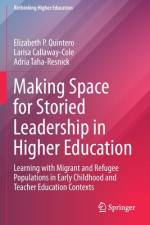
This book analyzes stories of university early childhood faculty members, community activists in southern California, and children and the early childhood teacher education students working with them. The grounding of this research is reconceptualization of postmodern narrative theoretical influences. Through narrative inquiry, the book connects ongoing research to ongoing pedagogy. It explores the following research questions: (1) How do learners across generations create, build upon, and reinvent each other's stories to make new meanings through consideration of family history, multigenerational knowledge, and experiences?; (2) How do learners' stories offer new possibilities through leadership that connects Global South knowledge with Global North contexts?; (3) In what ways is it possible to use this framework and methodology in Higher Education to promote systemic consistency in promoting social justice that is generatively inclusive?More than half of the research participants have truly lived bi-culturally, many of the children in the early care and education programs in the USA are from Mexico and Central America. These collaborators truly carry their roots with them as they strive for justice and authenticity in early childhood teacher education and community activists working with families and children.
This book explores recent developments in theoretical research and mathematical modelling of real-world complex systems, organized in four parts. The first part of the book is devoted to the mathematical tools for the design and analysis in engineering and social science study cases. We discuss the periodic evolutions in nonlinear chemical processes, vibro-compact systems and their behaviour, different types of metal-semiconductor self-assembled samples, made of silver nanowires and zinc oxide nanorods.The second part of the book is devoted to mathematical description and modelling of the critical events, climate change and robust emergency scales. In three chapters, we consider a climate-economy model with endogenous carbon intensity and the behaviour of Tehran Stock Exchange market under international sanctions.The third part of the book is devoted to fractional dynamic and fractional control problems. We discuss the novel operational matrix technique for variable-order fractional optimal control problems, the nonlinear variable-order time fractional convection-diffusion equation with generalized polynomialsThe fourth part of the book concerns solvability and inverse problems in differential and integro-differential equations.The book facilitates a better understanding of the mechanisms and phenomena in nonlinear dynamics and develops the corresponding mathematical theory to apply nonlinear design to practical engineering. It can be read by mathematicians, physicists, complex systems scientists, IT specialists, civil engineers, data scientists and urban planners.
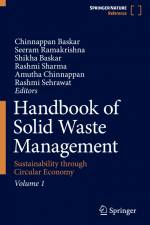
The issue and finding the green solution of Solid Waste Management are important challenges throughout the world. This book explores cutting edge developments in Circular Economy and Sustainability on Solid Waste Management, current research perspectives, existing problems on solid waste management system, industrial development and the latest green methodology for in Solid Waste conversion and regenerate products and materials, environmental solutions, social awareness and development on solid waste management and the future perspectives of Circular Economy for industrial revolution 4.0 with the mission of green chemistry and engineering on solid waste management. It focuses on chapters from different researchers, faculty members, scientists and engineers, industrialist and experts from different countries working on the Circular Economy on Solid Waste Management. It also features the importance of integration of multi-disciplinary research fields on Circular Economy for Sustainable Development. It provides latest development in and current research perspectives, technology development, and critical thinking and societal requirements and development on Circular Economy of Solid Waste Management to researchers, scientists, engineers, environmental managers, policy makers, and Experts of Energy Division of Government and Private Organization and Industries.</p>^
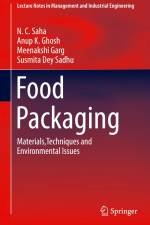
This comprehensive and authoritative book aims to encompass the best and current practices in the field of contemporary food packaging. It covers various aspects of packaging, including challenges and their solutions, innovations, and environmental concerns. Written by experts working in the field, the content is supported by technical/statistical data, practical examples, case studies, and real-life experiences of academicians and professionals working in the area of food packaging. The book covers challenges in food packaging, systems and materials for packaging, packaging design requirements of the food industry, technology machinery and system, printing and graphics, testing and regulatory aspects, advanced and smart packaging, distribution and logistics in a globalized environment, and sustainable and green packaging. This book will be useful for Packaging Technologists, food scientists, material scientists, policy makers, students, and researchers.
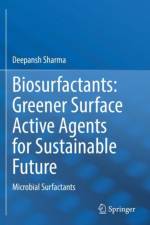
This book illustrates the importance and significance of the biosurfactants obtained from microorganisms, preferably from bacteria and yeast. It explains the superiority of biosurfactants (green molecule) over chemically synthesized surfactants for the sustainable future. The content of the present book addresses the quest for novel biosurfactants producing strains, high throughput screening methods, and production strategies. It finely describes the aptness of biosurfactants for industrial and environmental applications. It elaborately describes the technical background and cutting-edge advancement of the commercial aspect of biosurfactants. In the later part of the book, the role of green biosurfactants in food processing, control of food spoilage, incorporation in personal health care products, environmental and agricultural remediation are discussed. Finally, the book elucidates a comprehensive and representative description of toxicity assessment of the biosurfactants, which highlights the risk assessment of the incorporation of the microbial biosurfactants in food, healthcare, and pharmaceutical formulations.
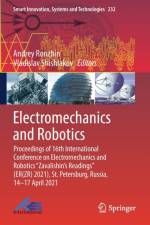
This book features selected papers presented at the 16th International Conference on Electromechanics and Robotics 'Zavalishin's Readings' - ER(ZR) 2021, held in St. Petersburg, Russia, on April 14-17, 2021. The contributions, written by professionals, researchers and students, cover topics in the field of automatic control systems, electromechanics, electric power engineering and electrical engineering, mechatronics, robotics, automation and vibration technologies. The Zavalishin's Readings conference was established as a tribute to the memory of Dmitry Aleksandrovich Zavalishin (1900-1968) - a Russian scientist, corresponding member of the USSR Academy of Sciences, and founder of the school of valve energy converters based on electric machines and valve converters energy. The first conference was organized by the Institute of Innovative Technologies in Electromechanics and Robotics at the Saint Petersburg State University of Aerospace Instrumentation in 2006. The 2021 conference was held with XV International Conference "e;Vibration-2021. Vibration technologies, mechatronics and controlled machines"e; and VI International Conference "e;Electric drive, electrical technology and electrical equipment of enterprises"e;, and was organized by St. Petersburg State University of Aerospace Instrumentation (SUAI), St. Petersburg Federal Research Center of the Russian Academy of Sciences (SPC RAS), Southwest State University (SWSU) and Ufa State Oil Technical University (USPTU).
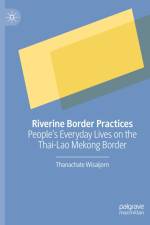
This book focuses on the ways in which unofficial modes of border crossings are practised by the Thai Ban, along the Mekong Thai-Lao border. In doing so, the book assesses how these border crossings can be theorised as a contribution to existing literature on borderland studies. With that, the book discusses the importance of the notion of the Third Space and its effects on the pluralities of border-crossings in the borderland by weaving together spatial negotiations, temporal negotiations, and negotiations of political subjectivity.To illustrate the importance and complexity of the notion of the Third Space, the borderland of Khong Chiam-Sanasomboun, an area composed of quasi-state checkpoints as well as mobile checkpoints, is used as a case study. The author employs an ethnographic approach using the four methods of participant observations, interviews, interpreting visual presentations, and essay readings to examine the everyday practices of the Thai Ban people in crossing the border between the riverine villages in the two nation-states of Thailand and Lao PDR. With this, the findings in the fieldwork reveal that people engaged in everyday border-crossings in the riverine area do not simply embrace or reject the existence of Thai-Lao territory. Most of the time, the stance of Thai Ban people is the mixture of subversion, rejection, and acceptance of the boundary resulting in the sedentary assumption in the form of Thai-Lao territory co-existing with people's everyday mobility.
Abonner på vårt nyhetsbrev og få rabatter og inspirasjon til din neste leseopplevelse.
Ved å abonnere godtar du vår personvernerklæring.