


Gjør som tusenvis av andre bokelskere
Abonner på vårt nyhetsbrev og få rabatter og inspirasjon til din neste leseopplevelse.
Ved å abonnere godtar du vår personvernerklæring.Du kan når som helst melde deg av våre nyhetsbrev.

The 5G technology has been commercialized worldwide and is expected to provide superior performance with enhanced mobile broadband, ultra-low latency transmission, and massive IoT connections. Meanwhile, the edge computing paradigm gets popular to provide distributed computing and storage resources in proximity to the users. As edge services and applications prosper, 5G and edge computing will be tightly coupled and continuously promote each other forward.Embracing this trend, however, mobile users, infrastructure providers, and service providers are all faced with the energy dilemma. On the user side, battery-powered mobile devices are much constrained by battery life, whereas mobile platforms and apps nowadays are usually power-hungry. At the infrastructure and service provider side, the energy cost of edge facilities accounts for a large proportion of operating expenses and has become a huge burden.This book provides a collection of most recent attempts to tackle the energy issues in mobile edge computing from new and promising perspectives. For example, the book investigates the pervasive low-battery anxiety among modern mobile users and quantifies the anxiety degree and likely behavior concerning the battery status. Based on the quantified model, a low-power video streaming solution is developed accordingly to save mobile devices' energy and alleviate users' low-battery anxiety. In addition to energy management for mobile users, the book also looks into potential opportunities to energy cost saving and carbon emission reduction at edge facilities, particularly the 5G base stations and geo-distributed edge datacenters.
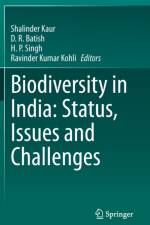
This contributed book is based on the current status of biodiversity in India, issues and challenges faced by the authorities involved in conservation efforts, and the imperative role of various direct and indirect stakeholders in biodiversity conservation. The book discusses the current status of different forms of biodiversity in India, challenges faced by stakeholders, issues and reasons for biodiversity losses, and efforts by government through various laws, policies, and programs in a concise and comprehensive manner throughout its many chapters. In this way, readers can access diverse information on Indian biodiversity through this book. It is compiled by leading experts in the field of conservation. In 18 chapters, it covers biodiversity of both fauna and flora, on land and in aquatic ecosystems, legal and policy aspects, as well as innovative conservation tool and techniques. It is useful for undergraduates and graduate students and also educates policy planners, bureaucrats, foresters, and researchers in India and abroad.
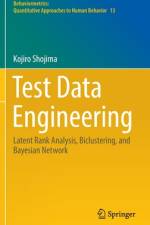
This is the first technical book that considers tests as public tools and examines how to engineer and process test data, extract the structure within the data to be visualized, and thereby make test results useful for students, teachers, and the society. The author does not differentiate test data analysis from data engineering and information visualization. This monograph introduces the following methods of engineering or processing test data, including the latest machine learning techniques: classical test theory (CTT), item response theory (IRT), latent class analysis (LCA), latent rank analysis (LRA), biclustering (co-clustering), and Bayesian network model (BNM). CTT and IRT are methods for analyzing test data and evaluating students' abilities on a continuous scale. LCA and LRA assess examinees by classifying them into nominal and ordinal clusters, respectively, where the adequate number of clusters is estimated from the data. Biclustering classifies examinees into groups (latent clusters) while classifying items into fields (factors). Particularly, the infinite relational model discussed in this book is a biclustering method feasible under the condition that neither the number of groups nor the number of fields is known beforehand. Additionally, the local dependence LRA, local dependence biclustering, and bicluster network model are methods that search and visualize inter-item (or inter-field) network structure using the mechanism of BNM. As this book offers a new perspective on test data analysis methods, it is certain to widen readers' perspective on test data analysis.
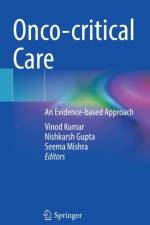
This book provides insights into the care of cancer patients in the intensive care unit in a comprehensive manner. It provides an evidence-based approach to practitioners and postgraduate students to understand about the critical care needs of the patients suffering from malignancies. It helps the readers to develop critical thinking and encourage discussion towards improving the overall care of the patients and their families as their optimal management requires expertise in oncology, critical care, and palliative medicine and there is a dearth of books explaining about the special requirements and critical care needs of cancer patients.Each chapter is prepared by an expert in the field and contains well-prepared illustrations, flowcharts and relevant images. Chapters include latest evidence-based information which is useful for the readers.The book is useful for residents, fellows and trainees in the field of onco-anaesthesia, onco-critical care, onco-surgery, critical care and anaesthesia; practitioners and consultants in anaesthesia and onco-anaesthesia as well as intensivist, critical care experts and postgraduates in nursing.
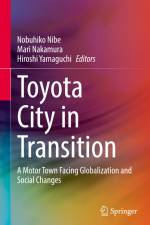
This informative monograph focuses on the city of Toyota, located in Aichi Prefecture, Japan. Aside from the fact that most Toyota passenger vehicles are produced there, generally little is known about its reality.Since the 1960s, the city has continuously attracted numerous jobseekers from distant rural areas. Owing to years of stable employment and settlement within local communities, once-new workers gradually build strong ties with their neighbours and actively participate in residential activities. This pattern of settlement provides a unique example of long-prosperous industrial cities, which deserves discussion against a backdrop of the present "e;de-industrializing"e; urban economies.Unfortunately, this favourable situation is now changing, despite the regional economy's steady recovery from the 2008 financial crisis. Addressing this paradox is the main focus of the present book. The upgrading of the Toyota Production System and concomitant widening class disparity are damaging local ties under severe pressure from global competition. Other suppressing factors are driven by sociological conditions, such as aging, declining marriage rates and birth rates. By comparing two sets of survey data, from 2009 and 2015, and performing fieldwork research in two communities that once were "e;new towns"e;, the book seeks to provide an understanding of the present situation of this unusual industrial city. At the same time, a unique theoretical perspective is revealed that does not fit the mould of either the Chicago School or the new urban sociology.
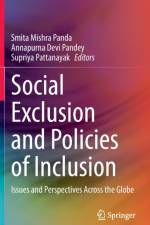
This book brings together cross-cultural perspectives on political economy of social exclusion and a critical view of policies of inclusion. The themes covered are political economy of social exclusion; inclusionary policy outcomes; persistent challenges to social exclusion and rethinking social exclusion and inclusion. The contexts are located in varied geographies including India, South East Asia, USA, Canada, Mexico, Australia and Papua New Guinea. The book throws light on how, historically, social inclusion of various excluded communities has always been a part of nation building with varying results. Furthermore, it highlights how the terrain of social exclusion is becoming increasingly complex today. It provides the space to reimagine issues of inclusion and exclusion within the social policy landscape of a country. It provides ways to rethink policies of inclusion such that dialogue between the excluded and the state is enhanced, and the systems of seeking justice for a dignified life, peace and freedom are improved. It appeals to policy makers, academicians and practitioners of development and social policy studies, planning and governance in both developing and developed countries.
This book presents a collection of annotated English translations of German diplomatic documents-including telegrams, dispatches and reports-sent to the Foreign Office in Berlin and the German Ambassador in Hankou, China, by German diplomatic officials in Nanjing, and detailing Japanese atrocities and the conditions in and around Nanjing during the early months of 1938. The author visited the German Federal Archives (Bundesarchiv) and the German Foreign Ministry Archives (Auswartiges Amt Archiv) in Berlin, where these documents are currently archived, in 2008, 2016, and 2017 to locate and retrieve them. These diplomatic documents are of significant value in that they provide both detailed information and wide coverage, from different locations and on various topics. Further, the information offered is unique in a number of ways. First, the events were recorded from the perspective of Germans, citizens of a country that was a close ally of Japan, and second, these documents are not included in any other source. As such, these archival primary sources represent an invaluable addition to the research literature on the Nanjing Massacre and will undoubtedly benefit researchers and scholars for generations to come.
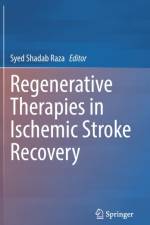
This book illustrates the importance and significance of regenerative medicine in stroke recovery. It discusses stem-cell-based treatment strategies and offers mechanistic insights into their role in neurological recovery. It also examines the challenges and advances in using adult stem cells for enhanced therapeutic efficacy. Further, it presents the strategies as well as the strengths and weaknesses of various delivery methods to administer stem cells in ischemic stroke. It examines the role of non-coding RNA in our understanding the stroke pathogenesis, their regulatory role in ischemic stroke and potential as biomarkers and therapeutic targets. Lastly, it explores exosomes in the treatment of stroke, and the underlying mechanism of their action as therapeutic vectors for stroke. Given its scope, it is an excellent resource for neurologists, neuroscientists and researchers involved in regenerative therapy for stroke.
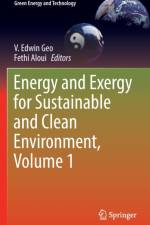
This multi-disciplinary book presents the most recent advances in exergy, energy, and environmental issues. Volume 1 focuses on fundamentals in the field and covers current problems, future needs, and prospects in the area of energy and environment from researchers worldwide. Based on some selected lectures from the Eleventh International Exergy, Energy and Environmental Symposium (IEEES-11) and complemented by further invited contributions, this comprehensive set of contributions promote the exchange of new ideas and techniques in energy conversion and conservation in order to exchange best practices in "e;energetic efficiency."e; Included are fundamental and historical coverage of the green transportation and sustainable mobility sectors, especially regarding the development of sustainable technologies for thermal comforts and green transportation vehicles. Furthermore, contributions on renewable and sustainable energy sources, strategies for energy production, and the carbon-free society constitute an important part of this book.
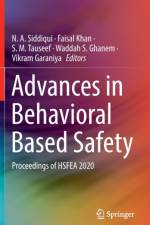
This book presents the proceedings of the International Conference on Health, Safety, Fire, Environment, and Allied Sciences 2020. It highlights latest developments in the field of science and technology aimed at improving health and safety in the workplace. The volume comprises content from leading scientists, engineers, and policy makers discussing issues relating to industrial safety, fire hazards and their management in industry, forests and other settings. Also dealt with are issues of occupational health in engineering, process and agricultural industry and protection against incidents of arson and terror attacks. The contents of this volume will be of interest to researchers, practitioners, and policy makers alike.
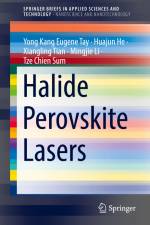
This book highlights the rapidly emerging field of solution-processed halide perovskite lasers. These amazing materials not only possess exceptional photovoltaic properties, but are also outstanding optical gain media. Halide perovskites are the latest member of solution-processed optical gain media, joining organics and traditional semiconductor colloidal quantum dots. Amplified spontaneous emission and lasing have been demonstrated in various halide perovskite configurations and nanostructures with wavelengths tunable over the visible and infrared wavelengths (400-1000 nm).This book provides comprehensive information on perovskite lasing, starting with some fundamentals of lasers and their basic operating principles. Unambiguous methods for identifying lasing light emission are presented, while the basic optoelectronic properties of perovskite materials are also discussed, with an emphasis on their photophysics, using ultrafast optical spectroscopy techniques. The viability of perovskites as a gain media within a suitable resonator, as well as the characterization methods for optical gain, are highlighted. The book closes with a discussion on the remaining challenges (such as electrical driven lasing and material stabilities) that need to be tackled, and the future of this new family of lasers.
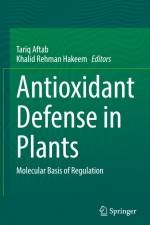
This edited book highlights the molecular basis of various enzymatic and non-enzymatic antioxidants, defense mechanisms and adaptation strategies employed by plants to avoid the stressful conditions. Special focus is given to gene expression, omics and other latest technologies such as CRISPR-Cas mediated genome editing applications for defense related studies in plants. Environmental stresses such as drought, salinity or floods etc. induce the generation of reactive oxygen species (ROS) which causes severe damage to cell membrane integrity by accelerating lipid peroxidation. To counteract the detrimental effect of ROS, plants are inherited with an intricate and vibrant antioxidant defense system, comprised of enzymatic (catalase, peroxidase, superoxide dismutase, glutathione reductase, glutathione S-transferase, guaiacol peroxidase, monodehydroascorbate reductase, dehydroascorbate reductase etc.), and non-enzymatic (glutathione, ascorbate, a-tocopherol, carotenoids, flavonoids etc.) antioxidants, which scavenge and/or reduce excess ROS and improve plant tolerance to various stresses. Stress tolerance in most crop plants is positively correlated with an efficient antioxidant system. Therefore, studying the efficiency of antioxidant defense systems in plants is necessary for facilitating the plant's nature of adaptation against challenging environments. This book is of interest to teachers, researchers and academic experts. Also, the book serves as additional reading material for undergraduate and graduate students of biotechnology and molecular biology of plants.
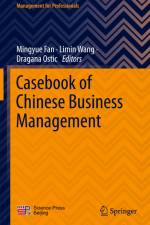
This book selects Chinese excellent enterprise management cases, integrating into the education system of business schools, sharing "e;China's new story"e; to readers, and boosting the process of national economic construction and enterprise transformation.Chinese enterprises face unprecedented opportunities and challenges under the circumstance of fast-changing technology, economy, and political environment. In the face of various uncertainties, they have risen to prominence and constantly summed up enterprise management concepts and practical experience suitable for their own development to reshape their competitive advantages and enhance their market value.Based on the investigation, this book covers the major theoretical aspects of management principles such as planning, organizing, leading, controlling, and innovation. The 17 selected cases from manufacturing, retailing, technology/big data service, agriculture, and other industries cover strategic management, entrepreneurial management, human-oriented management, information management, and organizational innovation management. We hope that readers can get some valuable practical experience and enlightenment from the practices in these fields.The book also includes two case study guides, which guide readers to form a case study's thinking. It also encourages readers to broaden their learning ideas on management.
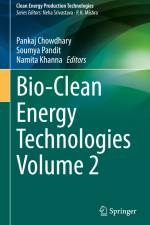
This edited book discusses the latest advancements in the area of biofuel development. It covers extensive information regarding different aspects and types of biofuels. The book provides a road map of the various kinds of biofuels available for consideration. It focuses on microbial based power generation, applications of nanotechnology in biofuel development, advancements in molecular techniques, economic and life cycle assessments. The book also highlights the commercialization prospects and economics of the various processes and an overview of the life cycle assessment of the various different kinds of biofuels. The contributors are experienced professors, academicians and scientists associated with renowned laboratories and institutes in India and abroad. This book is of interest to teachers, researchers, biofuel scientists, capacity builders and policymakers. Also the book serves as additional reading material for undergraduate and graduate students. National and international scientists, policy makers will also find this to be a useful read.
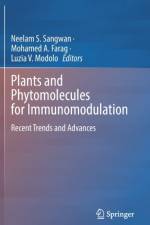
This book describes the process of immunomodulation and the plants which possess immunomodulation properties to boost the immune system. The immunomodulation process is highly relevant to address emerging as well as existing diseases in humans. A better immune system triggers the cellular responses for neutralizing and combating the onset of disease conditions. Chapters in the book discuss plants that have profound effects on the health and well-being of humans. They discuss the natural phytochemicals that have immense diversity and uniqueness of molecules. Molecules belonging to phenylpropanoids, terpenoids, steroids, alkaloids, and tannins etc possess a variety of pharmacological activities. The chapters describe how bioactive exert effects even when taken as part of the diet, supplement, and or as traditional herbal medicine. This book provides up-to-date scientific knowledge about the activities and mechanisms and leads in the area of medicinal plants and phytochemicals with immunomodulation properties.This book is meant for students, academics, researchers, and industry professionals interested in pharmacology, immunology, and plant secondary metabolites.
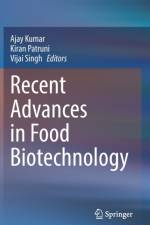
This book highlights important aspects of food biotechnology. It is very thoughtfully divided into five sections. The first section introduces the readers to food biotechnology and discusses functional foods, use of plant and animal biotechnology in improving food quality. The second section deals with food microbiology and includes topics such as application of microbial surfactants, use of probiotics, beneficial microorganisms used in food industry etc. The third section describes important macro and micromolecules in foods. It includes chapters on food enzymes, gluten free formulations, use of biopolymers, biofortification of food and other important topics. The next section discusses novel technologies such as use of nanotechnology in food industry, reverse micelle techniques, genome editing in food crops etc. The book culminates with a section on food quality and management. It describes important topics about biosafety and regulatory issues in food biotechnology. This book is meant for students, researchers and course instructors in food science, food technology and biotechnology. It is also useful for industry experts in the area of food technology.
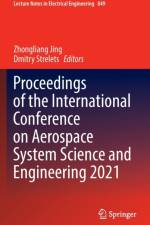
The book collects selected papers presented at the 5th International Conference on Aerospace System Science and Engineering (ICASSE 2021), organized by Shanghai Jiao Tong University, China, hosted by Moscow Aviation Institute, Russia. It provides a forum for experts in aeronautics and astronautics to share new ideas and findings. ICASSE conference has been organized annually since 2017 and host in Shanghai, Moscow, and Toronto in turn, where the three regional editors of journal Aerospace Systems are located.This book presents high-quality contributions in the subject area of Aerospace System Science and Engineering, including topics such as: Trans-space vehicle systems design and integration, Air vehicle systems, Space vehicle systems, Near-space vehicle systems, Opto-electronic system, Aerospace robotics and unmanned system, Aerospace robotics and unmanned system, Communication, navigation and surveillance, Dynamics and control, Intelligent sensing and Information fusion, Aerodynamics and aircraft design, Aerospace propulsion, Avionics system, Air traffic management, Earth observation, Deep space exploration, Bionic micro-aircraft/spacecraft.
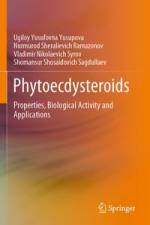
This book presents the results of comprehensive research of an inadequately studied class of secondary plant metabolites: phytoecdysteroids, which are structural analogs of the hormones of molting and metamorphosis of arthropods. The chemical structures of ecdysteroids isolated from plants of the genera Ajuga, Rhaponticum, and Silene have been established. Data on the physicochemical characteristics, reactivity, metabolism, and biological activity of these compounds are presented in this book. Considerations of the role of ecdysteroids in plants are expressed and data on their pharmacological properties are also given. Issues regarding the use of phytoecdysteroids in practical medicine and, accordingly, the technological aspects of deriving drugs on their basis and biologically active food additives of a fortifying type of action are considered as well.The book is intended for specialists in the fields of bioorganic and organic chemistry, biochemistry, biotechnology, and pharmacology. It is also relevant to scientists of various profiles and teachers and students interested in the problems of the chemistry of natural and physiologically active substances.
This book provides thorough information on various nanomaterials, techniques for their synthesis and characterization, and examines their agricultural, environmental, biomedical, and clinical applications. The initial part of the book presents different nanomaterials; covers various physical, chemical, and biological methods for their synthesis; and reviews techniques to characterize their physicochemical and biological properties. Subsequently, the chapters of the book focus on the innovative applications of nanomaterials in disease diagnosis, tissue engineering, regenerative medicine, and cancer therapy. It also explores the green biosynthesis of nanomaterials and highlights their biological applications. Towards the end, the book examines the toxicity and biocompatibility of various nanomaterials. It aims to serve as a resource guide for researchers and biomedical clinicians working with nanomaterials.
This book summarizes the application of soft computing techniques, machine learning approaches, deep learning algorithms and optimization techniques in geoengineering including tunnelling, excavation, pipelines, etc. and geoscience including the geohazards, rock and soil properties, etc. The book features state-of-the-art studies on use of SC,ML,DL and optimizations in Geoengineering and Geoscience. Considering these points and understanding, this book will be compiled with highly focussed chapters that will discuss the application of SC,ML,DL and optimizations in Geoengineering and Geoscience. Target audience: (1) Students of UG, PG, and Research Scholars: Several applications of SC,ML,DL and optimizations in Geoengineering and Geoscience can help students to enhance their knowledge in this domain. (2) Industry Personnel and Practitioner: Practitioners from different fields can be able to implement standard and advanced SC,ML,DL and optimizations for solving critical problems of civil engineering.
This book covers the research fields in biodiversity conservation, the Belt and Road eco-environmental cooperation, China's five-year plan for eco-environmental protection, sustainable development goals assessment, and human health loss assessment. In the past, these achievements have played an important scientific role in supporting China's ecological and environmental protection, and produced extensive social impacts and significant environmental benefits. At the same time, the relevant research ideas and methods also show the latest progress and trend in the field of environmental strategy and planning in China in recent years, which can be used for reference by experts and scholars of other countries in the field of ecological environment.
This book looks at a substantively new model of educational philosophy and its application within the field of tertiary education, in relation to socio-economic development in Southeast Asian members of the Organization of Islamic Conferences (OIC). Focusing on and drawing from the cross-regional South East Asian Cooperation (SEACO), a network promoting regional economic cooperation, the author presents a thoughtful evocation of a new orientation to educational philosophy and policy within the development context in the time of, and relating to, COVID-19. The generalized worldview of Islamic educational and socio-economic development model is laid down in relation to the philosophy of education and an ethical-scientific structure of development in terms of the theory of knowledge (epistemology, episteme). The foundation of scientific thought and a comparative Islamic worldview in understanding the unified reality of 'everything' is presented. The objectivity of socio-scientific learning at all levels of educational development is further explained within the context of SEACO and its think tank vis-a-vis a reconstructive perspective in which the Islamic episteme of the unity of knowledge and its substantive methodology is addressed and unpacked. The book is relevant to policymakers and scholarly researchers in Islamic philosophy and development and higher education in Southeast Asia and in the Muslim world and more broadly for the world of learning.
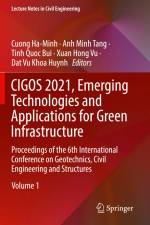
This book highlights the key role of green infrastructure (GI) in providing natural and ecosystem solutions, helping alleviate many of the environmental, social, and economic problems caused by rapid urbanization. The book gathers the emerging technologies and applications in various disciplines involving geotechnics, civil engineering, and structures, which are presented in numerous high-quality papers by worldwide researchers, practitioners, policymakers, and entrepreneurs at the 6th CIGOS event, 2021. Moreover, by sharing knowledge and experiences around emerging GI technologies and policy issues, the book aims at encouraging adoption of GI technologies as well as building capacity for implementing GI practices at all scales. This book is useful for researchers and professionals in designing, building, and managing sustainable buildings and infrastructure.
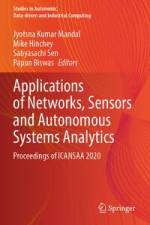
This book presents high-quality research papers presented at International Conference on Applications of Networks, Sensors and Autonomous Systems Analytics (ICANSAA 2020), held during December, 11 - 12, 2020, at JIS College of Engineering, Kalyani, West Bengal, India. The major topics covered are cyber-physical systems and sensor networks, data analytics and autonomous systems and MEMS and NEMS with applications in biomedical devices. It includes novel and innovative work from experts, practitioners, scientists, and decision-makers from academia and industry.
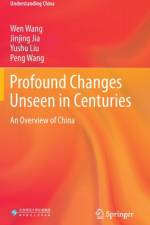
This book focuses on the current internal and external situation China is facing both from a macro perspective and a theoretical height, and puts forward practical development strategies and diplomatic ideas. It is of great methodological significance. At home, the development thought after the conclusion of the hundred-year change is the guiding thought for China's further development, and abroad, the international communication and the construction of international order highlighted by the hundred-year change also have important reference significance for the world's development.
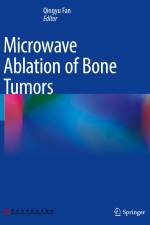
The book provide up-to-date information on clinical application of microwave ablation for limb salvage in bone tumors. First chapters briefly introduce clinical diagnosis, stage, amputation and limb salvage surgery of bone tumors. In the following chapters, detailed procedure of microwave ablation of bone tumors in various parts of the body, for example, upper limb, lower limb, pelvis and spine, is described, accompanying a large number of high-resolution illustration. Microwave ablation of different kinds of bone tumors, for example, bone metastases, giant cell tumor, osteosarcoma, soft tissue tumors is also presented with tips in clinical procedure. In the closing chapters, joint function preservation, prevention and treatment of complications, and the advantages and disadvantages of microwave ablation of bone tumors are also discussed for reader to have a in-depth understanding. It will be a valuable reference for orthopedic surgeons and oncologists, as well as practitioners interested in this field.
The book covers a range of topics dealing with emerging computing technologies which are being developed in response to challenges faced due to scaling CMOS technologies. It provides a sneak peek into the capabilities unleashed by these technologies across the complete system stack, with contributions by experts discussing device technology, circuit, architecture and design automation flows. Presenting a gradual progression of the individual sub-domains and the open research and adoption challenges, this book will be of interest to industry and academic researchers, technocrats and policymakers.Chapters "e;Innovative Memory Architectures Using Functionality Enhanced Devices"e; and "e;Intelligent Edge Biomedical Sensors in the Internet of Things (IoT) Era"e; are available open access under a Creative Commons Attribution 4.0 International License via link.springer.com.
This book brings high-quality selected research articles from the international conference on Sustainable Water Resources Management (SWARM 2020), held at Assam Engineering College, Guwahati, Assam, India, during 19-21 June 2020. The book focuses on water management and planning, urban water management, climate change and global warming, management of groundwater and aquifer remediation, water conservation, water quality, pollution control, management of trans-boundary rivers, advanced hydrological modelling and hydro-disaster risk management of sustainable water management.
This informative book discusses the latest research on the risk factors and therapeutics in dementia. WHO calls dementia a public health priority. Dementia manifests as a group of symptoms associated with decline in memory or other thinking skills and is severe enough to reduce a person's ability to perform everyday activities. It occurs frequently among elderly people, but it is not necessarily part of the normal aging process. The book has been divided into two broad sections. The first section reviews the risk factors involved in developing dementia, including various medical conditions, lifestyle choices, as well as genetics. The latter section describes various therapeutic interventions in dementia. Although there is no known cure for dementia, this book underlines the current treatment strategies that could momentarily reduce the symptoms and improve the quality of life of the patients. This book highlights the global effort to find better ways to halt the progression of dementia and develop novel therapeutic strategies. The book would be an interesting read for advanced graduate students and researchers working in the field of neuroscience, genetics, and medicine. It will generate good interest to neurologists, psychiatrists, geriatricians, cardiologists, internal medicine practitioners, epidemiologist, and public health workers.
This book reviews applications of nanomaterial and nanodevices in the food industry. It also discusses the advanced bioanalytical techniques, including Enzyme-Linked Immunosorbent Assay (ELISA), immunoanalytical techniques, and monoclonal antibody-based immunological techniques for detecting food adulterations and allergens. It comprehensively covers electrode modification and nano-engineered fabrication of biosensors to enhance their functionalities for utilization in food industries. The book highlights the utilization of nanobiosensors for food safety and quality analysis, such as detection of toxin, food-borne pathogen, allergen, evaluation of toxicity etc. Further, it also summarizes the recent advances in nanodevices such as nano-systems, nano-emulsions, nanopesticides, and nanocapsules and their applications in the food industry. Lastly, it covers nanomaterial-based sensors for drug analysis in diverse matrices. It serves as an invaluable source of information for professionals, researchers, academicians, and students related to food science and technology.
Abonner på vårt nyhetsbrev og få rabatter og inspirasjon til din neste leseopplevelse.
Ved å abonnere godtar du vår personvernerklæring.