

Gjør som tusenvis av andre bokelskere
Abonner på vårt nyhetsbrev og få rabatter og inspirasjon til din neste leseopplevelse.
Ved å abonnere godtar du vår personvernerklæring.Du kan når som helst melde deg av våre nyhetsbrev.

This book compiles the best selected research papers presented during the 2nd International Conference on Intelligent Computing Techniques for Smart Energy Systems (ICTSES 2021), held at Manipal University, Jaipur, Rajasthan, India. It presents the diligent work of the research community where intelligent computing techniques are applied in allied fields of engineering ranging from engineering materials to electrical engineering to electronics and communication engineering- to computer-related fields. The theoretical research concepts are supported with extensive reviews highlighting the trends in the possible and real-life applications of computational intelligence. The high-quality content with broad range of the topics is thoroughly peer-reviewed and published on suitable recommendations.
This contributed volume aims at bringing together all the genetic engineering tools for managing various types of crop pests. The main focus of this book is to explore the application of these tools in pest management. Major pest groups covered in this book are insects, mites and nematodes.The first section covers all major genetic tools and molecular approaches. The second section deals with genetic tools for of beneficial containing three chapters involving honey bees, silkworms and natural enemies. Next section deals with genetic interactions against pests in diverse geographical regions with special focus on Africa, Vietnam and Sri Lanka. Sections four and five addresses diverse aspects as management of pests, genetic behavior, gene expression, plasticity, pathways and interactions and options for mitigation of pests.It serves as a useful resource for professionals in the fields of entomology, agronomy, horticulture, ecology, and environmental sciences, as well as to agricultural producers and plant biotechnologists.
This book provides a comprehensive overview of the development and status of fintech in China. Occupying core position in fintech development, big data takes on stronger superiority and application value. Meanwhile, blockchain and other technological innovations, which are used to serve data, greatly promote the growth of fintech industry. Furthermore, not only the benefits are illustrated by the authors, but also the financial risks and noise caused by fintech and big data are discussed. By using both academic knowledge and newest real cases in China, this timely book will appeal to practitioners, academics, and policy makers.
This book presents the select proceedings of the conference of Innovative Product Design and Intelligent Manufacturing System (IPDIMS 2020), held at the National Institute of Technology, Rourkela, India. The book addresses latest methods and advanced tools from different areas of design and manufacturing technology. The main topics covered include computational methods for robotics, mechatronics and human-computer interaction; computer-aided design, manufacturing and engineering; aesthetics, ergonomics and UX/UI design; smart manufacturing and expert systems. The contents of this book will be useful for researchers as well as professionals working in the areas of industrial design, mechatronics, robotics, and automation.
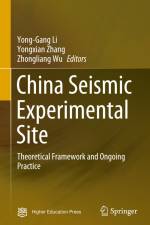
This book introduces an integrated conceptual framework of the China Seismic Experimental Site (CSES), describes its scientific challenges and research priorities, and reports preliminary results coming out of observational infrastructure in seismology, tectonophysics, geodesy, geophysics and geochemistry. Preliminary community fault model, community velocity model, and community strain rate model in the CSES are described in this book. A multidisciplinary test observation system includes GNSS, seismic array, and deep drilling system under construct around middle segment of the Xiansuihe-Xiaojiang fault and other seismogenic faults in the CSES which are also introduced. This book introduces multidisciplinary topics and a wide spectrum of solid earth system to describe various disciplines, methods, and techniques through the CSES. This book presents a vision of the CSES that is dedicated to deepen the scientific understanding of continental earthquake preparation and occurrence and enhance the disaster resilience of the society. It aims at establishing a field laboratory of earthquake science, in which international and interdisciplinary cooperation could be fostered and supported. Contents of this book include the following:* History of Seismic Experiment Sites in the World.* Launching of CSES Project: Seismicity, Existed Earthquake Monitoring Networks, and Historical Seismic Disasters.* Seismotectonics and Geodynamics of the Eastern Margin of the Tibetan Plateau with Implication for the CSES.* Theoretical Framework of CSES in View of Natural Science and in view of Social Science.* Updated Earthquake Monitoring Network in China.* CSES Community Models of Geology, Structure, and Deformation.* Earthquake Forecasting Models.* CSES Products: Massive Data Procession and Distribution.* A Review of the Field Expedition of the June 17, 2019, Changning, Sichuan, M6.0 Earthquake.* Rupture Structure and Earthquake Risk of the South Longmenshan Fault Viewed by Guided Waves.* Seismic Risk Assessment.* Model of a Seismic Experimental Site with Application to the Comparative Study between CSES and ASES.
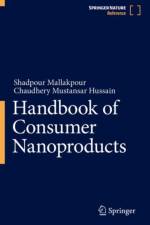
This handbook provides a best study and practice guide to consumer nanoproducts (scientists, researchers, engineers, experts), and specialists. It captures all aspects of applications of nanotechnology in consumer products, like in healthcare and fitness, home and garden, automotive, appliances, coatings, electronics, foods & beverages, sporting goods, clothing, bikes, touch screens, and automobiles, etc. It is detailed reference material for both the research community and industry professionals wanting to learn about the concept of nanoproduct. Drawing on expert contributors from around the world, this volume provides academia and industry, a high-tech start-up that will revolutionize modern consumer nanoproducts practices. In addition, it also captures aspects of environmental, legal, health, and safety issues related to consumer nano products.
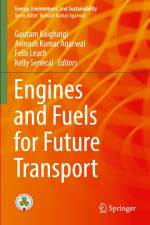
This book focuses on clean transport and mobility essential to the modern world. It discusses internal combustion engines (ICEs) and alternatives like battery electric vehicles (BEVs) which are growing fast. Alternatives to ICEs start from a very low base and face formidable environmental, material availability, and economic challenges to unlimited and rapid growth. Hence ICEs will continue to be the main power source for transport for decades to come and have to be continuously improved to improve transport sustainability. The book highlights the need to assess proposed changes in the existing transport system on a life cycle basis. The volume includes chapters discussing the challenges faced by ICEs as well as chapters on novel fuels and fuel/ engine interactions which help in this quest to improve the efficiency of ICE and reduce exhaust pollutants. This book will be of interest to those in academia and industry alike.
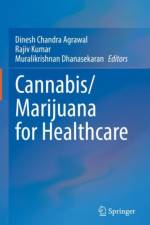
The book contains review articles providing a comprehensive overview of cannabis/marijuana's diverse healing aspects in human healthcare (medicinal, nutraceutical, skincare, etc.). The research articles include the role of cannabis in cancer treatment, drug discovery, cosmeceutical potential, prophylactic and therapeutic use for treating neuropathic pain and migraine, pharmacokinetics, safety profile, and issues related to the consumption of cannabis/marijuana. Another salient feature of the book is a complete mapping and region- and sector-wise critical analysis of cannabis/marijuana patents on healthcare and future directions for the benefit of researchers and businesses/entrepreneurs interested in the rapidly advancing area of cannabis.The text describes cannabis/marijuana's detailed legal aspects, production prospects, and applications for healthcare and recreational purposes in the USA. It traces the traditional roots of cannabis use in Turkey, Israel, the Middle East, Africa, and India. This unique compendium of articles will be useful as a reference book for students, researchers, academics, business houses, and all individuals interested in medicinal, nutraceutical, cosmeceutical, traditional, legal, and commercial aspects of cannabis usage.
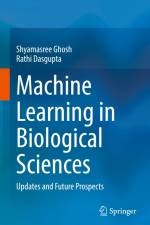
This book gives an overview of applications of Machine Learning (ML) in diverse fields of biological sciences, including healthcare, animal sciences, agriculture, and plant sciences. Machine learning has major applications in process modelling, computer vision, signal processing, speech recognition, and language understanding and processing and life, and health sciences. It is increasingly used in understanding DNA patterns and in precision medicine. This book is divided into eight major sections, each containing chapters that describe the application of ML in a certain field. The book begins by giving an introduction to ML and the various ML methods. It then covers interesting and timely aspects such as applications in genetics, cell biology, the study of plant-pathogen interactions, and animal behavior. The book discusses computational methods for toxicity prediction of environmental chemicals and drugs, which forms a major domain of research in the field of biology. It is of relevance to post-graduate students and researchers interested in exploring the interdisciplinary areas of use of machine learning and deep learning in life sciences.
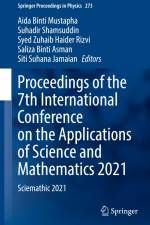
This book presents peer-reviewed articles and recent advances on the potential applications of Science and Mathematics for future technologies, from the 7th International Conference on the Applications of Science and Mathematics (SCIEMATHIC 2021), held in Malaysia. It provides an insight about the leading trends in sustainable Science and Technology. The world is looking for sustainable solutions to problems more than ever. The synergistic approach of mathematicians, scientists and engineers has undeniable importance for future technologies. With this viewpoint, SCIEMATHIC 2021 has the theme "e;Quest for Sustainable Science and Mathematics for Future Technologies"e;. The conference brings together physicists, mathematicians, statisticians and data scientists, providing a platform to find sustainable solutions to major problems around us. The works presented here are suitable for professionals and researchers globally in making the world a better and sustainable place.
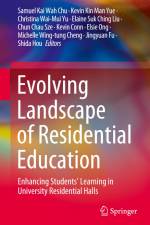
This book examines the alignment of residential educational aims and university educational aims in order to provide guidance for implementing university-specific residential educational aims. Grounded in a new theoretical model of residential education, Residential Education in university probes into how university students adopt transformative learning through residential halls in different universities. By reviewing case studies, experience sharing, and residential hall models in renowned universities in Asia, U.K., and USA respectively, this book offers a wide perspective to assess different residential education models in practice and useful programs to promote students learning outcomes. The detailed discussion on how to create learning environments and align educational aims of residence and university to maximize learning outcomes in different cultural contexts provides readers with insight into how the residential experience in university can be improved.
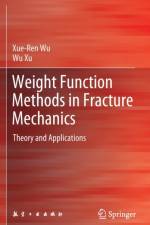
This book provides a systematic and standardized approach based on the authors' over 30 years of research experience with weight function methods, as well as the relevant literature. Fracture mechanics has become an indispensable tool for the design and safe operation of damage-tolerant structures in many important technical areas. The stress intensity factor-the characterizing parameter of the crack tip field-is the foundation of fracture mechanics analysis. The weight function method is a powerful technique for determining stress intensity factors and crack opening displacements for complex load conditions, with remarkable computational efficiency and high accuracy.The book presents the theoretical background of the weight function methods, together with a wealth of analytical weight functions and stress intensity factors for two- and three-dimensional crack geometries; many of these have been incorporated into national, international standards and industrial codes of practice. The accuracy of the results is rigorously verified, and various sample applications are provided. Accordingly, the book offers an ideal reference source for graduate students, researchers, and engineers whose work involves fracture and fatigue of materials and structures, who need not only stress intensity factors themselves but also efficient and reliable tools for obtaining them.
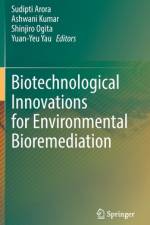
This edited book focuses on the application and implementation of bioremediation and other strategies to create a sustainable and healthy environment. It provides a collection of approaches to environmental biotechnology for wastewater treatment, removal of soil heavy metals, degradation of pesticides, removal of dyes, waste management, and microbial conversion of environmental pollutants. This book brings to the fore contributions of certain globally important environmental biotechnologist. Bioremediation is a popular branch of biotechnology that involves the use of living organisms such as microorganisms (microbial remediation), bacteria, fungus (mycoremediation), and plants (phytoremediation) to bind, extract, and clean up contaminants, pollutants, and toxins from soil, groundwater, and other environments. This book is of interest to researchers, scientists, and academic faculty in environmental sciences. Also, it serves as additional reading and reference material for undergraduate and graduate students as well as postdocs in environmental, agriculture, ecology, and soil sciences. National and International policy makers will also find valuable information from this book.
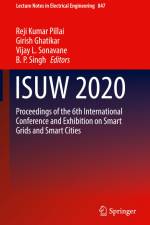
This book presents selected articles from INDIA SMART UTILTY WEEK (ISUW 2020), which is the sixth edition of the Conference cum Exhibition on Smart Grids and Smart Cities, organized by India Smart Grid Forum from March 03-07, 2020, in New Delhi, India. ISGF is a public private partnership initiative of the Ministry of Power, Govt. of India, with the mandate of accelerating smart grid deployments across the country. This book gives current scenario updates of Indian power sector business. It also highlights various disruptive technologies for power sector business.
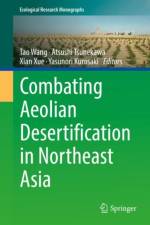
This book presents the definition of aeolian desertification and uncovers its processes, driving factors, and consequences, and focuses on measures to effectively combat aeolian desertification in Northeast Asia. Aeolian desertification in Northeast Asia is of great concern for its destructive influences on the environment and society not only in the local but also in faraway areas. The topics of this book are addressed by compiling theoretical review, remote sensing monitoring, synoptic analysis, and laboratory and field studies in China, Japan, and Mongolia.This is the first comprehensive book to address the aeolian desertification in Northeast Asia. Readers can learn the basic theory of aeolian desertification and the primary causes of this environmental problem. More critical is the successful practical countermeasures to combat desertification which can be referred to by various stakeholders who concern the aeolian desertification in Northeast Asia.To meet the Sustainable Development Goals of the United Nations adopted in 2015, especially its Goal 15.3 to achieve a land degradation-neutral world by 2030, desertification combating actions should be taken cross country borders. This book is not only intended for environmental professionals but also for people who are affected and concerned about desertification and land degradation. The concept and processes in this book will serve as a ready reference to understand the aeolian desertification with countermeasures and successful preventing stories that can be referred to.
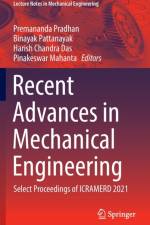
This book presents select proceedings of the International Conference on Recent Advances in Mechanical Engineering Research and Development (ICRAMERD 21). It covers the latest research trends in various branches of mechanical engineering. The topics covered include materials engineering, industrial system engineering, manufacturing systems engineering, automotive engineering, thermal systems, smart composite materials, manufacturing processes, industrial automation, and energy system. The book will be a valuable reference for beginners, researchers, engineers, and industry professionals working in the various fields of mechanical engineering.
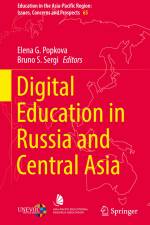
This book is a collection of the leading scientific studies, which elaborate on the unique specifics of Central Asia and Russia and dwell on the potential and current contribution of digital higher education to the preservation of these specifics and adaptation of universities to them. In the four parts of this book, the authors determine the contribution of digital education to cultural inclusivity and the development of international education in Central Asia and Russia. The role of digital higher education in the sustainable development of regions in Central Asia and Russia is described. The advantages of digital higher education for the optimization of the labor market and employment of youth in Central Asia and Russia are determined. The current directions of digitalization (EdTech) and their contribution to the increase of quality and effectiveness of higher education in Central Asia and Russia are established.This multidisciplinary book is aimed at scholars from various spheres of science (pedagogics, cultural sciences, law, management, economics, and ICT), for whom the book offers the leading scientific and methodological inventions and developments on the digitalization of higher education in Central Asia and Russia.
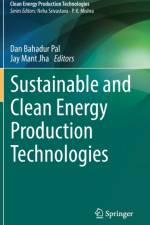
This edited book is a comprehensive collection of chapters on various clean energy technology such as solar energy, waste biomass as energy, hydro-electricity generation, biodiesel production from biomass and strategies to cater the demand of clean renewable energy. Clean energy technologies also enhance economic growth by increasing the supply of energy demand and tackling environmental challenges and their impacts due to the use of other conventional sources of energy. The conventional/non-conventional energy production methods are efficient but it has adverse effects on environment and human health. As environmental concerns are not avoidable therefore the necessity of clean energy production comes in to the picture. The clean energy can be produced by different wastes which are caused for the environmental pollution. This book covers various aspects of new and renewable clean energy production technology and its utilization in different fields. This is a useful reading material for students and researchers involved in clean energy study.
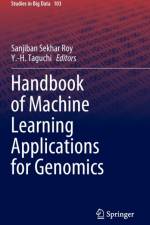
Currently, machine learning is playing a pivotal role in the progress of genomics. The applications of machine learning are helping all to understand the emerging trends and the future scope of genomics. This book provides comprehensive coverage of machine learning applications such as DNN, CNN, and RNN, for predicting the sequence of DNA and RNA binding proteins, expression of the gene, and splicing control. In addition, the book addresses the effect of multiomics data analysis of cancers using tensor decomposition, machine learning techniques for protein engineering, CNN applications on genomics, challenges of long noncoding RNAs in human disease diagnosis, and how machine learning can be used as a tool to shape the future of medicine. More importantly, it gives a comparative analysis and validates the outcomes of machine learning methods on genomic data to the functional laboratory tests or by formal clinical assessment. The topics of this book will cater interest to academicians, practitioners working in the field of functional genomics, and machine learning. Also, this book shall guide comprehensively the graduate, postgraduates, and Ph.D. scholars working in these fields.
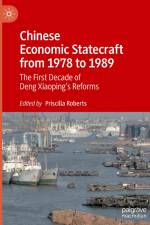
This volume focuses on Chinese economic statecraft during the first decade of Deng Xiaoping's reform and opening-up policies, from 1978 to 1989. During these years, Chinese economic engagement with the external world was tentative and experimental, with long-term strategies still decidedly under development. Prominent topics covered are China's efforts to steer an economic course tailored to and representing what Deng Xiaoping famously described as "e;socialism with Chinese characteristics"e;; China's quest for advanced science and technology; China's dealings with international economic institutions, especially the World Bank; China's engagement with other powers, including Japan, the United States, the ASEAN nations, and Europe; and the role of non-governmental organizations, including foreign policy think tanks, exchange groups, and educational institutions, in developing Chinese economic thinking and methodology during this decade. Contributors also focus on how elements of the Chinese military turned to building China's new economic infrastructure, and on Chinese efforts to break into foreign markets. The volume ends with an overview and reassessment of earlier findings on Chinese economic statecraft in these years, by one of the leading Chinese experts on the PRC's international policy.
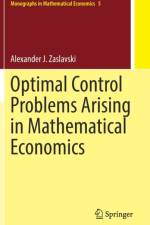
This book is devoted to the study of two large classes of discrete-time optimal control problems arising in mathematical economics. Nonautonomous optimal control problems of the first class are determined by a sequence of objective functions and sequence of constraint maps. They correspond to a general model of economic growth. We are interested in turnpike properties of approximate solutions and in the stability of the turnpike phenomenon under small perturbations of objective functions and constraint maps. The second class of autonomous optimal control problems corresponds to another general class of models of economic dynamics which includes the Robinson-Solow-Srinivasan model as a particular case. In Chap. 1 we discuss turnpike properties for a large class of discrete-time optimal control problems studied in the literature and for the Robinson-Solow-Srinivasan model. In Chap. 2 we introduce the first class of optimal control problems and study its turnpike property. This class of problems is also discussed in Chaps. 3-6. In Chap. 3 we study the stability of the turnpike phenomenon under small perturbations of the objective functions. Analogous results for problems with discounting are considered in Chap. 4. In Chap. 5 we study the stability of the turnpike phenomenon under small perturbations of the objective functions and the constraint maps. Analogous results for problems with discounting are established in Chap. 6. The results of Chaps. 5 and 6 are new. The second class of problems is studied in Chaps. 7-9. In Chap. 7 we study the turnpike properties. The stability of the turnpike phenomenon under small perturbations of the objective functions is established in Chap. 8. In Chap. 9 we establish the stability of the turnpike phenomenon under small perturbations of the objective functions and the constraint maps. The results of Chaps. 8 and 9 are new. In Chap. 10 we study optimal control problems related to a model of knowledge-based endogenous economic growth and show the existence of trajectories of unbounded economic growth and provide estimates for the growth rate.
This book elucidates the tissue structure and cell composition of the organs of zebrafish at the microscopic, ultrastructural and molecular levels. The distribution of important macromolecular substances is shown and the morphological relationship between different components is analyzed. The book is divided into 15 chapters and contains more than 700 structural photos, all of which are original experimental pictures of the research group. It shows the histological panorama of the whole zebrafish both in cross and longitudinal sections and covers and interprets the tissues and organs of zebrafish in detail, including oropharynx, taste buds, pharyngeal teeth, liver, etc. A brief text description of the structure and function meaning is available for every picture to facilitate the audience understanding the theoretical knowledge more vivid and concrete. In addition, the 3D reconstruction of the main organs of zebrafish is completed by computer-aided technology, and the three-dimensional morphology of the organs is displayed in an intuitive form. This book provides a reference for postgraduates and researchers in anatomy, biology, animal medicine, animal science, aquaculture, developmental biology, medicine, and experimental animals.
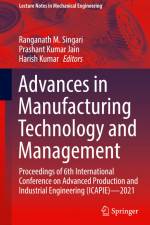
This book presents the select peer-reviewed proceeding of the International Conference on Advanced Production and Industrial Engineering (ICAPIE) - 2021 held at Delhi Technological University. It covers recent trends in various fields of mechanical engineering. The broad range of topics and issues covered include mechanical system engineering, materials engineering, micro-machining, renewable energy, industrial engineering and additive manufacturing. This book will be useful for students, researchers and professionals working in the area of mechanical and allied engineering discipline.
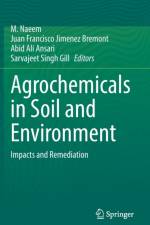
This volume 'Agrochemicals in Soil and Environment: Impacts and Remediation' is a comprehensive collection of important literature on agrochemical contamination. The main focus of this book is to point out undesirable changes in biological, physical and chemical characteristics of agricultural soils and its impacts on global agricultural crop productivity. Soil is one of the important resources of basic needs for our sustenance but due to various anthropogenic activities like urbanization and industrialization, the soil is losing its basic quality characteristics. Soil microorganisms, water holding capacity, minerals, salts and nutrients are under the direct threat due to agrochemicals therefore, agricultural sector is facing a serious challenge. Lack of proper knowledge and luxurious applications of agrochemicals resulting into degradation and deterioration of soil quality, loss of soil and crop productivity and threatening the food security. Therefore, it is imperative to develop indices, indicators and soil parameters for the monitoring and impact assessment of agricultural contaminants. Further, biotic and abiotic stresses and their tolerance mechanisms in plants in relation to the soil contaminants such as toxic pollutants, heavy metals, inorganic and organic matters, variety of pesticides, insecticides, herbicides, agricultural runoffs and solid wastes, and chemical fertilizers are also highlighted in this volume. This book also discusses causes of reduced agriculture productivity and suggests sustainable measures such as plant-based technologies, bioremediation and nanotechnology, that can be used to overcome the crop losses. The book is interest to research students, teachers, agricultural scientists, agronomists, environmentalists as well as policy makers.
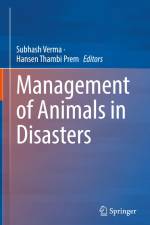
This book is a comprehensive guide for veterinary and humanitarian professionals to plan emergency responses for the care and welfare of animals. It covers various topics on disasters, such as principles of disaster management, operation planning, team deployment, etc., from the perspective of saving both livestock and the livelihood of vulnerable communities. The book also discusses the importance of early warning systems, biosecurity, techniques for data collection, one health approach, climate change, and appropriate mitigation strategies. It highlights different principles, approaches, and guidelines related to the rescue, relief, and management of animals during disasters. It also contains topics on the welfare of birds and the rescue and relief of wild animals. This book includes essential veterinary and life-saving supplies required by the relief providing teams during emergencies such as disasters. The book helps administrators understand the key aspects of welfare and management of animals during disasters and enable them to draft policies focusing on humans and animals' rescue & welfare and protection of livelihoods. It is an essential guide for veterinarians, humanitarian workers, field functionaries, farmers, disaster response forces personnel, etc., during various types of disasters and emergencies.
This book bridges the gap between Education for Sustainable Development and community development and examines the contributions of critical environmental education as a theoretical framework to the policy, research, and practice of Education for Sustainable Development. The book investigates what Education for Sustainable Development really means when it happens from the perspectives of a marginalized individual at the very bottom of society in a local community, where there is no such 'educational' institution, no policy or no curriculum to support the effort, but there is the necessity of learning and empowerment for changing the situation. In particular, drawing on the experience of the indigenous Ainu fisherman, it critically examines the theoretical foundation of Education for Sustainable Development, critical environmental education, investigating methodologically and epistemologically the relevance and efficacy of critical environmental education to socially critical approaches to Education for Sustainable Development in a community development context. And this investigation leads to develop a praxis framework for socially critical Education for Sustainable Development in a community development context so that both fields would be mutually supportive to strengthen the practices.
From both theoretical and practical perspectives, this book systematically expounds the important theories, key measures and major achievements in the field of poverty alleviation in China, and sums up the important experience of poverty alleviation, it answers the significant question why China has been able to lift itself out of poverty and build a moderately prosperous society in an all round way. China has accumulated experience for achieving the two centenary goals, and contributed Chinese wisdom and Chinese solutions to the global cause of poverty reduction.
In an article for Wired Magazine in 2006, Jeff Howe defined crowdsourcing as an idea for outsourcing a task that is traditionally performed by a single employee to a large group of people in the form of an open call. Since then, by modifying crowdsourcing into different forms, some of the most successful new companies on the market have used this idea to make people's lives easier and better. On the other hand, software testing has long been recognized as a time-consuming and expensive activity. Mobile application testing is especially difficult, largely due to compatibility issues: a mobile application must work on devices with different operating systems (e.g. iOS, Android), manufacturers (e.g. Huawei, Samsung) and keypad types (e.g. virtual keypad, hard keypad). One cannot be 100% sure that, just because a tested application works well on one device, it will run smoothly on all others.Crowdsourced testing is an emerging paradigm that can improve the cost-effectiveness of software testing and accelerate the process, especially for mobile applications. It entrusts testing tasks to online crowdworkers whose diverse testing devices/contexts, experience, and skill sets can significantly contribute to more reliable, cost-effective and efficient testing results. It has already been adopted by many software organizations, including Google, Facebook, Amazon and Microsoft. This book provides an intelligent overview of crowdsourced testing research and practice. It employs machine learning, data mining, and deep learning techniques to process the data generated during the crowdsourced testing process, to facilitate the management of crowdsourced testing, and to improve the quality of crowdsourced testing.
The globally distributed health impacts of environmental degradation and widening inequalities require a fundamental shift in understandings of healthy urbanism. This book redefines the meaning and form of healthy urban environments, urging planners and design professionals to consider how their work impacts population health and wellbeing at multiple spatial and temporal scales. The concepts of equity, inclusion and sustainability are central to this framing, reversing the traditional focus on individuals, their genes and 'lifestyle choices' to one of structural factors that affect health. Integrating theory and concepts from social epidemiology, sustainable development and systems thinking with practical case studies, this book will be of value for students and practitioners.
Abonner på vårt nyhetsbrev og få rabatter og inspirasjon til din neste leseopplevelse.
Ved å abonnere godtar du vår personvernerklæring.