













Gjør som tusenvis av andre bokelskere
Abonner på vårt nyhetsbrev og få rabatter og inspirasjon til din neste leseopplevelse.
Ved å abonnere godtar du vår personvernerklæring.Du kan når som helst melde deg av våre nyhetsbrev.

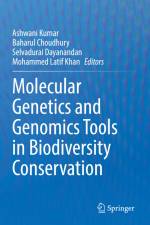
This book provides insight into the use of molecular and genomic techniques to the study of populations of critically important species at various geographical scales. It delves into a wide range of issues relevant to biodiversity conservation, such as population differentiation, landscape genomics, ecological interactions, phylogenetics, phylogeography, metagenomics, molecular methods, and data processing. The current rate of biodiversity loss is unprecedented and valuable genetic resources are being lost at an alarmingly rate. Effective strategies to conserve these genetic resources are essential to maintain healthy ecosystems with inter-dependent species. The book is an invaluable resource for training undergraduate and graduate students, postdoctoral fellows, and for young researchers. This book is particularly useful for the policy makers and academics who want to learn about important concepts in population and conservation genetics and genomics.
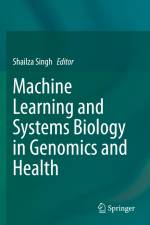
This book discusses the application of machine learning in genomics. Machine Learning offers ample opportunities for Big Data to be assimilated and comprehended effectively using different frameworks. Stratification, diagnosis, classification and survival predictions encompass the different health care regimes representing unique challenges for data pre-processing, model training, refinement of the systems with clinical implications. The book discusses different models for in-depth analysis of different conditions. Machine Learning techniques have revolutionized genomic analysis. Different chapters of the book describe the role of Artificial Intelligence in clinical and genomic diagnostics. It discusses how systems biology is exploited in identifying the genetic markers for drug discovery and disease identification. Myriad number of diseases whether be infectious, metabolic, cancer can be dealt in effectively which combines the different omics data for precision medicine. Major breakthroughs in the field would help reflect more new innovations which are at their pinnacle stage. This book is useful for researchers in the fields of genomics, genetics, computational biology and bioinformatics.
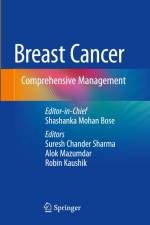
The book provides detailed information on breast cancer and covers all the aspects of this rapidly spreading disease, such as applied anatomy and physiology, causative factors, various Investigations to reach a concise, definitive and complete diagnosis. The management of breast cancer involves multi-modality treatment and the book describes all the modalities in a very clear manner. It also discusses in a very lucid and practical way. the multi-prong treatment that the patient requires . Additionally, the book covers lesser-known areas of the subject like rehabilitation, management of lymphoedema, Extravasation of chemo-Infusion, organization of breast cancer management group, breast cancer awareness and patient education, follow up of the patient, and psychological support to these patients who have undergone mutilation of their organ. Edited by experts the chapters are contributed by renowned onco-sugeons from high volume and reputed centersin India such as, PGIMER, Chandigarh, AIIMS, New Delhi, and TMH, Mumbai among others. The book serves as a useful resource for surgeons, medical oncologists, radiotherapists, pathologists, radiologists and many other specialists interested in the field of breast cancer and actively working in this area. It is useful for practitioners and residents as well as for those who want to learn the different aspects of this disease.
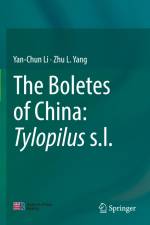
This book introduces the Chinese boletes, including the history, ecological and economic values, as well as the geographical distribution patterns with a highlight on the Tylopilus species. Species in Tylopilus s.l. are not only of important ecological values but also of scientific interests. They are very diverse in morphology, complex in structure and wide in ecological niches. China is one of the diverse hotspots of boletes, and many boletes were traditionally treated as members of Tylopilus based on hymenophore or spore-print colour. The studies revealed that the traditionally defined Tylopilus is polyphyletic. This book aims to elucidate the phylogenetic relationships among the genera treated in Tylopilus s.l. previously; to delimit and recognize the taxa, and finally to reveal the diversity of the genera and species of Tylopilus s.l. in China. The book is intended to be a reference for biologists who conduct investigations of biological resources and biodiversity; university and college teachers and students carrying out studies in related fields; mycologists and amateur mycologists, or people who interested in mushrooms taxonomy and systematics; and workers in the development of non-timber forest products.
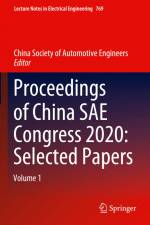
These proceedings gather outstanding papers presented at the China SAE Congress 2020, held on Oct. 27-29, Shanghai, China. Featuring contributions mainly from China, the biggest carmaker as well as most dynamic car market in the world, the book covers a wide range of automotive-related topics and the latest technical advances in the industry. Many of the approaches in the book will help technicians to solve practical problems that affect their daily work. In addition, the book offers valuable technical support to engineers, researchers and postgraduate students in the field of automotive engineering.
Abonner på vårt nyhetsbrev og få rabatter og inspirasjon til din neste leseopplevelse.
Ved å abonnere godtar du vår personvernerklæring.