









Gjør som tusenvis av andre bokelskere
Abonner på vårt nyhetsbrev og få rabatter og inspirasjon til din neste leseopplevelse.
Ved å abonnere godtar du vår personvernerklæring.Du kan når som helst melde deg av våre nyhetsbrev.

This book includes high-quality papers presented at the Second International Conference on Data Science and Management (ICDSM 2021), organized by the Gandhi Institute for Education and Technology, Bhubaneswar, from 19 to 20 February 2021. It features research in which data science is used to facilitate the decision-making process in various application areas, and also covers a wide range of learning methods and their applications in a number of learning problems. The empirical studies, theoretical analyses and comparisons to psychological phenomena described contribute to the development of products to meet market demands.
This book presents a view of the current environment of organ donation and transplantation after cardiac death in China, including legal and ethical aspects of cardiac death, assessment and management of potential organ donor, quality evaluation and machine perfusion of organ, as well as immunology, imaging and pathology related to transplantation from cardiac death donors. Since 2015, voluntary donation has been announced as the only legitimate venue for organ transplant in China. As cardiac death is adopted in China, the donation mode is different from those in other countries where brain death is adopted. It offers transplant surgeons and physicians valuable information on optimal practice proposal for organ donation after cardiac death in China.
This open access book assesses the potential of data-driven methods in industrial process monitoring engineering. The process modeling, fault detection, classification, isolation, and reasoning are studied in detail. These methods can be used to improve the safety and reliability of industrial processes. Fault diagnosis, including fault detection and reasoning, has attracted engineers and scientists from various fields such as control, machinery, mathematics, and automation engineering. Combining the diagnosis algorithms and application cases, this book establishes a basic framework for this topic and implements various statistical analysis methods for process monitoring. This book is intended for senior undergraduate and graduate students who are interested in fault diagnosis technology, researchers investigating automation and industrial security, professional practitioners and engineers working on engineering modeling and data processing applications. This is an open access book.
This book includes original, peer-reviewed research papers from the International Conference on Internet of Things, Communication and Intelligent Technology (IoTCIT) 2022. It contains the application of communication and IoT engineering in the age of intelligent technology+ from the standpoint of disciplinary integration, combining theory and associated IoT and intelligent technology algorithms. The topics cover the full range of IoT solutions, from IoT to network security, and focus on many forms of communication, such as Next Generation (6G) Mobile Communication, D2D, and M2M Communication. Additionally, it examines Intelligent Technology, with a focus on Information System Modeling and Simulation. It also explores Cloud Computing, Pervasive and Mobile Computing, Distributed Computing, High Performance Computing, and Ubiquitous Computing.
This contributed volume covers a comprehensive account of the sources, toxic biological as well as environmental impacts, and possible remediation strategies for contamination by heavy metals. In biological systems, toxic metals affect the integrity of cellular organelles and act as carcinogens causing chromosomal aberrations or as systemic toxicants leading to cardiovascular, neurobehavioral, and immunological disorders. In plants, they interfere with photosynthesis, fertility, metabolite, and chlorophyll synthesis. Toxicity induced by heavy metals involves mechanistic approaches that need to be understood properly. They cannot be degraded by biological or chemical means and thus can only be converted to less harmful forms. The conventional detection methods include biosensors, voltammetry, atomic absorption spectrometry, and inductively coupled plasma with atomic emission spectrometry. All such strategies for metal detection and mitigation strategies are covered in this title under one section.This book incorporates classical views along with modern scientific approaches to develop an understanding of the subject matter suitable for academicians, researchers, planners, policymakers, NGOs, and environmental consultancies and raise awareness on this concern. Topics representing diverse sections namely environmental impacts, biological effects, and methods used for detection and remediation have been included to address all possible contemporary issues on the topic in one concise volume.
This book presents recent advancements of machine learning methods and their applications in material science and nanotechnologies. It provides an introduction to the field and for those who wish to explore machine learning in modeling as well as conduct data analyses of material characteristics. The book discusses ways to enhance the material¿s electrical and mechanical properties based on available regression methods for supervised learning and optimization of material attributes. In summary, the growing interest among academics and professionals in the field of machine learning methods in functional nanomaterials such as sensors, solar cells, and photocatalysis is the driving force for behind this book. This is a comprehensive scientific reference book on machine learning for advanced functional materials and provides an in-depth examination of recent achievements in material science by focusing on topical issues using machine learning methods.
With the rapid proliferation of information and communications technology, industrial automation has undergone a sweeping transformation toward intelligent manufacturing. Wireless communication is widely considered to be one of the key technologies enabling intelligent manufacturing. On one hand, deterministic communication with high reliability and low latency is typically required in industrial automation applications. On the other hand, wireless communication in industrial settings is hindered by strictly limited communication resources and many other factors which mainly derive from the shared and error-prone nature of the wireless channels used. The limited communication resources and harsh channel conditions pose considerable challenges for reliable, real-time data transmission in industrial wireless networks. Resource optimization methods are vital to ensuring the deterministic performance of industrial wireless networks. Traditional resource optimization methods adopt the isolated resource optimization methods for each protocol layer, which is inherently local-optimal and leads performance uncontrollable. To focus on ¿Performance Controllable Industrial Wireless Networks¿, this book presents thejoint resource optimization methods across multiple protocol layers for industrial wireless networks; reviews recent, major advances; and discusses the practical implementations of the proposed methods. The joint resource optimization methods discussed here will greatly benefit scientists and researchers in the areas of industrial automation and Industrial Internet of Things. To gain the most from this book, readers should have a fundamental grasp of wireless communication, scheduling theory, and convex optimization.
Professor Drew¿s latest work makes the case that even great public policy needs to be deliberately and strategically sold in order for it to ultimately be considered a success. However, it seems that most people charged with the task of selling public policy simply do not have the requisite skills to do so.Selling public policy is an art that draws on disparate strands of scholarship spanning the political sciences, economics, sociology, ethics and the classics. To perform the art of selling public policy one must first master the lessons from the greats in the field. Following this, it is necessary to learn how to apply the knowledge to real-world complex scenarios in such a way that the policy is indeed sold and stays sold over the implied returns period.This book is unique in the corpus of scholarly literature because it provides both the knowledge and real-world case studies required for students, scholars, and policy practitioners to master the art of selling public policy.
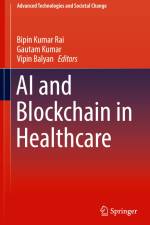
This book presents state-of-the-art blockchain and AI advances in health care. Healthcare service is increasingly creating the scope for blockchain and AI applications to enter the biomedical and healthcare world. Today, blockchain, AI, ML, and deep learning are affecting every domain. Through its cutting-edge applications, AI and ML are helping transform the healthcare industry for the better. Blockchain is a decentralization communication platform that has the potential to decentralize the way we store data and manage information. Blockchain technology has potential to reduce the role of middleman, one of the most important regulatory actors in our society. Transactions are simultaneously secure and trustworthy due to the use of cryptographic principles. In recent years, blockchain technology has become very trendy and has penetrated different domains, mostly due to the popularity of cryptocurrencies. One field where blockchain technology has tremendous potential is health care, dueto the need for a more patient-centric approach in healthcare systems to connect disparate systems and to increase the accuracy of electronic healthcare records (EHRs).
This book thoroughly reviews the advancements in design and applications of Polymeric Micelles (PMs) in drug delivery. It provides information on the synthesis of amphiphilic block copolymers and their types, functional chemistry for targeting and sensing, and biomedical applications. The book further provides the possibilities for designing PMs in a range of drug delivery approaches. The book addresses the molecular parameters of amphiphilic block copolymers that are required for functionalizing PMs for drug delivery applications. Additionally, the book presents recent advances in applications of PMs such as co-delivery, sensing, theranostics, delivery of nucleic acids, and proteins. Towards the end, it discusses different physico-chemical strategies to enhance the stability and drug retention of polymeric micelles and reviews the preclinical and clinical toxicity and immunogenicity-related aspects of polymeric micelles. This book is an invaluable source for academics, research, and industry professionals working in the field of polymeric micelles and drug delivery.
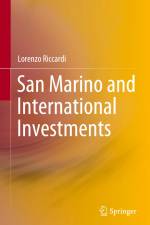
This book seeks to promote investment opportunities in a global context, given San Marinös advantageous tax and corporate system. After introducing readers to the country¿s historical, geographical and political background, it focuses on current economic trends, business practices and the main institutions for economic development. In turn, the book illustrates San Marinös unique international status, which supports its active membership in numerous international organizations. Additionally, it reports on the country¿s ties with the world¿s largest economies. These ties are chiefly characterized by international treaties and Double Tax Agreements (DTAs), which are also analyzed. In closing, the book shares insights into other small European countries¿ dealings with San Marino (Andorra, Lichtenstein and Monaco).
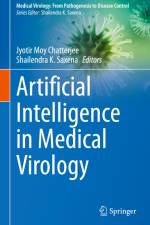
This book comprehensively reviews the potential of Artificial Intelligence (AI) in biomedical research and healthcare, with a major emphasis on virology. The initial chapter presents the applications of machine learning methods for structured data, such as the classical support vector machine and neural network, modern deep learning, and natural language processing for unstructured data in biomedical research and healthcare. The subsequent chapters explore the applications of AI in tackling COVID-19, analysis of the pandemic, viral infection, disease spread, and control. The book further identifies the potential applications of machine learning in the field of virology with a focus on the key aspects of infection: diagnosis, transmission, response to treatment, and resistance. The book also discusses progress and challenges in developing viral vaccines and examines the application of viruses in translational research and human healthcare.Furthermore, the book covers the applications of artificial intelligence-mediated diagnosis and the development of drugs to treat the disease. Towards the end, the book summarizes the ethical and legal challenges posed by AI in healthcare and biomedical research. This book is an invaluable source for researchers, medical and industry practitioners, academicians, and students exploring the applications of AI in biomedical research and healthcare.¿
This Monograph is a compilation of clinical experience and basic research by the author on the function and anatomy of the shoulder joint, with particular emphasis on biomechanics. The book provides deep and comprehensive knowledge about the shoulder based on the author¿s over forty years of career. This book is unique in that it emphasizes the process of discovering new knowledge through searching for clinical questions or ¿whys¿ and solving them. The author shows how he tackled various problems with a great deal of medical curiosity. The chapters place much space on anatomy, function, and pathology, for correct treatment through an accurate understanding of the pathology.The first part of this book explains the basic examination methods as clearly as possible, with abundant figures taken during patient consultations. Part two through four describes some diseases of the shoulder joint, including rotator cuff tears, instability, frozen shoulder, biceps disorders,and throwing shoulder, all of which are frequently encountered in daily practice. In part five, biomechanical research related to suture anchors is presented, and correct insertion angles and intervals are described. It is crucial to understand the surgical method correctly and question the commonly used techniques for better patient care. A clear explanation of long-standing debates, such as the deadman theory, is explained based on the evidence from his research. The last part presents two cases that are rarely encountered but are interesting from the perspective of functional reconstruction of the shoulder. Shoulderology - Searching for ¿Whys¿ Related to the Shoulder invites shoulder surgeons, fellows, residents, and medical students to read the thought-provoking collection of evidence and interpretations of the common knowledge. It will be of interest to orthopaedic surgeons specializing in other areas. The author places a strong emphasis on educatingyoung researchers and provides valuable guidance apart from the basic research and clinical practice and hopes that the book will motivate the subsequent generations to pursue further study.
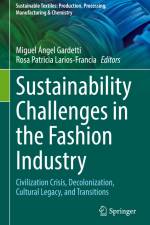
Fashion, and the growth of fashion, are presented as the manifestation of a process of civilization, within a capitalist culture (capital understood as material possessions) that has become global and imperialist, of which - in an economic sense - the industry (or the fashion system?) functions as one of its main instruments of exploitation. And with respect to design, Arturo Escobar said:"Can design detach itself from its roots in modernist practices of unsustainability and defuturization and reorient itself towards other commitments, practices, narratives and ontological enactions? Moreover, can design be part of the toolkit for the transition to the pluriverze (i.e. a world in which many worlds can fit)?"This book presents the importance of cultural sustainability in the textiles and fashion industry, decolonizing fashion system and promotes the design for transitions.
Abonner på vårt nyhetsbrev og få rabatter og inspirasjon til din neste leseopplevelse.
Ved å abonnere godtar du vår personvernerklæring.