
















Gjør som tusenvis av andre bokelskere
Abonner på vårt nyhetsbrev og få rabatter og inspirasjon til din neste leseopplevelse.
Ved å abonnere godtar du vår personvernerklæring.Du kan når som helst melde deg av våre nyhetsbrev.

1 Seafood Quality.- 1. Microbiology of Finfish and Finfish Processing.- Harvesting and Onboard Handling.- Fishing Vessel Sanitation.- Processing.- Preservatives.- References.- 2. Microbiology of Bivalve Molluscan Shellfish.- Biology of the Bivalves.- Public Health Concerns.- Microflora of Bivalves at Harvest.- Shellstock Harvesting and Handling.- Bivalve Processing.- Heat Processing.- Indicators of Spoilage.- Summary.- References.- 3. Microbiology of Crustacea Processing: Crabs.- Harvest and Utilization.- Microbiological Flora.- Processing and Microbiological Quality Control.- Summary.- References.- 4. Microbiology of Crustacean Processing: Shrimp, Crawfish, and Prawns.- Naturally Occurring Microflofa.- Yeasts, Molds, Fungi, and Viruses.- Microbiological Changes Through the Distribution System.- Microorganisms Associated with Seafood Spoilage.- Microorganisms of Public Health Concern.- Effect of Freezing on Micororganisms.- Retail Handling Procedures.- Simulated Retail Procedures.- Ice-Only Service Cases.- Refrigerated Display Case.- Retail Display Summary.- References.- 5. Microbiology of Mince, Surimi, and Value-Added Seafoods.- Mince.- Surimi.- Value-Added Seafoods.- General Microbiological Aspects of Mince, Surimi, and Value-Added Products.- References.- 6. U.S. Seafood Inspection and HACCP.- Food and Drug Administration (FDA).- U.S. Department of Commerce (USDC).- U.S. Department of Agriculture (USDA).- U.S. Environmental Protection Agency (EPA).- Department of Defense (DOD).- State Seafood Inspection Activities.- Inspection Approaches.- What Is HACCP?.- How Is HACCP Applied?.- HACCP Beyond Microbiology.- HACCP Applications to Marine Food Products.- HACCP Sampling Procedures.- Appendix: Glossary of Terms.- References.- 2 Seafood Safety.- 7. Indicators and Alternate Indicators of Growing Water Quality.- Historical Perspectives.- Emerging Environmental Issues That Question Basic Assumptions.- Sources and Composition of Indicator Organisms in Shellfish Growing Waters.- Influence of the Estuarine-Marine Environment on the Fate of Allochthonous Indicators of Fecal Contamination.- Indicator Systems.- Concluding Remarks.- References.- 8. Viruses in Seafoods.- Families of Human Enteric Viruses Associated with Pollution of Marine Waters with Human Feces.- Human Enteric Viral Pathogens Associated with Processing Distribution and Preparation of Seafoods.- Summary of Reported Seafood-Associated Viral Disease Outbreaks 1973-1987.- References.- 9. Seafood-Transmitted Zoonoses in the United States: The Fishes, the Dishes, and the Worms.- Cestodes.- Digeneans.- Nematodes.- Acanthocephalans.- Other Metazoan Agents.- Risks.- Aquaculture and Parasites.- Prevention of Human Infections.- Public Education.- Acknowledgments.- References.- 10. Nonindigenous Bacterial Pathogens.- Open Water Harvest and Pollution.- Pollution and Aquaculture Systems.- Relative Incidence of Enterics in Seafood Illness.- Clostridium botulinum.- Listeria monocytogenes.- Staphylococcus aureus.- Salmonella.- Shigella.- Conclusions.- References.- 11. Indigenous Pathogens: Vibrionaceae.- Vibrio.- Aeromonas.- Plesiomonas.- Summary.- References.- 12. Natural Toxins.- The Known Seafood Toxin Syndromes.- Management.- Summary.- Acknowledgments.- References.- 13. Scombroid Poisoning.- Clinical Aspects.- Epidemiology of Scombroid Fish Poisoning.- Formation of Histamine in Fish.- Histamine Toxicity.- Analysis of Histamine in Fish.- Histamine Regulation (U.S.).- References.- 3 Special Processing and Packaging.- 14. Principles of Pasteurization and Minimally Processed Seafoods.- Pasteurization.- Minimally Processed Seafoods (Sous Vide Seafood Products).- Effect of Container Type.- Common Problems.- Concept of Microbial Survivors in a Batch.- Use of Steam Tunnel Processes to Reduce Microbial Levels.- Clostridium botulinum Type E.- Appendix: Explanation of Terms.- References.- 15. Modified Atmosphere Packaging.- Proposed Mechanisms of Action.- MAP Storage and Gutted Fish.- Studies...
1. Cheddar Cheese and Related Dry-Salted Cheese Varieties.- 2. Dutch-Type Varieties.- 3. Swiss-Type Varieties.- 4. Mould-Ripened Cheeses.- 5. Bacterial Surface-Ripened Cheeses.- 6. Iberian Cheeses.- 7. Italian Cheese.- 8. North European Varieties of Cheese.- 9. Ripened Cheese Varieties Native to the Balkan Countries.- 10. Cheeses of the Former USSR.- 11. Domiati and Feta Type Cheeses.- 12. Mozzarella and Pizza Cheese.- 13. Fresh Acid-Curd Cheese Varieties.- 14. Some Non-European Cheese Varieties.- 15. Processed Cheese Products.- 16. Cheeses from Ewes' and Goats' Milk.
1.Cheese: An Overview.- 2.General and Molecular Aspects of Rennets.- 3.The Enzymatic Coagulation of Milk.- 4.Secondary (Non-enzymatic) Phase of Rennet Coagulation and Post-Coagulation Phenomena.- 5.The Syneresis of Curd.- 6.Cheese Starter Cultures.- 7.Salt in Cheese: Physical, Chemical and Biological Aspects.- 8.Cheese Rheology.- 9.Cheese: Methods of Chemical Analysis.- 10.Biochemistry of Cheese Ripening.- 11.Water Activity in Cheese in Relation to Composition, Stability and Safety.- 12.Growth and Survival of Undesirable Bacteria in Cheese.- 13.Application of Membrane Separation Technology to Cheese Production.- 14.Acceleration of Cheese Ripening.- 15.Nutritional Aspects of Cheese.
This book provides a current synthesis of principles and applications in landscape ecology and conservation biology. Bringing together insights from leaders in landscape ecology and conservation biology, it explains how principles of landscape ecology can help us understand, manage and maintain biodiversity. Gutzwiller also identifies gaps in current knowledge and provides research approaches to fill those voids.
This volume surveys oxidation activities in key biological systems, including heme proteins and enzymes, oxygenases and oxidases, photosynthetic systems, and cell and tissue damage.
This book examines chemical processes and interactions found in seafood and discusses the processing techniques used, in relation to quality and sensory assessment. The processing and use of seafood by-products is also covered.
1 Introduction to quality attributes and their measurement in meat, poultry and fish products.- 1.1 Introduction.- 1.2 Color.- 1.2.1 Importance.- 1.2.2 Variability and measurement.- 1.3 Juiciness and/or water-binding.- 1.3.1 Importance.- 1.3.2 Effects of variability and measurement.- 1.4 Flavor.- 1.4.1 Importance.- 1.4.2 Variability.- 1.4.3 Physiology and psychology of flavor/aroma.- 1.4.4 Specific flavors/odors.- 1.4.5 Flavor and aroma problems.- 1.5 Tenderness.- 1.5.1 Importance.- 1.5.2 Some factors influencing tenderness and its measurement.- 1.6 Microbial problems.- 1.6.1 Importance.- 1.6.2 Measurement.- 1.7 Additives and residues.- 1.7.1 Additives.- 1.7.2 Residues.- 1.8 Contributions of meat to human nutrition.- 1.8.1 Proteins and essential amino acids.- 1.8.2 Fats and essential fatty acids.- 1.8.3 Vitamins.- 1.8.4 Minerals.- 1.9 Summary.- References.- Appendix 1.1.- Appendix 1.2.- 2 Color - its basis and importance.- 2.1 Introduction.- 2.1.1 Retail importance of meat color.- 2.2 Myoglobin and its derivatives.- 2.2.1 Myoglobin concentration in muscle.- 2.3 Factors affecting fresh meat color stability.- 2.3.1 Oxygen tension.- 2.3.2 Bacteria.- 2.3.3 Vacuum-packaging.- 2.3.4 Packaging with oxygen-permeable films.- 2.3.5 Modified-atmosphere packaging.- 2.3.6 Effects of pH.- 2.3.7 Temperature.- 2.4 Dark-cutting beef and related dark color problems.- 2.4.1 Characteristics of dark-cutting meat.- 2.4.2 Mechanism by which pH affects color.- 2.4.3 Changes occurring after death.- 2.4.4 Shelf-life of high pH meat.- 2.4.5 Vacuum packaging.- 2.4.6 Minimizing dark-cutters by management.- 2.4.7 Dark, coarse band in beef ribs.- 2.5 Pale, soft, exudative (PSE), porcine stress syndrome (PSS) and dark, firm, dry (DFD) pork'.- 2.5.1 Importance ofPSE, PSS and DFD pork.- 2.5.2 Genetic basis.- 2.5.3 Influence of environmental factors.- 2.6 Enzymatic reduction of metmyoglobin.- 2.6.1 Enzymes involved.- 2.6.2 Variation among muscles.- 2.6.3 Other factors influencing color stability.- 2.7 Non-enzymatic reductants and inhibitors of oxidation.- 2.7.1 Effects of antioxidants and reductants.- 2.8 Irradiation and other antimicrobial treatments.- 2.8.1 Irradiation of fresh and cooked meats.- 2.8.2 Sulfites and meat color.- 2.9 Effects of light, freezing, salt and lipid oxidation on meat color.- 2.10 Cooked meat color.- 2.10.1 Pink color in cooked, uncured meat.- 2.11 Cured meat color.- 2.11.1 Role of nitrite.- 2.11.2 Action of cysteine and ascorbate.- 2.11.3 The cured meat pigment.- 2.11.4 Fading of cured meat color.- 2.12 Summary.- References.- 3 Colour of meat.- 3.1 Introduction to vision and colour.- 3.2 Colour vision.- 3.2.1 Colour measurement.- 3.2.2 Uniform colour space.- 3.3 Terminology.- 3.4 Instrumentation.- 3.4.1 Trichromatic colorimeters.- 3.4.2 Spectrophotometers.- 3.4.3 Sources of variation among colorimeters and spectrophotometers.- 3.5 Absorption, scatter and pigmentation.- 3.5. 1 Reflectance.- 3.5.2 Light scatter.- 3.6 Meat colour.- 3.6.1 Measurement procedure.- 3.6.2 Reflectance spectral changes in meat.- 3.6.3 Colour changes in beef.- 3.6.4 Differences between CIELAB and Hunter scales.- 3.7 Summary.- References.- 4 Juiciness - its importance and some contributing factors.- 4.1 Introduction.- 4.2 Subjective assessment of juiciness.- 4.3 Relationship to objective measurements.- 4.3.1 Juiciness vs. water-holding.- 4.3.2 The state of water.- 4.3 .3 Heating method and end-point temperature vs. juiciness.- 4.3.4 The role of fat.- 4.3.5 Relationship between drip losses and juiciness.- 4.3.6 Relationship between press fluid and juiciness.- 4.4 Factors influencing the juiciness of intact meat.- 4.4.1 Interference from other experimental and textural factors.- 4.4.2 Heating/cooking methods.- 4.4.3 Animal characteristics.- 4.4.4 Factors related to rigor development.- 4.4.5 Restructured meat.- 4.4.6 Processed meats.- 4.4.7 Marinaded meat.- 4.5 Conclusions.- References.- 5 Measurement of water-holding capacity and juiciness.- 5.1 Introduction.- 5...
This book provides an up-to-date overview of this important and rapidly moving area for food scientists / technologists, packaging technologists and suppliers to the food and packaging industries.
This book begins by considering the raw materials that are used in the food industry, whether derived from animals, fruit and vegetables, or from the products of genetic engineering, as may increasingly be the case in the future.
1 - The principles.- 1 Scientific principles of shelf life evaluation.- 1.1 Introduction.- 1.2 Major modes of food deterioration.- 1.2.1 Physical changes.- 1.2.2 Chemical changes.- 1.2.3 Microbiological changes.- 1.3 Evaluation of food quality.- 1.3.1 Reaction kinetics.- 1.3.2 Determination of kinetic parameters.- 1.3.3 Shelf life plots.- 1.4 Use of sensors to monitor shelf life of foods.- 1.4.1 Critical temperature indicators.- 1.4.2 Partial history indicators.- 1.4.3 Full history indicators.- 1.5 Conclusions.- References.- 2 The methodology of shelf life determination.- 2.1 Integration of shelf life procedures into a total quality system.- 2.2 Food legislation and shelf life.- 2.3 Forms of quality deterioration during storage.- 2.4 Procedures for direct determination and monitoring of shelf life.- 2.5 Methodology for accelerated estimation of shelf life.- 2.6 The importance of shelf life to quality and distribution.- 2.7 Conclusions.- References.- 3 The principles and practice of shelf life prediction for microorganisms.- 3.1 Introduction.- 3.2 Development of predictive models.- 3.2.1 Experimental design.- 3.2.2 Data collection.- 3.2.3 Modelling.- 3.2.4 Model validation.- 3.2.5 Obtaining predictions.- 3.3 Uses of models.- 3.3.1 Product formulation and reformulation.- 3.3.2 Process design.- 3.3.3 HACCP.- 3.3.4 Time-temperature profiles.- 3.3.5 Training and education.- 3.4 Limitations of models.- 3.5 The future.- References.- 4 Packaging and food quality.- 4.1 Introduction.- 4.2 Plastics packaging materials for food.- 4.2.1 Polyolefins.- 4.2.2 Polyvinyl chloride (PVC).- 4.2.3 Polyvinylidene chloride (PVdC).- 4.2.4 Ethylene vinyl alcohol (EVOH).- 4.2.5 Polystyrene (PS).- 4.2.6 Polyamides (nylons).- 4.2.7 Polyesters.- 4.2.8 Polycarbonates (PC).- 4.2.9 Lamination and coextrusion.- 4.3 Some packaging systems and recent developments.- 4.3.1 Trends in food packaging.- 4.3.2 Silica-coated films.- 4.3.3 Active packaging technologies.- 4.3.4 Modified atmosphere packaging (MAP).- 4.3.5 Aseptic/ultra-high temperature (UHT) packaging.- 4.3.6 Sous vide (vacuum cooking/packaging) technology.- 4.3.7 Edible films.- 4.4 The influence of 'scalping' on food.- 4.4.1 The limonene controversy.- 4.4.2 The influence of pulp content on scalping.- 4.4.3 Comparison of instrumental and sensory analysis.- 4.4.4 Influence of scalping on barrier and mechanical properties.- 4.4.5 Methods of suppressing scalping.- 4.5 Flavour transfer problems in refillable PET bottles.- 4.6 Conclusions.- References.- 5 Preservation technology and shelf life of fish and fish products.- 5.1 Introduction.- 5.2 Properties and spoilage of fish.- 5.3 Conventionally preserved fish and fish products.- 5.4 Modern technologies.- 5.5 Sensory quality and safety.- 5.6 Conclusions.- 2 - The practice.- 6 Delicatessen salads and chilled prepared fruit and vegetable products.- 6.1 Introduction.- 6.2 The products - their characteristics.- 6.3 Specific factors affecting shelf life.- 6.3.1 Delicatessen salads.- 6.3.2 Prepared fruit and vegetables.- 6.4 Determination of shelf life.- 6.4.1 Delicatessen salads.- 6.4.2 Prepared fruit and vegetables.- 6.5 Current developments and the future.- 6.5.1 Delicatessen salads.- 6.5.2 Prepared fruit and vegetables.- References.- 7 Chilled yogurt and other dairy desserts.- 7.1 Introduction.- 7.2 Products, product groups and characteristics.- 7.2.1 Product groups.- 7.2.2 Product characteristics.- 7.3 Factors affecting shelf life.- 7.3.1 Raw materials.- 7.3.2 Processing.- 7.3.3 Filling and packaging.- 7.3.4 Storage and distribution.- 7.3.5 Consumer storage.- 7.4 Evaluation methods.- 7.4.1 Shelf life determination - yogurt.- 7.5 Current developments and the future.- 8 Modified-atmosphere-packed ready-to-cook and ready-to-eat meat products.- 8.1 Introduction.- 8.2 Meat product groups and their basic characteristics.- 8.2.1 Appearance.- 8.2.2 Flavour.- 8.2.3 Texture.- 8.3 Factors affecting shelf life.- 8.3.1 Intrinsic factors.- 8.3.2 Extrinsic factors.- 8.4 Det...
'Concise and easy to read..This is an excellent book covering an important topic of interest to the food industry.' - Microbiology Newsletter'...this is an excellent text..all academic departments teaching any aspect associated with food and its production should have copies too.' - The Genetic Engineer and Biotechnologist'Once in a while, someone writes a how-to book that is both timely and usable. This is one of those, There are a number of good books on the principles and conceptual interpretations of HACCP (Hazard Analysis Critical Control Points), but when it comes to practical, step-by-step considerations in implementing a HACCP program in a food plant, this is the best I have seen so far.' - Food Technology
One Concurrent Engineering: Concepts, Definitions and Issues.- 1 Introduction to concurrent engineering.- 2 Concurrent engineering case studies: lessons from Ford Motor Company experience.- Organizational and managerial issues.- Design maturity.- Two Essential Techniques for Concurrent Engineering.- 5 Quality function deployment: an overview.- 6 Design for manufacture.- Design for assembly.- Rapid prototyping of physical parts.- Rapid prototyping of software and hybrid systems.- Three Product Design, Support and Management Tools for Concurrent Engineering.- 10 Software tools for the product development process.- 11 The role of knowledge-based systems in concurrent engineering.- 12 Software solutions for concurrent engineering II.- 13 Strategies for concurrent engineering and sources of further information.
A clear and systematic treatment of time series of data, regular and chaotic, found in nonlinear systems. The text leads readers from measurements of one or more variables through the steps of building models of the source as a dynamical system, classifying the source by its dynamical characteristics, and finally predicting and controlling the dynamical system. It examines methods for separating the signal of physical interest from contamination by unwanted noise, and for investigating the phase space of the chaotic signal and its properties. The emphasis throughout is on the use of modern mathematical tools for investigating chaotic behaviour to uncover properties of physical systems, requiring knowledge of dynamical systems at the advanced undergraduate level and some knowledge of Fourier transforms and other signal processing methods.
These essays provide both an overview of Bruno Bettelheim's contributions to psychoanalysis and education and a reflection on present issues confronting child psychiatry, education, and the social sciences. It will point to new directions for scholarly study and psychoanalytic intervention.
This book describes the importance of sustainable livestock production from a food security perspective in the changing climate scenario. It covers the amelioration of climate change impacts and describes the various mitigation strategies to reduce enteric methane emissions. The book targets sustainable livestock production by covering diverse concepts of amelioration, mitigation, and policy up-gradation. Further, it examines various adverse impacts of climate change on growth, meat, milk, and reproduction in livestock. Most importantly, the book covers novel aspects of quantifying heat stress response of livestock based on non-invasive methodologies, including infrared thermal imaging, sensor-based applications, hair, urine, and fecal cortisol estimation. Particular emphasis was given to describing the skin-based novel approaches to establish climate resilience in indigenous breeds. The book provides detailed descriptions of alleviating climate change impacts on shelter management, nutritional interventions, and genetics-based strategies involving advanced genomic tools. Lastly, it highlights the livestock species which could be considered ideal climate-resilient animal models to withstand the adversities associated with climate change.
This book urges readers to develop a radical capacity to unthink and rethink interculturality, through multiple, pluri-perspectival and honest dialogues between the authors, and their students. This book does not give interculturality a normative scaffolding but envisages it differently by identifying some of its polyphonic textures. China's rich engagement with interculturality serves to support the importance of being curious about other ways of thinking about the notion beyond the 'West' only. As such, the issues of culture, identity, language, translation, intercultural competence and silent transformations (amongst others) are re-evaluated in a different light. This is a highly informative and carefully presented book, providing scientific insights for readers with an interest in interculturality.
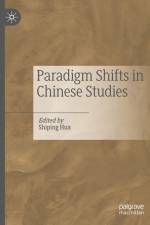
This book is a study of the change and continuity in paradigms in China studies, both inside and outside of China. In the last few years, the United States and China appeared to be moving in the direction of "de-coupling," indicating that the engagement policy with China in the last four decade is ending. The "modernization theory" that is the theoretical foundation of the engagement policy has proved to be insufficient. This situation calls for a reexamination of the field of China studies. Historically, scholarly paradigms shifts often went hand in hand with drastic social change. As we have entered an era of great uncertainty, it is constructive to reflect on the paradigms in China studies in the past and explore the possibility of new paradigms in the future. How are the shifts of major theories, methods and paradigms in China studies in the west related to social change? How did some of China's paradigms impact on the country's social change and developments?This book will appeal to a wide readership, including scholars and graduate students, upper division undergraduate students of China studies, Asian studies.
This book focuses on chemical reactions and processing under extreme conditions-how materials react with highly concentrated active species and/or in a very confined high-temperature and high-pressure volume. Those ultimate reaction environments created by a focused laser beam, discharges, ion bombardments, or microwaves provide characteristic nano- and submicron-sized products and functional nanostructures. The book explores the chemistry and processing of metals and non-metals as well as molecules that are strongly dependent on the energy deposition processes and character of the materials. Descriptions of a wide range of topics are given from the perspective of a variety of research methodologies, material preparations, and applications. The reader is led to consider and review how a high-energy source interacts with materials, and what the key factors are that determine the quality and quantity of nanoproducts and nano-processing.
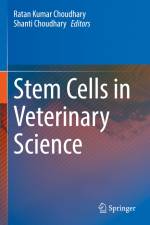
This book explores the potential applications of animal stem cells in veterinary medicine. It begins with an overview of stem cells and their application in treating various animal diseases, including mastitis. In turn, the book discusses the challenges of using stem cells in regenerative medicine and emphasizes the importance of understanding the action of stem cells and preclinical evidence for ensuring safety and therapeutic efficacy. It also presents methods for the identification, characterization, and quantification of stem cells. Further, it discusses the therapeutic applications of different stem cells, including milk-derived, testicular, and mesenchymal stem cells in veterinary medicine. Lastly, it discusses strategies for and therapeutic applications of genome editing by CRISPER/Cas9 in mammary stem cells. As such, the book offers a valuable resource for students and scientists working in the veterinary sciences and veterinarians.
This book discusses delay and integro-differential equations from the point of view of the theory of functional differential equations. This book is a collection of selected papers presented at the international conference of Functional Differential Equations and Applications (FDEA-2019), 7th in the series, held at Ariel University, Israel, from August 22-27, 2019. Topics covered in the book include classical properties of functional differential equations as oscillation/non-oscillation, representation of solutions, sign properties of Green's matrices, comparison of solutions, stability, control, analysis of boundary value problems, and applications. The primary audience for this book includes specialists on ordinary, partial and functional differential equations, engineers and doctors dealing with modeling, and researchers in areas of mathematics and engineering.
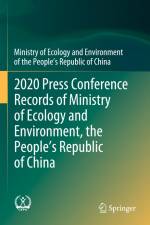
This book records the press release of Ministry of Ecology and Environment of the People¿s Republic of China in 2020. It is divided into three parts chronologically. The first part contains the records of Minister Huang Runqiüs attendance at the press conference of the National People's Congress and the Chinese Political Consultative Conference as well as the "Minister Channel". The second part contains the records of four press conferences on ecological and environmental protection held by the State Council Information Office of the People's Republic of China. The third part contains the records of 12 regular press conferences held by the Ministry of Ecology and Environment of the People¿s Republic of China.
The human microbiome refers to the complete microorganisms inhabiting the human body sites including skin, ear, nose, oral cavity, the genital, gastrointestinal and respiratory tracts, and body fluids such as breast milk, saliva, and urine. It is a significant and essential organ recognized for the body and has an established involvement in the host wellbeing, in terms of nutritional requirements and immunomodulation. This book talks about how alteration and imbalance in the same can have clinical implications associated with a multitude of gastrointestinal, lifestyle-associated, and neurodegenerative disorders. How the proliferation of specific groups of bacteria and their metabolic activities, as a result of intestinal dysbiosis leads to the 'leaky gut' condition thereby influences brain activity via the bidirectional gut-brain axis. It also coves the importance of microbial seeding and how it can be influenced by the mode of delivery, nutrition, and medication. This book also provides various therapeutic interventions such as the establishment of stool banks and Faecal microbiota transplantation (FMT) that have recently proved promising in the treatment of ASD, Inflammatory Bowel Disease, and Ulcerative Colitis. This book provides a deeper understanding of the development of the human gut microbiome and the factors driving its dysbiosis. This book is a valuable read for health professionals, medical students, nutritionists, and scientific research communities who are eager to update themselves with recent trends in microbiome research. It will also aid gastroenterologists and nutritionists to make well-informed choices regarding therapeutic regimes.
Abonner på vårt nyhetsbrev og få rabatter og inspirasjon til din neste leseopplevelse.
Ved å abonnere godtar du vår personvernerklæring.