



















Gjør som tusenvis av andre bokelskere
Abonner på vårt nyhetsbrev og få rabatter og inspirasjon til din neste leseopplevelse.
Ved å abonnere godtar du vår personvernerklæring.Du kan når som helst melde deg av våre nyhetsbrev.

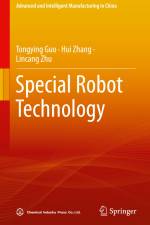
This book focuses on the core technologies of special robots. Both principles and engineering practice have been addressed. This is achieved by providing an in-depth study on several major topics such as the vision positioning of mobile robots, the autonomous motion control of ruin search and rescue robots, and typical applications of text questions and answers robots. The autonomous motion control technologies of ruin search and rescue robots and typical applications of text questions and answers robots are the major features of the book. The book benefits researchers, engineers, senior undergraduate students, and postgraduate students in the fields of visual positioning, path planning, autonomous motion control, and typical applications of special robots.
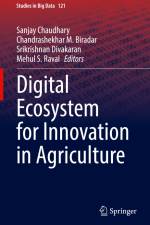
This book presents the latest findings in the areas of digital ecosystem for innovation in agriculture. The book is organized into two sections with thirteen chapters dealing with specialized areas. It provides the reader with an overview of the frameworks and technologies involved in the digitalization of agriculture, as well as the data processing methods, decision-making processes, and innovative services/applications for enabling digital transformations in agriculture. The chapters are written by experts sharing their experiences in lucid language through case studies, suitable illustrations, and tables. The contents have been designed to fulfill the needs of geospatial, data science, agricultural, and environmental sciences of universities, agricultural universities, technological universities, research institutes, and academic colleges worldwide. It helps the planners, policymakers, and extension scientists plan and sustainably manage agriculture and natural resources.
This book examines the connections between policy, school experiences, and everyday activities of children growing up in the global city of Melbourne, Australia. It provides an in-depth consideration of Melbourne primary school children¿s lifeworlds, exploring everyday stories and practices inside and outside of school. This includes consideration of the diverse ways that educational ¿success¿ may be understood in the context of Melbourne, productively moving beyond a narrow focus only on academic achievement. Situated alongside policy and curriculum analysis, the book draws on research in Melbourne Year 4 primary school classrooms in the form of student-completed surveys, classroom ethnographies, and student responses to a learning dialogues activity, as well as video re-enactments of out-of-school life. Through this it explores key aspects of children¿s lifeworlds with a focus on school timetabling and pedagogical encounters, school engagement and belonging, and activities and everyday routines outside of school. This book offers a comprehensive and holistic exploration of children¿s lifeworlds in Melbourne, drawing connections between children¿s lives inside and outside of school, and the broader policy contexts.
Targeted to graduate students of mathematics, this book discusses major topics like the Lie group in the study of smooth manifolds. It is said that mathematics can be learned by solving problems and not only by just reading it. To serve this purpose, this book contains a sufficient number of examples and exercises after each section in every chapter. Some of the exercises are routine ones for the general understanding of topics. The book also contains hints to difficult exercises. Answers to all exercises are given at the end of each section. It also provides proofs of all theorems in a lucid manner. The only pre-requisites are good working knowledge of point-set topology and linear algebra.
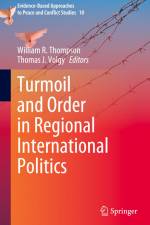
This edited book complements and follows up on the book, Thompson and Volgy et al, Regions, Power and Conflict: Constrained Capabilities, Hierarchy, and Rivalry. It is predicated in part on the paucity of published material available on comparing regional international politics. Monadic, dyadic, and systemic approaches all have their uses and have been exploited extensively. The same cannot be said about comparative regional analysis. The premise is that a great deal of international politics takes place within regional parameters. Most states simply lack the capability or interest in devoting many resources to extra-regional affairs. Yet each region is distinctive. In some, military coups remain common while they have died out as a form of political practice in others. A few have been highly conflictual and then become more pacific, while others persist in their conflict intensity. Some have powerful neighbors with intervention tendencies, while others are surrounded by relatively weak states. Some are rich; others are poor. The point is that regions, all with proper names, have attributes that can be harnessed through comparison to explain why regional behavior differs greatly across the planet. The aim is to replace the proper names with the leading variables that appear to drive behavior. For instance, to shrug and say ¿that¿s the Middle East for yoü does not take us very far. Replacing the Middle East label with conceptualization about how a set of small, weak, autocratic states behave subject to high penetration by major powers might take us farther than shrugging off regional identity. We have good reasons to think that comparative regional analysis can deliver an explanatory value-added product just as much as alternative ¿levels of analysis¿ can. Ultimately, we might desire to integrate separate levels of analysis, rather than segregating them. But in the short term,we need to encourage comparative regional analysis because it is the least developed perspective. Why that might be the case can be debated, but it stems in part from our disciplinary tendencies for some analysts to specialize in regional behavior largely in a descriptive vein while others prefer to focus on explaining universal behavior. Comparative regional behavior tends to be squeezed out by regional scholars who suspect generalization about behavior and universal scholars who suspect particular contexts such as regions. Comparative regional analysis requires analysts who are willing to explore generalization but acknowledge regional contexts more explicitly than is customary. At the same time, more general substitutes for those regional labels must be introduced if explanatory headway is to be achieved.
This book comprises carefully selected and reviewed outcomes of the 13th International Workshop on Automated Negotiations (ACAN) held in Vienna, 2022, in conjunction with International Joint Conference on Artificial Intelligence (IJCAI) 2022. It focuses on the applications and challenges of agent-based negotiation including agreement technology, mechanism design, electronic commerce, recommender systems, supply chain management, social choice theory, and others.This book is intended for the academic and industrial researchers of various communities of autonomous agents and multi-agent systems, as well as graduate students studying in those areas or having interest in them.
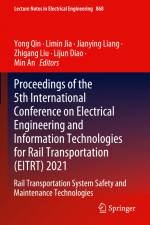
The conference offers a forum for academic and technical communication for researchers and engineers working in the fields of energy science and technology, electrical systems, and power electronics. It conducts in-depth exchanges and discussions on pertinent subjects like new energy and electrical technology. The book aids scholars and engineers worldwide in understanding the academic development trend and expanding their lines of inquiry by disseminating the research status of cutting-edge technologies and scientific research accomplishments. It also strengthens international academic research, academic topics exchange, and discussion, and encourages the industrialization of academic achievements.
This book is the first book to comprehensively and deeply explain and construct the legal system of Chinese art auctions. Based on agency theory in traditional contract law, this book combs the legal relationship between client, auctioneer, and buyer. Aiming at the most difficult problem of art identification, this book shows the obligations that auctioneers must perform and the common methods for auctioneers to avoid these obligations. The purpose of this book is to ease the current situation in which the interests of buyers and auctioneers are too opposed and speed up the legalization process of art auctions through the construction of the legal system of art auctions in China. Additionally, using the method of policy demonstration, this book discusses how public power should intervene in the process of art auctions.
The book explains the important concepts and principles of image processing to implement the algorithms and techniques to discover new problems and applications. It contains numerous fundamental and advanced image processing algorithms and pattern recognition techniques to illustrate the framework. It presents essential background theory, shape methods, texture about new methods, and techniques for image processing and pattern recognition. It maintains a good balance between a mathematical background and practical implementation. This book also contains the comparison table and images that are used to show the results of enhanced techniques. This book consists of novel concepts and hybrid methods for providing effective solutions for society. It also includes a detailed explanation of algorithms in various programming languages like MATLAB, Python, etc. The security features of image processing like image watermarking and image encryption etc. are also discussed in this book. This book will be useful for those who are working in the field of image processing, pattern recognition, and security for digital images. This book targets researchers, academicians, industry, and professionals from R&D organizations, and students, healthcare professionals working in the field of medical imaging, telemedicine, cybersecurity, data scientist, artificial intelligence, image processing, digital hospital, intelligent medicine.
This book reconstructs the philosophical issues informing the debate between the makers of modern India: Ambedkar and Gandhi. At one level, this debate was about a set of different but interconnected issues: caste and social hierarchies, untouchability, Hinduism, conversion, temple entry, and political separatism. The introduction to this book provides a brief overview of the engagements and conflicts in Gandhi and Ambedkar's central arguments. However, at another level, this book argues that the debate can be philosophically re-interpreted as raising their differences on the following issues: The nature of the self,The relationship between the individual self and the community,The appropriate relationship between the constitutive encumbrances of the self and a conception of justice,The relationship between memory, tradition, and self-identity. Ambedkar and Gandhi¿scontrary conceptions of the self, history,itihaas, community and justice unpack incommensurable world views. These can be properly articulated only as very different answers to questions about the relationship between the present and the past. This book raises these questions and also establishes the link between the Ambedkar--Gandhi debate in the early 20th century and its re-interpretation as it resonates in the imagination and writing of marginalized social groups in the present times.
This book describes the dynamics of biological cells and their mathematical modeling. The topics cover the dynamics of RNA polymerases in transcription, construction of vascular networks in angiogenesis, and synchronization of cardiomyocytes. Statistical analysis of single cell dynamics and classification of proteins by mathematical modeling are also presented. The book provides the most up-to-date information on both experimental results and mathematical models that can be used to analyze cellular dynamics. Novel experimental results and approaches to understand them will be appealing to the readers. Each chapter contains 1) an introductory description of the phenomenon, 2) explanations about the mathematical technique to analyze it, 3) new experimental results, 4) mathematical modeling and its application to the phenomenon. Elementary introductions for the biological phenomenon and mathematical approach to them are especially useful for beginners. The importance of collaboration between mathematics and biological sciences has been increasing and providing new outcomes. This book gives good examples of the fruitful collaboration between mathematics and biological sciences.
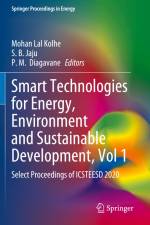
This book contains select proceedings of the International Conference on Smart Technologies for Energy, Environment, and Sustainable Development (ICSTEESD 2020). The book is broadly divided into the themes of energy, environment, and sustainable development; and discusses the significance and solicitations of intelligent technologies in the domain of energy and environmental systems engineering. Topics covered in this book include sustainable energy systems including renewable technologies, energy efficiency, techno-economics of energy system and policies, integrated energy system planning, environmental management, energy efficient buildings and communities, sustainable transportation, smart manufacturing processes, etc. The book will be a valuable reference for young researchers, professionals, and policy makers working in the areas of energy, environment and sustainable development.
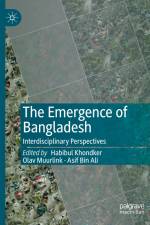
The Emergence of Bangladesh analyses and celebrates the first 50 years of Bangladesh as a nation, bringing insights from key scholars in Bangladeshi studies to an international audience, as well as ¿bringing home¿ to a domestic audience the work of some of the nation¿s greatest intellectual exports, the Bangladeshi scholars who have made a mark in their field of study in academia. The book offers unique coverage of the battlegrounds on which the founding of the new nation was fought, including language, power and religion, and provides unique insight into some of the hot spots that continue to shape the development of the nation: the issues of gender, culture, ethnicity, governance, the economy and the army. Those with an interest in understanding the past or present Bangladesh will find this a trove of frank and readable analysis.
This book brings together a collection of chapters that investigate sustainable tourism development in different Asian contexts; from stakeholders¿ perspectives, existing issues in the market, as well as the impacts of COVID-19 on tourism. It highlights the importance of tourism sustainability in Asia. Specifically, this book examines these themes by examples related to Asian tourism such as; social-cultural impact of sustainable growth, environmental constraints and policies, community engagement, moral limits of the market, stakeholders¿ participation in tourism development, the hindered interaction between foreign tourists and local community, impact of the pandemic and proposed ways forward.This edited volume substantiates this by using evidence of quantitative, qualitative and mixed methods approaches aligned with empirical data to show sustainable efforts and impacts. This book is of interest to researchers and practitioners as it offers timely understandings of sustainable tourism from multiple perspectives within the Asian context.
Indian mycologists have extensively studied various groups of fungi such as soil fungi, aquatic fungi, marine fungi, endophytic fungi, fungi associated with man and animals. Though several books on various aspects of fungi are published, this is the first account of the history and development in mycology in India. This book is the second volume of the two-volume book "e;Progress in Mycology: An Indian Perspective"e;. While volume 1 contains the historical aspects, taxonomy and information about the various groups of fungi, this volume focuses majorly on the biotechnological applications of the different groups of fungi. It discusses topics such as the extremophilic fungi, the history and development in Candida research, progress of mycotoxin research in India etc. It provides a detailed account of the various enzymes and bio-active molecules derived from fungi. India shows a very high biodiversity of fungi, and this book discusses these different group of fungi and their industrial and biotechnological applications. This book is useful to students, teachers and researchers in botany, microbiology, biotechnology and life sciences, agriculture and industries using fungi to produce various valuable products.
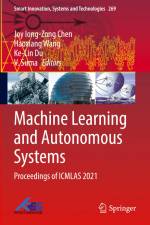
This book involves a collection of selected papers presented at International Conference on Machine Learning and Autonomous Systems (ICMLAS 2021), held in Tamil Nadu, India, during 24-25 September 2021. It includes novel and innovative work from experts, practitioners, scientists and decision-makers from academia and industry. It covers selected papers in the area of emerging modern mobile robotic systems and intelligent information systems and autonomous systems in agriculture, health care, education, military and industries.
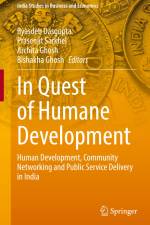
This book presents a multidimensional perspective on the interlinkage between human development, community characteristics and public service delivery with special reference to India. The chapters in the book analyze the influence of public service delivery on human development from neo-classical as well as Marxian point of view. Thus, the expositions in the book provides a balanced mix of macro and micro approaches in the study of development. The analytical discussions are supplemented by case studies and empirical estimates so as to demonstrate the applicability of the theory and the theoretical discourse about human development, community network and the success and failures of critical public services in the Indian context. The methodology followed in the chapters involves critical survey of existing literature, case studies, field survey and use of econometric techniques as well as statistical tools of index construction. While contributors are primarily scholars from neo-classical economics discipline, some are intellectuals from the field of political economy and development studies. Given the wide array of development perspectives, this book is of interest not only to students and researcher of development economics, social science and management, but also a valuable reading for development practitioners and policy makers, who would be interested in understanding how community and public institutions interact to determine access to health, education and social security services that shapes the wellbeing of disadvantaged populations. The lessons and implications are extremely pertinent to other emerging economies, in particular those in South Asia.
1 Fundamental Principles of Microbiology.- 1.1 Introduction.- 1.2 Characterisitics of Bacteria.- 1.2.1 Shape and size.- 1.2.2 Reproduction.- 1.2.3 Bacterial structure.- 1.2.4 Gram reaction.- 1.3 Types of Bacteria Important in Foods.- 1.3.1 Gram negative bacteria.- 1.3.2 Gram positive bacteria.- 1.4 Characteristics of Fungi.- 1.4.1 Moulds.- 1.4.2 Yeasts.- 1.5 Characteristics of Viruses and Prions.- 1.6 The Growth Curve of Bacteria.- 1.7 Factors Influencing Bacterial Growth.- 1.7.1 Nutrients.- 1.7.2 Temperature.- 1.7.3 Moisture.- 1.7.4 Oxygen.- 1.7.5 Hydrogen ion concentration (pH).- 1.7.6 Inhibitory substances.- References.- 2 Food Poisoning and Other Food-borne Hazards.- 2.1 Introduction.- 2.2 Incidence of Food Poisoning.- 2.2.1 The bacteria responsible.- 2.2.2 Type of food.- 2.3 Bacterial Food Poisoning.- 2.3.1 Salmonellas.- 2.3.2 Enteritis due to Campylobacter spp.- 2.3.3 Staphylococcus aureus.- 2.3.4 Bacillus cereus.- 2.3.5 Vibrio parahaemolyticus.- 2.3.6 Botulism.- 2.3.7 Listeriosis.- 2.3.8 Clostridium perfringens.- 2.3.9 Escherichia coli.- 2.3.10 Miscellaneous bacterial food poisoning and new variant CJD.- 2.4 Mycotoxicoses.- 2.4.1 Aflatoxins.- 2.4.2 Miscellaneous mycotoxins.- 2.5 Virus Food Poisoning.- 2.5.1 Small round structured viruses (SRSV).- 2.5.2 Infective hepatitis.- 2.5.3 Rotaviruses.- 2.5.4 Bovine spongiform encephalopathy and new variant CJD.- 2.5.5 General control measures.- 2.6 Animal Toxins and Parasitic Infections.- 2.6.1 Animals that are naturally toxic to man.- 2.6.2 Secondary toxicity.- 2.6.3 Parasitic infections.- 2.7 Poisonous Plants.- 2.8 Chemical Poisoning.- References.- 3 Food Spoilage.- 3.1 Introduction.- 3.2 Spoilage of Fresh Meats.- 3.2.1 Contamination of tissues by microorganisms.- 3.2.2 Control of microbial growth.- 3.2.3 Effect of storage temperature.- 3.2.4 Chemical changes produced by bacteria in chilled meats.- 3.3 Spoilage of Cured Meats.- 3.3.1 Curing agents.- 3.3.2 The curing process.- 3.3.3 The microbiology and spoilage of bacon and ham.- 3.4 Spoilage of Vacuum-Packed Meats.- 3.4.1 Types of packaging materials.- 3.4.2 Influence of packaging materials on the microbiological flora.- 3.4.3 Spoilage of packed fresh meats.- 3.4.4 Spoilage of vacuum-packed bacon.- 3.4.5 Modified atmospheric packaging.- 3.4.6 Sous vide.- 3.5 Spoilage of Poultry.- 3.5.1 Effects of processing on the microbiological flora.- 3.5.2 Spoilage of chickens held at chill temperatures.- 3.6 Spoilage of Fish and Shellfish.- 3.6.1 Bacteriology of the newly caught fish.- 3.6.2 The effect of initial processing and storage in ice on board ship.- 3.6.3 The effect of handling ashore.- 3.6.4 Chemical changes induced by bacteria in fish.- 3.6.5 Salted fish.- 3.6.6 Smoked fish.- 3.6.7 Packaged fish.- 3.6.8 Shellfish.- 3.7 Dairy Products.- 3.7.1 Milk.- 3.7.2 Butter.- 3.7.3 Cheese.- 3.7.4 Yoghurt.- 3.8 Eggs and Egg Products.- 3.8.1 The chicken's egg and its spoilage.- 3.8.2 Egg products.- 3.9 Vegetables and Fruits.- 3.9.1 Spoilage by fungi.- 3.9.2 Spoilage by bacteria.- 3.9.3 Control of microbial spoilage.- 3.10 Cereal Based Products.- 3.11 Beer.- 3.12 Wine.- 3.13 Sauerkraut.- 3.14 Canned Foods.- 3.14.1 Leaker spoilage.- 3.14.2 Spoilage due to inadequate heat treatment.- 3.15 Frozen Foods.- 3.15.1 Influence of sub-zero temperatures on microorganisms.- 3.15.2 Factors affecting viability of microorganisms during freezing.- 3.15.3 Effect of cold storage.- 3.15.4 Freezing injury to cells.- 3.15.5 Thawed foods and their spoilage.- 3.16 Dehydrated Foods.- 3.16.1 Methods of drying.- 3.16.2 Influence of drying and freeze drying on microorganisms.- 3.16.3 Storage stability of dried foods.- 3.16.4 Rehydration.- 3.16.5 Intermediate moisture foods.- 3.17 Irradiated Foods 13.- 3.17.1 Types of radiation.- 3.17.2 Effect of radiation on microorganisms.- 3.17.3 High dose applicatons.- 3.17.4 Low dose applications and the spoilage of foods so treated.- References.- 4 Microbiological Examining Methods.- 4.1 The Rational of Microbiological Testing....
1. Generalities on Radiated Interference.- 2. Electric and Magnetic Fields from Simple Circuit Shapes.- 3. Fields Radiated by Nonsinusoidal Sources.- 4. General Strategy for Designing a Low-Radiation Product.- 5. Controlling Radiated Emissions at the Chip and Integrated Circuit Level.- 6. Printed Circuit Board Design.- 7. Emission Control in Mother Boards and Backplanes.- 8. Controlling Radiated Fields from Switch-Mode Power Supplies.- 9. Reducing Radiated EMI via Internal Cabling and Packaging.- 10. Box Shielding.- 11. Controlling Radiation from External Cables.- 12. Principal Radiated Emission Specifications and Test Methods.- 13. Troubleshooting Radiated EMI Problems.- Appendix A: The Modified Dipole Model.- Appendix B: Some Validation Results Supporting the Simplified Radiation Model.
Biological visual systems employ massively parallel processing to perform real-world visual tasks in real time. A key to this remarkable performance seems to be that biological systems construct representations of their visual image data at multiple scales. A Pyramid Framework for Early Vision describes a multiscale, or `pyramid', approach to vision, including its theoretical foundations, a set of pyramid-based modules for image processing, object detection, texture discrimination, contour detection and processing, feature detection and description, and motion detection and tracking. It also shows how these modules can be implemented very efficiently on hypercube-connected processor networks. A Pyramid Framework for Early Vision is intended for both students of vision and vision system designers; it provides a general approach to vision systems design as well as a set of robust, efficient vision modules.
VHDL Coding Styles and Methodologies provides an in-depth study of the VHDL language rules, coding styles, and methodologies. This book clearly distinguishes good from poor coding methodologies using an easy to remember symbology notation along with a rationale for each guideline. The VHDL concepts, rules and styles are demonstrated using complete compilable and simulatable examples which are also supplied on the accompanying disk. VHDL Coding Styles and Methodologies provides practical applications of VHDL and techniques that are current in the industry. It explains how to apply the VHDL guidelines using several complete examples. The `learning by example' teaching approach along with an in-depth presentation of the language rules application methodology provides the necessary knowledge to create digital hardware designs and models that are readable, maintainable, predictable, and efficient. VHDL Coding Styles and Methodologies is intended for both college students and design engineers. It provides a practical approach to learning VHDL. Combining methodologies and coding styles along with VHDL rules leads the reader in the right direction from the beginning.
This volume provides a rigorous and analytical perspective on the pressing issue of making economic progress consistent with environmental conservation. It proposes formal definitions of sustainability, embeds them in dynamic models and models of uncertainty, and explores the concepts and their implications. It presents a wide-ranging approach to formalizing sustainability and bringing it within the realm of economic theory. Environmental sustainability of growth depends on the interactions between the biosphere and the process of economic growth. The analysis of the dynamics of such a complex system requires the use of sophisticated dynamic methods in order to take account of the most relevant implications for social welfare, such as the relationship between economics and ethics, intergenerational distribution of resources, and the impact of economic policy on environmental conservation. The complexity of the object of the analysis involves a high degree of uncertainty coupled with a serious risk of irreversibility of the consequences of present decisions. Therefore, environmental risks are often very difficult to analyze and control. These problems may be faced and solved only by developing new ideas and approaches, some of which are explored in this book.
In recent years there have been major advances in the fields of cardiovascular nuclear medicine and cardiac magnetic resonance imaging. In nuclear cardiology more adequate tomographic systems have been designed for routine cardiac use, as well as new or improved quantitative analytic software packages both for planar and tomographic studies implemented on modern state-of-the-art workstations. In addition, artificial intelligence techniques are being applied to these images in attempts to interpret the nuclear studies in a more objective and reproducible manner. Various new radiotracers have been developed, such as antimyosin, labeled isonitriles, metabolic compounds, etc. Furthermore, alternative stress testing with dipyridamole and dobutamine has received much attention in clinical cardiac practice. Magnetic resonance imaging is a relative newcomer in cardiology and has already shown its merits, not only for anatomical information but increasingly for the functional aspects of cardiac performance. This book covers almost every aspect of quantitative cardiovascular nuclear medicine and magnetic resonance imaging. It will assist the nuclear medicine physician, the radiologist, the physicist/image processing specialist and the clinical cardiologist in understanding the nuclear medicine techniques used in cardiovascular medicine, and in increasing our knowledge of cardiac magnetic resonance imaging.
1 Introduction to the chemistry, synthesis, manufacture and characterization of epoxy resins.- 2 Curing agents for epoxy resins.- 3 The kinetics of cure and network formation.- 4 Additives and modifiers for epoxy resins.- 5 Fracture behaviour of epoxy resins.- 6 Electrical properties of epoxy resins.- 7 Epoxy resin adhesives.- 8 Composite materials.- 9 Coatings and other applications of epoxy resins.
1 Design requirements for aerospace structural materials.- 1.1 Introduction.- 1.2 Properties that affect structural efficiency ab initio.- 1.3 Properties affecting cost of ownership.- 1.4 Cost-effective design.- 1.5 Concluding remarks.- References.- 2 Aluminium alloys: physical metallurgy, processing andproperties.- 2.1 Introduction.- 2.2 Aluminium alloys: processing and properties.- 2.3 Conventional aerospace aluminium alloys.- 2.4 Advanced aerospace aluminium alloys.- 2.5 Conclusions.- References.- Further reading.- 3 Titanium alloys: production, behaviour and application.- 3.1 Introduction.- 3.2 Brief summary of the metallurgy of conventional Ti alloys.- 3.3 The production of Ti alloys and Ti alloy components.- 3.4 The mechanical behaviour and properties of commonTi alloys.- 3.5 Ti-based intermetallic compounds.- 3.6 Summary.- Acknowledgements.- References.- Further reading.- 4 Nickel-based alloys: recent developments for the aero-gasturbine.- 4.1 Background.- 4.2 Alloy constitution and development trends.- 4.3 Processing developments.- 4.4 Microstructure and high temperature deformation.- 4.5 Turbine disk applications.- 4.6 Future prospects.- References.- 5 Structural steels.- 5.1 Introduction.- 5.2 Gear steels.- 5.3 Bearing steels.- 5.4 Ultra high strength steels.- Acknowledgements.- References.- 6 Ceramic materials in aerospace.- 6.1 Introduction.- 6.2 Monolithic and toughened ceramics.- 6.3 Composite ceramics.- 7 Polymeric-based composite materials.- 7.1 Introduction.- 7.2 Reinforcements.- 7.3 Matrices.- 7.4 Interface.- 7.5 Processing.- 7.6 Properties.- 7.7 Joining composites.- 7.8 Non-destructive testing (NDT).- 7.9 Advantages of composite materials.- 8 Metal-based composite materials.- 8.1 Introduction.- 8.2 Metal-ceramic composites.- 8.3 Laminates.- 8.4 Cost.- 8.5 Applications.- 8.6 Appendix.- References.- 9 Superplastic forming.- 9.1 Introduction.- 9.2 Superplasticity and its characteristics.- 9.3 Aerospace superplastic alloys.- 9.4 Post-superplastic straining mechanical properties.- 9.5 Superplastic forming (SPF).- 9.6 Advantages of SPF in aerospace structural design/manufacture.- 9.7 Aerospace applications of SPF.- 9.8 SPF/DB.- 9.9 Advantages of SPF/DB in aerospace structural design/manufacture.- 9.10 Aerospace applications of SPF/DB.- 9.11 Background to the application of SPF and SPF/DB in aerospace.- References.- 10 Joining advanced materials by diffusion bonding.- 10.1 Introduction.- 10.2 Diffusion bonding mechanisms.- 10.3 Effect of surface roughness and contamination on bondinterface defects.- 10.4 Testing of diffusion bonded joints.- 10.5 Diffusion bonding techniques of metals.- 10.6 Diffusion bonding of intermetallics.- 10.7 Diffusion bonding of ceramics.- 10.8 Diffusion bonding of composites.- 10.9 Diffusion bonding of dissimilar metallic materials.- 10.10 Diffusion bonding of metastable alloys.- 10.11 Manufacture of components by diffusion bonding techniques.- 10.12 Conclusions.- Acknowledgements.- References.- 11 Adhesive bonding for aerospace applications.- 11.1 Introduction.- 11.2 Bonded wooden aircraft.- 11.3 Principles of bonding.- 11.4 Aerospace adhesive types.- 11.5 Surface treatments.- 11.6 Design of bonded joints.- References.- 12 Rapid solidification and powder technologies for aerospace.- 12.1 Introduction.- 12.2 Production technologies.- 12.3 Effects on microstructure.- 12.4 Benefits of rapid solidification foraerospace applications.- 12.5 Conclusions.- References.- 13 Hot isostatic processing.- 13.1 Introduction.- 13.2 Removal of porosity.- 13.3 Benefits of HIP.- 13.4 Applications of HIP.- 13.5 Powder products.- 13.6 Diffusion bonding.- 13.7 Other applications.
Analog filters are commonly used in areas such as electronics, communications, controls and signal processing. It is desirable for engineers and students in these areas to have a sound understanding of basic filter theory. This book is intended to be an intermediate level treatise of this subject. It can be used either as a textbook in a course at either the undergraduate or graduate level, or as a reference for engineers who find it useful to have an introductory knowlege or a general overview of analog filters. It introduces the theory behind filter development and the design techniques commonly used in practice, including the application of standard software packages. Extensive use is made of MATLAB for examples and problem sets, allowing readers to acquire familiarity with the methods for designing filters with a modern software tool.
Abonner på vårt nyhetsbrev og få rabatter og inspirasjon til din neste leseopplevelse.
Ved å abonnere godtar du vår personvernerklæring.