





















Gjør som tusenvis av andre bokelskere
Abonner på vårt nyhetsbrev og få rabatter og inspirasjon til din neste leseopplevelse.
Ved å abonnere godtar du vår personvernerklæring.Du kan når som helst melde deg av våre nyhetsbrev.

Dieses Buch bietet eine Analyse der Politik des Konsums und zeigt, wie der "gebildete Verbraucher" eine entscheidende Rolle bei der Förderung verantwortungsvoller Marktpraktiken und des Konsums spielt. Auf der Grundlage einer umfassenden interdisziplinären Perspektive untersucht es das Ausmaß, die Triebkräfte und die Verbindungen von Boykott, Kaufboykott, Kennzeichnungssystemen und sozialer Verantwortung von Unternehmen (CSR) in 20 europäischen Ländern. Eine zentrale Frage ist, ob makro-gesellschaftliche Orientierungsmuster hinsichtlich der Rolle des Staates, der Unternehmen und der Bürger individuelle und länderübergreifende Unterschiede beim Boykottieren und beim Kaufverbot erklären können. Wie das Buch zeigt, gibt es nicht nur einen Typus des "politischen Verbrauchers", sondern mehrere, und ihr Auftreten steht in direktem Zusammenhang mit nationalen Variationen von Kennzeichnungssystemen und der sozialen Verantwortung von Unternehmen. Die Verbraucher brauchen Anhaltspunkte und Informationen über die politischen Hintergründe ihrer Einkäufe, und die politischen Entscheidungsträger müssen diesem Bedarf durch politische Maßnahmen Rechnung tragen, die den nationalen Mustern in den Ansichten über Zusammenarbeit und Marktbeziehungen entsprechen.
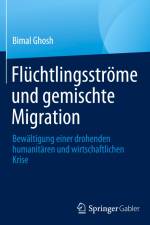
Dieses Buch bietet eine aufschlussreiche Analyse der sich abzeichnenden Flüchtlings- und gemischten Migrationskrise im Kontext von vier großen, aktuellen Migrationsströmen: zwei in West- und Osteuropa und jeweils einer in Amerika und Asien. Auf die Analyse folgt in jedem Fall eine kluge Identifizierung der Schlüsselfragen und die Präsentation einer Reihe von Vorschlägen für politische Antworten. Die Diskussion wird dann in einen globalen Rahmen gestellt und mit der kürzlich gestarteten Initiative der Vereinten Nationen zur Verabschiedung von Global Compacts für Flüchtlinge und Migranten verknüpft. Der Autor bringt in dieses Buch, das erste seiner Art, seine umfangreiche Erfahrung aus der Beratung und aktiven Zusammenarbeit mit vielen der wichtigsten internationalen Organisationen ein, die sich mit Flüchtlings- und Migrationsfragen befassen. Dieses Buch wird für Forscher, Studenten, NRO, Berufsverbände, nationale Ministerien, internationale Organisationen und Rechtsgruppen in den Bereichen Wirtschaft, öffentliche Finanzen, politische Ökonomie, Menschenrechte und Flüchtlingsrecht sowie internationale Beziehungen und Demografie von Interesse sein.
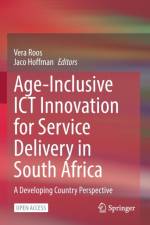
This open access book presents a step-by-step journey to address the problem of ineffective service delivery by local government that led to the leveraging of new technology to benefit older individuals. Based in South Africa, this exploration is in one sense peculiar to its setting-a developing country with huge inequalities-but the story goes beyond the immediate geographical setting of (South) Africa and transcends the temporal aspect of ICT technology. It reflects on older persons' participation, negotiation, and transition in the development of a technology artefact that offers the potential to access services and activities, and to participate in an inclusive society for all ages. This theme has wider resonance, and demonstrates a phenomenon witnessed in different ways and stages across the globe: cohorts of older persons negotiating waves of updated and new technologies. This edited volume details a workable, transdisciplinary and relational approach to 21st-century ICTinnovation that helps create a technology artefact tailored for purpose.Worldwide, it is anticipated that care needs of older populations will outstrip available resources. Sub-Saharan Africa lacks relevant long-term care systems for older persons, and technology could play a crucial role in supporting families, communities and government in vital care management. This volume addresses, in three parts, the under-explored topic of age-inclusive ICT development and use in resource-poor countries. Part 1, Context and Project Background, sets out ICT service delivery to older persons globally and within South Africa, drawing on guiding legislative frameworks. It discusses the we-DELIVER project as an example of developing and applying age-inclusive technology in developing countries. Part 2, Principles, Process and Applications, proposes situationally and relationally informed ethical conduct in applying community-based research; the development of a questionnaire and applicationto present first-time baseline findings of older South Africans' cell phone use, highlighting its intergenerational facilitation. The development of the Yabelana (alluding to 'sharing') ecosystem (consisting of a website, an app, and an unstructured supplementary service data (USSD) code) turned out to be a first of its kind: a digital self-sustaining technology artefact that serves as an eDirectory to provide information about local services or events for (but not exclusively) older individuals. Part 3, Critical Reflections and the Way Forward, considers the inclusion of marginalized older individuals and the future of ICT and cell phone technology to inform research, practice, and policy. This topical edited volume is of interest to social science researchers and students as well as policy makers and practitioners dealing with the life course, ageing and age care, intergenerational issues, technology, social policy, and social work.
This book constitutes the refereed proceedings of the Third International Conference on Electronic Government and the Information Systems Perspective, EGOVIS 2014, held in Munich, Germany, in September 2014, in conjunction with DEXA 2014. The 23 revised full papers presented together with one invited talk were carefully reviewed and selected for inclusion in this volume. The papers are organized in the following topical sections: identity management in e-government; e-participation; intelligent systems in e-government; semantic technologies in e-government; e-government cases; open government data and G-cloud; and privacy and security in e-government.
This book describes the neurology of a business as a new dimension of organization and as a basis for success in a complex world. Comparing organizations with living organisms, it places an organization¿s neurology (control and communication) as a third dimension beside its anatomy (structure) and physiology (process). Overlooked by classical organizational theory, this third dimension offsets its typical drawbacks.The Neurology of Business introduces Stafford Beer¿s Viable System Model (VSM) and shows how this helps managers to diagnose, discover, and unleash the potential and performance lying dormant in today¿s enterprises.The book is based on numerous consulting projects and management seminars conducted in Europe, America, and Asia. It guides the reader through the diagnosis and design process and illustrates application issues with practical examples. In this way, the book provides managers with the language needed to have meaningful conversations abouthow their organizations are functioning. As such, it will benefit managers in business and nonbusiness organizations, as well as readers interested in general management.
Abonner på vårt nyhetsbrev og få rabatter og inspirasjon til din neste leseopplevelse.
Ved å abonnere godtar du vår personvernerklæring.