




















Gjør som tusenvis av andre bokelskere
Abonner på vårt nyhetsbrev og få rabatter og inspirasjon til din neste leseopplevelse.
Ved å abonnere godtar du vår personvernerklæring.Du kan når som helst melde deg av våre nyhetsbrev.

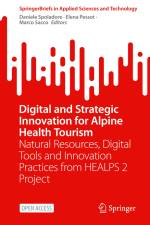
This open access book presents a set of practical tools and collaborative solutions in multi-disciplinary settings to foster the Alpine Space health tourism industry¿s innovation and competitiveness. The proposed solutions emerge as the result of the synergy among health, environment, tourism, digital, policy and strategy professionals. The approach underlines the pivotal role of a sustainable and ecomedical use of Alpine natural resources for health tourism destinations, and highlights the need of integrating aspects of natural resources¿ healing effects, a shared knowledge of Alpine assets through digital solutions, and frames strategic approaches for the long-term development of the sector.The volume exploits the results of the three-years long EU research project HEALPS 2, which involved several stakeholders from the health tourism, healthcare and sustainable tourism industries. This book is relevant for health tourism destinations and facilities (hotels, clinics, wellnessand spa companies), regional and local authorities (policy makers), business support organizations, researchers involved in digital healthcare and geoinformatics.
Das Buch zeigt komplexe Probleme in den Bereichen Logistik und Supply Chain Management und erörtert fortschrittliche Methoden, insbesondere aus dem Bereich Computational Intelligence (CI), zu deren Lösung. Die ersten beiden Kapitel bieten allgemeine Einführungen in die Logistik, das Lieferkettenmanagement und in die Computational Intelligence. Die folgenden Kapitel behandeln spezifische Bereiche der Logistik und des Supply Chain Managements und diskutieren Lösungsansätze. In Kapitel 3 werden Probleme der Transportplanung, wie z. B. Arten von Vehicle Routing, betrachtet. In Kapitel 4 werden Probleme aus dem Bereich der Produktions- und Lagerverwaltung erörtert. Kapitel 5 befasst sich mit Planungsaktivitäten beim Scheduling. Während in den Kapiteln 3 bis 5 eher Planungsprobleme auf operativer Ebene behandelt werden, geht es in Kapitel 6 um das strategische Problem der Gestaltung einer Lieferkette oder eines Netzwerks. Das letzte Kapitel gibt einen Überblick über akademische und kommerzielle Software und Informationssysteme für die diskutierten Anwendungen.Es scheint eine Lücke zu geben zwischen allgemeinen Lehrbüchern über Logistik und Supply Chain Management und speziellerer Literatur, die sich mit Methoden der Computational Intelligence, des Operations Research usw. zur Lösung komplexer betrieblicher Probleme in diesen Bereichen befasst. Für den Leser ist es oft schwierig, von einführenden Texten über Logistik und Supply Chain Management zu der anspruchsvollen Literatur über die Anwendung fortgeschrittener Methoden überzugehen. Dieses Buch füllt diese Lücke, indem es Beschreibungen der entsprechenden Probleme und geeignete Methoden zu ihrer Lösung auf dem neuesten Stand der Technik bereitstellt.Dieses Buch ist eine Übersetzung einer deutschen Originalausgabe. Die Übersetzung wurde mit Hilfe von künstlicher Intelligenz (maschinelle Übersetzung durch den Dienst DeepL.com) erstellt. Eine anschließende menschliche Überarbeitung erfolgte vor allem in Bezug auf den Inhalt, so dass sich das Buch stilistisch anders liest als eine herkömmliche Übersetzung.
This book explores the history of the Mayo Clinic Cardiac Catheterization Laboratory from 1940 to present day. It examines the life and journey of the Cardiac Catheterization Lab and its ultimate success in implementing the vision of the Mayo philosophy of emphasizing collaboration between lab-based scientists and clinical health care professionals to bring innovation to the clinical practice and lead landmark changes in the practice of medicine profoundly enhancing what we can offer to patients and society alike. The book is divided into decades, with separate sections in each decade on key cardiology topics such as congenital heart disease, coronary heart disease, hemodynamics, pacing, and electrophysiology (EP). Chapters will highlight training, advances, new procedures, new technologies, and fundamental changes to the field throughout the decades, attributed to the work done by Cath lab personnel. Chapters also identify the problems faced, the unmetclinical needs of patients and society, problems solved, and things learned and transmitted into the clinical arena along the way. The Mayo Clinic Cardiac Catheterization Laboratory will be a valuable resource for health care professionals, clinicians, scientists, innovators, administrators, and small and large device manufacturing companies as well as historians and past and present patients.
This book offers a rich perspective on Africäs agency in the changing global order marked by intense geopolitical contestations. It discusses ways in which the African continent has been on the margins of the global economic system because of the actions of major powers and Africäs own leaders, and how this legacy can be overcome. The book covers an uncharted ground in analyzing the intersection between geopolitical rivalry, digital futures, and Africäs place in the world. This text makes a clarion call for African leaders and citizens to define better development pathways for the continent through insisting on ethical and transformation leadership as well as building credible institutions that are inclusive. This, according to the author, will ensure a sounder basis for Africäs positive agency. Further, the book makes a strong case for structural transformation that is innovation-led, and that African decision-makers should leverage US-China rivalries to achieve Africäsown development interests.
Abonner på vårt nyhetsbrev og få rabatter og inspirasjon til din neste leseopplevelse.
Ved å abonnere godtar du vår personvernerklæring.