













Gjør som tusenvis av andre bokelskere
Abonner på vårt nyhetsbrev og få rabatter og inspirasjon til din neste leseopplevelse.
Ved å abonnere godtar du vår personvernerklæring.Du kan når som helst melde deg av våre nyhetsbrev.

This book provides a complete and thorough guide to the performance of robotic urinary tract reconstruction procedures, including the principals of successful reconstructive techniques in the kidney, ureter, bladder, prostate and urethra. Reviewing patient positioning, trocar placement, instrumentation, detailed steps of procedure, and available outcome data, it outlines both common and advanced techniques, such as revision of uretero-intestinal anastomoses, buccal mucosa graft for long segment ureteral strictures, management of complex fistulas and urethral stricture. Illuminating unusual anatomy, including horseshoe kidney, retrocaval ureter, ureteral duplication, ectopic/malrotated kidneys, and retroperitoneal fibrosis, this book also highlights potential complications, their avoidance and management. Written by experts in the field, Techniques of Robotic Urinary Tract Reconstruction: A Complete Approach guides clinical practitioners in the utilization of advanced novel technology to aid intraoperation and demonstrates the ways in which robotics enables the performance of reconstructive procedures in an area difficult to reach via open techniques.
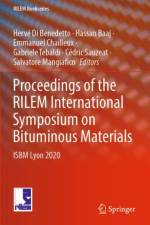
This volume highlights the latest advances, innovations, and applications in bituminous materials and structures and asphalt pavement technology, as presented by leading international researchers and engineers at the RILEM International Symposium on Bituminous Materials (ISBM), held in Lyon, France on December 14-16, 2020. The symposium represents a joint effort of three RILEM Technical Committees from Cluster F: 264-RAP "e;Asphalt Pavement Recycling"e;, 272-PIM "e;Phase and Interphase Behaviour of Bituminous Materials"e;, and 278-CHA "e;Crack-Healing of Asphalt Pavement Materials"e;. It covers a diverse range of topics concerning bituminous materials (bitumen, mastics, mixtures) and road, railway and airport pavement structures, including: recycling, phase and interphase behaviour, cracking and healing, modification and innovative materials, durability and environmental aspects, testing and modelling, multi-scale properties, surface characteristics, structure performance, modelling and design, non-destructive testing, back-analysis, and Life Cycle Assessment. The contributions, which were selected by means of a rigorous international peer-review process, present a wealth of exciting ideas that will open novel research directions and foster new multidisciplinary collaborations.
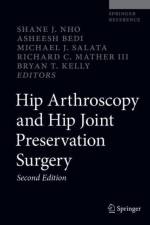
The field of hip preservation surgery has evolved over the past decade as our understanding of hip pathomechanics and pathomorphology has expanded. The published literature on non-arthritic hip pathology, for example, has grown exponentially. The topics of controversy in the past decade have been answered in some cases, but new questions have also arisen. In addition to the 99 chapters in the original edition - most of which will be retained and updated as applicable - there will be over 30 brand new chapters focusing on new and more sophisticated techniques from authors that have been the pioneers of the field. The text is divided into nine thematic sections, covering the breadth of the topic and the current state of the art: basic science of the hip; operative basics for hip arthroscopy and open hip preservation surgery; pediatric hip conditions; approaches to disorders of the hip and pelvis; enthesopathy and neuromuscular disorders; hip fractures and instability; avascular necrosis; hip cartilage restoration; and oncologic conditions. Throughout, there is a heavy emphasis on surgical techniques, and video clips will be included in selected chapters. Written by edited by thought leaders and seasoned practitioners in the field, this new edition of Hip Arthroscopy and Hip Joint Preservation Surgery will remain the gold standard for orthopedic surgeons and sports medicine specialists, expanding on the range of techniques available to clinicians treating injuries to and disorders of the hip.
Keeping up to date with advances in comprehensive ophthalmology and in the ophthalmic sub-specialties is extremely difficult because of the accelerating rapidity with which new information and technology become available and the diminishing time and opportunity for practitioners and trainees to read and learn. The first edition of Albert and Jakobiec's Principles and Practice (1994) was conceived with the idea of utilizing an electronic, updated version in which the chapters were revised by the chapter authors on an annual or semi-annual basis, but the technology was not sufficiently advanced to achieve this goal. Subsequent editions (2000 and 2008) were organized by Saunders and the last published by Elsevier (of which Springer has obtained the complete rights to move forward with the 4th edition). For nearly three decades, this text has provided its readers with authoritative and comprehensive coverage of clinical ophthalmology, written and edited by a group of authors who represented a "e;Who's Who"e; in ophthalmology. By using Springer's Meteor platform, with its ability to allow authors and editors access to updating their chapters online annually/semi-annually, and with the recruitment of select chapter authors, this work's usefulness as the standard text in ophthalmology will be maintained and expanded upon by Springer. The 4th edition of this comprehensive and authoritative text is written by hundreds of the most distinguished authorities from around the world and edited by four leaders in the field, providing today's best answers to every question that arises in ophthalmology practice. Richly illustrated with thousands of high quality, full color, clinically-relevant images, Albert and Jakobiec's Principles and Practice of Ophthalmology, 4th Edition covers every scientific and clinical principle in ophthalmology, ensuring that the reader will always be able to find the guidance needed to diagnose and manage patients' ocular problems and meet today's standards of care. Written for practicing ophthalmologists and trainees, this book delivers in-depth guidance on new diagnostic approaches, operative techniques, and treatment options, as well as coherent explanations of new scientific concept and its clinical importance. The 4th edition will prove to be the source every practicing clinician needs to efficiently and confidently overcome any clinical challenge they may face. Updates include new chapters on anterior and posterior segment diseases, as well as chapters more focused on treatment, plus thousands of new, high-quality, color images and illustrations, updated references, and information on the most cutting-edge technology used by clinicians in their practices today. Additionally, readers will enjoy the same, user-friendly, full-color design they remember from the previous edition, complete with many at-a-glance summary tables, algorithms, boxes, and diagrams that allow the reader to locate the assistance needed more rapidly than ever.
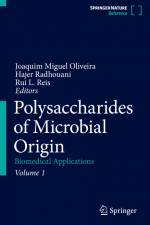
This book provides a comprehensive analysis of microbial polysaccharides, their current uses, and highlights biomedical opportunities. The topics comprise principally a) their extraction, isolation, purification and advanced production processes; b) characterization of their structural, physicochemical, and biological properties, among others, by several techniques; c) description of the advanced functionalization and modification methods for the polysaccharide based-material; and d) their applications and uses in medical and pharmaceutical fields. Each chapter is written by world-renowned academics and practitioners on their field.This is an essential reference for students in biomedical, chemical, material, and microbiology engineering as well as researchers and professionals in the medical field.
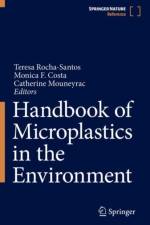
This reference work presents an authoritative review of microplastics as vectors of environmental contaminants and provides a comprehensive coverage of their ecotoxicological and toxicological effects. Divided into four sections, this book outlines the current analytical techniques and applications for sampling, processing analysis, and data reporting of microplastics pollution in the environment, explores microplastics degradation and interaction with chemical pollutants, discusses the fate and behaviour of microplastics in the environment, and provides valuable insights about prevention, regulation and remediation of microplastics pollution.Written by interdisciplinary expert academics and practitioners, this reference work will appeal to a wide readership of students, researchers and professionals interested in this field, including marine scientists, environmental scientists, analytical chemists, organic chemists, biochemists, biologists, polymer scientists, and toxicologists.
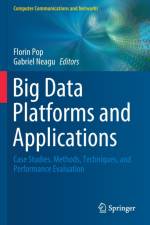
This book provides a review of advanced topics relating to the theory, research, analysis and implementation in the context of big data platforms and their applications, with a focus on methods, techniques, and performance evaluation. The explosive growth in the volume, speed, and variety of data being produced every day requires a continuous increase in the processing speeds of servers and of entire network infrastructures, as well as new resource management models. This poses significant challenges (and provides striking development opportunities) for data intensive and high-performance computing, i.e., how to efficiently turn extremely large datasets into valuable information and meaningful knowledge.The task of context data management is further complicated by the variety of sources such data derives from, resulting in different data formats, with varying storage, transformation, delivery, and archiving requirements. At the same time rapid responses are needed for real-time applications. With the emergence of cloud infrastructures, achieving highly scalable data management in such contexts is a critical problem, as the overall application performance is highly dependent on the properties of the data management service.
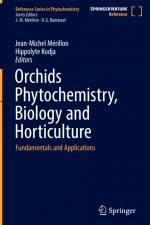
This reference work provides an authoritative and comprehensive review of the latest developments in orchids' biology, biotechnology and phytochemistry, and it also explores the applications of orchids in medicinal chemistry, nutrition and cosmetics industry. Chapters from expert contributors are organised into six sections and cover the entire gamut of orchid research and uses. In this work, readers will learn about topics such as biogeography and diversity of orchids, their biology and environmental factors, their horticulture and phytochemistry, and their use in agri-food, medicinal and perfumery industries. This book will appeal to graduate students, scholars, researchers interested in botany, agriculture, pharmacy, biotechnology and phytochemistry. Industrial scientists and those involved in marketing flowers and phytochemicals, plants and their extracts will also understand the importance of this reference work.
Abonner på vårt nyhetsbrev og få rabatter og inspirasjon til din neste leseopplevelse.
Ved å abonnere godtar du vår personvernerklæring.