











Gjør som tusenvis av andre bokelskere
Abonner på vårt nyhetsbrev og få rabatter og inspirasjon til din neste leseopplevelse.
Ved å abonnere godtar du vår personvernerklæring.Du kan når som helst melde deg av våre nyhetsbrev.

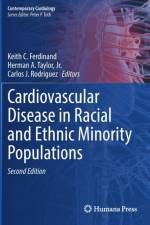
Cardiovascular heart disease mortality in African Americans is the highest of all major racial/ethnic subpopulations in the United States. Examining race and ethnicity, Cardiovascular Disease in Racial and Ethnic Minorities will reveal that there are unacceptable healthcare disparities in risk factor prevalence, disease states, and cardiovascular outcomes in the United States. Written by a team of experts, Cardiovascular Disease in Racial and Ethnic Minorities examines to what degree biomedical and scientific literature can clarify the impact of genetic variation versus environment as related to cardiovascular disease. Chapters illustrate the magnitude of cardiovascular and metabolic disparities and the effect of environment on diseases.
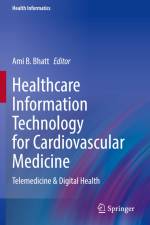
This unique book comprehensively reviews how information technology is changing cardiovascular medical practice. Chapters include a wide range of topics from specific technologies and virtual care education to large system implementation. Extensive illustrative material and specific case studies are included throughout to reinforce key concepts and enable the reader to develop an understanding of how information technology is impacting medical practice. Health equity, medicolegal ethics, and regulatory considerations are also covered. Healthcare Information Technology for Cardiovascular Medicine: Telemedicine & Digital Health provides a foundation for better understanding how these technologies impact cardiovascular care delivery. Its comprehensive analysis enables healthcare providers and other stakeholders to enhance clinical practice through digital health implementation.
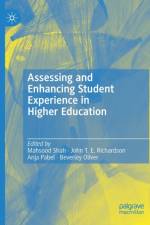
The book makes an important contribution to the discourse on student experience in higher education. The book includes chapters that cover important aspects of the 21st century student experience. Chapters cover issues such as: new trends and insights on the student experience; the changing profile of students in higher education and performance measures used to assess the quality of student experience, institutional approaches in engaging students, using student voice to improve the quality of teaching, COVID-19 and its impact on international students, innovative partnerships between students and academic staff, student feedback and raising academic standards, the increased use of qualitative data in gaining insights into student experience, the use of innovative learning spaces and technology to enhance the learning experience, and the potentially disrupting nature of student feedback and its impact on the health and wellbeing of academic staff, and the increased use of social media reviews by students.
This volume explores the governance and management of science, technology, and innovation (STI) in relation to innovation policy and governance systems, highlighting its goal, challenges, and opportunities. Divided into two sections, it addresses the role of governments in promoting innovation in Latin-American contexts as well as barriers and opportunities for STI governance in the region. The chapters tackle the role of institutions, innovation funding, technological trajectories, regional innovation policies, innovation ecosystems, universities, knowledge appropriation, and markets. Researchers and scholars will find an opportunity to grasp a better understanding of innovation policies in emerging economies. This interdisciplinary work presents original research on science, technology and innovation policy and governance studies in an understudied region.
This book explains how microorganisms play a pivotal role in the formation of biominerals, including carbonates, silicate minerals and oxides. As readers will learn, these minerals may be produced either intracellularly or extracellularly in order to sustain microbial life. Experienced scientists from the field show that some of these biominerals can be produced in an active form, which involves direct enzymatic intervention to form precipitates. In addition, passive mineral formation can be mediated by the presence of dead cells.Readers from Microbiology and Biochemistry will appreciate the thorough coverage on various types of microbial mineral formation and their roles in microbial domains. Furthermore, they will benefit from the authors' first-hand knowledge regarding common techniques for studying biomineral-producing microorganisms, factors affecting biomineralization, and the use of this process in biotechnological applications.
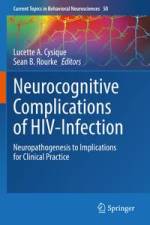
This volume aims at presenting the latest international research and discoveries in the neurocognitive aspects and complications in HIV/AIDS, and how this understanding can shape and inform how we think about clinical practice and patient care in HIV/AIDS as well as lead to a better understanding of the underlying neuropathogenesis.The chapter, "e;Metabolic Syndrome and Cardiovascular Disease Impacts on the Pathophysiology and Phenotype of HIV-Associated Neurocognitive Disorders"e;, of this book is available open access under a CC BY 4.0 license at link.springer.com
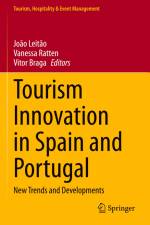
Tourism is one of the sectors that have undergone substantial change for several decades and in particular due to the restrictions and change in national and international policies since the beginning of the COVID-19 pandemic. This book focuses on how tourism has been innovative, especially in light of these changes, by providing new and novel ways of introducing change into the marketplace. The book focuses on Spain and Portugal, thereby offering an interesting perspective as to how the Iberian Peninsula has adapted based on the new market conditions. This book is the first to focus specifically on these countries and offers an economic geography perspective on tourism innovation. This will provide useful and practical information about how a region has hurt but also thrived in times of global turmoil.
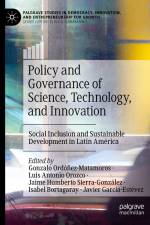
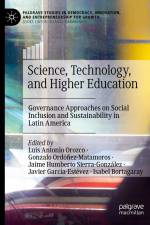
This volume explores the governance and management of science, technology, and innovation (STI) in relation to social inclusion and sustainability, highlighting its goal, challenges, and opportunities. Divided into two sections, it addresses the goals and institutional arrangements around sustainable development in the context of Latin American countries as well as the challenges of developing absorptive STI capacities for inclusion in the higher education institutions and systems. The chapters tackle the important role of citizen science, science diplomacy, peace building, mission-oriented policies, public innovation, institutional entrepreneurs, and policy networks. Researchers and scholars will find an opportunity to better grasp several topics and methodologies in knowledge development in the governance of STI. This interdisciplinary work presents original research on science, technology and innovation policy and governance studies in an understudied region.
This volume collects the edited and reviewed contribution presented in the 9th iTi Conference that took place virtually, covering fundamental and applied aspects in turbulence. In the spirit of the iTi conference, the volume is produced after the conference so that the authors had the opportunity to incorporate comments and discussions raised during the meeting.In the present book, the contributions have been structured according to the topics:I ExperimentsII Simulations and ModellingIII Data Processing and ScalingIV TheoryV Miscellaneous topics
Plants, being sessile and autotrophic in nature, must cope with challenging environmental aberrations and therefore have evolved various responsive or defensive mechanisms including stress sensing mechanisms, antioxidant system, signaling pathways, secondary metabolites biosynthesis, and other defensive pathways among which accumulation of osmolytes or osmo-protectants is an important phenomenon. Osmolytes with organic chemical nature termed as compatible solutes are highly soluble compounds with no net charge at physiological pH and nontoxic at higher concentrations to plant cells. Compatible solutes in plants involve compounds like proline, glycine betaine, polyamines, trehalose, raffinose family oligosaccharides, fructans, gamma aminobutyric acid (GABA), and sugar alcohols playing structural, physiological, biochemical, and signaling roles during normal plant growth and development. The current and sustaining problems of climate change and increasing world population has challenged global food security. To feed more than 9 billion, the estimated population by 2050, the yield of major crops needs to be increased 1.1-1.3% per year, which is mainly restricted by the yield ceiling. A major factor limiting the crop yield is the changing global environmental conditions which includes drought, salinity and extreme temperatures and are responsible for a reduction of crop yield in almost all the crop plants. This condition may worsen with a decrease in agricultural land or the loss of potential crop yields by 70%. Therefore, it is a challenging task for agricultural scientists to develop tolerant/resistant varieties against abiotic stresses. The development of stress tolerant plant varieties through conventional breeding is very slow due to complex multigene traits. Engineering compatible solutes biosynthesis by deciphering the mechanism behind the abiotic tolerance or accumulation in plants cell is a potential emerging strategy to mitigate adverse effects of abiotic stresses and increase global crop production. However, detailed information on compatible solutes, including their sensing/signaling, biosynthesis, regulatory components, underlying biochemical mechanisms, crosstalk with other signaling pathways, and transgenic development have not been compiled into a single resource. Our book intends to fill this unmet need, with insight from recent advances in compatible solutes research on agriculturally important crop plants.
This volume describes several highly diverse subjects: Chapter 1 explores marine biodiscovery of the North-eastern Atlantic off the coast of Ireland as a model for best practice in research. The second chapter investigates Brazilian Chemical Ecology and examples of insect-plant communication studies that are mediated by natural products demonstrate the beautiful interconnectedness of species in a biome. Our third chapter comprises the advances in the science of the sesquiterpene quinone, perezone, which in 1852 was the first natural product isolated in crystalline form in the New World. The last two chapters are from a Vietnamese group and the first of these follows the phytochemistry, pharmacology, and ethnomedical uses of the genus Xanthium, which produces interesting sulfur and nitrogen containing natural products. Finally, the genus Desmos is discussed, where an overview of its constituent natural products and their in vitro pharmacological potential is described.
What is depression? An "e;imagined sun, bright and black at the same time?"e; A "e;noonday demon?"e; In literature, poetry, comics, visual art, and film, we witness new conceptualizations of depression come into being. Unburdened by diagnostic criteria and pharmaceutical politics, these media employ imagery, narrative, symbolism, and metaphor to forge imaginative, exploratory, and innovative representations of a range of experiences that might get called "e;depression."e; Texts such as Julia Kristeva's Black Sun: Depression and Melancholia (1989), Andrew Solomon's The Noonday Demon (2000), Allie Brosh's cartoons, "e;Adventures in Depression"e; (2011) and "e;Depression Part Two"e; (2013), and Lars von Trier's film Melancholia (2011) each offer portraits of depression that deviate from, or altogether reject, the dominant language of depression that has been articulated by and within psychiatry. Most recently, Ann Cvetkovich's Depression: A Public Feeling (2012) has answered the author's own call for a multiplication of discourses on depression by positing crafting as one possible method of working through depression-as-"e;impasse."e; Inspired by Cvetkovich's efforts to re-shape the depressive experience itself and the critical ways in which we communicate this experience to others, Re/Imagining Depression: Creative Approaches to "e;Feeling Bad"e; harnesses critical theory, gender studies, critical race theory, affect theory, visual art, performance, film, television, poetry, literature, comics, and other media to generate new paradigms for thinking about the depressive experience. Through a combination of academic essays, prose, poetry, and interviews, this anthology aims to destabilize the idea of the mental health "e;expert"e; to instead demonstrate the diversity of affects, embodiments, rituals and behaviors that are often collapsed under the singular rubric of "e;depression."e;
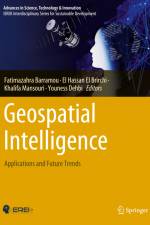
This book explores cutting-edge methods combining geospatial technologies and artificial intelligence related to several fields such as smart farming, urban planning, geology, transportation, and 3D city models. It introduces techniques which range from machine and deep learning to remote sensing for geospatial data analysis.The book consists of two main parts that include 13 chapters contributed by promising authors. The first part deals with the use of artificial intelligence techniques to improve spatial data analysis, whereas the second part focuses on the use of artificial intelligence with remote sensing in various fields. Throughout the chapters, the interest for the use of artificial intelligence is demonstrated for different geospatial technologies such as aerial imagery, drones, Lidar, satellite remote sensing, and more. The work in this book is dedicated to the scientific community interested in the coupling of geospatial technologies and artificial intelligence and exploring the synergetic effects of both fields. It offers practitioners and researchers from academia, the industry and government information, experiences and research results about all aspects of specialized and interdisciplinary fields on geospatial intelligence.
Sudden death in athletes is a global problem. Although it is a relatively rare phenomenon (1/100,000 persons), when it does occur, it is often as an incomprehensible event. In fact, it strikes subjects who presumably should be much healthier than the general population. In the previous 20 years, many authors have studied this problem in an attempt to understand the causes and prevent these events, and it has been determined that, in the vast majority of cases, athletes who die suddenly have an underlying heart disease (arrhythmogenic cardiomyopathy, hypertrophic cardiomyopathy, coronary anomalies, channelopathies, etc.).In most cases these diseases do not produce major symptoms and do not preclude sports activity even at the highest levels, although they do increase the incidence of sudden death. How to discover these diseases in asymptomatic athletes is a hotly debated issue. In particular, there is controversy as to whether all athletes should undergo detailed medical screening, including electrocardiogram, or whether the costs of this screening are too high in relation to the event incidence. The purpose of this book is to accurately analyze the causes of sudden death in athletes and to provide cardiologists and sports physicians with useful tips on how to identify at-risk individuals.
Pediatric Surgery Digest offers a praxis-oriented and up-to-date overview of all subjects in pediatric surgery according to the European surgical curriculum. Additionally, interdisciplinary aspects concerning pediatrics, adult surgery, obstetrics and other disciplines working with children were considered. The tables enable quick access to indications for the operative and conservative therapy with schematic step-by-step illustrations for nearly all surgical procedures. Practical information on child-adapted dosage for pharmacotherapy as well as age-specific injury patterns from scalding in young children to spleen rupture in teenaged vehicle users are taken into consideration. The surgical role in modern pediatric oncology is also presented according to the guidelines of SIOP. European pediatric surgeons, experts in their field, have written this book for students and trainees, but also for anybody who treats children surgically.
The book presents recent remediation techniques for heavy metal contamination in wastewater, with a focus on recently-developed and sustainable materials such as metal oxides and their composites, two-dimensional materials, organic-inorganic ion exchange materials, nanomaterials, bagasse, and olive-oil waste chelating materials. Chapters also describe the analysis of heavy metals, membranes for water treatment, sources and impact of heavy metals and opportunities and challenges in heavy metal remediation.
This book examines the dilemma of overdependence on tourism in Caribbean countries and territories, and the need for a resilient path to address the industry's vulnerability in the face of natural disasters. The chapters in the book question how tourism resilience is understood and practiced in Caribbean small island developing states (SIDS) and the factors that inform, undermine, or indeed redefine the sustainable resilience agenda for these territories.With its overreliance on tourism and vulnerability to climate, the Caribbean region finds itself susceptible and in need of an innovative approach in order to survive economically. Contributors to this volume touch on all three sustainability pillars and spanning across many tourism sector considerations, such as product development, stakeholder management, hotel management, marketing and entrepreneurship. By spanning the geography of the Anglophone and Spanish Caribbean this book offers a smorgasbord of conceptual and applied perspectives to researchers in the area of tourism resilience in SIDS. It also presents strategic considerations to public and private sector practitioners in implementing measures to strengthen the competitive positioning of their destinations as they contend with the dynamism of the external and internal environments.
This book brings together an interdisciplinary group of academic researchers in order to examine how and to what extent the challenge of language revitalisation should be reassessed and reconceptualised to take account of our fast-changing social context. The period of four decades between 1980 and 2020 that straddled the end of the twentieth century and the beginning of the twenty-first is widely regarded as one that witnessed a series of fundamental social, economic and political transformations. Many societies have become increasingly individualistic, mobile and diverse in terms of ethnicity and identity; their economies have become increasingly interconnected; and their governance structures have become increasingly complex, incorporating a growing number of different levels and actors. In addition, rapid advancements with regard to automated, digital and communication technology have had a far-reaching impact on how people interact with each other and participate in society. The chapters in this book aim to advance an agenda of key questions that should concern those working in the field of language revitalisation over the coming years, and the volume will be of interest to students, scholars and policy-makers in related areas including sociolinguistics, education, sociology, geography, political science, law, economics, Celtic studies, and communication technology.
This book analyzes the main topics of Palliative Care in Cardiac Intensive Care Units (CICU), from the changing epidemiology of patients admitted to the ICU, to the main clinical and ethical issues. The changing epidemiology of patients has led to new and emerging patient needs at the end of life. Care has shifted from acute coronary syndrome patients towards elderly patients, with a high prevalence of non-ischemic cardiovascular diseases and a high burden of non-cardiovascular comorbid conditions: both increase the susceptibility of patients to developing life-threatening critical conditions. These conditions are associated with a significant symptom burden, high mortality rate, and increased length of stay.The main new challenges involve shared decision-making, symptom control (pain, dyspnea, etc.), and ethical issues (withholding/withdrawing life sustaining treatments, deactivation of implanted cardiac devices, palliative sedation), all of which necessitate formal education on end-of-life care. Written by opinion leaders in their respective fields, who share their experience with improving the cultural and clinical competence of medical/nursing teams, this volume is chiefly intended for cardiologists, anesthesiologists, palliative care doctors and nursing staff.
This contributed volume compiles the latest improvements in the field of biotechnology. It focuses on topics that comprises industrial, environment, agricultural and medical related issues to technology and biological studies and exhibits the correlation between the biological world and the dependence of humans on it. The book is organized into five parts covering the role of biotechnology in industrial products, environmental remediation, agriculture and pharmacological agents. Ranging from micro-scale studies to macro, it covers a huge domain of agricultural biotechnology and focuses on important commercial crops (e.g. cacao and coffee), arbuscular mycorrhizal fungi, flow and distribution of phosphorus in agricultural soils in the Latin American region. Overall, the book portrays the importance of modern biotechnology and its role in solving the problems in modern day life. The book is a ready reference for practicing students, researchers of environmental engineering, chemical engineering, agricultural engineering, and other allied fields likewise.
This book is a comprehensive review of image guided interventions of the spine. Beginning with a chapter dedicated to the history of image guided spinal interventions, authors set the stage for the role these procedures have and will play in the field. Chapters cover the key procedures, techniques, and considerations to maximize effectiveness and patient care. Some major topics covered include: imaging osseo-ligamentous spine anatomy, percutaneous vertebroplasty, image guided tumor ablation, and vascular spine intervention. Additional features include high-quality illustrations with concise descriptions and clinical cases discussions. This is an ideal guide for interventional neuroradiologists, radiologists, pain management physicians, neurosurgeons, orthopedic spine surgeons, and related residents, fellows, and students wanting in depth information on image guided interventions of the spine.
Cyclodextrins (CD) are cyclic oligosaccharides containing 6, 7 or 8 glucose units (a, or y-CD, respectively) in a truncated molecular shape. Their cyclic molecular structure contains a hydrophilic surface and a hydrophobic cavity at the center that can interact (host) with external hydrophobic compounds (guest molecules). Cyclodextrins have been categorized as Generally Recognized As Safe (GRAS) in the USA, "e;natural products"e; in Japan, and as "e;novel food"e; in Australia, New Zealand and EU countries. They are therefore widely used in food production to encapsulate hydrophobic compounds, including solid, liquid and gas molecules, in order to solubilize, stabilize or control the release rate of these components. To date, there has been no comprehensive review of the very large number of studies performed on encapsulation using cyclodextrin powders for food applications in recent years. This text fills that gap for academics in the encapsulation field and for industry professionals who want to gain a solid understanding of encapsulation functionality of cyclodextrin powders. The book consists of 16 chapters in which chapter 1 introduces cyclodextrin properties and its applications in food processing, and chapters 2-16 explore applications of cyclodextrin in encapsulation for many guest compounds. These compounds include gases, flavors, colors, pigments, polyphenols (plant bioactive compounds), essential oils, lipids (cholesterol and polyunsaturated fatty acids), vitamins, fruit ripening controlling compounds, and antifungal and antimicrobial compounds. These chapters also discuss functionalities of cyclodextrin in packaging, masking off-flavor and off-taste, and as dietary fiber.Covering a broad range of cyclodextrin applications and suitable for both newcomers to encapsulation technology and those with experience, Functionality of Cyclodextrins in Encapsulation for Food Applications is a unique and essential reference on this increasingly important topic.
This volume discusses the climate responsiveness of sustainable architecture design and technology in China, Japan, Singapore, and South Korea in recent years, addressing concepts and applications in urban planning, building design, and structural performance evaluation. The four sections of the text cover the theory and implementation of sustainable architecture within various geographic boundaries and contexts, offering an interdisciplinary assessment of the challenges faced in urban areas at different climate zones. The main topics covered are: 1) urban ecological restoration under the influence of climate environment; 2) health and human considerations of building and environment; 3) prototype optimization of sustainable building, and 4) feedback of building performance and design evaluation. The book is intended to be a contribution to the growing body of knowledge on sustainable architecture for applicable use by practitioners, city planners, field researchers, and building operators in building design, construction, usage, operation, and maintenance.
This book addresses and summarizes the main andrological disorders (genital, reproductive or sexual diseases) that may originate in childhood or adolescence.Since many of the andrological diseases that occur in adulthood originate before the age of 18 and sometimes even during gestation, andrological evaluation is essential during childhood to highlight anomalies in the genital organs. During puberty, evaluation can help to monitor growth and secondary sex characteristics, and to assess e.g. the possible presence of an eunucoid habitus, gynecomastia, testicular hypotrophy or varicocele, a very common pathology in young people. During adolescence, the assessment of risk factors, such as those related to certain lifestyles, is of fundamental importance for primary prevention. Moreover, in late adolescence the focus shifts to preventing sexually transmitted infections, or to dealing with possible discomforts related to the sexual sphere. Finally, ensuring young people's genital and sexual health also means protecting their fertility. Written by respected experts in the field, this book constitutes an innovative resource, combining updated, reliable and comprehensive information with agile consultation in order to provide a streamlined approach to the care of children and adolescents with such disorders.
This book gathers the latest advances, innovations, and applications in the field of environmental and construction engineering, as presented by international researchers at the XXIV International Scientific Conference "e;Construction: The Formation of Living Environment"e;, held in Moscow, Russia on April 22-24, 2021. It covers highly diverse topics, including sustainable innovative development of the construction industry, building materials, reliability of buildings and constructions and safety in construction, modelling and mechanics of building structures, engineering and smart systems in construction, climate change and urban environment. The contributions, which were selected by means of a rigorous international peer-review process, highlight numerous exciting ideas that will spur novel research directions and foster multidisciplinary collaborations.
To survive and sustain businesses during such times of crisis becomes difficult for managers and entrepreneurs. This in turn amplifies the importance of designing new flexible and adaptive business models. This book addresses different business situations that occur during national and global crises, such as the COVID-19 pandemic. Specifically, it proposes new and inspiring business models for various industries such as service and retail industry using different statistical software like SPSS and AMOS. It discusses the various changing elements of businesses such as the application of artificial intelligence (AI) and machine learning and how to cope with these unexpected business elements to maintain sustainable development.
The growth of the American high school that occurred in the twentieth century is among the most remarkable educational, social, and cultural phenomena of the twentieth century. The history of education, however, has often reduced the institution to its educational function alone, thus missing its significantly broader importance. As a corrective, this collection of essays serves four ends: as an introduction to the history of the high school; as a reevaluation of the power of narratives that privilege the perspective of school leaders and the curriculum; as a glimpse into the worlds created by students and their communities; and, most critically, as a means of sparking conversations about where we might look next for stories worth telling.
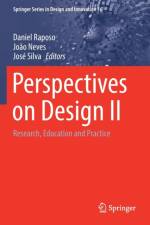
This book reports on interdisciplinary research and practices in communication, interior, fashion and product design, highlighting strategies for systematizing the design approach in a global, digital world. It gathers a selection of chapters written by the authors of the best articles presented at the 7th EIMAD conference, held online on May 14-15, 2020, from Portugal. The works were chosen for their particular link to contemporary concerns in terms of identity, health and well-being, social inclusion, sustainability, education and environment and, among others. They cover and bridges between important aspects of design education, research and practice, as well as creativity and emerging technology, offering a timely perspective and a source of inspiration to researchers, professionals and educators in design, product development and related fields.
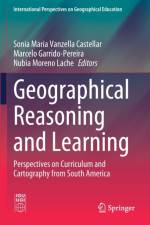
This book presents the distinctive theoretical and methodological approaches in geography education in South America and more specifically in Brazil, Chile and Colombia. It highlights cartography and maps as essential tools and provides a meaningful approach to learning in geographical education, thereby giving children and young people the opportunity to better understand their situations, contexts and social conditions. The book describes how South American countries organize their scholar curriculum and the ways in which they deal with geography vocabulary and developing fundamental concepts, methodologies, epistemological comprehension on categories, keywords and themes in geography. It also describes its use in teachers' practices and learning progressions, the use of spatial representations as a potent mean to visualize and solve questions, and harnesses spatial thinking and geographical reasoning development. The book helps to improve teaching and learning practices in primary and secondary education and as such it provides an interesting read for researchers, students, and teachers of geography and social studies.
This book discusses new candidates for rapid-acting antidepressants, such as (R)-ketamine, (2R,6R)-hydroxynorketamine, scopolamine, mGluR2/3 antagonists and AMPA receptor agonists. There are serious limitations to currently available antidepressants, such as delayed onset and low rates of efficacy. The discovery that a single dose of ketamine, an NMDAR antagonist, can produce rapid antidepressant effects that are sustained has led to new research in this area. In this volume, a variety of novel pharmaceutical treatments are examined. This volume would be useful to both researchers and clinicians who work in the field of pharmacology, specifically CNS drug treatments.
Abonner på vårt nyhetsbrev og få rabatter og inspirasjon til din neste leseopplevelse.
Ved å abonnere godtar du vår personvernerklæring.