




















Gjør som tusenvis av andre bokelskere
Abonner på vårt nyhetsbrev og få rabatter og inspirasjon til din neste leseopplevelse.
Ved å abonnere godtar du vår personvernerklæring.Du kan når som helst melde deg av våre nyhetsbrev.

This book sheds new light on the potential application of EU law to situations arising outside EU territory, and its consequences. In today's globalized world, EU law and the ECJ's decisions have been calling for exceptions and defining new connecting elements that make the traditional approach of EU law, based on the territoriality principle, less straightforward. This is the case with e.g. the effects doctrine in the context of EU competition law, as was fully recognized after the ECJ's Intel case. Moreover, recently approved rules concerning the EU's internal market, EU environmental law and EU data protection law have made it more difficult to define the application of EU law in terms of a pure link to the territoriality principle. The book examines these and other problems from the perspectives of various branches of EU economic law. With regard to EU competition law it presents, among others, studies on the evolution of the effects doctrine in the US and the EU; extraterritoriality of competition law; global cartels; merger control; state aid and cooperation between NCAs. Furthermore, it includes several studies concerning extraterritorial issues in trade relations between the EU and China; EU screening regulation of foreign direct investments; EU trade agreements; EU investment law and EU financial services.The twenty-one contributing authors are internationally respected experts on EU law.
This book provides cross-cultural ethical exploration of sex robots and their social impact. What are the implications of sex robots and related technological innovations for society and culture? How should we evaluate the significance of sexual relations with robots that look like women, men or children? Critics argue that sex robots present a clear risk to real persons and a social degradation that will increase sexual violence, objectify women, encourage pedophilia, reinforce negative body images, increase forms of sexual dysfunction, and pass on sexually transmitted disease. Proponents judge robotic sexual companionship as just another step in the exploration of human desire. They see sex robots, and similar technology, such as virtual reality pornography, as providing autonomy affirming companionship for the lonely and a relatively harmless outlet for sexual fantasies that avoids the use of human prostitutes and thus reduces sexual victimization. Some appreciate sex robots as a social evil, others as a positive good, and still others as a harmless pastime. How we come to terms with such conceptual and moral concerns will have significant implications for society and the future of human relations. This book is of great interest to researchers in bioethics, human sexual behavior, AI ethics, and philosophy of sex.
This two-volume, edited collection lays the groundwork for an international exploration of incarceration and generation, covering a range of geographic, judicial and administrative contexts of incarceration from contributors across a range of subjects. Volume II examines intergenerational relations issues within contexts of incarceration. It focuses on the intergenerational continuities in imprisonment; intergenerational justice and citizenship; the impacts of incarceration on multiple generations and within families; and media representations of the intergenerationality of incarceration. Volume I explores an array of experiences, dynamics, cultures, interventions, and impacts of incarceration in different generations. This collection speaks to academics in criminology, sociology, psychology, and law, and to practitioners and policymakers interested in incarceration.
This two-volume, edited collection lays the groundwork for an international exploration of incarceration and generation, cover a range of geographic, judicial and administrative contexts of incarceration from contributors across a range of subjects. Volume I explores an array of experiences, dynamics, cultures, interventions and impacts of incarceration in specific generations: childhood, youth and emerging adulthood, adulthood and older age. It covers topics such as: the expansion of the penal landscape; deprivation of liberty regarding children, the problem of unaccompanied migrant children; the incarceration of young adults and adults, exploring its impacts within and beyond incarceration and the consequences of imprisoning older populations. Volume II examines intergenerational relations issues within different contexts of incarceration. This collection discusses public policies and the role of the state and the citizen deprived of liberty. It speaks to academics in criminology, sociology, psychology, and law, and to practitioners and policymakers interested in incarceration.
This book explores justice 'on the ground' in Southern African communities, and in particular the roles that women play in these processes. Justice on the ground is often critiqued for being male-dominated and patriarchal. This volume seeks to unpack and problematize this assumption through the case studies of Namibia, Zimbabwe, Mozambique and South Africa. Contributions focus on the lived experiences of women and the intersections of race, class, culture and the colonial experience that shape their lives. In the rural and peri-urban contexts discussed in this book, justice on the ground is found to be relational. The network of relationships between people and the well-being and health of a community as an integral whole continue to be of central importance as the survival of the community depends on the entire community functioning interdependently. An engagement with African feminisms is helpful in providing a number of lenses, or simply questions, through which to read the case studies. These case studies reveal the complex and organic ways in which women have power and influence in relation to justice on the ground which may not be immediately obvious.
This book provides insight into the importance and impacts that experiential learning has in geographic education by examining the experience, the methods of evaluation, and the encounters that students have shared about their experiences. It allows the reader to gain insight into what it really takes to prepare and lead students in such experiences both domestically and internationally. The book can be used as a guide to planning, but also demonstrates the use of experiential learning theory throughout these experiences and especially the importance of reflection by the students on what they are experiencing. The book is beneficial to students and faculty alike that are studying geography education.
This succinct yet comprehensive book describes current and emerging concepts in risk stratification, detection, and staging of bladder cancer. Divided into two distinct sections, the first section focuses on contemporary and novel imaging modalities in bladder cancer staging. The second section illuminates advanced optical techniques and tumor markers for bladder cancer detection. The volume also addresses such topics as novel immuno-positron emission tomography radiotracers, imaging modalities for monitoring of tumor response, and non-invasive urine biomarkers such as current and emerging molecular markers for bladder cancer screening, early diagnosis, and surveillance.Comprehensive Diagnostic Approach to Bladder Cancer: Molecular Imaging and Biomarkers is written by experts in the field and provides a valuable resource for urologists, oncologists, urologic oncologists, radiation oncologists, allied health professionals, residents, and fellows who treat and manage bladder cancer.
In recent years, digital business models have frequently been the subject of academic and practical discourse. The increasing interconnectivity across the entire supply chain, which is subsumed under the term Industry 4.0, can unlock even farther-reaching potentials for digital business models, affecting entire supply chains and ecosystems. This book examines the specific challenges and obstacles that supply chain and ecosystem management poses with regard to the development of digital business models. The top-quality contributions gathered here focus on the successful implementation of Industry 4.0 in digital business models for industrial organizations in a European context, making the book a valuable asset for researchers and practitioners alike.
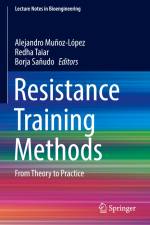
This book reviews the main principles of resistance training, from basics to modern insights. It includes practical ways to develop most of the strength training methods, including monitoring and testing procedures. It merges practical tips with knowledge about the scientific background concerning program and periodization. It describes procedures for special populations, such as elderly or women.Gathering contributions by authoritative researchers and professors in the fields of sport science and biomechanics, this book provides an integrated view of strength training programming, and describes the most important biological factors associated with this type of training. The evidence-based and detailed description of each single mechanism to be trained to enhance performance is covered in depth. Thanks to its strong academic background, an being self-contained, this book offers a valuable reference guide for advanced undergraduate and graduate students in sports science, as well as an inspiring guide for sport and health researchers and professional trainers alike.
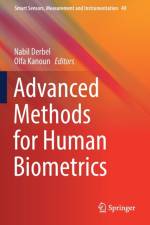
The book highlights recent developments in human biometrics, covering a wide range of methods based on biological signals, image processing, and measurements of human characteristics such as fingerprints and iris or medical characteristics. Human Biometrics is becoming increasingly crucial in forensics security and medicine. They provide a solid basis for identifying individuals based on unique physical characteristics or diseases based on characteristic biomedical measurements. As such, the book offers an essential reference guide about biometry methods for students, engineers, designers, and technicians.
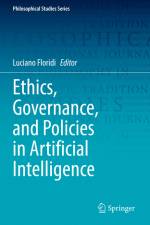
This book offers a synthesis of investigations on the ethics, governance and policies affecting the design, development and deployment of artificial intelligence (AI). Each chapter can be read independently, but the overall structure of the book provides a complementary and detailed understanding of some of the most pressing issues brought about by AI and digital innovation. Given its modular nature, it is a text suitable for readers who wish to gain a reliable orientation about the ethics of AI and for experts who wish to know more about specific areas of the current debate.
This book uses an innovative interdisciplinary approach to explain how communication is a necessary condition for diplomacy in a digital and relationship-driven world. Divided into three parts, it highlights the importance of communication strategies and processes in contemporary society and in current global socio-political events in general, particularly within the field of diplomacy. The first part discusses the main theoretical debates that shaped the central concepts of the project, while the second part of the book presents further practical approaches and examples of diplomatic practice. Lastly, the third part focuses on pedagogical and methodological approaches, which can be useful in diplomacy and communication classes and for the implementation of a European curriculum.This interdisciplinary book will appeal to students, researchers, policy-makers, and practitioners from various disciplines, including international relations, political science, business, and communication.
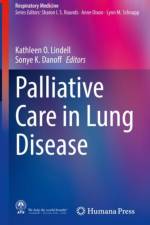
This book details the benefits of palliative care to improve the lives of patients with serious lung disease and their caregivers. Palliative care is specialized medical care for people living with a serious illness. This type of care is focused on providing relief from the symptoms and stress of a serious illness, and is often described as "e;an extra layer of support"e; for patients and their caregivers, as patients with malignant and nonmalignant lung disease experience great symptom burden and have advanced care planning needs.This book has three main objectives:Define the role of palliative care in advanced lung diseaseIncorporate a patient-centered perspective in describing symptom burden and interventions to improve quality of lifeProvide current initiatives to expand evidence-based practice and improve access to palliative careWritten by leading experts in palliative care and respiratory medicine, the chapters seek to answer those objectives by first defining and describing palliative care, advanced lung disease, and inadequate palliative care in this patient population. Patient reported outcomes, quality of life, and interventions to help deal with the psychological toll of serious illness are then detailed, as well as pharmacological and non-pharmacological interventions for symptom management. Detailed information is additionally provided on current research studies and management for several lung diseases, including COPD, ILD, Lung Cancer, Pulmonary Arterial Hypertension, Neuromuscular disease, and pediatric lung disease. The more administrative aspects of palliative care programs are then covered with an example of a specialty palliative care program for advanced lung disease and advice on how to address policy that promotes palliative care. Finally, palliative care's role during a pandemic is thoughtfully considered.This book is an ideal guide for clinicians, nurses, hospital administrators, teachers, students to help them understand and fill unmet care needs that many patients with serious lung disease experience.
This book uses new thinking on precision medicine and the interplay of genetic factors, the microbiome, and external triggers to build on the core concepts of inflammatory bowel disease. It outlines the latest findings in targeting therapies to the individual patient with Crohn's and colitis, management of chronic infections in the setting of immunomodulators and biologics, non-surgical therapy of dysplasia in colitis patients, and redefining and structuring the problematic pouch. In addition, this book features useful chapters dedicated to the economic aspects of IBD in an increasingly constrained healthcare system, as well as the patient experience and the role of subspecialist telemedicine care.Written by specialists and thought leaders in the field, Inflammatory Bowel Disease: Pathogenesis, Diagnosis and Management provides a concise but highly relevant account of the latest thinking and concepts in IBD.
This edited book focuses on speech etiquette, examining the rules that govern communication in various online communities: professional, female, and ethnospecific. The contributors analyze online communication in the Slavic languages Russian, Slovak, Polish, and Belarusian, showing how the concept of speech etiquette differs from the concept of politeness, although both reflect the relationship between people in interaction. Online communities are united on the basis of common informative or phatic illocutions among their participants, and their speech etiquette is manifested in stable forms of conducting discussions - stimulating and responding. Each group has its own ideas of unacceptable speech behavior and approaches to sanitation, and the rules of speech etiquette in each group determine the degree of rapport and distancing between the participants in discourse. The chapters in this book explore how rapport and distance are established through acts such as showing attention to the addressee and increasing his or her communicative status; reducing or increasing the illocutionary power of evaluations and motivations; and evaluating one's own or someone else's speech. The volume will be of interest to researchers studying online communication in such diverse fields as linguistics, sociology, anthropology, programming, and media studies.
This book comprehensively reviews soft tissue, bone, ligament, and nerve injury of the hand and wrist unique to baseball.Organized into three sections, the book begins with a discussion on fractures of the hand and wrist, including the distal radius, scaphoid, and phalanges. Following this, section two examines ligament injuries from the wrist to the thumb. Section three then concludes the book with an analysis of tendon and nerve injuries. Chapters include high-quality images and tables to supplement expertly written text.Unique and thorough, Hand and Wrist Injuries in Baseball is an invaluable resource for orthopedics surgeons and sports medicine specialists, as well as primary care physicians, emergency room physicians, pediatricians, athletic trainers, and therapists.
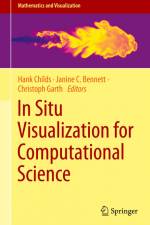
This book provides an overview of the emerging field of in situ visualization, i.e. visualizing simulation data as it is generated. In situ visualization is a processing paradigm in response to recent trends in the development of high-performance computers. It has great promise in its ability to access increased temporal resolution and leverage extensive computational power. However, the paradigm also is widely viewed as limiting when it comes to exploration-oriented use cases. Furthermore, it will require visualization systems to become increasingly complex and constrained in usage. As research efforts on in situ visualization are growing, the state of the art and best practices are rapidly maturing.Specifically, this book contains chapters that reflect state-of-the-art research results and best practices in the area of in situ visualization. Our target audience are researchers and practitioners from the areas of mathematics computational science, high-performance computing, and computer science that work on or with in situ techniques, or desire to do so in future.
Ethical discourse is commonly not a priority in a conventional finance syllabus. Moral sentiments often take a back seat to market sentiments, even in shaping the direction of ethical finance business. This anomaly persists despite growing interest in ethical finance. Taking an interdisciplinary and diverse perspective, this book enriches the evolving definition and scope of ethical finance literature by focusing on actors, products and regulation that shape markets. Considering the gap between theory and practice, this book bridges academic and professional knowledge in unpacking ethical and governance issues in the financial industry. In an effort to include as many viewpoints as possible, regardless of popularity or who holds them, the book editors gathered thoughts from diverse fields, including accounting, economics, ethics, finance, governance, law, management, philosophy and religion. Appealing to academic and non-academic stakeholders with an interest in ethics and finance, this book is the result of and a testament to a distinct educational and public engagement project that included different generations and communities, for future reference.
This book analyzes the changing dynamics of competition and the emergence of deglobalization trends and processes. The authors begin by explaining the role of technology on globalization and its impact on competitive strategy. Then, they present a theoretical framework that outlines the connection between globalization and modern society. The book also delves into the shift toward deglobalization and addresses how the onset of the COVID-10 pandemic has accelerated the process. Concluding with a discussion of how the 4th Industrial Revolution has resulted in new paradigms for business, this book will fill a gap through its investigation of an emerging concept for scholars in international business.
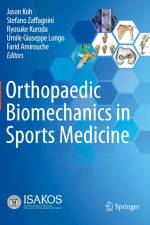
This book presents a fundamental basic overview of orthopedic biomechanics in sports medicine, with a special focus on the current methodologies used in modeling human joints, ligaments, and muscle forces. The first part discusses the principles and materials, including the use of finite element analysis (FEA) to analyze the stress-strain response in the implant-bone interface and design. The second part focuses on joint-specific biomechanics, highlighting the biomechanics of the knee and shoulder joints, their modeling, surgical techniques, and the clinical assessment of joint performance under various kinematic conditions resulting from different repair techniques. Written by international experts working at the cutting edge of their fields, this book is an easy-to-read guide to the fundamentals of biomechanics. It also offers a source of reference for readers wanting to explore new research topics, and is a valuable tool for orthopedic surgeons, residents, and medical students with an interest in orthopedic biomechanics.
This book's point of departure rests on the premises that dimensions of the mainstream inclusive city discourse fail to capture in detail vulnerable clusters of society (being women, children, and the aging), the minority clusters (i.e., the blind, the disabled), and migrants. In addition, it fails to recognize the increase of spatial inequality driven by racial and class differences-a factor that has seen an increase in community violence and protests. The focus on spatial inequality has, for a long time, blind-folded urban authorities to ignore exclusion arising out of the same environments created with a notion of creating inclusivity. Hence this book "e;collapses spatial walls"e; as it seeks to uncover the true perspectives of inclusivity in cities beyond spatial dimensions but within social realms. The depth of this book's enquiry rests on its critical investigation of Southern African cities' through historical epochs of apartheid and colonialism in the region.
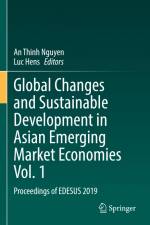
This two-volume set presents the conference papers from the 1st International Conference on Economics, Development and Sustainability (EDESUS 2019), organized by the University of Economics and Business, Vietnam National University, Hanoi. The collection addresses global changes and sustainable development in Vietnam and other emerging market economies in Asia, and covers wider topics such as economics and business (e.g. economic theory, national and international income distribution, macroeconomic policies, sectors of economy, productivity developments, financial market, business governance, bank financing), development and sustainability (e.g. developing process, development policy, public policy, sustainable growth, sustainability tools, sustainable livelihood, sustainable tourism, green growth), and resources and global change (e.g. human resources, natural resources, climate change, globalization, global challenges). The books are of interest to professors, researchers, lecturers, and students in economics and geography, consultants, and decision makers interested in global changes and sustainable development. Volume 1 focuses on economic development in Vietnam and other emerging market economies in Asia. This covers topics such as economics and business (e.g. economic theory, national and international income distribution, macroeconomic policies, sectors of economy, productivity developments, financial market, business governance, bank financing) and development studies (e.g. developing process, development policy, public policy, green growth).
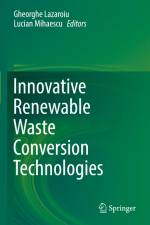
This book investigates innovative solutions to increase the share of renewable engery in the global power mix, with a particular focus on improved and sustainable biomass conversion technologies. To this end, the book deals with an analysis of the generation mix of renewable energies (including biofuels, renewable waste and biogas) in the overall power balance of several countries. In addition, the possibilities of using bioenergy resources in the context of power generation are thoroughly analyzed. As one of the most important ways of converting biomass into energy, the combustion process is analyzed in detail, highlighting the vast potential for the use of innovative biofuels. In this context, a detailed classification of existing biofuels is established, reflecting the relationship between their energy properties and their potential use in industrial facilities. Additionally, the most efficient combustion technologies for the respective applications are discussed.Furthermore, the authors emphasize that the management of renewable waste, both from industry (tannery waste and oils from transport) and agriculture, requires an economic and environmental friendly approach. The challenges of burning various renewable waste fuels and upgrading industrial facilities are discussed, and the ideas and technologies presented in this book contribute to the UN Sustainable Development Goal (SDG) for "e;Affordable and Clean Energy"e;. The book is a useful resource for professionals dealing with current and upcoming activities related to renewable energy combustion, and a good starting point for young researchers.
The first of this two-volume work brings to the fore marketing communication theories and concepts that are prominent in emerging economy contexts, and highlights the opportunities and challenges within these markets. Offering a distinctive meaning and importance to both the practice and the theory of marketing communications in emerging economies, this collection introduces the foundational issues of marketing communications as well as the broader marketing communication environment and how they impact on communication strategy development and implementation. With contributors from diverse disciplines, the book establishes the importance of linking customer value creation, national culture and the management process with the marketing communications strategy. It highlights the critical role of research, the changing trends in marketing communication in the digital age and the communication opportunities for small and large brands. This book is a useful tool for orporate executives, educators, students, policymakers and businesses on marketing communication in emerging markets.
These conference proceedings are the output of one of the first academic events of its nature happening globally, targeting fashion from a communication sciences perspective, including, in a broad sense, cultural heritage studies and marketing. The chapters present theoretical and empirical interdisciplinary work on how various communication practices impact the fashion industry and on societal fashion-related practices and values. The special focus of this volume is how digital transformation is changing the field and its utility to practitioners. Using these academic insights, practitioners can understand the core causes and reasons for trends and developments in the field of fashion communication and marketing.
This book provides up-to-date information on lesser known eating disorders (EDs) and eating related disorders. EDs and eating-related disorders include a highly heterogeneous group of syndromes and symptoms characterized by abnormal eating and weight control behaviors that can appear in all genders and ages. EDs can lead to high rates of morbidity and mortality, especially if they are misdiagnosed and untreated. The risk of underestimation is high for the lesser-known ED, and when unhealthy eating behaviors appear in unusual situations, such as some medical and psychiatric pathologies, adults and the elderly, sexual minorities etc. The volume examines EDs in specific populations (the elderly, males, infants and toddlers, sexual minorities, etc.). Several chapters explore in detail lesser-known EDs (anorexia athletica, avoidant/restrictive food intake disorder, chewing and spitting, EDs by proxy, EDs after bariatric surgery, muscle dysmorphia, night-eating syndrome, nocturnal sleep-related eating disorder, orthorexia nervosa, pica, rumination disorder, etc.). Finally, other chapters address features of unhealthy eating and weight control behaviors associated with medical diseases (achalasia, craniopharyngioma, cystic fibrosis, cyclic vomiting syndrome, diabetes, dysphagia, Kleine-Levin syndrome, Klinefelter syndrome, Parkinson disease, Prader-Willi syndrome, Turner syndrome, etc.)The book will be a valuable resource for all health professionals who work in the fields of psychiatry, clinical psychology, eating disorders, obesity, medicine, clinical nutrition, public health, and prevention, allowing them to broaden their understanding of these disorders, and to enhance their clinical ability to diagnose them.
This book provides a comprehensive, state-of-the-art overview of interventional nephrology. Similar to the previous edition, this text describes a direct approach to clinical problems encountered by the community of care providers who treat chronic kidney disease and dialysis patients. Practical scenarios faced on a day-to-day basis are presented by experts in the field, utilizing the latest scientific information. The book also features updated therapeutic guidelines and fully revised and new chapters.Written by the foremost authorities in the field, Interventional Nephrology: Principles and Practice, Second Edition is a must-have resource for clinicians and practitioners who treat and manage patients with hemodialysis and peritoneal dialysis access problems.
This volume offers new insights into food and culture. Food habits, preferences, and taboos are partially regulated by ecological and material factors - in other words, all food systems are structured and given particular functioning mechanisms by specific societies and cultures, either according to totemic, sacrificial, hygienic-rationalist, aesthetic, or other symbolic logics. This provides much "e;food for thought"e;. The famous expression has never been so appropriate: not only do cultures develop unique practices for the production, treatment and consumption of food, but such practices inevitably end up affecting food-related aspects and spheres that are generally perceived as objectively and materially defined. This book explores such dynamics drawing on various theoretical approaches and analytical methodologies, thus enhancing the cultural reflection on food and, at the same time, helping us see how the study of food itself can help us understand better what we call "e;culture"e;. It will be of interest to anthropologists, philosophers, semioticians and historians of food.
Climate change over the past thousands of years is undeniable, but debate has arisen about its impact on past human societies. This book explores the link between climate and society in ancient worlds, focusing on the ancient economies of western Eurasia and northern Africa from the fourth millennium BCE up to the end of the first millennium CE.This book contributes to the multi-disciplinary debate between scholars working on climate and society from various backgrounds. The chronological boundaries of the book are set by the emergence of complex societies in the Neolithic on the one end and the rise of early-modern states in global political and economic exchange on the other. In order to stimulate comparison across the boundaries of modern periodization, this book ends with demography and climate change in early-modern and modern Italy, a society whose empirical data allows the kind of statistical analysis that is impossible for ancient societies. The book highlights the role of human agency, and the complex interactions between the natural environment and the socio-cultural, political, demographic, and economic infrastructure of any given society. It is intended for a wide audience of scholars and students in ancient economic history, specifically Rome and Late Antiquity.
This book is the result of reflections and work of the Specialty group on neurology in migrants of the World Federation of Neurology. The volume provides a synthesis of migrants' health in relation to the sustainable development goals and the 2030 agenda, and an up-to-date overview on neurological diseases among migrants, refugees and ethnic minorities.The book is composed of both general chapters dealing with the history of migration, the relationship between climate change and migration flows, the migration and neurosciences research and the barriers to migrant's health. Other chapters deal with the migrants' particularities of the common neurological diseases such as cerebrovascular diseases, epilepsy, dementia, movement disorders, multiple sclerosis, headache, functional and mental disorders. In addition, also neurological manifestation of COVID-19 in ethnic minorities and palliative care in migrants are discussed.Neurology in Migrants and Refugees will be useful to neurologists worldwide who can find appropriate knowledge for diagnosis and treatment when facing migrants with neurological disorders which are sometimes difficult to assess in the absence of clinical experience with the migrant population. It will also be very useful for international organizations, policymakers and non-governmental organizations working in the field of health and migration.This book will certainly find an indispensable place in neurological departments libraries and will constitute a basic textbook for teaching neurology taking into account ethnicity, culture and health inequalities in the care of neurological disorders.
Abonner på vårt nyhetsbrev og få rabatter og inspirasjon til din neste leseopplevelse.
Ved å abonnere godtar du vår personvernerklæring.