













Gjør som tusenvis av andre bokelskere
Abonner på vårt nyhetsbrev og få rabatter og inspirasjon til din neste leseopplevelse.
Ved å abonnere godtar du vår personvernerklæring.Du kan når som helst melde deg av våre nyhetsbrev.

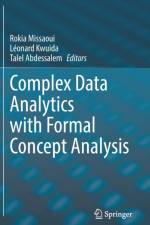
FCA is an important formalism that is associated with a variety of research areas such as lattice theory, knowledge representation, data mining, machine learning, and semantic Web. It is successfully exploited in an increasing number of application domains such as software engineering, information retrieval, social network analysis, and bioinformatics. Its mathematical power comes from its concept lattice formalization in which each element in the lattice captures a formal concept while the whole structure represents a conceptual hierarchy that offers browsing, clustering and association rule mining.Complex data analytics refers to advanced methods and tools for mining and analyzing data with complex structures such as XML/Json data, text and image data, multidimensional data, graphs, sequences and streaming data. It also covers visualization mechanisms used to highlight the discovered knowledge.This edited book examines a set of important and relevant research directions in complex data management, and updates the contribution of the FCA community in analyzing complex and large data such as knowledge graphs and interlinked contexts. For example, Formal Concept Analysis and some of its extensions are exploited, revisited and coupled with recent processing parallel and distributed paradigms to maximize the benefits in analyzing large data.
This book presents selected, peer-reviewed contributions from the 9th International Conference on Experimental Vibration Analysis for Civil Engineering Structures (EVACES 2021), organized by the University of Tokyo and Saitama University from September 17-20, 2021 on the Hongo campus of the University of Tokyo, and hosted in an online format. The event brought together engineers, scientists, researchers, and practitioners, providing a forum for discussing and disseminating the latest developments and achievements in all major aspects of dynamic testing for civil engineering structures, including instrumentation, sources of excitation, data analysis, system identification, monitoring and condition assessment, in-situ and laboratory experiments, codes and standards, and vibration mitigation. The topics of EVACES 2021 included but were not limited to: damage identification and structural health monitoring; testing, sensing and modeling; vibration isolation and control; system and model identification; coupled dynamical systems (including human-structure, vehicle-structure, and soil-structure interaction); and application of advanced techniques involving the Internet of Things, robot, UAV, big data and artificial intelligence.
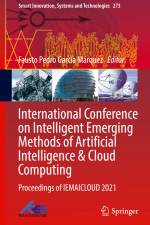
This book consists of different accepted papers of the conference. Firstly, the artificial intelligence and its application-related topics are provided. Secondly, cloud computing and related topics are also provided. The book has been designed to help research organisations and business leaders from across industries to transform their organisations into AI-driven disruptors. The utility of the technology in the face of massive globally interconnected complexity is explored. The significant characteristics of IEMAICLOUD are the promotion of inevitable dialogue between scientists, researchers, engineers, corporate's and scholar's students to mitigate the gap between academia, industry and governmental ethics which has been fostered through keynote speeches, workshops, panel discussion and oral presentations by eminent researchers in relevant field. The industry personnel depict cutting-edge researches in artificial intelligence and cloud computing to convey academia regarding real-time scenario and practical findings. Conference has been well equipped with talks by industry experts on the state of the art in computer science, lectures by eminent scientists designed to inspire and inform presentations by innovative researchers coming from 20+ countries from Europe and abroad. There has been discussion-oriented sessions and networking breaks to enable collaborations.Papers consist abstract, result, discussions and conclusions by the help of different tables and diagrams.
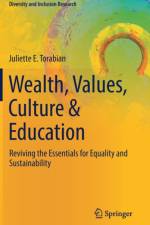
"e;The book on offer here is fascinating. I do not think it is proper to classify it as 'philosophy' or 'sociology' or 'comparative education'. It is a work sui generis. Its cultural and historical range is extraordinary. Its illustrations are themselves arresting. Its literature is well outside disciplinary conventions and ranges across a number of languages. Mirabile dictu!"e; Professor Robert CowenHow have modern societies arrived at assuming:nbsp; Culture is non-essential!nbsp; Higher education is to train economically but not socio-politically active & engaged citizens!nbsp; Economic wealth is the most important and prominent form of individual and national assets!nbsp; Precariousness and socio-economic gaps are due to individuals' skills and capacities but not the failure of legal, political, and social systems!nbsp; Freedom and equality are about "e;choices in having"e; but not necessarily about "e;ways of being and becoming"e;!Torabian argues these assumptions have not been constructed overnight and that COVID-19 has simply revealed their long-term fabrication and impact since the 1970s. This book is a fascinating voyage from the Middle Ages to today. It travels across different socio-cultural and political contexts drawing on arts, literary works, music, philosophical thoughts, economic and social concepts. It explores value systems and perceptions of wealth, poverty, and inequality and depicts the mutual impact and shifting role of (higher) education and culture and societies- particularly when related to social revolutions, political participation, and collective quests for equality and justice across time and spaces.Examining instrumentalisation of culture and education by the powerful elite, Torabian delineates mechanisms through which values are fabricated and imposed on the masses. Drawing on some catching examples, she explains the authoritarian elite do so through visible rewards and punishments, while in capitalist societies power remains invisible and indirect. In both contexts, though, she skilfully demonstrates, the powerful groups transform the role and meaning of culture and higher education to facilitate normalisation and internalisation of their fabricated value system among the masses.Consequently, Torabian celebrates the recently accelerated quest for socio-ecological justice and sustainability across societies as a fortunate cosmopolitan shift. This, she believes, announces a rupture with the dominant capitalist ideology that has reigned the world since the 1970s through celebrity culture, media, propaganda, and by reducing higher education to an economic activity. The pursuit of a socio-ecological contract based on fairness, justice, and participation, Torabian argues, requires a renewed value system in which the socio-political role of culture and higher education can be revitalised. To this end, she introduces an innovative framework, i.e., the Big Wealth Pie (the topic of the author's upcoming book in this series) and proposes using transgressive education, resistance pedagogy, and teaching ignorance. She reckons such a social contract can be a global reality if "e;being"e; replaces the capitalist ideology of "e;having"e;; a process that can be started and reified by questioning what is or is not essential in socio-ecologically just societies. The book is thought-provoking and timely in questioning values and social institutions that have normalised precariousness, inequality, and poverty within a consumerist logic.
This book is the first evidence-based evaluation of the present limitations and controversies in clear aligner therapy. It discusses problems in software, mechanotherapy, attachment optimization, interceptive treatment, the mandibular advancement appliance, complex movements, interproximal reduction, extraction therapy, deep bite/open bite correction, finishing, and overcorrection. Unlike current available texts on clear aligner therapy, this book features a nonpartisan, critical analysis of the problems of the technique and demonstrates their clinical implications. Unique solutions to the current limitations of clear aligner therapy are presented, and systematic strategies and protocols for addressing a vast range and complexity of malocclusions commonly confronted by practitioners are introduced. The book helps orthodontists, dentists, dental students, dental educators, technicians, and bioengineers to investigate prevailing misconceptions, and to address significant controversies and dilemmas in clear aligner therapy.
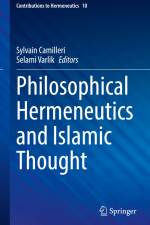
This book investigates the methodological issues raised by the encounter between Islamic thought and contemporary philosophical hermeneutics. It features essays that examine why and how current Muslim thinkers refer to Continental philosophy. The contributors put the universality of the hermeneutic order to the test with three different approaches.The first looks at exegetical aspects. It addresses contemporary thinkers from the Islamicate world who have engaged critically or not with main representatives or key concepts of philosophical hermeneutics. The second presents an interpretative analysis. The essays here present attempts at using philosophical hermeneutics in order to develop new interpretations of canonical or traditional ensembles of texts such as the Qur'an and the Hadith as well as legal, spiritual, and philosophical corpuses from the Islamicate world. The third looks at different political and critical issues.The clear and sound reference to religion of Islamic thought makes its entanglement with philosophical hermeneutics a burning challenge for all parties involved. Is it true, as some contend, that philosophical hermeneutics can help interpret Islamic thought anew? This book reveals how the two philosophies are likely to expand each other's horizons and influence each other's conceptual frameworks. It features revised papers from an International Conference.
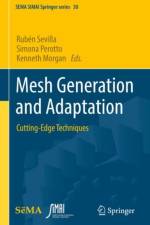
The developments in mesh generation are usually driven by the needs of new applications and/or novel algorithms. The last decade has seen a renewed interest in mesh generation and adaptation by the computational engineering community, due to the challenges introduced by complex industrial problems.Another common challenge is the need to handle complex geometries. Nowadays, it is becoming obvious that geometry should be persistent throughout the whole simulation process. Several methodologies that can carry the geometric information throughout the simulation stage are available, but due to the novelty of these methods, the generation of suitable meshes for these techniques is still the main obstacle for the industrial uptake of this technology.This book will cover different aspects of mesh generation and adaptation, with particular emphasis on cutting-edge mesh generation techniques for advanced discretisation methods and complex geometries.
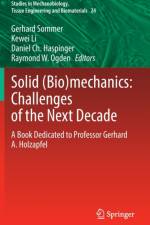
This book offers a comprehensive and timely overview of the latest developments in the field of biomechanics and extensive knowledge of tissue structure, function, and modeling. Gathering chapters written by authoritative scientists, it reports on a range of continuum and computational models of solids, and related experimental works, for biomechanical applications. It discusses cutting-edge advances such as constitutive modeling and computational simulation of biological tissues and organs under physiological and pathological conditions, and their mechanical characterization. It covers innovative studies on arteries, heart, valvular tissue, and thrombus, brain tumor, muscle, liver, kidney, and stomach, among others. Written in honor of Professor Gerhard A. Holzapfel, the book provides specialized readers with a thorough and timely overview of different types of modeling in biomechanics, and current knowledge about biological structures and function.
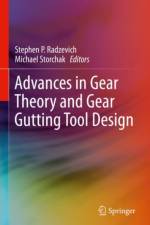
This book was written by a team of leading gear experts from across the globe, including contributions from USA, Germany, Poland, China, Russia, Ukraine, and Belarus. It provides readers with the latest accomplishments in the gear theory and gear cutting tool design. Specialists can apply competencies gained from this book to quality control in gear manufacture, as well as to the conditions of their production. The book begins with a detailed discussion of the kinematics and geometry of geometrically-accurate gears and gear systems. This is followed by an analysis of state-of-the-art gear manufacturing methods with focus on gear finishing operations. Novel designs of gear transmission systems as well as gear theory and gear cutting tool design are also covered.
This unique book is at the nexus of modern software programming practices and electrochemical process engineering. It is the authoritative text on developing open source software for many applications, including:* fuel cells;* electrolyzers; and* batteries.Written by experts in the field in the open source computational fluid dynamics (CFD) code suite OpenFOAM, this book is intended for process engineering professionals developing practical electrochemical designs for industry, as well as researchers focused on finding tomorrow's answers today. The book covers everything from micro-scale to cell-scale to stack-scale models, with numerous illustrations and programming examples. Starting from a clear explanation of electrochemical processes and simple illustrative examples, the book progresses in complexity through a range of diverse applications. After reading this book, the reader is able to take command and control of model development as an expert. The book is aimed at all engineers and scientists with basic knowledge of calculus and programming in C++.
This biography provides an understanding of William Bateson as well as a reconciliation of diverging views (e.g. the hierarchical thinking of Gould and the genocentrism of George Williams and Richard Dawkins). Evolutionists may thus, at long last, present a unified front to their creationist opponents. The pressing need for this text is apparent from the high percentages reported not to believe in evolution and the growth of the so-called "e;intelligent design"e; movement.
This book provides a detailed description of laryngeal procedures performed under topical anesthesia in an office setting. The last two decades have witnessed a major evolution in laryngology practice toward office-based surgery, thus reducing the risk of general anesthesia and containing healthcare costs while also hastening recovery rates from the time of diagnosis. Beginning with a comprehensive review of the anatomy and physiology of phonation, the book then provides systematic assessment of patients with voice dysfunction secondary to structural and functional laryngeal disorders. It offers detailed instructions on patient selection, safety, tolerance, and proper administration of topical anesthesia. The book supplies detailed descriptions of the various surgical techniques commonly used in office-based laryngeal surgery using color illustrations, photographs and videos. Different surgical approaches are presented including transcervical, transnasal and per-oral techniques. The book also supplies a thorough review of the literature on the current status of the most commonly performed office-based laryngeal surgeries including patient care, surgical outcome, and complications.Office-Based Laryngeal Surgery will help laryngologists operating on awake patients in an office setting to be both well-equipped and well-informed.
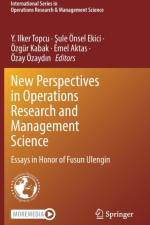
This book presents innovative operations research applications in business, specifically industrial engineering and its sub-disciplines. It investigates new perspectives in operations research and management science with regard to research methods, the research context, and industrial engineering, offering readers a broad range of new approaches to management problems. The book features the latest work of researchers who have worked with Professor Fusun Ulengin or built upon her work in their academic careers.Written in honor of Prof. Ulengin, this book was edited by her former Ph.D. students, who are now experts in operations research, multiple criteria decision making, competitiveness, logistics, and supply chain management.Prof. Ulengin's impact in academia is visible in the range of topics and methodologies featured in this book: Location and transportation problems, competitiveness of nations, food supply chains, debt collection, mathematical modelling, multiple criteria decision making, data envelopment analysis, random forests, and Bayesian networks.
This is the first international and interdisciplinary handbook to offer a comprehensive and an in-depth overview of findings from contemporary research, theory, and practice in early childhood language education in various parts of the world and with different populations. The contributions by leading scholars and practitioners are structured to give a survey of the topic, highlight its importance, and provide a critical stance. The book covers preschool ages, and looks at children belonging to diverse ethno-linguistic groups and experiencing different histories and pathways of their socio-linguistic and socio-cultural development and early education. The languages under the scope of this handbook are identified by the contributors as immigrant languages, indigenous, endangered, heritage, regional, minority, majority, and marginalized, as well as foreign and second languages, all of which are discussed in relation to early language education as the key concept of the handbook. In this volume, "e;early language education"e; will refer to any kind of setting, both formal and informal (e.g. nursery, kindergarten, early childhood education centers, complementary early schooling etc.) in which language learning within a context of children's sociolinguistic diversity takes place before elementary school.
Advances in Trichoderma Biology for Agricultural Applications covers the beneficial properties of Trichoderma in enhancing global agricultural productivity. Trichoderma are biotechnologically significant fungi, being widely used both agriculturally and industrially. In many cases Trichoderma are also a potential drug source of clinical importance. In recent years, driven by advances in genetics and genomics, research on these fungi has opened new avenues for its various applications. This book covers i) Current state of Trichoderma taxonomy, and species identification, ii) Trichoderma and plant-pathogenic fungi interactions, iii) Trichoderma interactions with plants, including rhizosphere competence of Trichoderma, antagonistic potentials, plant growth promotion, and management of various abiotic stresses in plants, iv) Practical aspects of Trichoderma commercialization in agriculture, v) Biosynthesis of metal-based nanoparticles and its application, and vi) Negative impact of Trichoderma strains in the environments.Reading this book should kindle further discussions among researchers working in fungal biotechnology, microbiology, agriculture, environmental science, forestry, and other allied subjects and thus lead to a broader scope of Trichoderma-based products and technologies. The knowledge shared in this book should also provide a warning on the potential risks associated with Trichoderma.
How does consciousness emerge from a brain that consists only of physical matter and electrical / chemical reactions? The deep mysteries of consciousness have plagued philosophers and scientists for thousands of years. This book approaches the problem through scientific studies that shed light on the neural mechanism of consciousness, and furthermore, delves into the possibility of artificial consciousness, a phenomenon that may ultimately solve the mystery. Finally, two key suggestions made in the book, namely, a method to test machine consciousness and a theory hypothesizing that consciousness emerges from a neural algorithm, reveal a novel and credible pathway to mind-uploading.The original Japanese version of this book has become a best-seller in popular neuroscience and has even led to a neurotech startup for mind-uploading.
The book provides a global perspective of local government response towards the COVID-19 pandemic through the analysis of a sample of countries in all continents. It examines the responses of local government, as well as the responses local government developed in articulation with other tiers of government and with civil society organizations, and explores the social, economic and policy impacts of the pandemic. The book offers an innovative contribution on the role of local government during the pandemic and discusses lessons for the future. The COVID-19 pandemic had a global impact on public health, in the well-being of citizens, in the economy, on civic life, in the provision of public services, and in the governance of cities and other human settlements, although in an uneven form across countries, cities and local communities. Cities and local governments have been acting decisively to apply the policy measures defined at national level to the specific local conditions. COVID-19 has exposed the inadequacy of the crisis response infrastructures and policies at both national and local levels in these countries as well as in many others across the world. But it also exposed much broader and deeper weaknesses that result from how societies are organized, namely the insecure life a substantial proportion of citizens have, as a result of economic and social policies followed in previous decades, which accentuated the impacts of the lockdown measures on employment, income, housing, among a myriad of other social dimensions. Besides the analysis of how governments, and local government, responded to the public health issues raised by the spread of the virus, the book deals also with the diversity of responses local governments have adopted and implemented in the countries, regions, cities and metropolitan areas. The analysis of these policy responses indicates that previously unthinkable policies can surprisingly be implemented at both national and local levels.
Der Zugang zur Linearen Algebra ist in diesem Buch weniger algebraisch als in anderen Quellen; der Begriff des Korpers wird erst relativ spat eingefuhrt. Stattdessen werden die Grundlagen der Linearen Algebra (Vektorraume, lineare Unabhangigkeit, Basen, lineare Abbildungen, Matrizen, Determinanten, Eigenwerte, usw.) zuerst nur im reellen Fall diskutiert.Schwerpunkt im zweiten Teil sind Innenproduktraume und lineare Abbildungen darauf. Hier werden insbesondere die Singularwertzerlegung und Elemente der Matrix-Analysis besprochen, aber auch Anwendungen in der Geometrie kommen nicht zu kurz. Zahlreiche Beispiele und Hinweise auf aktuelle Themen runden dieses ansprechende und leserfreundliche Lehrbuch ab.
This book features state-of-the-art contributions from two well-established conferences: Changeable, Agile, Reconfigurable and Virtual Production Conference (CARV2020) and Mass Customization and Personalization Conference (MCPC2020). Together, they focus on the joint design, development, and management of products, production systems, and business for sustainable customization and personalization. The book covers a large range of topics within this domain, ranging from industrial success factors to original contributions within the field.
This book provides recent understanding about the sustainable development in agriculture. It includes information regarding new approaches for sustainable development in agriculture, horticulture and fisheries. It examines the effect of climate change and provides information on climate smart practices. In addition, some important aspects like quality seed production, role of bioinoculants, on-farm water harvesting, non-thermal processing of food, importance of water use in organic agriculture have also been discussed. It also presents in detail plant disease aspect and their management strategies. This book aims to provide an overall understanding of all aspects related to the study of environment resources, its protection for sustainable development. To meet the growing food demand of the over nine billion people who will exist by 2050 and the expected dietary changes, agriculture will need to produce 60 percent more food globally in the same period. The goal of sustainable agriculture is to meet society's food and textile needs in the present without compromising the ability of future generations to meet their own needs. Practitioners of sustainable agriculture seek to integrate three main objectives into their work: a healthy environment, economic profitability, and social and economic equity. Every person involved in the food system growers, food processors, distributors, retailers, consumers, and waste managers can play a role in ensuring a sustainable agricultural system.
This book examines central aspects of the new technologies and the legal questions raised by them from both an international and an inter-disciplinary perspective. The technology revolution and the global networking of IT systems pose enormous challenges for the law. Current areas of discussion relate to autonomous systems, big data and issues surrounding legal tech. Ensuring data protection and IT security as well as the creation of a legal framework for the new technology as a whole can only be achieved through international and inter-disciplinary co-operation.The team of authors is made up of experienced, internationally renowned experts as well as young researchers and professionals who give valuable insights from numerous different jurisdictions. This book is written for jurists and those responsible for technology in public authorities and companies as well as practising lawyers and researchers.
This book contains selected papers from International Symposium for Production Research 2021, held on October 7-9, 2021, online, Turkey. The book reports recent advances in production engineering and operations. It explores topics including production research;production management; operations management;industry 4.0;industrial engineering;mechanical engineering;engineering management; andoperational research.Presenting real-life applications, case studies, and mathematical models, this book is of interest to researchers, academics, and practitioners in the field of production and operation engineering. It provides both the results of recent research and practical solutions to real-world problems.
This book provides an up-to-date revision of materialism's central tenets, its main varieties, and the place of materialistic philosophy vis a vis scientific knowledge.Materialism has been the subject of extensive and rich controversies since Robert Boyle introduced the term for the first time in the 17th century. But what is materialism and what can it oi er today? The term is usually defined as the worldview according to which everything real is material. Nevertheless, there is no philosophical consensus about whether the meaning of matter can be enlarged beyond the physical. As a consequence, materialism is often defined in stark exclusive and reductionist terms: whatever exists is either physical or ontologically reducible to it. This conception, if consistent, mutilates reality, excluding the ontological significance of political, economic, sociocultural, anthropological and psychological realities. Starting from a new history of materialism, the present book focuses on the central ontological and epistemological debates aroused by today's leading materialist approaches, including some little known to an anglophone readership. The key concepts of matter, system, emergence, space and time, life, mind, and software are checked over and updated. Controversial issues such as the nature of mathematics and the place of reductionism are also discussed from different materialist approaches. As a result, materialism emerges as a powerful, indispensable scientifically-supported worldview with a surprising wealth of nuances and possibilities.
This book showcases state-of-the-art advances in service science and related fields of research, education, and practice. It presents emerging technologies and applications in contexts ranging from healthcare, energy, finance, and information technology to transportation, sports, logistics, and public services. Regardless of its size and service, every service organization is a service system. Due to the socio-technical nature of service systems, a systems approach must be adopted in order to design, develop and deliver services aimed at meeting end users' utilitarian and socio-psychological needs alike. Understanding services and service systems often requires combining multiple methods to consider how interactions between people, technologies, organizations and information create value under various conditions. The papers in this volume highlight a host of ways to approach these challenges in service science and are based on submissions to the 2021 INFORMS Conference on Service Science.
This highly illustrated textbook provides an essential overview on RNA architecture and function, it offers insights into the RNA basics and also explains novel RNA technologies, such as CRISPR-Cas and their applications. In addition, the mRNA based vaccine technology, which has long been tested, also before the COVID-19 pandemic, is discussed and students receive a basic understanding of this important medical application.The textbook is written by Prof. Grover in collaboration with her students and has an easily accessible style. The book provides a great tool for young researchers and students in biology, biomedical engineering or biochemistry, looking for a compact introduction or refresher work on RNA, including the newest findings and technologies. It is an ideal starter to learn about several RNA specific topics and to research them further.
The concepts for Industry 4.0 and the Industrial Internet of Things (IIoT) will fundamentally change supply chains, production processes and industries. Intelligent technologies such as IoT, edge and cloud computing, big data, artificial intelligence and digital assistance systems are drivers of this change. This book provides a comprehensive overview of IoT use cases with illustrative practical examples of how digitization or innovation projects can be successfully implemented. It takes into consideration that processes are getting more flexible and efficient, and new digital technologies allow seamless, location-independent communication in near real time between things, processes and people through the digitization of physical objects and processes. Considering these changes, the book provides a guideline on how companies should position themselves for the future with industrial IoT in order to still play a decisive role in the industry in a few years' time. The book is aimed at both decision-makers and practitioners who, on the one hand, recognize the opportunities and possibilities for their company and, on the other hand, want to learn how to use the appropriate technologies. With this in mind it will be valuable for entrepreneurs, managers, architects and also developers in the field of Industry 4.0.
This book contains an inclusive compilation of perspectives about the Arctic Ocean with contributions that extend from Indigenous residents and early career scientists to Foreign Ministers, involving perspectives across the spectrum of subnational-national-international jurisdictions. The Arctic Ocean is being transformed with global climate warming into a seasonally ice-free sea, creating challenges as well as opportunities that operate short-to-long term, underscoring the necessity to make informed decisions across a continuum of urgencies from security to sustainability time scales. The Arctic Ocean offers a case study with lessons that are especially profound at this moment when humankind is exposed to a pandemic, awakening a common interest in survival across our globally-interconnected civilization unlike any period since the Second World War. This second volume in the Informed Decisionmaking for Sustainability series reveals that building global inclusion involves common interests to address changes effectively "e;for the benefit of all on Earth across generations."e;
This book considers theoretical issues of the ethnocultural landscape concepts at large as well as examples of its practical application in ethnic communities of Siberia. It reveals the patterns of the processes of penetration, settlement, development and adaptation of Siberian populations from Paleolithic time to Russian colonization in the era of the Russian Empire, during Soviet modernization and in the face of modern challenges. The authors consider the principal interactions (character, stages, conditions), system-related evidence and phenomena that determine the diverse specifics and multidirectional vectors of a change in the ethnic (social, cultural, economic, legal) presence in large subregions of Siberia in the mirror of various theoretical paradigms.This transdisciplinary volume appeals to researchers, lecturers and students in the fields of geography, history, philosophy, anthropology, ecology, archaeology and interfaces to many other disciplines.
This second edition offers a fully revised and updated work on a rapidly growing field of knowledge, and was prepared by two experts whose goal was to explain the molecular basis of mosaic skin disorders in a language that is accessible for practicing physicians and medical students alike. It presents a timely and comprehensive overview of the strikingly manifold patterns and peculiarities of mosaic skin disorders in a straightforward, reader-friendly way that will help physicians to further improve genetic counseling and treatment outcomes.The first two parts of the book are devoted to the mechanisms and patterns of cutaneous mosaicism, and include an explanation of genomic and epigenetic mosaicism and a description of the archetypical segmental patterns including the lines of Blaschko and the flag-like, phylloid and lateralization pattern, the non-segmental pattern of large congenital melanocytic nevi, and the sash-like arrangement as noted in a particular type of cutis tricolor. The concept of lethal mutations surviving as mosaics has now been confirmed by molecular analysis in many sporadically occurring phenotypes. The difference between monoallelic and biallelic traits has deepened our understanding of hereditary mosaics, especially of multiple benign skin tumors. Moreover, recognition of the fundamental difference between the simple segmental and the superimposed types of mosaicism is important for the purpose of genetic counseling. In the third part, the various mosaic skin disorders are examined in depth, including nevi, didymotic disorders, other binary genodermatoses, mosaic manifestations of autosomal skin disorders, and nevoid skin disorders such as phenotypes reflecting functional X-chromosome mosaicism or a superimposed mosaic manifestation of common skin diseases with a polygenic background. Reader-friendly and clearly structured, Mosaicism in Human Skin will appeal to both experienced dermatologists and residents in training, as well as to medical geneticists and pediatricians.
Abonner på vårt nyhetsbrev og få rabatter og inspirasjon til din neste leseopplevelse.
Ved å abonnere godtar du vår personvernerklæring.