











Gjør som tusenvis av andre bokelskere
Abonner på vårt nyhetsbrev og få rabatter og inspirasjon til din neste leseopplevelse.
Ved å abonnere godtar du vår personvernerklæring.Du kan når som helst melde deg av våre nyhetsbrev.

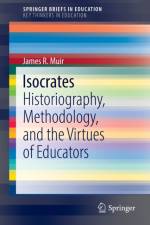
Isocrates is one of the most remarkable and influential figures in the history of human thought. The influence of his ideas in the history of historical writing, rhetoric, the visual arts, music, religion and theology, political science, philosophy and, above all, educational philosophy and practice in Europe, Australia, North America, North Africa, and the Middle East are well established and widely known.This book argues careful study of the educational philosophy of Isocrates and its legacy can contribute to an improved understanding of the historiography of educational thought, his distinctive normative methodology in both political and educational philosophy, and his arguments about the primary importance of the virtues of self-knowledge and realistic self-appraisal for educational philosophers and practitioners.At a time when educational philosophy has an increasingly precarious academic existence and educationists are actively seeking new historiographical and methodological approaches to the philosophical study of education, there is much to be gained by recovering and reevaluating the historiography and normative methodology of Isocrates and the role they play in educational discourse and practice today.
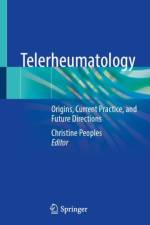
This book details the practice of telerheumatology. Telemedicine is defined as the delivery of healthcare and the exchange of healthcare information across distances. Following, telerheumatology is the delivery of rheumatology care through telemedicine. There exists an increasing demand from patients, caregivers, and healthcare systems for access to academic specialists through telemedicine. This has been the case for the past several years and the demand has only increased with the ongoing COVID-19 pandemic. There is currently a lack of rheumatologists in rural areas and that is expected to spread to a general lack by 2025. Telerheumatology offers an excellent and timely solution to fill these gaps and provide care.Telerheumatology care has been shown to be feasible and quite effective. The current COVID-19 pandemic has thrust the concept of telemedicine into the spotlight. However, not all telerheumatology care is the same and there exists many nuances and differences when examining telerheumatology care across the United States and the world. After comprehensively reviewing the origins of telerheumatology, this work defines in detail the current practice of telerheumatology, along with the specific impact of the COVID-19 pandemic and all applications of telerheumatology. Expert authors also provide a detailed roadmap for providers to initiate, sustain, and grow a telerheumatology program. The book concludes by covering future directions of telerheumatology, including areas for expansion, improvement, and innovation.After reading this work, the editor and all the contributing authors hope that it will inspire, provoke thought and discussion, and lead to increased adaptation of providing telerheumatology care by rheumatologists and rheumatology providers.
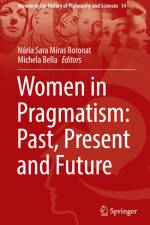
This book offers a selection of the papers of the Women in Pragmatism International Conference held at the University of Barcelona in January 2020. The conference gathered women and non-binary scholars from twelve different countries. This was the first pragmatist conference organized entirely by women and non-binary persons. It has initiated a stable network of mentoring and support analogous to other women philosophers' organizations. The book provides paths to reconstruct the roots of pragmatism, integrating the works of women pragmatists of the past and linking them to the current developments of feminist and pragmatist topics. Scholars of different countries, status, and backgrounds serve as a powerful example of the trend toward interdisciplinary cooperation and versatility we might expect for the future of pragmatism. The book is of interest for scholars interested in both pragmatism and feminism, from various perspectives ranging from psychology to semiotics, logic, and sociology, wishing to expand their horizons and understand their relevant interactions.
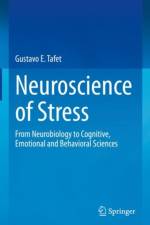
This textbook provides an introduction to the interdisciplinary study of stress, helping students and professionals understand the main neurobiological and psychological causes and consequences of stress in human beings. It's aimed at understanding the concept of stress at different levels, from the impact of environmental stressors to its processing in the brain, and from the neural mechanisms involved in this processing to the expression of different adaptive responses. All these neural mechanisms are clearly explained according to different levels of complexity, from the neurobiological level, including the cellular and molecular mechanisms, to the psychological level, including the cognitive and emotional processing, and behavioral expressions.The whole content is described in a very comprehensive manner, accompanied with descriptive graphics to clearly illustrate every detail, therefore allowing a full integration of all the covered concepts. In addition, clinical expressions of stress, such as mood and anxiety disorders, are also covered in detail, including an overview of different factors of vulnerability and resilience, therefore providing a unique and fundamental insight of this interdisciplinary field. Given its interdisciplinary approach, Neuroscience of Stress: From Neurobiology to Cognitive, Emotional and Behavioral Sciences will provide a comprehensive and clear introduction to the study of stress to students and professionals from different fields of the behavioral and health sciences. It will serve as a valuable text for adoption in classes of a wide range of graduate courses dealing with mental health and well-being, in areas such as health and clinical psychology, health promotion and disease prevention, psychiatry and behavioral medicine, among others.
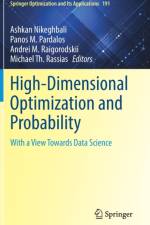
This volume presents extensive research devoted to a broad spectrum of mathematics with emphasis on interdisciplinary aspects of Optimization and Probability. Chapters also emphasize applications to Data Science, a timely field with a high impact in our modern society. The discussion presents modern, state-of-the-art, research results and advances in areas including non-convex optimization, decentralized distributed convex optimization, topics on surrogate-based reduced dimension global optimization in process systems engineering, the projection of a point onto a convex set, optimal sampling for learning sparse approximations in high dimensions, the split feasibility problem, higher order embeddings, codifferentials and quasidifferentials of the expectation of nonsmooth random integrands, adjoint circuit chains associated with a random walk, analysis of the trade-off between sample size and precision in truncated ordinary least squares, spatial deep learning, efficient location-based tracking for IoT devices using compressive sensing and machine learning techniques, and nonsmooth mathematical programs with vanishing constraints in Banach spaces.The book is a valuable source for graduate students as well as researchers working on Optimization, Probability and their various interconnections with a variety of other areas.Chapter 12 is available open access under a Creative Commons Attribution 4.0 International License via link.springer.com.
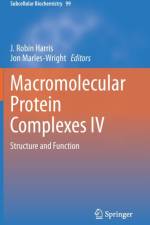
This book covers the latest findings of a wide variety of viral, prokaryotic and eukaryotic macromolecular protein complexes and builds upon the solid macromolecular foundations established by previous volumes of the Subcellular Biochemistry series. Thus, an almost encyclopaedic coverage of the broad field of protein complex structure and function has been established. The 17 interesting chapters included in this book have been organised into four sections: Soluble Protein Complexes, Membrane Protein Complexes, Fibrous Protein Complexes and Viral Protein Complexes. Significant topics present here are: Fatty Acid Synthase, the Fork Protection Complex, Ribonucleotide Reductase, the Kinetochore, G proteins, the FtsEX Complex, the Kainate Receptor, the Photosystem I-antenna, the Mycobacterial Arabinofuranosyltransferases, the the Bacterial Flagellum, the Actomyosin Complex, Motile Cilia, SLS Collagen Polymorphic Structures, and the Reovirus Capsid and Polymerase. Up-dates/expansion of chapter topics present in earlier volumes are now included in chapters here, e.g., those on Ferritin-like proteins and the Multi-tRNA Synthetase. The book is richly illustrated throughout, the result of an impressive integration of structural data from X-ray crystallography and cryo-electron microscopy. The functional aspects of protein-protein interactions are also given a high priority.
A very handy practical book written by French doctors specialised in disaster medicine, this guide offers their core experience condensed in 50 small, easily digestible chapters. Each chapter is designed to enable the reader to "e;know"e;, "e;understand"e;, and learn what to "e;do"e; in the concerned situation, ensuring the crucial information is easily on hand and available.Facing disasters, whether natural or man-made, technological or social, what are the risks and the consequences of such hazards on victims? What kind of care to provide? How to get organised, to have the appropriate resources, and to protect oneself as a responder? The French emergency and healthcare preparedness has followed a unique path. The responding medical doctors have followed in the footsteps of Dominique Larrey, a military surgeon and the father of emergency medicine. For him, the on-scene presence of doctors is paramount to organise the entire healthcare and emergency response, an innovative method that has proven its efficacy. This book is intended for all healthcare and emergency staff, doctors, paramedics or first aiders in ambulances or in emergency services who might come to deal with a massive influx of injured, poisoned, or traumatised victims. The management of multiple concomitant emergencies requires specific know-how and skills. May this guide contribute to the dissemination of a validated French know-how and thus to save lives and alleviate suffering.
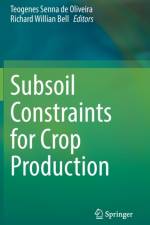
This book will address the major subsoil physical and chemical constraints and their implications to crop production; Plant growth is often restricted by adverse physical and chemical properties of subsoils yet these limitations are not revealed by testing surface soils and hence their significance in crop management is often overlooked. The major constraints can be physical or chemical. Physical limitations such as poor/nil subsoil structure, sandy subsoils that do not provide adequate water or gravelly subsoils and, etc. On the other hand, chemical constraints include acidity/alkalinity, high extractable Al or Mn, low nutrient availability, salts, boron toxicity and pyritic subsoils. Some of these constraints are inherent properties of the soil profile while others are induced by crop and soil management practices. This aim of this book is to define the constraints and discuss amelioration practices and benefits for crop production. This book will be of interest to readers involved with agriculture and soil sciences in laboratory, applied or classroom settings.
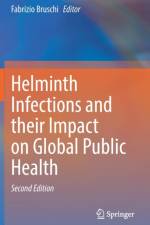
This is a thoroughly revised edition of a well-received reference work on helminthiases and their impact on worldwide public health. The carefully presented collection covers both common and neglected helminth infections. Readers will discover an up-date overview to helminth epidemiology (including molecular typing), specific biological, immunological and immunopathological aspects, diagnosis and latest perspectives of control. New contributions give particular attention to economic consequences of helminthiases, deworming programs and future public health approaches, as well as most recent findings in host immune responses.Helminths are long-lived multicellular organisms that have co-evolved with humans over many thousands of years. They are responsible for infections which affect around one fourth of the human population, at global level. Despite the huge efforts in research during the last years, effective control of helminth infections is still far from optimal standards and the resulting diseases remain neglected.The highly readable link of parasitological background and clinical application makes this book a valuable read not only for parasitologists but also physicians and medical students, health professionals as well as experts in public health issues.Moreover, all readers concerned with combating neglected parasitoses towards the Sustainable Development Goal SDG 3 (Good Health and Well-being) will understand the significance of this renewed volume.
This book explains and focuses on analysis of electric circuits using an up-to-date software package. The book is filled with examples that students will see throughout a standard electric circuit course. This book is a good source to accompany and complete theoretical work of professors. The author provides a single-source for anyone who needs to analyse an electric circuit.
This book is a practical guide for advocates interested in the representation of victims before the International Criminal Court (ICC). It has been developed by experts responsible for the advocacy training of the International Criminal Court's List of Counsel members. Written in a readily accessible style, this guide provides a firm grounding in relevant legal doctrine, essential advocacy techniques and valuable multidisciplinary perspectives. Drawing upon global expertise from legal practitioners, specialist advocacy trainers and multi-disciplinary writers, this book addresses both practical considerations and key challenges faced by ICC victim advocates. These include issues such as gender, child victims, victims of sexual violence, special need victims and victims who are themselves implicated in international crimes. Through its practical focus on advocacy techniques, hypothetical case studies, checklists, interviews from the field and lists of further resources, this manual equips readers with the knowledge and skills necessary to engage in sophisticated ICC victim advocacy. This book will also appeal to those interested in the workings of International Criminal Law and in victim advocacy and victimology more broadly.
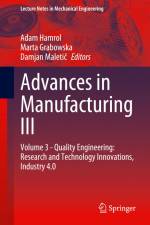
This book reports on innovative strategies for quality control, risk assessment and sustainable development in production processes, in the era of industry 4.0. Based on peer-reviewed contributions to the 7th International Scientific-Technical Conference MANUFACTURING 2022, held on May 16-19, 2022, in Poznan, Poland, the chapters cover important topics relating to the use of quality management strategies in different stages of the production processes. They report on methods for statistical process control, vision control and inspection of machines, on the application of machine learning methods in quality control and/or risk assessment, on issues relating to digital transformation, and on methods to improve occupational safety. Besides industrial applications, the book also discusses the use quality management tools for educational purposes. By bridging between concepts in quality engineering, ergonomics, digitalization and industry 4.0, this book offers an authoritative source of information for researchers, engineers and managers.
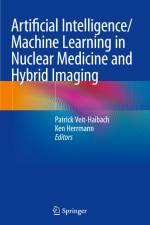
This book includes detailed explanations of the underlying technologies and concepts used in Artificial Intelligence (AI) and Machine Learning (ML) in the context of nuclear medicine and hybrid imaging. A diverse team of authors, including pioneers in the field and respected experts from leading international institutions, share their insights, opinions and outlooks on this exciting topic.A wide range of clinical applications are discussed, from brain applications to body indications, as well as the applicability of AI and ML for cardio-vascular conditions. The book also considers the potential impact of theranostics. To balance the technology-heavy and disease-specific applications, it also discusses ethical / legal issues, economic realities and the human factor, the physician. Though this discussion is not based on research and outcomes, it provides important insights into the ramifications of how AI and ML could transform Nuclear Medicine and Hybrid Imaging practice.As the first work highlighting the role of these concepts specifically in this field, rather than for medical imaging in general, this book offers a valuable resource for Nuclear Medicine Physicians, Radiologists, Physicists, Medical Imaging Administrators and Nuclear Medicine Technologists alike.
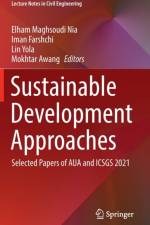
This book highlights the recent research works on sustainable construction, people behavior and built environment which were presented virtually during the 2021 AUA and ICSGS Academic Conference, Global Strategies for a Resilient and Sustainable Post Pandemic World Towards a Better Future for All which was conducted on 26-27 October 2021.
This book presents the development of electrospun materials, fundamental principles of electrospinning process, controlling parameters, electrospinning strategies, and electrospun nanofibrous structures with specific properties for applications in tissue engineering and regenerative medicine, textile, water treatment, sensor, and energy fields. This book can broadly be divided into three parts: the first comprises basic principles of electrospinning process, general requirements of electrospun materials and advancement in electrospinning technology, the second part describes the applications of electrospun materials in different fields and future prospects, while the third part describes applications that can be used in advanced manufacturing based on conjoining electrospinning and 3D printing. Electrospinning is the most successful process for producing functional nanofibers and nanofibrous membranes with superior chemical and physical properties. The unique properties of electrospun materials including high surface to volume ratio, flexibility, high mechanical strength, high porosity, and adjustable nanofiber and pore size distribution make them potential candidates in a wide range of applications in biomedical and engineering areas. Electrospinning is becoming more efficient and more specialized in order to produce particular fiber types with tunable diameter and morphology, tunable characteristics, having specific patterns and 3D structures.With a strong focus on fundamental materials science and engineering, this book provides systematic and comprehensive coverage of the recent developments and novel perspectives of electrospun materials. This comprehensive book includes chapters that discuss the latest and emerging applications of nanofiber technology in various fields, specifically in areas such as wearable textile, biomedical applications, energy generation and storage, water treatment and environmental remediation, and sensors such as biomarkers in healthcare and biomedical engineering. Despite all these advancements, there are still challenges to be addressed and overcome for nanofiber technology to move towards maturation.
Despite global advancements in pediatric medicine, technologies which have become standard-of-care in high-resource settings are unavailable in low-and middle-income countries due to cost, availability, or challenges maintaining equipment. This book compiles evidence-based and expert clinical procedural adaptations in an approachable, case-based, step-by-step guide, aimed to provide educational support for healthcare providers practicing in resource-limited settings. This responds to both the high demand for this content and the importance of gathering experts across continents and pediatric disciplines. Each chapter provides both a theoretical framework and practical discussion of high-yield procedural adaptations. Leading international researchers and seasoned clinicians with expertise using these adaptations were selected by the editors as authors. Chapters include an example case with adaptation use and detailed instructions including supplies, indications, risks, and benefits. Content is grounded in current best practice recommendations and evidence-based research. Highlighted by the COVID-19 pandemic, a mature understanding of pathophysiology and device design/safety is required when providing care in low-resource settings or in crisis times. In-person instruction is not always feasible. Written and virtual platforms remain critical in disseminating high-yield, practical content. This book is not a substitute for appropriate procedural training, though is easily modified to meet the educational needs of diverse learner groups. It is a valuable resource for appropriately trained practitioners practicing in accordance with local guidelines. Knowledge and fluency with pediatric procedural adaptations is critical in efforts to reduce global inequities and pediatric morbidity/mortality in low-resource settings.
The pituitary gland is often referred to as the master gland, coordinating hormonal signals from the hypothalamus and peripheral circulation to maintain homeostasis in the body. Patients with pituitary dysfunction are faced with challenges unique to each stage of their life cycle. For example, the goals of management for a hypopituitary adolescent transitioning to adulthood would be to optimize growth and sexual development. In early adulthood, approaches that optimize of fertility in men and women can be a priority, and the management approach will be very different from that of older adults requiring sex hormone replacement. This case-based guide will provide practical clinical guidance on approaches to the management of pituitary disorders organized by time of life, from childhood and fertile years through to older age. Sensibly divided into sections, various pituitary disorders and conditions are described and relevant treatment strategies are outlined. Sections included discussions of the unique considerations for the pituitary gland in childhood and adolescents, patients desiring fertility and pregnant patients, health optimization and non-tumoral diagnoses in adults, and management of disorders of the hypothalamic-pituitary axis in the elderly. Each chapter presents a clinical case vignette as an introduction to the concepts and a framework for the discussion of the diagnosis, management and unique consideration of each pituitary pathology. Practical and user-friendly, Pituitary Disorders throughout the Life Cycle is an excellent resource for practicing clinical endocrinologists (pediatric, transitional care, adult) and reproductive endocrinologists as well as specialty residents and trainees.
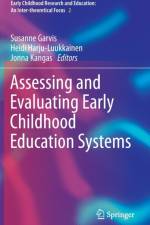
This book provides global perspectives on assessment and evaluation practices with young children in contemporary times within early childhood education systems. It critiques and evaluates current evaluation and assessment goals and tools in early childhood settings. The book also compares the different approaches to educational evaluations from different countries in early childhood education and care. It provides insights into different approaches, techniques as well as perspectives of micro and macro-levels of analysis. This book aims to create an international understanding about the thematic conceptions of assessment for early childhood education and care.
This book discusses important applications of the Behrens-Fisher statistic and the False Discovery Rate (FDR). Covered applications include ANOVA and MANOVA under potentially non-normal errors and heteroscedasticity; and an intuitive method of analyzing s x r contingency tables when the column variable is ordinal. This book also explores the novel possibility that these applications may be deemed nonparametric.
This book provides a didactic derivation of the main theories of thermotropic and lyotropic liquid crystals, revealing the common molecular-theoretic framework that underpins both theories. This unified context will help young researchers in coming to grips with the basics of the simplest of liquid crystals, being uniaxial nematic liquid crystals, easing them into the intricacies of more complex forms of such materials irrespective of whether they are thermotropic or lyotropic. The coverage provides a theoretical understanding of the phase behaviour, that is, what drives molecules and particles to spontaneously align themselves, as well as an appreciation of the role of entropy, energy and so on. The focus here is on the main theories for the isotropic-nematic transition, being the Maier-Saupe and the Onsager theories, and how they are derived from a common description, known as (classical) density functional theory (DFT). This book will be a valuable resource for senior undergraduate and graduate students, and experimentalists and engineers who feel intimidated by more formal or rigorous theoretical accounts and textbooks. Exercises at the end of each chapter help the reader to apply the basic concepts also to other types of liquid crystal, in particular the smectic liquid crystal.
Mergers & acquisitions are an essential instrument of strategic corporate management for companies of all sizes. The success of an M&A project highly depends on an optimal transaction preparation, fast execution and the experience of all parties involved. Due to numerous endogenous and exogenous influences, no two M&A transactions are alike at the detailed level.This book is designed as a practical M&A guide for students and professionals alike. In addition to dealing with important basics of mergers & acquisitions, the focus is on a structured and in-depth examination of the individual process steps of a typical company sale. At various points in this book, specific differences between a company sale of medium-sized companies (mid-caps) and large companies (large-caps) are discussed in detail.
This edited book provides an overview of unstructured and structured play scenarios crucial to developing young children's awareness, interest, and ability to learn Science, Technology, Engineering and Mathematics (STEM) in informal and formal education environments. The key elements for developing future STEM capital, enabling children to use their intuitive critical thinking and problem-solving abilities, and promoting active citizenship and a scientifically literate workforce, begins in the early years as children learn through play, employing trial and error, and often investigating on their own.Forty-seven STEM experts come together from 16 countries (Argentina, Australia, Belgium, Canada, England, Finland, Germany, Israel, Jamaica, Japan, Malta, Mauritius, Mexico, Russia, Sweden, and the USA) and describe educational policies and experiences related to young learners 3-4 years of age, as well as students attending formal-nursery school, early primary school, and the early years classes post 5 years of age.The book is intended for parents seeking to provide STEM activities for their children at home and in playgroups, citizen scientists seeking guidance to provide children with quality educational activities, daycare practitioners providing educational structures for young children from birth to formal education, primary school teachers and preservice teachers seeking to teach preschool, kindergarten or children typically aged 5-8 years old in grades 1-3, as well as researchers and policy makers working in science didactics with small children.
This book provides an original analysis of the trajectory of health policy reform in the United Kingdom from the beginning of the 'Thatcher reforms' in the 1980s right up to the latest changes in England in 2022. Rooted in political science and health policy analysis, it tackles key arguments around the 'new integration' of the NHS since 2015, what the new and emerging NHS structure represents, the UK's poor response to the Covid-19 crisis, and the future threat to a comprehensive public NHS. It includes significant new material on what has happened since 2015, such as the politics of the Covid-19 pandemic, the effects of Brexit, and the conundrum of 'social care'. The book is a scholarly and polemical analysis from an expert who has studied the politics of health services for more than forty years. It will be a key resource for students, academics and policy makers.
This book, dedicated to Professor Georgi M. Dimirovski on his anniversary, contains new research directions, challenges, and many relevant applications related to many aspects within the broadly perceived areas of systems and control, including signal analysis and intelligent systems. The project comprises two volumes with papers written by well known and very active researchers and practitioners. The first volume is focused on more foundational aspects related to general issues in systems science and mathematical systems, various problems in control and automation, and the use of computational and artificial intelligence in the context of systems modeling and control. The second volume is concerned with a presentation of relevant applications, notably in robotics, computer networks, telecommunication, fault detection/diagnosis, as well as in biology and medicine, and economic, financial, and social systems too.
This book covers a variety of topics at the interface between biomedical engineering and manufacturing. Based on peer-review papers presented at the 7th International Scientific-Technical Conference MANUFACTURING 2022, held in Poznan, Poland on May 16-19, 2022, it focuses on cutting-edge issues relating to 3D printing of medical devices, including custom manufacturing of orthopedic aids, optimization of their manufacturing process, 3D and numerical models supporting prostheses development and surgical simulation, and discusses the applications of different quality control methods in the healthcare industry. This book offers a timely guide to engineers and other professionals dealing with production and testing of medical devices in the era of industry 4.0.
Across three centuries, AJYB has provided insight into major trends. Part I of the current volume contains two chapters on Jewish Americans in 2020 by the Pew Research Center, including reactions from 16 prominent social scientists. Subsequent chapters analyze the development of Holocaust consciousness in America, recent domestic and international events as they affect the American Jewish community, and the demography and geography of the US, Canada, and world Jewish populations. Part II provides lists of Jewish institutions, including federations, community centers, social service agencies, national organizations, camps, museums, and Israeli consulates. The final chapters present lists of Jewish periodicals and broadcast media, Jewish Studies programs, books, journals, articles, websites, research libraries, and academic conferences and lists of major events in the past year, Jewish honorees, and obituaries. This volume employs an accessible style, making it of interest to public officials, Jewish professional and lay leaders, as well as the general public and academic researchers.For more than 120 years the American Jewish Year Book has served as an indispensable resource for scholars, clergy, and lay leaders, providing crucial, detailed insights into demographic shifts and sociological trends in the North American Jewish community. The latest edition continues to fulfill these important needs with essential articles on the landmark Pew Report and the impact of the Holocaust in the American Jewish community and American in general. This is a must-have volume for any serious student of the contemporary Jewish world.Jeffrey Shoulson, Senior Vice Provost for Academic Affairs, Professor of Literatures, Cultures, and Languages, and English, Director Emeritus Center for Judaic Studies and Contemporary Jewish Life, University of ConnecticutThe American Jewish Year Book is a critical snapshot of Jews and Jewish Studies in the United States in a particular year, and a valuable resource for scholars studying the changes in Jewish communities and Jewish Studies in the United States (and beyond!) over time. The AJYB highlights major publications and data that are consistently used in research, and its scholarly essays contextualize the information in an easily readable context. The lists of important institutions and organizations are invaluable for someone interested in the broader Jewish experience (or, at the most practical, a Jewish organization in their neighborhood!).Michelle Margolis Chesner, Norman E. Alexander Librarian for Jewish Studies, Columbia University
This book presents a synthesis of critical new information for the Melastomataceae, one of the ten richest families among flowering plants with over 5,800 species that has its diversity highly concentrated in tropical or subtropical areas. It describes the family's global diversity and distribution and summarizes recent advances in systematics, evolution, biogeography, reproductive biology and ecology.
This book covers the medical condition of diabetic patients, their early symptoms and methods conventionally used for diagnosing and monitoring diabetes. It describes various techniques and technologies used for diabetes detection. The content is built upon moving from regressive technology (invasive) and adapting new-age pain-free technologies (non-invasive), machine learning and artificial intelligence for diabetes monitoring and management. This book details all the popular technologies used in the health care and medical fields for diabetic patients. An entire chapter is dedicated to how the future of this field will be shaping up and the challenges remaining to be conquered. Finally, it shows artificial intelligence and predictions, which can be beneficial for the early detection, dose monitoring and surveillance for patients suffering from diabetes
This book examines funding platforms for impact investing known as social stock exchanges (SSE) and ways to approach impact investing at regulated traditional exchanges. The book analyses the antecedents and prerequisites for the successful implementation of SSEs. It presents the creation of SSEs as a necessary step towards a more democratic and popular impact investing market, and a way to align the asset search process for investors with capital access for entrepreneurs. It also analyses the installation of impact investing at traditional stock exchanges drawing from Green Bonds and Social Bonds. The book showcases successful financial structuring, integrating impact into existing financial products. It discusses standalone impact solutions, the status quo of impact investing, social entrepreneurship and the pros and cons of platforms versus the use of traditional stock exchanges for impact investing. It highlights aspects of adjusted portfolio and product structuring, innovation in the context of listing criteria and makes proposals for impact stock listings at platforms and traditional stock exchanges.
This book contains original essays that look at contagious/infectious disease pandemics and the ethical public policy and administration these have entailed. In particular, the pandemics of the 1918 flu pandemic, HIV in the 1990s, SARS in 2003, Ebola from 2014-2016 and the novel COVID-19 in 2020 are highlighted. The contributions in this work offer the reader insights in these and several other recent pandemics that present differently-either via contagion or mortality rate-and how each should be addressed by countries of various sorts. This book is a must for the ongoing debate on how we should treat public health crises, such as the one we have all just encountered in the novel COVID-19 pandemic.
Abonner på vårt nyhetsbrev og få rabatter og inspirasjon til din neste leseopplevelse.
Ved å abonnere godtar du vår personvernerklæring.