






















Gjør som tusenvis av andre bokelskere
Abonner på vårt nyhetsbrev og få rabatter og inspirasjon til din neste leseopplevelse.
Ved å abonnere godtar du vår personvernerklæring.Du kan når som helst melde deg av våre nyhetsbrev.

This book provides the intermittency equation that is derived a priori. Since the intermittency equation is mathematically obtained, the resulting gamma transition model no longer requires any extra parameters and terms to explicitly account for free-stream turbulence and pressure gradient like the previous transition models.Instead, the present gamma transition model can naturally predict natural transition and effects of free-stream turbulence and pressure gradient on the transition process. Furthermore, the present gamma transition model requires much fewer model constants than the previous transition models.The book is beneficial for CFD researchers in industry and academia who confront modern complex applications involving simultaneously laminar, transitional and turbulent flow regimes, and ideally relevant to graduate students in applied physics, applied mathematics and engineering who are interested in the world of laminar-to-turbulent transition modeling in CFD, or would like to further advance more realistic transition models in the future.
This book explores the most important aspects of populism as a significant social phenomenon. It recapitulates the approaches to defining populism in the social sciences, singles out the most important concepts in the definition of populism, and presents them to the readership. Specific to this book is that it seeks to promote an approach that sees populism as a meta-ideology, that is, an ideology that uses other political ideologies instrumentally. In addition, the book Populism as Meta Ideology identifies the most important factors that have contributed to the growth of populism in recent times. Modernization, globalization, the crisis of political parties, and the transformation of the public sphere have been identified as such factors. A chapter is devoted to each of these factors in the book. The book concludes by examining the interaction between populism and liberal democracy, both theoretically and practically.
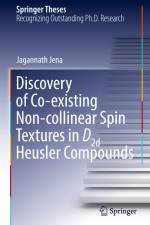
Non-collinear spin textures have attracted significant attention due to their topological nature, emergent electromagnetic properties, and potential spintronic and magnonic device applications. This book explores the physical properties of distinct spin textures in D2d compounds. The main goals of the work are (a) discovering new spin textures in D2d Heusler compounds and studying their detailed properties to enrich the field of non-collinear magnetism (b) optimizing the nano-track geometry and generating isolated and single chains of nano-objects that will establish new hallmarks for technological applications (c) studying the stability of spin textures with magnetic fields and temperatures and finding a way to observe the striking behavior of spin textures near the specimen edges. The first few chapters provide a brief overview of spin textures such as Bloch and Neel skyrmions. In the experimental methods section, the author shows how to identify the single-crystalline grains of a polycrystalline sample, how to make single-crystalline thin specimens and nano-tracks, and then provides explicit descriptions of different imaging techniques performed on a transmission electron microscope. This part will be valuable for beginners wishing to conduct research in experimental nano-magnetism and transmission electron microscope imaging. The core results of the book are presented in four chapters, describing the discovery of several new and unanticipated spin textures, namely square-shaped antiskyrmions, elliptical Bloch skyrmions, fractional antiskyrmions, fractional Bloch skyrmions and elongated (anti)skyrmions in a single D2d Heusler compound. It is shown that these textures can be understood by a combination of dipole-dipole interactions and a chiral vector exchange that makes it possible to stabilize various spin textures even in the same compound. The D2d compounds are the first non-centrosymmetric systems shown to host several co-existing non-collinear spin textures.
This book systematically summarizes the accuracy, precision, and repeatability levels of field-based tests applied in soccer. It considers such details as the effectiveness of tests for different age categories and sexes. In this book, the readers will be able to check all the field-based tests conceived for fitness assessment in soccer through a large systematic review made to the literature. In addition a brief characterization of each test and presentation of the concurrent validity and repeatability levels for each test will be provided. Finally, the book contains a general discussion of the implications of the tests for different methodological approaches to training. It will be use to sports scientists and practitioners.
This Handbook covers non-invase techniques as well as digital technologies to study cultural heritage. It focuses on multidisciplinary approaches that help site managers to deal with their site form conservation to prevention. The book is conceived to foster exchanges of ideas and information and to update innovation on measurements suitable for cultural heritage across several disciplines. Contributions on measurements deriving from the large number of analytical methodologies and tools (spectroscopy, chemometrics, modeling, etc) are also of interest for the scientific community. Considering the tremendous amount of new interactive technologies which inevitably impact traditional arts, the final section of the Handbook focuses on the use of virtual reality systems in museums and archaeological sites. The Handbook will contribute to build an international network of cultural heritage scientists, architects, geophysicists, archaeologists, and soil scientists.
This book examines the recent changes in strategic stability, caused by the collapse of the international security architecture. Against the background of Russia's invasion of Ukraine, international experts discuss topics and critical issues such as the revanchist strategy of Russia and the readiness of the United States (US) and Europe to give an adequate response; the influence of new technologies in the future of nuclear deterrence; and the crumbling of the arms control and nonproliferation system under the new challenges. The book explains how the combination of these factors lead to a crucial change of strategic stability and the international security landscape, the first such change since the end of the Cold War.Divided into three parts, the book presents timely analyses on (1) US, Russia: New Challenges and Strategic Stability in Europe; (2) Extended Deterrence and Arms Control in Europe; and (3) Regional Dimensions of Strategic Stability in Europe. It further offers perspectives from and case studies on different countries, such as Ukraine, France, Germany, the United Kingdom, the USA, Turkey, Poland, and Romania.This book is a must-read for scholars for international relations, as well as policy-makers interested in a better understanding of the changing international security architecture, Russia's strategy, arms control, nonproliferation, and the future of nuclear deterrence.
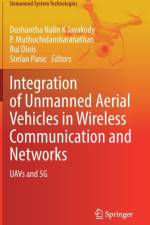
This book presents a comprehensive overview of Unmanned Arial Vehicles (UAV) and their integration of wireless communications and networks, including inherent challenges and open access concerns. The authors present the latest technologies associated with UAV-assisted wireless communications and networks by linking their association with 5G Wireless Networks. The authors include positioning of UAV, coagulation attack of UAV, and the green prospective of UAV communication systems. The book explains how the UAV can be integrated with 5G wireless schemes such as ultra-reliable, low density communications, full duplex, and non-orthogonal multiple access (NOMA) for 5G. This book targets graduate students, researchers, and industry personnel.
This book develops alternative methods to estimate the unknown parameters in stochastic volatility models, offering a new approach to test model accuracy. While there is ample research to document stochastic differential equation models driven by Brownian motion based on discrete observations of the underlying diffusion process, these traditional methods often fail to estimate the unknown parameters in the unobserved volatility processes. This text studies the second order rate of weak convergence to normality to obtain refined inference results like confidence interval, as well as nontraditional continuous time stochastic volatility models driven by fractional Levy processes. By incorporating jumps and long memory into the volatility process, these new methods will help better predict option pricing and stock market crash risk. Some simulation algorithms for numerical experiments are provided.
This book employs the latest insights from modern marketing into the theory and practice of corporate communication, including the main stages and goals, and highlights the key potentials for the field. It briefly presents the essential features of the methodological and structural sciences in order to illustrate to the reader how, from a marketer's point of view, these new insights can be derived objectively, reliably, and validly for the field of corporate communication according to scientific criteria.The book then introduces the maturity model for modern corporate communication and describes which fields of activity must be gone through in order to be able to implement the change management process towards corporate communication excellence efficiently and effectively. Building on this, it introduces and defines the most important new concepts of corporate communication in the twenty-first century and thus clearly delineates the field of research for this corporate function in the coming years. The book goes on to address the important areas of IT and HR in order to provide a 360 view of the developments to be realized in the field of corporate communication. A "e;CC self-test"e; at the end of the book is intended to help the reader immediately recognize where their own organization stands and, against this backdrop, to be able to start the necessary activities towards corporate communication excellence immediately on the basis of the maturity model."e;Prof. Dr. Uwe Seebacher takes us on a timely and informative read on what could be the biggest crisis for Corporate Communications - remaining stagnant in a time of great change. With rich context and fine detail, he illuminates the opportunities to reengineer Corporate Communications and quantify its role in truly impacting business. From the importance of predictive intelligence underpinned by authenticity and empathy to building trust, this book is a guide for successful business in the 21st Century. I highly recommend it."e;Heidi Eusebio, Strategist and Executive Director, Edelman"e;Uwe Seebacher has once again demonstrated in a well-founded manner what methodological and structural science is capable of - namely, to precisely logically derive the long overdue process of change in the field of corporate communications and thereby make it comprehensible. But he also takes the important next step of operationalizing his thoughts in a directly measurable way by providing an easy applicable concrete process model for reengineering corporate communication with many tips, templates and inputs for HR and IT."e;Miguel Gimenez de Castro, Head Of Communications Spain, Portugal, Greece and Israel, IBM
This book tells the story of a unique scientific and human adventure, following the life and science of Bruno Touschek, an Austrian born physicist, who conceived and built AdA, the first matter-antimatter colliding-beam storage ring, the ancestor of the Large Hadron Collider at CERN where the Higgs Boson was discovered in 2012. Making extensive use of archival sources and personal correspondence, the author offers for the first time a unified history of European efforts to build modern-day particle accelerators, from the dark times of war-ravaged Europe up to the rebuilding of science in Germany, UK, Italy and France through the 1950s and early 1960s. This book, the result of several years of scholarly research work, includes numerous previously unpublished photos as well as original drawings by Bruno Touschek.
This book provides a practical guide in the use of imaging and visualization technologies in urology. It details how output from diagnostic systems, can be represented through synthetic, virtual and augmented reality tools, such as holograms and three dimensional (3D) modelling and how they can improve everyday surgical procedures including laparoscopic, robotic-assisted, open, endoscopic along with the latest and most innovative approaches. Anatomy for Urologic Surgeons in the Digital Era: Scanning, Modelling and 3D Printing systematically reviews diagnostic imaging, visualization tools available in urology and is a valuable resource for all practicing and in-training urological surgeons.
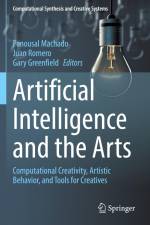
Emotions, creativity, aesthetics, artistic behavior, divergent thoughts, and curiosity are both fundamental to the human experience and instrumental in the development of human-centered artificial intelligence systems that can relate, communicate, and understand human motivations, desires, and needs. In this book the editors put forward two core propositions: creative artistic behavior is one of the key challenges of artificial intelligence research, and computer-assisted creativity and human-centered artificial intelligence systems are the driving forces for research in this area.The invited chapters examine computational creativity and more specifically systems that exhibit artistic behavior or can improve humans' creative and artistic abilities. The authors synthesize and reflect on current trends, identify core challenges and opportunities, and present novel contributions and applications in domains such as the visual arts, music, 3D environments, and games.The book will be valuable for researchers, creatives, and others engaged with the relationship between artificial intelligence and the arts.
Based on the success of the first published book on "e;Nondestructive Evaluation and Monitoring Technologies, Documentation, Diagnosis and Preservation of Cultural Heritage"e;, this book will includes peer reviewed papers submitted to the conference in form of single independent chapters. Each chapter will highlight the benefits of one or more Non-Destructive Testing (NDT) methods, image processing and data analysis methods and their applications on cultural heritage sites. This book demonstrates Non-destructive sensing technologies and inspection modules as main tools for documentation, diagnosis, characterization, preservation planning, monitoring and quality of restoration, assessment and evaluation of material and preservation work. Within this book, the benefits of NDT methods and their applications will be demonstrated on diverse and important cultural heritage sites and monuments around the world. NDT sensing technologies and inspection modules are becoming main tools for the documentation, diagnosis, characterization, preservation planning, monitoring and quality control of restoration, assessment and evaluation of materials and preservation works.Distinguished scientists and representatives of the National Geographic Society, the Cultural Heritage Finance Alliance, the International Council of Monuments and Sites ICOMOS, the Organization of World Heritage Cities OWHC, the European Society for Engineering Education SEFI, the European Construction Technology Platform ECTP, the International Federation of Surveyors FIG, the International Committee CIPA Heritage Documentation, the World Monuments Fund and other major International and European Organizations, Associations, networks Universities and Research Centers in the field of cultural heritage preservation, participate in to the International Steering Committee which had successfully organized the 1st TMM_CH Conference as well.
This handbook focuses on the contribution of management and employment practices to the health and wellbeing of workers. It provides readers with a comprehensive oversight of the latest research and thinking on these issues, with content provided by leading researchers in each of the fields covered. This reference work is divided into six sections that cover leadership, change management, human resource management practices, managing disabilities, work-life interfaces, and emerging challenges. The topics covered represent an interdisciplinary perspective, integrating psychology, social sciences, biomedical sciences, economics, employment relations and management. Through a spectrum of chapters this volume provides the best available scientific evidence to professionals and stakeholders on the interplay between management practices, health and wellbeing.
This two-volume set LNCS 13188 - 13189 constitutes the refereed proceedings of the 6th Asian Conference on Pattern Recognition, ACPR 2021, held in Jeju Island, South Korea, in November 2021. The 85 full papers presented were carefully reviewed and selected from 154 submissions. The papers are organized in topics on: classification, action and video and motion, object detection and anomaly, segmentation, grouping and shape, face and body and biometrics, adversarial learning and networks, computational photography, learning theory and optimization, applications, medical and robotics, computer vision and robot vision.
Volume 11 of the EYIEL focuses on rights and obligations of business entities under international economic law. It deals with the responsibilities of business entities as well as their special status in various subfields of international law, including human rights, corruption, competition law, international investment law, civil liability and international security law. The contributions to this volume thus highlight the significance of international law for the regulation of business entities. In addition, EYIEL 11 addresses recent challenges, developments as well as events in European and international economic law such as the 2019 elections to the European Parliament, Brexit and the EU-Mercosur Free Trade Agreement. A series of essays reviewing new books on international trade and investment law completes the volume.
Inequalities play a central role in mathematics with various applications in other disciplines. The main goal of this contributed volume is to present several important matrix, operator, and norm inequalities in a systematic and self-contained fashion. Some powerful methods are used to provide significant mathematical inequalities in functional analysis, operator theory and numerous fields in recent decades.Some chapters are devoted to giving a series of new characterizations of operator monotone functions and some others explore inequalities connected to log-majorization, relative operator entropy, and the Ando-Hiai inequality. Several chapters are focused on Birkhoff-James orthogonality and approximate orthogonality in Banach spaces and operator algebras such as C*-algebras from historical perspectives to current development.A comprehensive account of the boundedness, compactness, and restrictions of Toeplitz operators can be found in the book. Furthermore, an overview of the Bishop-Phelps-Bollobas theorem is provided. The state-of-the-art of Hardy-Littlewood inequalities in sequence spaces is given. The chapters are written in a reader-friendly style and can be read independently. Each chapter contains a rich bibliography. This book is intended for use by both researchers and graduate students of mathematics, physics, and engineering.
This text is an enhanced, English version of the Russian edition, published in early 2021 and is appropriate for an introductory course in geometric control theory. The concise presentation provides an accessible treatment of the subject for advanced undergraduate and graduate students in theoretical and applied mathematics, as well as to experts in classic control theory for whom geometric methods may be introduced. Theory is accompanied by characteristic examples such as stopping a train, motion of mobile robot, Euler elasticae, Dido's problem, and rolling of the sphere on the plane. Quick foundations to some recent topics of interest like control on Lie groups and sub-Riemannian geometry are included. Prerequisites include only a basic knowledge of calculus, linear algebra, and ODEs; preliminary knowledge of control theory is not assumed. The applications problems-oriented approach discusses core subjects and encourages the reader to solve related challenges independently. Highly-motivated readers can acquire working knowledge of geometric control techniques and progress to studying control problems and more comprehensive books on their own. Selected sections provide exercises to assist in deeper understanding of the material.Controllability and optimal control problems are considered for nonlinear nonholonomic systems on smooth manifolds, in particular, on Lie groups. For the controllability problem, the following questions are considered: controllability of linear systems, local controllability of nonlinear systems, Nagano-Sussmann Orbit theorem, Rashevskii-Chow theorem, Krener's theorem. For the optimal control problem, Filippov's theorem is stated, invariant formulation of Pontryagin maximum principle on manifolds is given, second-order optimality conditions are discussed, and the sub-Riemannian problem is studied in detail. Pontryagin maximum principle is proved for sub-Riemannian problems, solution to the sub-Riemannian problems on the Heisenberg group, the group of motions of the plane, and the Engel group is described.
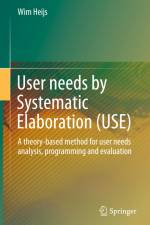
The design of a building can facilitate the process of use and promote the well-being of users if it meets their needs. Knowledge of user needs and processes of use is important for a good design. However, it is not self-evident what user needs really are, how user needs and processes of use can be researched, and how that knowledge can be used in a design. This book introduces an integrated methodology for the analysis of user needs, programming and evaluation that answers these questions. The purpose is to improve the interaction between the users and their environment and to avoid failure costs by facilitating proper design decisions. The theoretical perspective and the conceptual framework originate from environmental psychology, more specifically P-E fit theory. The target group consists of those who are interested in creating environments for people (designers, users, real estate managers; students and scientific staff). Designers are a special audience for whom the book can be a guide to working for and with users. The theoretical perspective and the conceptual framework can also be relevant for scientific research into the interaction between users and buildings.
This book is the continuation of the textbook Lean Compendium - Introduction to Modern Manufacturing Theory. It extends the theory of mathematical modeling to batch & queue-based cyber-physical production systems. To facilitate learning, the book continues to develop a Cartesian-derived understanding of the system's behavior by applying manufacturing-specific theorems, corollaries and lemmas. A law-based description enables to model production mathematically and understand upfront their dynamics in terms of WIP generation, lead-times, exit-rates, and on-time delivery performance. While simulation alone only allows to explore the optimum solution, the development of a theory allows to gain knowledge. This improves the learning of the "e;physics"e; of manufacturing systems and contributes to a solid production's understanding and a clear and cognitive problem determination that leads to a thorough mental capture for mastering a systematic design of such highly complex systems.
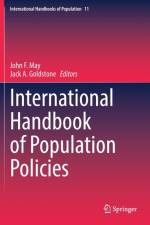
This Handbook offers an array of internationally recognized experts' essays that provide a current and comprehensive examination of all dimensions of international population policies. The book examines the theoretical foundations, the historical and empirical evidence for policy formation, the policy levers and modelling, as well as the new policy challenges. The section Theoretical Foundations reviews population issues today, population theories, the population policies' framework as well as the linkages between population, development, health, food systems, and the environment. The next section Empirical Evidence discusses international approaches to design and implement population policies on a regional level. The section Policy Levers and Modelling reviews the tools and the policy levers that are available to design, implement, monitor, and measure the impact of population policies. Finally, the section New Policy Challenges examines the recurrent and emerging issues in population policies. This section also discusses prospects for demographic sustainability as well as future considerations for population policies. As such this Handbook provides an important and structured examination of contemporary population policies, their evolution, and their prospects.
This book discusses how and why animals evolved into particular shapes. The book identifies the physical laws which decide over the evolutionary (selective) value of body shape and morphological characters. Comparing the mechanical necessities with morphological details, the author attempts to understand how evolution works, and which sorts of limitations are set by selection.The book explains morphological traits in more biomechanical detail without getting lost in physics, or in methods. Most emphasis is placed on the proximate question, namely the identification of the mechanical stresses which must be sustained by the respective body parts, when they move the body or its parts against resistance.In the first part of the book the focus is on 'primitive' animals and later on the emphasis shifts to highly specialized mammals. Readers will learn more about living and fossil animals.A section of the book is dedicated to human evolution but not to produce another evolutionary tree, nor to refine a former one, but to contribute to answering the question: "e;WHY early humans have developed their particular body shape"e;.
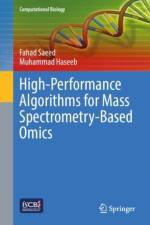
To date, processing of high-throughput Mass Spectrometry (MS) data is accomplished using serial algorithms. Developing new methods to process MS data is an active area of research but there is no single strategy that focuses on scalability of MS based methods. Mass spectrometry is a diverse and versatile technology for high-throughput functional characterization of proteins, small molecules and metabolites in complex biological mixtures. In the recent years the technology has rapidly evolved and is now capable of generating increasingly large (multiple tera-bytes per experiment) and complex (multiple species/microbiome/high-dimensional) data sets. This rapid advance in MS instrumentation must be matched by equally fast and rapid evolution of scalable methods developed for analysis of these complex data sets. Ideally, the new methods should leverage the rich heterogeneous computational resources available in a ubiquitous fashion in the form of multicore, manycore, CPU-GPU, CPU-FPGA, and IntelPhi architectures. The absence of these high-performance computing algorithms now hinders scientific advancements for mass spectrometry research. In this book we illustrate the need for high-performance computing algorithms for MS based proteomics, and proteogenomics and showcase our progress in developing these high-performance algorithms.
This work presents some essential techniques that constitute the modern strategy for computing scattering amplitudes. It begins with an introductory chapter to fill the gap between a standard QFT course and the latest developments in the field. The author then tackles the main bottleneck: the computation of the loop Feynman integrals. The most efficient technique for their computation is the method of the differential equations. This is discussed in detail, with a particular focus on the mathematical aspects involved in the derivation of the differential equations and their solution. Ample space is devoted to the special functions arising from the differential equations, to their analytic properties, and to the mathematical techniques which allow us to handle them systematically. The thesis also addresses the application of these techniques to a cutting-edge problem of importance for the physics programme of the Large Hadron Collider: five-particle amplitudes at two-loop order. It presents the first analytic results for complete two-loop five-particle amplitudes, in supersymmetric theories and QCD. The techniques discussed here open the door to precision phenomenology for processes of phenomenological interest, such as three-photon, three-jet, and di-photon + jet production.
This book takes a radical approach to ecological economics, proposing a new paradigm based on earth systems science. This book questions the foundation of economics on individual private property, and proposes new forms of relationship to land and to the state. It questions the foundation of economics on the individual, and proposes new forms of regional ecological collectives, integrated at the global level. It critically examines the assumptions of economics and re-envisions it as more integrally related to society and ecology. The volume integrates insights from a variety of fields, including humanities, natural, and social science, placing human life in the setting of ecology. The chapters invoke a historical institutional methodology to examine the link between economic theories and economic institutions, understanding performativity and applying reflexivity, and the potential for the emergence of new visions and methods. The method draws upon literary studies, linguistic philosophy, as well as long term economic history. Providing an alternative view of the relationship of humans to the earth, this book is appropriate for students and researchers across a variety of disciplines including economics, history, ecology, and philosophy.
Seen from "e;inside the IAU,"e; this book tells the in-depth story of a major crisis in which China "e;divorced"e; from the International Astronomical Union in 1960 as a protest against the admission of Taiwan. This happened to all the scientific unions at the same time, and to the Olympic Games, which, unexpectedly, would serve as a laboratory for the "e;reconciliation"e; which took place following the re-opening of China to the world 20 years later.The so-called "e;China conflict"e; is the most important crisis in the post-WWII history of the IAU. Yet, many details about this conflict and its links to broader geopolitical events have long remained unsettled, obscure, or altogether absent. In particular, the book describes for the first time the "e;separation"e; period, which covered the Cultural Revolution, and in which the IAU made desperate official efforts to reach out to China, while some groups of Western and Chinese astronomers managed to keep contact at times. On the occasion of the IAU Centenary celebrations in 2019, the book revisits this painful succession of events using unpublished documents from the IAU Archives and the International Council of Scientific Unions. The book also contains supplementary typescripts of selected handwritten correspondences and the full translation of key original Chinese documents unknown to readers outside China.What emerges is a complex and fascinating story of human relations and science diplomacy under the shadow of the Cold War. Readers will learn how the 20-year "e;China conflict"e; as lived by astronomers and scientists is important not only for the history of the IAU, but also for the history of contemporary China. "e;This book is full of so many original documents of the IAU office, very reliable and good to open to the public readers."e; Shuhua Ye, Shanghai Observatory (IAU Vice-President, 1988-1994)This book is a companion book to "e;Astronomers as Diplomats,"e; published at the same time in the same series.
The system of the Tigris-Euphrates Rivers is one of the great river systems of southwestern Asia. It comprises the Tigris and Euphrates Rivers, which follow roughly parallel courses through the heart of the Middle East. The lower portion of the region that they run through is known as Mesopotamia, was one of the cradles of civilisation.There are several environmental factors that govern the nature of the two rivers and shape the landscape the two rivers running through. Geological events create rivers, climate monitor the water supply, the surrounding land influences the vegetation and the physical and chemical features of water. The Tigris-Euphrates system runs through the territory of four countries, Iraq, Iran, Turkey and Syria. Therefore, any scientific approach to the environment of these two rivers should include the natural history events in these countries. The book "e;Tigris and Euphrates Rivers: Their Environment from Headwaters to Mouth"e; will be divided into nine parts. These parts deal with the issues of the environment, the status of the flora and fauna, the abiotic aspects, ecology, hydrological regime of the two rivers, the biotic aspects. Water resources, stress of the environment, conservation issues. Since the book of Julian Rzoska "e;Euphrates and Tigris Mesopotamian Ecology and Destiny"e; in 1980, no book or major reference has been published that includes between its cover the facts and information that the present book will present. Therefore, the importance of the present book falls in stating the present status of the environment of the two rivers and the comparison of their environment between now and that of 37 years ago as given by J. Rzoska (1980). The recent studies showed that there are a large number of natural and political events that happened within the last three decades in the area of the Tigris-Euphrates river system that for sure have done a great change to the environment of the two rivers and consequently changing the biological and non-biological resources of the two rivers. This book will be a reference book to both Academic and students across the Middle East in different disciplines of knowledge to use in their researches on Tigris-Euphrates river system. The scholars interested in this area will use this book as a guide to compare this freshwater system with other areas in Asia and the world.
This volume focuses on the biomedical aspects of inorganic polyphosphates, a family of unique bio-inorganic polymers.In recent years, great advances have been made in understanding the development, metabolism, and physiological role of inorganic polyphosphates. These energy-rich polymers, which consist of long chains of phosphate units, are evolutionary old molecules. The acidocalcisomes, conserved organelles from bacteria to humans, as well as the mitochondria play a central role in polyphosphate production and storage. Polyphosphates have been assigned multiple functions, some of which are closely related to medically important processes, such as blood coagulation and fibrinolysis, energy metabolism, cell cycle regulation, apoptosis, chaperon function, microvascularization, stress response, neurodegeneration and aging. The development of bioinspired polyphosphate particles, in combination with suitable hydrogel-forming polymers enabled the development of new strategies in regenerative medicine, in particular for hard and soft tissue repair, but also in drug delivery and antimicrobial defense. This book not only highlights the basic research in this area, but also discusses possible applications. Therefore, it appeals to scientists working in cell biology, biochemistry, and biomedicine and practicioners alike.
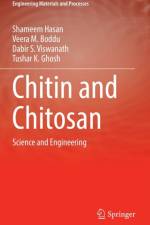
This book reviews work that covers everything from basic chemistry to advanced applications. Chitin and chitosan are used in a plethora of applications from wastewater treatment to prosthetics. After introducing the subject of polysaccharides as a whole, the authors turn to the preparation of chitin and chitosan and the characterization of the latter. The book provides information on chitin chemistry, extraction of chitin, chitosan preparation processes, and the applications of their derivatives in various fields. Among the applications that are included in detail are the adsorption of heavy metals for pollution prevention and clean-up, biosensors, cosmetics, various medical applications from anti-tumor activity to bone tissue engineering, agriculture and food production, and proton exchange membranes for fuel cells.Chitin and Chitosan features:* information on molecular structure, synthesis, properties, and latest research related to chitin and chitosan;* coverage of a wide range of topics from the properties of chitosan to its derivatives and applications;* in-depth information on biomedical applications of chitin and chitosan; and* information that can be applied to other biopolymer processing engineering areas.This book will be of interest to practitioners working in a wide variety of industries for which chitin and chitosan are useful materials, researchers in biosensors and heavy-metal adsorption, and to academic researchers investigating the properties, preparation, and uses of these materials.
This book gathers contributions on analytical, numerical, and application aspects of time-delay systems, under the paradigm of control theory, and discusses recent advances in these different contexts, also highlighting the interdisciplinary connections. The book will serve as a useful tool for graduate students and researchers in the fields of dynamical systems, automatic control, numerical methods, and functional analysis.
Abonner på vårt nyhetsbrev og få rabatter og inspirasjon til din neste leseopplevelse.
Ved å abonnere godtar du vår personvernerklæring.