

















Gjør som tusenvis av andre bokelskere
Abonner på vårt nyhetsbrev og få rabatter og inspirasjon til din neste leseopplevelse.
Ved å abonnere godtar du vår personvernerklæring.Du kan når som helst melde deg av våre nyhetsbrev.

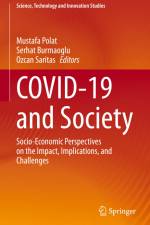
This timely book presents a collection of expert insights into the impacts of COVID-19 in a broader socio-economic context. In each chapter, the authors identify the current impact of COVID-19 by demonstrating transformative signals and project these signals to the future by considering their alternative futures and implications.The book emphasizes that dealing with major global pandemics like COVID-19 requires all countries and regions to take different, but synchronized measures to decrease its socio-economic effects in the short, medium and long run. The consequences of COVID-19 will go beyond medicine to cover all other aspects of life and are bound to change the nature of organizations. Moving beyond the medical viewpoint, the experts in this book discuss the topic from multi-dimensional and multi-disciplinary angles by focusing on the domains of technology, business, finance, marketing, law, public administration, and education.
This monograph uses braids to explore dynamics on surfaces, with an eye towards applications to mixing in fluids. The text uses the particular example of taffy pulling devices to represent pseudo-Anosov maps in practice. In addition, its final chapters also briefly discuss current applications in the emerging field of analyzing braids created from trajectory data. While written with beginning graduate students, advanced undergraduates, or practicing applied mathematicians in mind, the book is also suitable for pure mathematicians seeking real-world examples. Readers can benefit from some knowledge of homotopy and homology groups, but these concepts are briefly reviewed. Some familiarity with Matlab is also helpful for the computational examples.
This book revolves around the concept of financial risk tolerance and its role in financial markets. Bridging different literatures and reviewing in detail the impact of European regulation on the evolution of risk tolerance assessment, this book discusses the intersection of scholarly research, practitioner experience and current and likely normative developments.In particular, the book focuses on the evolution of the debate on the suitability questionnaire - a key tool introduced with the Markets in Financial Instruments Directive (MiFID) and further developed with MiFID's successor - comparing it with empirical evidence on financial risk tolerance determinants, spanning from sociodemographic to behavioral components and life events. The book also looks at the future evolution of the normative framework post MiFID2 addressing in detail two key trends that are already affecting the way in which risk tolerance is dealt with in European financial markets - sustainable development and fintech and roboadvisory. The book includes an original survey run with financial market experts to assess the perceptions regarding these two trends and includes commentaries by a professional financial advisor on the key topics discussed.
This book, based on ethnographic research in Romania, traces the ontological red lines that form a world in which xenophobic landscapes are possible. The last couple hundred years in Romania's history have been marked by change of political regimes, but this manuscript pays equal attention to an important continuity in Romania's ontological world: its understanding of the landscape, and the relationship between Romanian people and their land. From political discourses to children's books, to literature, and explanations found for everyday events, the book follows the ways in which the landscape of Romania has been understood as a sentient being imbued with willpower and ability to act on the world. The sentience specific to Romania's landscape is characterized by xenophobia-a fear and distrust of ethno-religious others-that has been historically interpreted by Romanians as manifesting through acts of violence enacted by the landscape towards various groups of humans understood as dangerous to the country's unity.The novelty of this book lies in the fact that it is an in-depth analysis of an ontological world in which sentient landscapes are de-romanticized and presented in their uncomfortable complexity. The concept of sentient xenophobic mountains can add a great deal to the current literature on the ontological turn and ontological multiplicities, by questioning binaries like colonized/colonizer, indigenous/colonial, sentient landscape/industrial superpower. Romania's history makes it a good case study for this exercise, as the country has been at the margins of empires, both desired because of its natural resources and rejected because of the perceived inferiority of its people, both racialized and racist, both neoliberal and imagining absolute sovereignty.
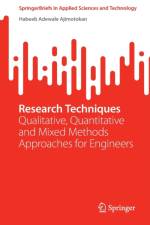
This book provides a hands-on guide towards conducting state-of-the-art engineering research and gaining a patent. It lists pragmatic, step-by-step instructions that cover every stage in engineering research and patent gaining, from choosing a topic to the presentation of research outcomes or patent application. The topics include the introduction and basic concepts of engineering research; research problem and questions; use of libraries, literature search and review; developing a research plan; research data collection methods, analysis and interpretation; project report writing and presentations; and inventions and patents. This book is ideal for engineering undergraduate and postgraduate students and/or first-time or novice researchers and academics intending to launch their research studies and careers.
The epistemological synthesis of the various theories of evolution, since the first formulation in 1802 with the transmission of the inherited characters by J.B. Lamarck, shows the need for an alternative synthesis to that of Princeton (1947). This new synthesis integrates the scientific models of self-organization developed during the second half of the 20th century based on the laws of physics, thermodynamics, and mathematics with the emergent evolutionary problematics such as self-organized memory.This book shows, how self-organization is integrated in modern evolutionary biology. It is divided in two parts: The first part pays attention to the modern observations in paleontology and biology, which include major theoreticians of the self-organization (d'Arcy Thompson, Henri Bergson, Rene Thom, Ilya Prigogine). The second part presents different emergent evolutionary models including the sciences of complexity, the non-linear dynamical systems, fractals, attractors, epigenesis, systemics, and mesology with different examples of the sciences of complexity and self-organization as observed in the human lineage, from both internal (embryogenesis-morphogenesis) and external (mesology) viewpoints.
This book provides a holistic evidence-based perspective on conceptual, clinical, assessment, and treatment aspects of key non-substance-based addictive disorders related to: gambling, gaming, social media, smartphone, internet, love, sex, exercise, work, and shopping. Each chapter focuses on a different addictive disorder and is structured in a user-friendly way to enable the reader fast navigation, yet the main aspects of the respective disorders are covered in the necessary depth. All in all, this book offers a timely, self-contained introduction to both key concepts and the latest scientific developments in behavioral addictions. It addresses mental health practitioners, researchers in psychology, neuroscience and communication, and undergraduate and postgraduate students alike.
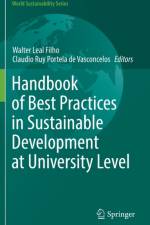
This book gives a special emphasis to state-of-the-art descriptions of approaches, methods, initiatives, and projects from universities, stakeholders, organizations, and civil society across the world, regarding cross-cutting issues in sustainable development.There is a perceived need for mobilizing the various stakeholders when attempting to promote sustainability in higher education and to promote best practices, which may inspire further initiatives. But despite this need, there are a few publications handling this matter in a coherent way. In order to meet the pressing need for publications which may document and disseminate examples of best practice on sustainable development at university level, the "e;Handbook of Best Practices in Sustainable Development at University Level"e; is being published.This book is produced by the European School of Sustainability Science and Research (ESSSR), through the Inter-University Sustainable Development Research Programme (IUSDRP) and contains inputs from authors across all geographical regions.The book also discusses examples of initiatives coordinated by universities but involving civil society, the private sector, and public sector (including local, national, and intergovernmental bodies). In particular, it describes practical experiences, partnerships, networks, and training schemes for building capacity aimed at fostering the cause of sustainable development at institutions of higher education.Thanks to its design and the contributions by experts from various areas, it provides a welcome contribution to the literature on sustainable development, and it may inspire further works in this field.
This book examines the economic theories and policies that underline the governance of the European Union. Through exploring the history of European economic governance and how this framework has evolved over time, it contextualises theoretical influences, policy debates surrounding the European Union and its instruments of governance, including the European Semester, Six Pack, Two Pack, and Fiscal Compact. Forthcoming reforms to fiscal rules and the economic policy architecture of the European Union are also discussed, with a particular focus on the impact of the COVID-19 pandemic. This book aims to give readers a broad understanding of the framework and dynamics that define European economic governance. It will be relevant to researchers and policymakers interested in the European political economy.
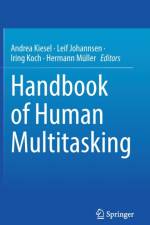
This handbook on human multitasking provides an integrative overview on simultaneous and sequential multitasking and thus combines theorizing on dual task limitations as well as costs related to task switching. In addition to a wide range of empirical findings and their theoretical integration, the editors provide a number of applications of multitasking, like training, interindividual differences and applied research in traffic and health psychology and music expertise.The book is suitable for people interested in multitasking, that is, for researchers and graduate students of cognitive psychology, movement science, sport psychology, cognitive neuroscience, cognitive and neurological rehabilitation, aging sciences, and broader cognitive science.
This volume gathers the latest advances, innovations, and applications in the field of sustainable and smart agriculture, as presented by leading researchers at the XI Farm Machinery and Processes Management in Sustainable Agriculture (FMPMSA), held in Bari, Italy on June 13-15, 2022. The volume covers highly diverse topics, including: management of field and livestock production machinery; management of biomass and agroenergy production; plant protection, soil management and agrochemicals application; smart farming and sustainability; ergonomic, labour organization, pandemic impact; sustainable agriculture in the European Union and other countries. The papers, which are published after a rigorous international peer-review process, highlight numerous exciting ideas that will spur novel research directions and foster multidisciplinary collaboration among different specialists.
The expansion of cross-border power transmission infrastructures and the regional integration of electricity markets are accelerating on several continents. The internationalization of trade in electric energy is embedded in an even greater transformation: the transition from fossil fuels to renewable energies and the race to net zero emissions. Against this backdrop, this book provides a comprehensive examination of the regulatory framework that governs the established and newly emerging electricity trading relations.Taking the technical and economic foundations as a starting point and thoroughly examining current developments on four continents, the book provides a global perspective on the state of the art in electricity market integration. in doing so, it focuses on the most relevant issues including transit of electricity, quantitative restrictions, market foreclosure and anti-competitive practices employed by the actors on electricity markets. In turn, the book carefully analyzes the regulatory framework provided by the WTO Agreements, the Energy Charter Treaty and other relevant preferential trade agreements. In its closing section, it moves beyond the applicable legal architecture to make concrete proposals on the future design of global trade rules specifically tailored to the electricity sector, which could provide a more reliable and transparent framework for the multilateral regulation of electricity trade.
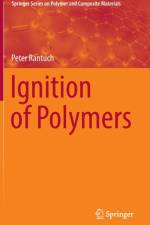
This book provides an overview of the initiation of combustion processes of polymeric materials. It presents physicochemical processes associated with heating as well as numerical methods for initiation parameter calculation. In addition, the book describes thermal degradation of polymers and the effect of an incident heat flux on initiation time. It then highlights the most commonly used devices for measuring the time to ignition using external heat sources. The target group of this book are scientists and researchers dealing with materials combustion and also graduates and practitioners focused on fire protection.
This book analyses the film industries and cinema cultures of Nazi-occupied countries (1939-1945) from the point of view of individuals: local captains of industry, cinema managers, those working for film studios and officials authorized to navigate film policy. The book considers these people from a historical perspective, taking into account their career before the occupation and, where relevant, pays attention to their post-war lives. The perspectives of these historical agents"e; contributes to an understanding of how top-down orders and haphazard signals from the occupying administration were moulded, adjusted and distorted in the process of their translation and implementation. This edited collection offers a more dynamic and less deterministic approach to research on the international expansion of Third-Reich cinema in World War Two; an approach that strives to balance the role of individual agency with the structural determinants. The case studies presented in this book cover the territories of Belgium, Czechoslovakia, France, the Netherlands, Norway, Poland and the Soviet Union.
This book examines how the unique perspectives of BIPOC faculty and students must be integrated into the undergraduate curriculum to expose students of color to education abroad experiences, enhance cultural awareness and sensitivity, and lend to a broader diversity and inclusion perspective. This edited volume, written by authors of color, argues that education abroad programs not only provide essential academic and cultural enrichment but can also be an important nexus of innovation. When approached within a creative, interdisciplinary, and holistic framework, these programs are ripe with opportunities to engage various constituencies and a potent source of strategies for bolstering diversity, recruitment, retention, and graduation. Despite a tendency to view study abroad as a luxurious option for persons with wealth and means, the editors and their authors argue that global education should be thought of as a fundamental and integral part of higher education, for all students, in a global era.
This brief treatise explores the common threads to psychoanalytic thought and theological theory. It uses a psychoanalytic lens to examine Judeo/Christian concepts of individual will, consciousness and the unconscious, and the apparent confounding idea of sin. What is new is that the definition of sin is revealed as a psychoanalytic translation of acting-out. Focusing on the behavior of acting-out it illuminates ideas that are part of Western cultural tradition providing insights to those interested in the psychology, and its history and philosophy. As such, it is a highly relevant work for psychologists, psychiatrists, and psychoanalysts, as well as for a comparative study of psychoanalytic and theological intersecting structures.
This book proposes new solutions to the problem of poverty, and begins with providing analyses. It bases most of the analyses and solutions in the context of the digital era. The book also follows, in addition to a scientific distribution, a spatial-geographical one: analyses of countries of the European Union as well as South Africa, while it referring to two main variables, television and art, as agents of poverty alleviation. The book places particular focus on how poverty is understood in the framework of Industry 4.0. It introduces a new expanded Multidimensional Poverty Index with more than 20 dimensions; moreover, it provides a mathematically based solution for the disposal of perishable food. Finally, it does not disregard the crucial aspect of the issue of poverty: that of education planning. This book is of interest to specialists in poverty research, from students to professionals and from professors to activists, without excluding engineers.
Marx, Spinoza and Darwin presents a common thread in its argument: it shows how these authors-certainly with differences among themselves-consolidated a field of investigation that does not resort to transcendent or religious premises in approaching the phenomena they analyze. Thus, when Spinoza declared that the "e;will of God"e; is the "e;sanctuary of ignorance,"e; when Marx provocatively maintained that "e;criticism of religion is the premise of all criticism,"e; or when Darwin polemicized against a millennial creationist approach, all were taking a stand that invited us to view our world through a secular and immanent lens. In addition to this common thread, Martins discusses other issues present in the works of these thinkers, for instance the space that exists for human subjectivity from a Marxist perspective (which is not to be confused with philosophical "e;objectivism"e;): men and women are encouraged to act in the world. With this conceptual background, the concluding chapters of the book address the proliferation of some less examined Christian fundamentalisms in contemporary world, presenting an explanatory hypothesis for the phenomenon.
Policing and firearms: it is a crucial relationship. Should police be routinely armed? If so, what restrictions should be imposed on the use of firearms? Where police are not routinely armed, there is still a need for specialist armed police: how do these units operate, and are they effective?This ground-breaking edited book explores the nexus between policing and firearms with a genuinely international focus. Contributors from Ireland, Germany, the United Kingdom, Brazil, Mexico, the United States, Venezuela, New Zealand, Australia, and Canada explore the issues from a range of perspectives, including human rights, militarization, police legitimacy, and the risks police firearms pose to the community and to police themselves.This thought-provoking collection is an indispensable resource for law enforcement policymakers and students of policing and criminal justice.
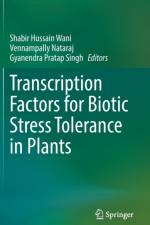
With the erratic changes in climate, crop plants are facing many forms of biotic stresses. When plants are under stress, among several gene families, regulatory genes play a vital role in signal transduction in modulating the expression of genes underpinning several defense pathways and targeting regulatory proteins (viz, transcription factors (TFs)) can be the alternative. Transcription factors directly regulate the downstream R genes and are excellent candidates for disease resistance breeding. Till date, numerous transcription factors have been identified and characterized structurally and functionally. Of them, TF families such as WRKY, NAC, Whirly, Apetala2 (AP2), ethylene responsive elements (ERF) etc. are found to be associated with transcriptional reprogramming of plant defense response. These TFs are responsive to the pathogen's PAMPs/DAMPs - host's PRR protein interactions and specifically binds to the cis-elements of defense genes and regulate their expression. With this background, realizing the importance of TFs in resistance breeding, this book discusses the recent research and developments in this field for various crops.
This book illustrates the multiple roles of textbooks as victim, transformer, and accomplice to conflict by introducing the Intersecting Roles of Education in Conflict (IREC) framework for use in the research, development, production, distribution, and dissemination of textbooks and learning materials. The framework illustrates these three potentially overlapping roles by mapping the complex educational contexts of conflict-affected societies and considering how textbooks, learning materials, and education systems more broadly may simultaneously operate within these various roles. Country case studies from Asia, Europe, Africa, and the Middle East are used to analyze primary and secondary school textbook development, content, and application from a variety of approaches that articulate conflict as protracted and/or socio-political violence. The breadth of case studies shows how conflict discourse circulates in educational systems and materials in a wide range of contexts, indicating that the complexity of the relationship between textbooks and conflict is not unique to one culture, geographic region, or type of conflict.
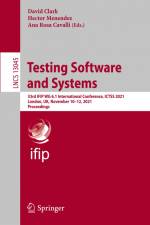
This book constitutes the refereed proceedings of the 33rd IFIP WG 6.1 International Conference on Testing Software and Systems, ICTSS 2021, which was supposed to be held in London, UK, but was held virtually due to the COVID-19 pandemic.The 10 regular papers and 7 short papers presented were carefully reviewed and selected from 36 submissions. Additionally, the volume includes 6 project reports. The papers are divided into the following topical subheadings: Finite State Machine-based Testing; Test Generation and Selection; AI-based Techniques; Use Cases; Project Reports.
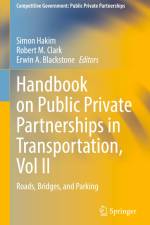
Second in a two-volume set, this book discusses the role of public-private partnerships (PPPs) in global transportation infrastructure, specifically focusing on roads, bridges, and parking. To provide vital services in an era of shrinking government budgets, public-private partnerships have become an increasingly important part of travel infrastructure worldwide. This book describes and analyses the structure of various models of PPPs in several countries, evaluating their effectiveness, and drawing policy implications for future use. The chapters were written by leading international researchers and practitioners in the transportation field where each chapter is a case study on the adoption, implementation, and outcome of transportation services. Taken together, these diverse case studies provide an integrated framework for evaluating, using PPPs, and suggesting policy implications to both the public and the private sectors in transportation. Providing rigorous empirical analysis of PPPs in transportation, this volume will be of interest to researchers in public administration, political science, public choice, and economics as well as practitioners and policymakers involved in establishing and monitoring PPPs in transportation.
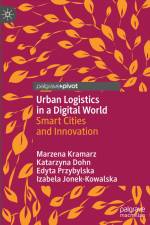
A smart city is a city that collates data via various technological methods, and uses insights gleaned from this data to manage assets, resources, services and operations more efficiently. Though the concept of 'smart cities' is fairly new, there is a vast amount of interest in the topic, exploring how technological advances can be used to better manage the integration of business and operations within a city, as well as how sustainable choices can be written into the fabric of an urban space. This book explores logistics within smart cities: the greater logistical demands of a smart city, how logistics can be adapted to new challenges, and what sort of new logistical support a smart city will need. The book pays particular attention to how logistical innovation within a smart city can lead to greater sustainability in the city, and on a global level. It will be of interest to academics working in logistics, urban planning, innovation management, digital technology, sustainability management, and operations management.
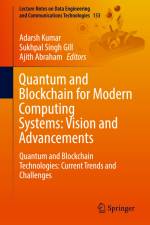
This book states that blockchain technology provides a secure distributed, peer-to-peer, and decentralized network with advanced cryptography primitives and protocols. The important question that arises in the quantum computing world is to test the existing blockchain networks against quantum attacks and design quantum computing enabled secure blockchain solutions. This book encourages professionals from different fields to provide blockchain and quantum technology-integrated solutions that incorporate low-cost, effective QoS, fast, secure, and futuristic demands. This book has surveyed and proposed approaches that improve quantum computing and cryptography protocols. Quantum computing and quantum science are not just helpful in software but the hardware world as well. To design networks with quantum science, quantum-enabled devices like quantum memories and quantum repeaters can be useful to demonstrate for organizations. For example, designing a single quantum repeater for long-distance quantum communication is useful in reducing the network cost, and ensuring better security levels. This book has introduced the quantum computing and blockchain technology aspects, their integration approaches and future directions.
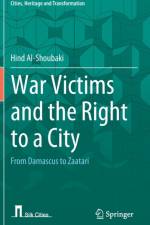
This book analyzes the role of integrated spatial planning in constructing eco-sustainable urban housing in post-conflict scenarios and investigates two different spaces in an emergency: Zaatari refugee camp in Jordan and Damascus city in Syria. The book presents a new innovative tool that assists in building a successful and sustainable reconstruction after emergencies which corresponds to the planning approach's heterogeneous nature within emergency situations. The same innovative theoretical framework also covers the ramifications of climate change on the urban built environment and reduces its sociological impact on the stricken communities.This book is intended for researchers, academics, students, spatial planners, policy makers, think tank groups, and public entities who are interested in post-disaster reconstruction and the issues of refugee camps.
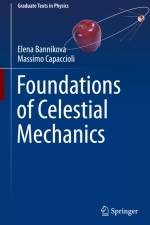
This book provides an introduction to classical celestial mechanics. It is based on lectures delivered by the authors over many years at both Padua University (MC) and V.N. Karazin Kharkiv National University (EB). The book aims to provide a mathematical description of the gravitational interaction of celestial bodies. The approach to the problem is purely formal. It allows the authors to write equations of motion and solve them to the greatest degree possible, either exactly or by approximate techniques, when there is no other way. The results obtained provide predictions that can be compared with the observations. Five chapters are supplemented by appendices that review certain mathematical tools, deepen some questions (so as not to interrupt the logic of the mainframe with heavy technicalities), give some examples, and provide an overview of special functions useful here, as well as in many other fields of physics. The authors also present the original investigation of torus potential. This book is aimed at senior undergraduate students of physics or astrophysics, as well as graduate students undertaking a master's degree or Ph.D.
This book provides a reference guide describing the current status of medication in all major psychiatric and neurological indications, together with comparisons of pharmacological treatment strategies in clinical settings in Europe, USA, Japan and China. In addition, it highlights herbal medicine as used in China and Japan, as well as complementary medicine and nutritional aspects. This novel approach offers international readers a global approach in a single dedicated publication and is also a valuable resource for anyone interested in comparing treatments for psychiatric disorders in three different cultural areas. There are three volumes devoted to Basic Principles and General Aspects, offering a general overview of psychopharmacotherapy (Vol. 1); Classes, Drugs and Special Aspects covering the role of psychotropic drugs in the field of psychiatry and neurology (Vol. 2) and Applied Psychopharmacotherapy focusing on applied psychopharmacotherapy (Vol. 3). These books are invaluable to psychiatrists, neurologists, neuroscientists, medical practitioners and clinical psychologists.
This book explains how peptide-based drug design works, what steps are needed to develop a peptide-based therapeutic, and challenges in synthesis as well as regulatory issues. It covers the design concept of peptide therapeutics from fundamental principles using structural biology and computational approaches. The chapters are arranged in a linear fashion. A fresh graduate or a scientist who works on small molecules can use this to follow the design and development of peptide therapeutics to use as understanding the basic concepts. Each chapter is written by experts from academia as well as industry. Rather than covering extensive literature, the book provides concepts of design, synthesis, delivery, as well as regulatory affairs and manufacturing of peptides in a systematic way with examples in each case. The book can be used as a reference for a pharmaceutical or biomedical scientist or graduate student who wants to pursue their career in peptide therapeutics. Some chapters will be written as a combination of basic principles and protocol so that scientists can adopt these methods to their research work. The examples provided can be used to perform peptide formulation considerations for the designed peptides. The book has nine chapters, and each chapter can be read as an independent unit on a particular concept.
This book provides insights into IoT, its applications, and various implementation techniques. The authors first discuss the IoT design methodology to define the domain model. They then cover various connection methodologies used in IoT such as Ethernet, Wi-Fi, low powered wide area network (LPWAN), Bluetooth, RFID, cellular, and satellite, and more, along with their challenges. An example is made on the designing process using Arduino, which offers smart, connected, and secure elements; they also illustrate the integration of IoT with Blockchain, cloud, machine learning, big data, embedded software, sensors, etc. The book going on to cover the future of IoT in various sectors and how IoT will continue to be game-changing technology.
Abonner på vårt nyhetsbrev og få rabatter og inspirasjon til din neste leseopplevelse.
Ved å abonnere godtar du vår personvernerklæring.