














Gjør som tusenvis av andre bokelskere
Abonner på vårt nyhetsbrev og få rabatter og inspirasjon til din neste leseopplevelse.
Ved å abonnere godtar du vår personvernerklæring.Du kan når som helst melde deg av våre nyhetsbrev.

This edited volume analyzes participatory practices in art and cultural heritage in order to determine what can be learned through and from collaboration across disciplinary borders. Following recent developments in museology, museum policies and practices have tended to prioritize community engagement over a traditional focus on collecting and preserving museal objects. At many museal institutions, a shift from a focus on objects to a focus on audiences has taken place. Artistic practices in the visual arts, music, and theater are also increasingly taking on participatory forms. The world of cultural heritage has seen an upsurge in participatory governance models favoring the expertise of local communities over that of trained professionals. While museal institutions, artists, and policy makers consider participation as a tool for implementing diversity policy, a solution to social disjunction, and a form of cultural activism, such participation has also sparked a debate on definitions, and on issues concerning the distribution of authority, power, expertise, agency, and representation. While new forms of audience and community engagement and corresponding models for "e;co-creation"e; are flourishing, fundamental but paralyzing critique abounds and the formulation of ethical frameworks and practical guidelines, not to mention theoretical reflection and critical assessment of practices, are lagging.This book offers a space for critically reflecting on participatory practices with the aim of asking and answering the question: How can we learn to better participate? To do so, it focuses on the emergence of new norms and forms of collaboration as participation, and on actual lessons learned from participatory practices. If collaboration is the interdependent formulation of problems and entails the common definition of a shared problem space, how can we best learn to collaborate across disciplinary borders and what exactly can be learned from such collaboration?
Businesses constantly look for ways to achieve better performance, and business schools play an important role through their curricula by teaching such methods and helping budding and experienced managers find innovative paths. The author of this book, Prof. Peter Lorange, a well-accomplished expert at business and academic leadership, draws on a set of reflections from his vast experience in both fields to offer core messages which help in improving business education. The author believes that experience-based reflections tend to be both more interesting and more useful than mere chronological, biographical ones, or conceptual reviews of management dimensions without links to practice. The book helps academics, business school management, and even advanced students understand how to bring a practical focus to learning and teaching business via a holistic curriculum. The book also features a special focus on how to integrate family business perspectives to the curriculum.
This is an increasingly timely book, focusing on issues arising from the impact of COVID-19 on the health care law of the Central and East European countries. It deals with dualism and system of health care law, depicts legal personality in the field of health care, examines property rights and turnover of human tissues, considers moral rights in this field, intellectual ownership in the field of medicine and pharmacy, contracts on health care and contracts on rendering medical services, the legal relationships of transplantology, post-mortem reproduction and donorship, features of family personal property rights in the field of health care, problems of legal regulation of medical workers labour, investigates private legal relationships of surrogate motherhood with foreign element. Special attention is given to the alternative resolution of health care disputes and impact of pandemic on the effective health rights protection. The book is intended for wide auditoria of scholars and practitioners, who engaged in health care rights protection, as well as judges and practicing lawyers, graduate and undergraduate students.
This book offers a unique perspective on the Brazilian communication environment in the middle of its most serious political crisis after a military dictatorship. The 2013 protests were an important turning point in the political life of the country, and are often seen as the trigger of many communicational and political dynamics that have led to recent political events, such as the election of a far right wing president. Understanding the transformation of the communication environment at that moment, as well as its consequences, helps to explain what is happening in the country today. The book's argument finds its foundations in the following: a systemic view of the communication environment, a conception of technology as structured and transformed by its use, and an understanding of communicational dynamics as an essential part of democratic systems. Drawing on both interviews with key actors in the protests and on analysis of a corpus of tweets, the book assesses the relationship between the use of social media and the formation of mainstream discourses surrounding the concept of mediactivism. It also investigates alternative paths of information made possible by the use of social media when new mediators emerge, going on to search for an understanding of the consequences of social media visibility dynamics on the construction of the common world.
This book is a small but practical summary of how one can and should learn science. The author argues that science cannot be taught but has to be learnt. Based on historical examples he shows that practicing science means putting one's intellect into the understanding of simple questions like what, why, how and when events around you happen. The reader understands that the search for the cause and effect relationship of so called normal happenings is a very provocative experience and learning science leads one to it. This is underpinned by looking at everyday experiences and how they can help any lay-person learn science.The author also explains the methodology of science and discusses an integrated approach to science communication. Finally he elaborates on the influence and role of science in society. The book addresses interested general readers, teachers and science communicators.
CSCL has in the past 15 years (and often in conjunction with Springer) grown into a thriving and active community. Yet, lacking is a comprehensive CSCL handbook that displays the range of research being done in this area. This handbook will provide an overview of the diverse aspects of the field, allowing newcomers to develop a sense of the entirety of CSCL research and for existing community members to become more deeply aware of work outside their direct area. The handbook will also serve as a ready reference for foundational concepts, methods, and approaches in the field. The chapters are written in such a way that each of them can be used in a stand-alone fashion while also serving as introductory readings in relevant study courses or in teacher education. While some CSCL-relevant topics are addressed in the International Handbook of the Learning Sciences and the International Handbook of Collaborative Learning, these books do not aim to present an integrated and comprehensive view of CSCL. The International Handbook of Computer- Supported Collaborative Learning covers all relevant topics in CSCL, particularly recent developments in the field, such as the rise of computational approaches and learning analytics.
This handbook examines the psychology of fatherhood throughout the lifespan and across multiple contexts. It synthesizes the trajectory of research and theorization of fathering that has traditionally dominated fatherhood literature. The book explores fathering within the developmental stages of children, from infancy to adulthood. In addition, it addresses the health and well-being of fathers from the perinatal period onward, with a focus on isolation, loss, trauma, and mental and physical health. The book emphasizes positive fatherhood and masculinity, thereby offering new perspectives of fatherhood. It synthesizes cutting-edge research on the intersectionality of fathering and provides knowledge of fatherhood for diverse populations, including military, LGBTQ, and fathers on the margins. The handbook reviews clinical assessment as well as community-based prevention and intervention strategies for issues of fatherhood and examines directions for future public policy and on-the-ground work. It offers recommendations for promoting the health and well-being of fathers and their families from multiple perspectives.Key areas of coverage include:Historical, multicultural, and future directions in the research of fatherhood.Fatherhood and child development, from infancy to emerging adulthood.Grandfathering and adult children.Fatherhood and men's mental and physical health and well-being.Positive masculinity and fatherhood.The Handbook of the Psychology of Fatherhood is an invaluable resource for researchers, clinicians and practitioners, and policy advocates as well as graduate students in developmental psychology, social work, public health, pediatrics, human development, family studies, child and adolescent psychiatry, school and educational psychology, and all interrelated disciplines.
This introductory textbook provides a comprehensive and up-to-date overview of the main issues in contemporary philosophy of social cognition. It explains and critically discusses each of the key philosophical answers to the captivating question of how we understand the mental life of other sentient creatures. Key Features:* Clearly and fully describes the major theoretical approaches to the understanding of other people's minds.* Suggests the major advantages and limitations of each approach, indicating how they differ as well as the ideas they have in common. * Tests each philosophical theory against the best available empirical data from psychology, neuroscience and psychopathology.* Includes suggestions for additional reading and practice study questions at the end of each chapter. Philosophy of Social Cognition is essential reading for all undergraduate and graduate students taking introductory courses on social cognition. It is also ideal for courses on cognitive neuroscience, social psychology and sociological theory.
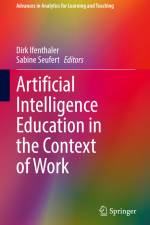
This edited volume remedies existing deficiencies in the literature on artificial intelligence and education in the context of work. The topics addressed by this book are: * Supporting formal and informal learning through AI* Human-machine collaboration for learning at the workplace, including the potential of human-AI interaction in professional and vocational education contexts, design, use, and evaluation of human-AI hybrid systems for learning* Intelligent and Interactive Technologies for Learning, including natural language processing and speech technologies; data mining and machine learning; knowledge representation and reasoning; semantic web technologies, chat bot-mediated learning, and conversational learning, * AI-enabled applications for skills management and personalized learning, such as AI-enabled coaching, personalized skill management, and intelligent tutoring systems. * Case studies for the implementation and use of AI-enabled learning and performance solutions, such as personal learning experience platforms, and automated performance feedback.
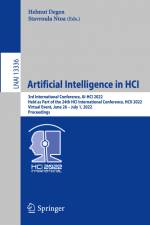
This book constitutes the refereed proceedings of the Third International Conference on Artificial Intelligence in HCI, AI-HCI 2022, which was held as part of HCI International 2022 and took place virtually during June 26 - July 1, 2022. A total of 1271 papers and 275 posters included in the 39 HCII 2022 proceedings volumes. AI-HCI 2022 includes a total of 39 papers; they are grouped thematically as follows: Human-Centered AI; Explainable and Trustworthy AI; UX Design and Evaluation of AI-Enabled Systems; AI Applications in HCI.
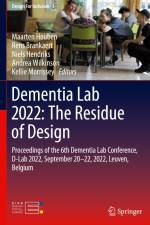
This book gathers the revised and selected contributions to the 6th Dementia Lab Conference, D-Lab 2022, held on September 20-22, 2022, in Leuven. It describes original and innovative research on how design can contribute to the quality of life of people with dementia, their loved ones, and caregivers. The papers highlight the value of participation within design, analyzing it at three levels: personal, product, and organizational. The presented ideas and findings address 'The Residue of Design' and go beyond the initial impact of the design itself by looking at what benefits design research brings for people with dementia. The papers cover topics such as the development of creative design methods to foster participation and engagement from people with dementia, evaluation studies or critical reflections that reveal the impact of products and the built environment in dementia care, and raising awareness and countering stigma in societal views on dementia.
This volume details the function of hydrocarbon seeps, their evolution over time, the most important seep occurrences and the fauna present in ancient hydrocarbon seeps. While several publications exist that cover modern seeps and vents, fossil seeps only constitute a small component of the literature. As such, many geologists, stratigraphers and paleontologists, as well as undergraduates and graduate students, are not very familiar with ancient hydrocarbon seep deposits and their associated fauna. This text is the first to comprehensively discuss the nature of such animal groups and how to recognize them. In addition to summarizing available knowledge on these topics for specialists in the field, this book offers the background needed to be of use to students as well as the wider community of geologists and paleontologists.
This book discusses, develops and applies the theory of Vilenkin-Fourier series connected to modern harmonic analysis.The classical theory of Fourier series deals with decomposition of a function into sinusoidal waves. Unlike these continuous waves the Vilenkin (Walsh) functions are rectangular waves. Such waves have already been used frequently in the theory of signal transmission, multiplexing, filtering, image enhancement, code theory, digital signal processing and pattern recognition. The development of the theory of Vilenkin-Fourier series has been strongly influenced by the classical theory of trigonometric series. Because of this it is inevitable to compare results of Vilenkin-Fourier series to those on trigonometric series. There are many similarities between these theories, but there exist differences also. Much of these can be explained by modern abstract harmonic analysis, which studies orthonormal systems from the point of view of the structure of a topological group.The first part of the book can be used as an introduction to the subject, and the following chapters summarize the most recent research in this fascinating area and can be read independently. Each chapter concludes with historical remarks and open questions. The book will appeal to researchers working in Fourier and more broad harmonic analysis and will inspire them for their own and their students' research. Moreover, researchers in applied fields will appreciate it as a sourcebook far beyond the traditional mathematical domains.
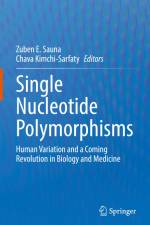
This book explores the importance of Single Nucleotide Polymorphisms (SNPs) in biomedical research. As SNP technologies have evolved from labor intensive, expensive, time-consuming processes to relatively inexpensive methods, SNP discovery has exploded. In terms of human biology, this research, particularly since the completion of the Human Genome Project, has provided a detailed understanding of evolutionary forces that have generated SNPs. It also has shown how SNPs shape human variation. The ability to inexpensively generate and analyze vast amounts of genetic data is poised to transform our understanding of human evolution and biology. "e;Single Nucleotide Polymorphisms"e; covers a broad survey of SNPs and their classification into synonymous and non-synonymous; the role of SNPs in human disease; case studies providing specific examples of synonymous and non-synonymous SNPs associated with human diseases or affecting therapeutic interventions; mechanisms by which synonymous mutations affect protein levels or protein folding which affect human physiology and response to therapy; and the role of SNPs in personalized medicine. Understanding what SNPs are, how they have been shaped is necessary for an increasingly expanding audience. This research will revolutionize the future of medicine. Chapter 4 is available open access under a Creative Commons Attribution 4.0 International License via link.springer.com. SNPs Ability to Influence Disease Risk: Breaking the Silence on Synonymous Mutations in Cancer"e; is available open access under a Creative Commons Attribution 4.0 International License via link.springer.com.
In recent years, consumers are concentrating more on the health benefits of food in order to preserve a healthy lifestyle and therefore becoming more aware of the relationship between diet and disease. This has resulted in a gradual shift from animal-derived to plant-based meals. Functional foods have turned into one of the rapidly expanding areas of the food industry due to the increasing awareness of consumers working to prevent lethal diseases like cancer, diabetes mellitus and cardiovascular disease. Functional foods are seen as the food or food components that manifest efficiency in protecting from diseases and attaining a healthier lifestyle by administering additional benefits on human physiology and metabolic functions apart from basic nutritional requirements of the body. Cereals hold a prominent place in this new market. Cereals and cereal foods are important energy sources and many phytochemicals such as dietary fiber, resistant starch, vitamins, minerals, lignans, phytic acid and phenolic compounds that provide a variety of health benefits. Eating functional cereal foods is an easy method to increase nutrients associated with whole grains without changing eating habits. Functional Cereals and Cereal Foods: Properties, Functionality and Applications comprehensively covers the Chemistry and nutritional composition of functional cereals components, their functionality and therapeutic significance, current innovations and functional approaches in improving attributes and biofortification and quality improvement of cereal products. The different types of functional cereals and their unlimited opportunities for the production of functional foods are covered in full, including gluten-free products and all the newest cereal processing technologies. For researchers in search of a fully up-to-date look at functional cereal foods and technologies and their important place on the current market, this text provides a timely and comprehensive overview.
This book provides a selection of recent developments in scanning ion conductance microscopy (SICM) technology and applications. In recent years, SICM has been applied in an ever-increasing number of areas in the bioanalytical sciences. SICM is based on an electrolyte-filled nanopipette with a nanometer-scale opening, over which an electric potential is applied. The induced ion current is measured, which allows to directly or indirectly quantify various physical quantities such as pipette-sample distance, ion concentration, sample elastic modulus among many others. This makes SICM well suited for applications in electrolytes - most prominently for the study of live cells.This book starts with a historic overview starting from the days of the invention of SICM by Paul Hansma at the University of California at Santa Barbara in 1989. SICM is a member of the family of scanning probe microscopies. It is related to another prominent member of the family, atomic force microscopy (AFM), which has found application in almost any field of nanoscale science. The advantages and disadvantages of SICM over AFM are also outlined. One of the most effective and break-through applications of SICM nanopipettes is in electrochemistry. The different routes and applications for doing electrochemistry using nanopipettes are also discussed. In addition the book highlights the ability of SICM for surface positioning with nanometer precision to open up new vistas in patch clamp measurements subcellular structures. Finally the book presents one research area where SICM has been making a lot of contributions, cardiac research and the endeavors to combine SICM with super-resolution optical microscopy for highest-resolution joint topography and functional imaging.
This Palgrave Pivot presents a concise yet comprehensive history of sociology in Ecuador. The case of Ecuador is especially interesting, as Ecuadorian sociology oscillated between theoretical debates-some of them out of time-and a constant search for ways of applying them to the local reality. In the decades after its formal creation in 1915, early academic sociology in Ecuador worked creatively with already outdated theories around positivism and organicism to understand the indigenous population's position, the regional fragmentation, and the formation of a coherent nation-state in Ecuador. After a short attempt of installing a more technical sociology in the 1960s, those topics were taken up and re-read by Marxist-inspired critical sociology after the 1970s, leading to the nation-wide institutionalization of one particular tradition that could connect to continental debates. This book engages with several relevant debates in social sciences and humanities, particularly by adding to the thriving research on social sciences and the role of the university and higher education in Latin America. Furthermore, it touches some recently influential topics in sociology: Ecuadorian sociology can be read as Southern Theory or engaged with from a postcolonial or decolonial perspective; the research on how ideas travel, are diffused or localized is vital for understanding sociology in Ecuador; the relation between academia and politics; and more.
This book introduces basic and practical information on fertigation to researchers, extension agents and growers. To provide understanding of the basic issues regarding the appropriate selection of fertilizer injectors, fertilizer compounds used in fertigation for growing various field and horticultural crops. The book provides useful basic principles and practical information concerning fertilizer management and fertigation techniques of field, horticulture, and medicinal and aromatic crops. The book focuses on the agronomic value of fertigation practice and provides the reader with best practical advice required for successful fertigation based on the field experience. This book summarizes the basic principles and practices of fertigation techniques to ensure accurate and efficient crop nutrition. The book consists of 5 chapters covering the following topics: Introduction to chemigation and fertigation, selecting an injector for fertilizer/chemical injection, fertilizers for fertigation, major, secondary, and micronutrient fertilizers used in fertigation, and fertigation practices: Egyptian case study. It also includes appendixes for fertigation calculation examples, calibration of an injection pump, calculating the quantities of fertilizers needed for fertigation, nutrients requirements per each ton of crop yield produced, macronutrient requirements for some filed, fiber, fruit, vegetable crops, and medicinal and aromatic plants.Fertigation is one of the smart practices that help attains sustainable food production and minimize environmental pollution. Fertigation is the application of dissolved mineral fertilizers, soil amendments, and other water-soluble products to the roots of crops through irrigation water. This book provides understanding of the basic issues regarding the appropriate selection of injectors and fertilizer compounds used in fertigation for growing various field and horticultural crops which are essential to attain higher productivity, increasing food security and reducing food contaminations. It also clarifies the advantages of fertigation and set solutions to overcome its disadvantages.
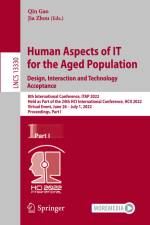
This two-volume set constitutes the refereed proceedings of the 8th International Conference on Human Aspects of IT for the Aged Population, ITAP 2022, held as part of the 24th International Conference, HCI International 2022, held as a virtual event, during June-July 2022.ITAP 2022 includes a total of 75 papers, which focus on topics related to designing for and with older users, technology acceptance and user experience of older users, use of social media and games by the aging population, as well as applications supporting health, wellbeing, communication, social participation and everyday activities. The papers are divided into the following topical sub-headings.Part I: Aging, Design and Gamification; Mobile, Wearable and Multimodal Interaction for Aging; Aging, Social Media and Digital Literacy; and Technology Acceptance and Adoption: Barriers and Facilitators for Older AdultsPart II: Intelligent Environment for Daily Activities Support; Health and Wellbeing Technologies for the Elderly; and Aging, Communication and Social Interaction.
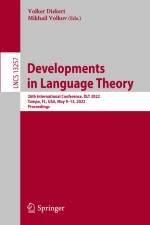
This book constitutes the proceedings of the 26th International Conference on Developments in Language Theory, DLT 2022, which was held in Tampa, FL, USA, during May, 2022. The conference took place in an hybrid format with both in-person and online participation.The 21 full papers included in these proceedings were carefully reviewed and selected from 32 submissions. The DLT conference series provides a forum for presenting current developments in formal languages and automata.
This book proposes an original approach to analyse the social and professional trajectories of migrant women with tertiary education. It focuses on the role of essentialism in stratifying labour markets based on gender, class and racialisation, and in limiting migrant women's employment opportunities. Based on multi-sited fieldwork conducted in France and Italy, the book highlights how essentialism influences the assessment of working capacities, stressing that skills are socially constructed and valued depending on who embodies them. It also emphasises that migrant women and labour market gatekeepers are not only passively accepting essentialism, but some are also resisting and eventually challenging this process. Deconstructing essentialism enables us to better understand the mechanisms that produce stratifications and aids in designing paths towards more equal access to employment.
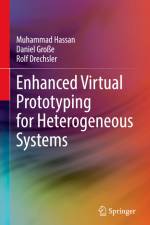
This book describes a comprehensive combination of methodologies that strongly enhance the modern Virtual Prototype (VP)-based verification flow for heterogeneous systems-on-chip (SOCs). In particular, the book combines verification and analysis aspects across various stages of the VP-based verification flow, providing a new perspective on verification by leveraging advanced techniques, like metamorphic testing, data flow testing, and information flow testing. In addition, the book puts a strong emphasis on advanced coverage-driven methodologies to verify the functional behavior of the SOC as well as ensure its security.Provides an extensive introduction to the modern VP-based verification flow for heterogeneous SOCs;Introduces a novel metamorphic testing technique for heterogeneous SOCs which does not require reference models;Includes automated advanced data flow coverage-driven methodologies tailored for SystemC/AMS-based VPs;Describes enhanced functional coverage-driven methodologies to verify various functional behaviors of RF amplifiers.
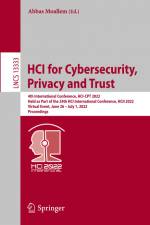
This book constitutes the refereed proceedings of the 4th International Conference on HCI for Cybersecurity, Privacy and Trust, HCI-CPT 2022, held as part of the 23rd International Conference, HCI International 2022, which was held virtually in June/July 2022. The total of 1271 papers and 275 posters included in the HCII 2022 proceedings was carefully reviewed and selected from 5487 submissions. The HCI-CPT 2022 proceedings focuses on to user privacy and data protection, trustworthiness and User Experience in cybersecurity, multi-faceted authentication methods and tools, HCI in cyber defense and protection, studies on usable security in Intelligent Environments, as well as the impact of the Covid-19 pandemic on cybersecurity
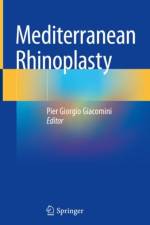
The book offers a thorough description of rhinoplasty techniques for patients from the Mediterranean area. Noses come in different shapes and colors, depending on the various biotypes of the different geographic regions. This represents a topical issue for rhinoplasty surgeons, since different nasal morphologies imply different anatomic conditions. Moreover, beauty ideal varies from one region to the other, and those differences need to be taken into consideration. Based on these premises, the ethnic rhinoplasty is becoming more and more important among facial plastic surgeons. In order to broaden the understanding of anatomo-functional and cultural or cosmetic aspects specific to the Mediterranean nasal biotype, the book collects and discusses the experiences of surgeons operating on patients from the various regions of the Mediterranean area. Mediterranean Rhinoplasty represents a valuable resource not only for surgeons who are already experts in facial plastic surgery, but also for young otorhinolaryngologists, plastic surgeons and maxillofacial surgeons.
The book explores the key factors affecting the successful implementation of public participation spatial systems in participatory planning as part of the urban governance system. It brings insight from nation-wide research in the Czech Republic and the implications to other countries in the region and beyond. The main aim of the proposed book is to analyse the state-of-the-art of using geoparticipatory tools for citizens' participation in community decision-making process and to suggest the effective implementation of the geoparticipatory tools available in urban governance.This book explores the situation in the Czech Republic as a representative of for Eastern Bloc country, three decades after the political transition, on its way to public participation in local and urban governance. The active involvement of the citizens into the local and urban decision making process via geoparticipatory spatial tools is becoming a popular research field among human geographers, behavioural geographers, GIS scientists, environmental psychologists, policy scientists and many others scientific areas.
Careers in Food Science provides detailed guidelines for students and new employees in the food industry to ensure a successful start to their career. Every step towards a rewarding career in this rapidly evolving industry is covered, from which classes to take in college and which degrees to earn, to internships, and finally how to land, and keep, the first job. This book also provides day-to-day examples of what to expect from the many jobs available to help students decide what to do and where to go.The food industry includes a wide array of fields and careers not only in food production and in academia, but also in government and research institutions. In fact, it is estimated that by 2010 there will be 52,000 annual job openings for college graduates in the Food, Agriculture, and Natural Resources system in the U.S. alone. Written by people who have experience or are currently working in each sector, this book seeks to shed some light on starting, or furthering, a career in this exciting field.
This volume constitutes the refereed proceedings of the workshops held at the 33rd International Conference on Database and Expert Systems Applications, DEXA 2022, held in Vienna, Austria, in August 2022: The 6th International Workshop on Cyber-Security and Functional Safety in Cyber-Physical Systems (IWCFS 2022); 4th International Workshop on Machine Learning and Knowledge Graphs (MLKgraphs 2022); 2nd International Workshop on Time Ordered Data (ProTime2022); 2nd International Workshop on AI System Engineering: Math, Modelling and Software (AISys2022); 1st International Workshop on Distributed Ledgers and Related Technologies (DLRT2022); 1st International Workshop on Applied Research, Technology Transfer and Knowledge Exchange in Software and Data Science (ARTE2022). The 40 papers were thoroughly reviewed and selected from 62 submissions, and discuss a range of topics including: knowledge discovery, biological data, cyber security, cyber-physical system, machine learning, knowledge graphs, information retriever, data base, and artificial intelligence.
This textbook is a practical and theoretical teacher guide on how to develop critical thinking and source criticism in contemporary elementary and secondary education, which requires students to develop their critical thinking from different perspectives as well as to develop their ability to critically evaluate sources they use for school-related work. What can a teacher do to support such development? The authors discuss several different perspectives on how one, as a teacher, can think about and work with source criticism together with the students. In the first part of the book a theoretical background and a principled discussion of critical thinking are discussed. This includes psychological and philosophical perspectives on source criticism. In the second part there are concrete teaching examples and tips on how to work with source criticism in both primary and secondary school.
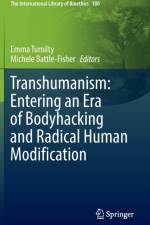
This book surveys the distinctions that underlie the unbound potential and existential risks of life expansion and radical modifications posed by a transhuman world. Humanness is in flux as human bodies are being hacked and altered in their quest for super wellness, super intelligence and super longevity. Now is the time to discuss how best to think about dealing with bodies that have been hacked to exceed natural physical limits or more technically, species typical functioning. Enter the advent of transhumanism to take uncertainty by the horns. According to transhumanists, death is unnecessary and medical conventions undermine the possibility to radically evolve. To biohackers, there is no need to wait to explore the risks that conventional medicine dares not. This book is of interest to anyone interested in tapping into this growing movement of modifying the human body as it is right now.
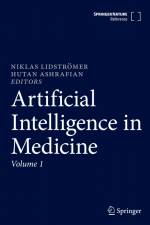
This book provides a structured and analytical guide to the use of artificial intelligence in medicine. Covering all areas within medicine, the chapters give a systemic review of the history, scientific foundations, present advances, potential trends, and future challenges of artificial intelligence within a healthcare setting.Artificial Intelligence in Medicine aims to give readers the required knowledge to apply artificial intelligence to clinical practice. The book is relevant to medical students, specialist doctors, and researchers whose work will be affected by artificial intelligence.
Abonner på vårt nyhetsbrev og få rabatter og inspirasjon til din neste leseopplevelse.
Ved å abonnere godtar du vår personvernerklæring.