










Gjør som tusenvis av andre bokelskere
Abonner på vårt nyhetsbrev og få rabatter og inspirasjon til din neste leseopplevelse.
Ved å abonnere godtar du vår personvernerklæring.Du kan når som helst melde deg av våre nyhetsbrev.

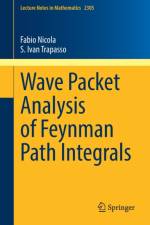
The purpose of this monograph is to offer an accessible and essentially self-contained presentation of some mathematical aspects of the Feynman path integral in non-relativistic quantum mechanics. In spite of the primary role in the advancement of modern theoretical physics and the wide range of applications, path integrals are still a source of challenging problem for mathematicians. From this viewpoint, path integrals can be roughly described in terms of approximation formulas for an operator (usually the propagator of a Schrodinger-type evolution equation) involving a suitably designed sequence of operators.In keeping with the spirit of harmonic analysis, the guiding theme of the book is to illustrate how the powerful techniques of time-frequency analysis - based on the decomposition of functions and operators in terms of the so-called Gabor wave packets - can be successfully applied to mathematical path integrals, leading to remarkable results and paving the way to a fruitful interaction.This monograph intends to build a bridge between the communities of people working in time-frequency analysis and mathematical/theoretical physics, and to provide an exposition of the present novel approach along with its basic toolkit. Having in mind a researcher or a Ph.D. student as reader, we collected in Part I the necessary background, in the most suitable form for our purposes, following a smooth pedagogical pattern. Then Part II covers the analysis of path integrals, reflecting the topics addressed in the research activity of the authors in the last years.
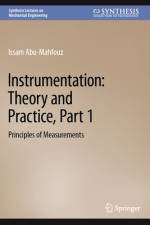
This book emphasizes simple and concise coverage of the fundamental aspects of measuring systems. It is designed to provide the reader with essential knowledge regarding signals, signal analysis, signal conditioning circuits, and data acquisition systems. The prerequisites are a basic knowledge of multivariable calculus, introductory physics, and a familiarity with basic electrical circuits and components. Delivers topics and techniques that are fundamental to the understanding of the measurement process. These include standards, dynamic characteristics of measuring devices, statistical analysis of data, uncertainty analysis, signal conditioning devices, transistors,and logic circuits, analog to digital converters. To aid in the understanding of the subject matter and related applications, the book chapters are complemented with examples and problems. Careful attention was paid to the details of figures and illustration to help enforce the learning objectives of this book.
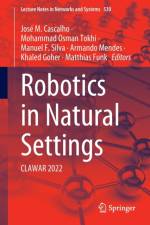
This book includes recent research on climbing and walking robots. CLAWAR 2022 is the twenty-fifth International Conference Series on Climbing and Walking Robots and Mobile Machine Support Technologies. The conference is organized by CLAWAR Association in collaboration with the University of the Azores, S. Miguel, Portugal, during September 12-14, 2022. CLAWAR 2022 provides an updated state of the art on robotics and its use in a diversity of applications and/or simulation scenarios, within the framework "e;Robotics in Natural Settings"e;. The topics covered include Bio-Inspired Robotics, Biped Locomotion, Educational Robotics, Human-Machine/Human-Robot Interaction, Innovative Actuators, Inspection, Legged Locomotion, Modeling and Simulation of CLAWAR, Outdoor and Field Robotics, Planning and Control, Wearable Devices and Assistive Robotics, and the Use of A.I. in Robotics. The intended readership includes participants of CLAWAR 2022 conference, international robotic researchers, scientists, and professors of related topics worldwide, and professors and students of postgraduate courses in Robotics and Automation, Control Engineering, Mechanical Engineering, and Mechatronics.
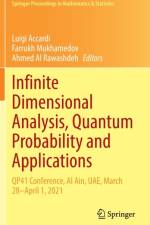
This proceedings volume gathers selected, peer-reviewed papers presented at the 41st International Conference on Infinite Dimensional Analysis, Quantum Probability and Related Topics (QP41) that was virtually held at the United Arab Emirates University (UAEU) in Al Ain, Abu Dhabi, from March 28th to April 1st, 2021. The works cover recent developments in quantum probability and infinite dimensional analysis, with a special focus on applications to mathematical physics and quantum information theory. Covered topics include white noise theory, quantum field theory, quantum Markov processes, free probability, interacting Fock spaces, and more. By emphasizing the interconnection and interdependence of such research topics and their real-life applications, this reputed conference has set itself as a distinguished forum to communicate and discuss new findings in truly relevant aspects of theoretical and applied mathematics, notably in the field of mathematical physics, as well as an event of choice for the promotion of mathematical applications that address the most relevant problems found in industry. That makes this volume a suitable reading not only for researchers and graduate students with an interest in the field but for practitioners as well.
In times of globalization, digitalization and demographic change, the COVID-19 pandemic has shown us the fragility and complexity of the world of work. It represents the peak of a process of change in the world of work in economic, social, socio-political and individual psychological terms.This book outlines how effective and future-oriented human resource management can look like in times of demographic and technological change on the one hand and the immediate and lasting effects of the coronavirus pandemic on the other hand. It provides the tools for effective human resource management, summarized in the following seven success factors: demographic-oriented recruitment, strength-oriented workforce deployment, age-appropriate HR development, new generation contract, family and gender, the vital employee, management of interests and expectations.The aim of the book is not only to provide solutions to problems caused by the changing world of work and the pandemic, but also to show how success factors can emerge from these inevitable phenomena. It will be of interest to professionals in the field of human resource management.
This book presents the selected proceedings of the (third) fourth Vehicle and Automotive Engineering conference, reflecting the outcomes of theoretical and practical studies and outlining future development trends in a broad field of automotive research. The conference's main themes included design, manufacturing, economic and educational topics.
This book covers selected research works presented at the fifth International Conference on Networking, Information Systems and Security (NISS 2022), organized by the Research Center for Data and Information Sciences at the National Research and Innovation Agency (BRIN), Republic of Indonesia, and Moroccan Mediterranean Association of Sciences and Sustainable Development, Morocco, during March 30-31, 2022, hosted in online mode in Bandung, Indonesia. Building on the successful history of the conference series in the recent four years, this book aims to present the paramount role of connecting researchers around the world to disseminate and share new ideas in intelligent information systems, cyber-security, and networking technologies. The 49 chapters presented in this book were carefully reviewed and selected from 115 submissions. They focus on delivering intelligent solutions through leveraging advanced information systems, networking, and security for competitive advantage and cost savings in modern industrial sectors as well as public, business, and education sectors. Authors are eminent academicians, scientists, researchers, and scholars in their respective fields from across the world.
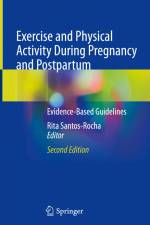
This is the second edition of a well-received, practice oriented, multidisciplinary book filling the gap between evidence-based knowledge on the benefits of physical activity and exercise during pregnancy and postpartum and the implementation of exercise programs and related health promotion measures in pregnant women.Readers will find up-to-date evidence on the psychological, social, physiological, body composition, musculoskeletal, and biomechanical changes that occur during pregnancy and their implications for physical activity and exercise. Further, the authors equip the reader with the latest guidelines and detailed description of exercise testing, prescription, selection and adaptation for pregnant and postpartum women, including those with clinical conditions.This new edition has been thoroughly updated, and includes additional chapters focused on the pedagogical intervention in pre and postnatal exercise programs, exercise prescription and adaptation during postpartum and diet recommendations for the pregnant exerciser and athlete. Written by recognized experts in the field, the book aims to allay undue fears regarding the consequences of exercising during pregnancy. Moreover, it provides medical, sports, and fitness professionals both with the knowledge and the practical expertise needed to offer an optimal guidance on exercising to pregnant exercisers and athletes.
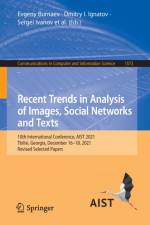
This book constitutes revised selected papers of the 10th International Conference on Analysis of Images, Social Networks and Texts, AIST 2021, held in Tbilisi, Georgia, in December 2021. Due to the COVID-19 pandemic the conference was held in hybrid mode. The 17 full papers were carefully reviewed and selected from 118 submissions, out of which 92 were sent to peer review. The papers are organized in topical sections on natural language processing; computer vision; data analysis and machine learning; social network analysis; theoretical machine learning and optimisation.
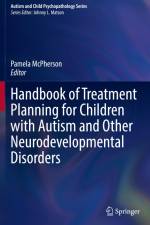
This handbook addresses treatment planning for children with autism spectrum disorder (ASD) and other neurodevelopmental disabilities (NDDs) using a medical home perspective. It examines the medical home model, which has been promoted as the standard of care by the American Academy of Pediatrics since 2002, emphasizing collaboration between patients, families, and providers to optimize care. The handbook addresses treatment planning, including the coordination of the care provided by multiple specialists with a clear, shared vision for maximizing each child's potential.Key areas of coverage include:* Elements of treatment planning, history of the medical home model, documentation, and strategies to facilitate communication.* Goals of treatment from the perspectives of the family, person served, care providers, and fiscal and regulatory bodies.* Role of each specialist, highlighting the most common conditions experienced by children with ASD and other NDD with expectations for assessment and treatment.* Detailed recommendations for making referrals and assisting the child and family in preparing for appointments.The Handbook of Treatment Planning for Children with Autism Spectrum Disorder and Other Neurodevelopmental Disabilities is a must-have resource for researchers, professors, and graduate students as well as clinicians, therapists, and other professionals across such interrelated disciplines as clinical child, school, and developmental psychology, child and adolescent psychiatry, social work, rehabilitation medicine/therapy, pediatrics, and special education.
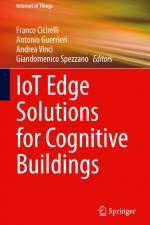
This book outlines the promise of the field of the Cognitive Internet of Things when it is applied to cognitive buildings. After an introduction, the authors discuss the goals of cognitive buildings such as operation in a more efficient, flexible, interactive, intuitive, and sustainable way. They go on to outline the benefits that these technologies promise to building owners, occupants, and their environments that range from reducing energy consumption and carbon footprint to promoting health, well-being, and productivity. The authors outline technologies that provide buildings and equipment with the ability to collect, aggregate, and analyze data and how this information can be collected by sensors and related to internal conditions and settings, energy consumption, user requests, and preferences to maintain comfort and save energy. This book is of interest to practitioners, researchers, students, and professors in IoT and smart cities.
The globalization of financial markets worldwide has progressively pushed toward simultaneous globalization of accounting information. Thus, during the last 50 years, categories of preparers, users, and regulators have devoted their efforts to support the global comparability of financial reporting aiming at favoring the comparison of corporates' financial performances at a cross-country level. In the same vein, IASB, national standard setters, and jurisdictions have participated in and given momentum to this process. At the same time, academic research has followed this process and tried to build a theoretical framework to address the related issues, to assess the impact on preparers, users, and regulators, while defining hindrances and obstacles to the comparability of financial reporting especially in an IFRS environment. In this context, this book reviews research studies on the comparability of financial reporting at a global level as well as highlights empirical analyses that demonstrate the extent to which global comparability has been achieved, and how it enhances value relevance of earnings across countries. It also looks at the cross-country investors' perspectives by shaping the empirical analysis to provide further insights on the role of the "e;Big Four"e; auditing services in enhancing the comparability of earnings. The book provides an original contribution to the current debate about the comparability of financial reporting under IFRS and will be useful for researchers in the field.
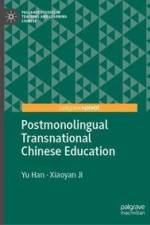
This book examines Transnational Chinese Language Education (TCLE) in the Australian context. Taking a post-monolingual perspective, the authors examine Chinese teachers' monolingual and multilingual practices and mindsets in their educational practices. They find that a Chinese-centric monolingual mindset dominates the Chinese teachers, while a multilingual mindset permeates in their classroom teaching, creating an unconscious tension between the two perspectives. The book proposes that it is the responsibility of teacher educators to train future Chinese teachers with an awareness of this issue, as well as suitable strategies to overcome it and be efficient language teachers. This book will be of interest to applied linguists, pre-service and in-service language teachers, as well as students and scholars of Teaching Chinese to Speakers of Other Languages (TCSOL).
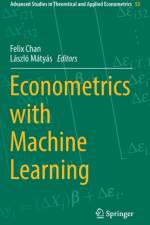
This book helps and promotes the use of machine learning tools and techniques in econometrics and explains how machine learning can enhance and expand the econometrics toolbox in theory and in practice. Throughout the volume, the authors raise and answer six questions: 1) What are the similarities between existing econometric and machine learning techniques? 2) To what extent can machine learning techniques assist econometric investigation? Specifically, how robust or stable is the prediction from machine learning algorithms given the ever-changing nature of human behavior? 3) Can machine learning techniques assist in testing statistical hypotheses and identifying causal relationships in 'big data? 4) How can existing econometric techniques be extended by incorporating machine learning concepts? 5) How can new econometric tools and approaches be elaborated on based on machine learning techniques? 6) Is it possible to develop machine learning techniques further and make them even more readily applicable in econometrics?As the data structures in economic and financial data become more complex and models become more sophisticated, the book takes a multidisciplinary approach in developing both disciplines of machine learning and econometrics in conjunction, rather than in isolation. This volume is a must-read for scholars, researchers, students, policy-makers, and practitioners, who are using econometrics in theory or in practice.
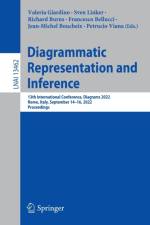
This book constitutes the refereed proceedings of the 13th International Conference on the Theory and Application of Diagrams, Diagrams 2022, held in Rome, Italy, in September 2022. The 11 full papers and 19 short papers presented together with 5 posters were carefully reviewed and selected from 58 submissions. 8 chapters are available open access under a Creative Commons Attribution 4.0 International License via link.springer.com.
This is the first Nursing book on cancer care designed around a conceptual model of whole person care. Key concepts are stress, healing, resilience and health. As a clinical model, nursing goals, desired outcomes, key concepts and proposed psychosocial interventions with patients and family caregivers, advance the practice of clinical nursing toward a more comprehensive understanding of the whole person with cancer and their loved ones. As a model for teaching nursing students about chronic illness, it provides a scientific basis for students to learn how to assess and care for the whole person and his loved one. As a model for clinical research in the field of cancer care, it serves as a predicate for the development, evaluation and interpretation of clinical interventions. The model is a dynamic framework that both informs and is informed by research findings. It is hoped that future research findings will reveal the optimal combination of interventions to provide comprehensive care across clinical contexts. With a patient-centred humanistic focus anchored by the quality of the nurse patient and family caregiver relationships, it is hoped that the nurse's technical, procedural and medical expertise may complement rather than define the nurse's approach to the whole patient and family. The book is structured to facilitate the reader's easy access to needed information. Each chapter examines a key concept of the model, and is organized around an introduction, learning objectives, definitions, and relevant research findings that serve as the scientific predicate for suggested interventions discussed in Part 4, Nursing approaches. Clinical and personal anecdotes, tables and figures illustrate the concepts under discussion. Nurse practitioners, clinic nurse specialists, nursing professors, graduate students, and nurse researchers may find this book a useful reference for conceptualizing whole person care, and for determining relevant interventions that promote healing, resilience and health. But it is also relevant for family doctors and fourth year students learning to care for the whole person with a chronic illness.
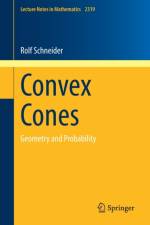
This book provides the foundations for geometric applications of convex cones and presents selected examples from a wide range of topics, including polytope theory, stochastic geometry, and Brunn-Minkowski theory. Giving an introduction to convex cones, it describes their most important geometric functionals, such as conic intrinsic volumes and Grassmann angles, and develops general versions of the relevant formulas, namely the Steiner formula and kinematic formula. In recent years questions related to convex cones have arisen in applied mathematics, involving, for example, properties of random cones and their non-trivial intersections. The prerequisites for this work, such as integral geometric formulas and results on conic intrinsic volumes, were previously scattered throughout the literature, but no coherent presentation was available. The present book closes this gap. It includes several pearls from the theory of convex cones, which should be better known.
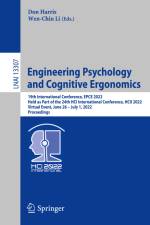
This book constitutes the refereed proceedings of the 19th International Conference on Engineering Psychology and Cognitive Ergonomics, EPCE 2022, held as part of the 23rd International Conference, HCI International 2022, which was held virtually in June/July 2022. The total of 1271 papers and 275 posters included in the HCII 2022 proceedings was carefully reviewed and selected from 5487 submissions. The EPCE 2022 proceedings covers subjects such as advances in applied cognitive psychology that underpin the theory, measurement and methodologies behind the development of human-machine systems. Cognitive Ergonomics describes advances in the design and development of user interfaces.
In the mid- to late-twentieth century, large scientific conflicts flared in two seemingly distinct fields of scientific inquiry. In bioenergetics, which examines how organisms obtain and utilize energy, the chemiosmotic hypothesis of Mitchell suggested a novel mechanism for energy conversion. In evolutionary biology, meanwhile, Wynne Edwards strongly articulated the view that organisms may act for the "e;good of the group."e; This work crystalized a long history of imprecise thinking about the evolution of cooperation. While both controversies have received ample attention, no one has ever suggested that one might inform the other, i.e., that energy metabolism in general and chemiosmosis in particular might be relevant to the evolution of cooperation. The central idea is nevertheless remarkably simple. Chemiosmosis rapidly converts energy, and once storage capacity is exceeded, an overabundance of product has various negative consequences. While to some extent chemiosmotic processes can be modulated, under certain circumstances it is also possible to simply disperse the products into the environment.This book argues that these two heretofore distinct scientific disciplines are connected, thereby suggesting that a ubiquitous process of energy conversion may underlie the evolution of cooperation and link major transitions in the history of life that have been regarded as mechanistically unrelated.
This book summarizes recent advances in epoxy vitrimer research, giving thorough discussion of the classification and fabrication of epoxy vitrimers and their composites. Epoxy vitrimers are reversible covalently crosslinked networks with dynamic covalent bonds, combining the excellent mechanical properties of thermosets with the re-processability of thermoplastics. The authors explore and summarize many current and potential applications of epoxy vitrimer composites across the domains of aerospace materials, electronic devices, machine manufacturing, and consumer products and technology. This book serves as an accessible introduction and a helpful guide to graduate students, researchers, and industry professionals in materials science and engineering with an interest in advanced polymer composites.
This book examines the best available empirical evidence regarding one of the most challenging and pervasive questions throughout ages, cultures, and religions: the survival of human consciousness after death. It begins with a contextual overview of belief in personal survival and refutes misguided historical and epistemological arguments against the notion of survival after death (e.g., irrational, purely religious, impossible to be addressed by science, that has been proved false by neuroscience). The book provides an overview of the scientific evidence regarding the survival of human consciousness after death, focusing on studies on mediumship, near-death and out-of-body experiences, and reincarnation.Featured topics of coverage include:The belief in life after death in the contemporary world as well as in the history of religions and philosophy.The key misguided arguments and prejudices against the academic study of afterlife survival.What constitutes empirical evidence for survival after death?The main explanatory hypotheses alternative to survival after death.The chief cultural barriers to a fair examination of the available evidence for survival of consciousness after death.Science of Life After Death is an essential resource for researchers, professors, and graduate students as well as clinicians, therapists, and other professionals in developmental and clinical psychology; spirituality, religious. and consciousness studies; psychiatry; neuroscience / neurology; phenomenology / philosophy; complementary and alternative medicine; and all interrelated disciplines.
This book constitutes the refereed proceedings of the 28th International Symposium on Model Checking Software, SPIN 2022, held virtually in May 2022.The 8 full papers were carefully reviewed and selected from 11 submissions. Topics covered include formal verification techniques for automated analysis of software; formal analysis for modeling languages, such as UML/state charts; formal specification languages, temporal logic, design-by-contract; model checking, automated theorem proving, including SAT and SMT; verifying compilers; abstraction and symbolic execution techniques; and much more.
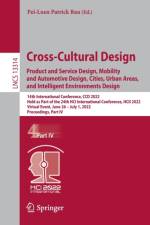
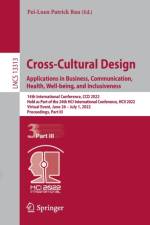
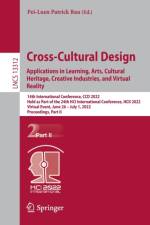
The four-volume set LNCS 13311 - 13314 constitutes the refereed proceedings of the 14th International Conference on Cross-Cultural Design, CCD 2022, which was held as part of HCI International 2022 and took place virtually during June 26 - July 1, 2022.The papers included in the HCII-CCD volume set were organized in topical sections as follows:Part I: Cross-Cultural Interaction Design; Collaborative and Participatory Cross-Cultural Design; Cross-Cultural Differences and HCI; Aspects of Intercultural DesignPart II: Cross-Cultural Learning, Training, and Education; Cross-Cultural Design in Arts and Music; Creative Industries and Cultural Heritage under a Cross-Cultural Perspective; Cross-Cultural Virtual Reality and GamesPart III: Intercultural Business Communication; Intercultural Business Communication; HCI and the Global Social Change Imposed by COVID-19; Intercultural Design for Well-being and InclusivenessPart IV: Cross-Cultural Product and Service Design; Cross-Cultural Mobility and Automotive UX Design; Design and Culture in Social Development and Digital Transformation of Cities and Urban Areas; Cross-Cultural Design in Intelligent Environments.
The four-volume set LNCS 13311 - 13314 constitutes the refereed proceedings of the 14th International Conference on Cross-Cultural Design, CCD 2022, which was held as part of HCI International 2022 and took place virtually during June 26 - July 1, 2022.The papers included in the HCII-CCD volume set were organized in topical sections as follows:Part I: Cross-Cultural Interaction Design; Collaborative and Participatory Cross-Cultural Design; Cross-Cultural Differences and HCI; Aspects of Intercultural DesignPart II: Cross-Cultural Learning, Training, and Education; Cross-Cultural Design in Arts and Music; Creative Industries and Cultural Heritage under a Cross-Cultural Perspective; Cross-Cultural Virtual Reality and GamesPart III: Intercultural Business Communication; Intercultural Business Communication; HCI and the Global Social Change Imposed by COVID-19; Intercultural Design for Well-being and InclusivenessPart IV: Cross-Cultural Product and Service Design; Cross-Cultural Mobility and Automotive UX Design; Design and Culture in Social Development and Digital Transformation of Cities and Urban Areas; Cross-Cultural Design in Intelligent Environments.
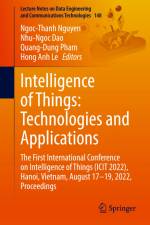
This book constitutes the refereed proceedings of the First Conference on Intelligence of Things (ICIT 2022), held in Hanoi, Vietnam, in August 2022. A total of 40 full papers in this book have been rigorously peer-reviewed and selected from over 100 submissions. The papers focused on the intelligence of things (AIoT) studies are organized in the following parts: theoretical intelligence analyses, intelligence services and applications, and intelligence service experiments. This book provides interested students and engineers with comprehensive and cutting-edge studies in the fields.
This brief textbook underpins the concept of eco-efficiency in product design and systematically addresses the essence of the integration of simplified life cycle assessment (LCA) methods and tools into industrial design. Fundamental steps of LCA-based tools implementation within the higher education context are proposed, using energy-related products (ErP) design as a prime case study. All chapters are designed to respond to the common frequently asked questions in LCA-based tools implementation during the sustainable product design process. The chapters are also enriched with discussions, data sources of simplified LCA tools, and examples of design assignments that provide constructive learning. Some assignments aim at encouraging tool users' reflections while others tackle particularly at knowledge exchange. The examples can assist the reader to visualize challenges and opportunities to engage learners who are tool users. This textbook broadens LCA knowledge for industrial design and environmental engineering students as well as enhance their sustainable product design performance. For professional practitioners including industrial designers, product engineers, entrepreneurs and the like, this textbook can be used as a guide at the introductory level for integrating life cycle thinking into product design and development.
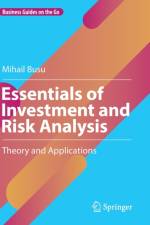
This book provides an overview of the evolution of investment and risk, together with a synthesis of research on these developments. It explores how exposures can be modified by measuring and managing them and introduces readers to the latest strategies and trends in investment. Broad in scope, the book covers the most important aspects of investment risk management, including the time value of money, financial markets, equity markets, bond markets, and portfolio theory. Accordingly, it offers a valuable asset for advanced undergraduate and graduate finance students, investors and academics alike.
The four-volume set LNCS 13311 - 13314 constitutes the refereed proceedings of the 14th International Conference on Cross-Cultural Design, CCD 2022, which was held as part of HCI International 2022 and took place virtually during June 26 - July 1, 2022.The papers included in the HCII-CCD volume set were organized in topical sections as follows:Part I: Cross-Cultural Interaction Design; Collaborative and Participatory Cross-Cultural Design; Cross-Cultural Differences and HCI; Aspects of Intercultural DesignPart II: Cross-Cultural Learning, Training, and Education; Cross-Cultural Design in Arts and Music; Creative Industries and Cultural Heritage under a Cross-Cultural Perspective; Cross-Cultural Virtual Reality and GamesPart III: Intercultural Business Communication; Intercultural Business Communication; HCI and the Global Social Change Imposed by COVID-19; Intercultural Design for Well-being and InclusivenessPart IV: Cross-Cultural Product and Service Design; Cross-Cultural Mobility and Automotive UX Design; Design and Culture in Social Development and Digital Transformation of Cities and Urban Areas; Cross-Cultural Design in Intelligent Environments.
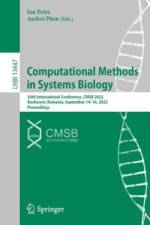
This book constitutes the refereed proceedings of the 20th International Conference on Computational Methods in Systems Biology, CMSB 2022, held in Bucharest, Romania, in September 2022.The 13 full papers and 4 tool papers were carefully reviewed and selected from 43 submissions. CMSB focuses on modeling, simulation, analysis, design and control of biological systems. The papers are arranged thematically as follows: Chemical reaction networks; Boolean networks; continuous and hybrid models; machine learning; software.
This book discusses artificial intelligence (AI) and cybersecurity from multiple points of view. The diverse chapters reveal modern trends and challenges related to the use of artificial intelligence when considering privacy, cyber-attacks and defense as well as applications from malware detection to radio signal intelligence.The chapters are contributed by an international team of renown researchers and professionals in the field of AI and cybersecurity.During the last few decades the rise of modern AI solutions that surpass humans in specific tasks has occurred. Moreover, these new technologies provide new methods of automating cybersecurity tasks. In addition to the privacy, ethics and cybersecurity concerns, the readers learn several new cutting edge applications of AI technologies.Researchers working in AI and cybersecurity as well as advanced level students studying computer science and electrical engineering with a focus on AI and Cybersecurity will find this book useful as a reference. Professionals working within these related fields will also want to purchase this book as a reference.
Abonner på vårt nyhetsbrev og få rabatter og inspirasjon til din neste leseopplevelse.
Ved å abonnere godtar du vår personvernerklæring.