















Gjør som tusenvis av andre bokelskere
Abonner på vårt nyhetsbrev og få rabatter og inspirasjon til din neste leseopplevelse.
Ved å abonnere godtar du vår personvernerklæring.Du kan når som helst melde deg av våre nyhetsbrev.

This book showcases recent research advances in service science and related fields. Including selected papers from the 2022 INFORMS International Conference on Service Science, held in Shenzhen, China from July 2 to 4, 2022, the book presents new theories and empirical results in the emerging, interdisciplinary field of digital transformation and society. Incorporating research, education and practice alike, the respective chapters highlight a host of ways to approach these challenges in service science.
This two-volume set LNCS 13305 - 13306 constitutes the thoroughly refereed proceedings of the thematic area Human Interface and the Management of Information, HIMI 2022, which was held as part of HCI International 2022 and took place virtually during June 26-July 1, 2022.The total of 1271 papers and 275 poster papers included in the 39 HCII 2022 proceedings volumes was carefully reviewed and selected from 5487 submissions. The papers included in the HCII-HIMI volume set were organized in topical sections as follows: Part I: Human-centered design approaches; information design and quality; visual design; visualization and big data; Information, cognition and learning. Part II: Recommender systems; robots and avatars appearance and embodiment; information in virtual and augmented reality; information in complex technological environments.
This intellectual biography provides an organic framework for understanding Antonio Gramsci's process of intellectual development, paying close attention to the historical and intellectual contexts out of which his views emerged. The Gramsci in Notebooks cannot fully account for the young director of L'Ordine Nuovo, or for the communist leader. Gramsci's development did not occur under conditions of intellectual inflexibility, of absence of evolution. However, there is a strong thread connecting the "e;political Gramsci"e; with Gramsci as a "e;cultivated man."e; The Sardinian intellectual's life is marked by the drama of World War I, the first mass conflict in which the great scientific discoveries of the previous decades were applied on a large scale and in which millions of peasants and workers were slaughtered. In all of his theoretical formulations, this dual relation, which epitomizes the instrumental use of "e;simpletons"e; by ruling classes, goes beyond the military context of the trenches and becomes full-fledged in the fundamental relations of modern capitalist society. In contrast with this notion of social hierarchy, which is deemed natural and unchangeable, Gramsci constantly affirmed the need to overcome the historically determined rupture between intellectual and manual functions, due to which the existence of a priesthood or of a separate caste of specialists in politics and in knowledge is made necessary. It is not the specific professional activity (whether material or immaterial) that determines the essence of human nature: to Gramsci, "e;all men are philosophers."e; In this passage from Notebooks, we find the condensed form of his idea of "e;human emancipation,"e; which is the historical need for an "e;intellectual and moral reform"e;: the subversion of traditional relations between rulers and ruled and the end of exploitation of man by man.
This book analyzes the use of the mobile Internet against the background of gender bias and Covid-19, currently two of the most important and pressing problems of the Global South. The book argues that the degree of benefits from this new technology depends heavily on the way it is actually used and that most new technologies are developed for the conditions prevailing in rich countries, where they tend to be quite easily adopted and used. In the Global South, by contrast, a paucity of digital skills and other factors make the potentially valuable benefits from the Internet much more difficult to derive. Using empirical data recently provided by the Groupe Speciale Mobile Association (GSMA), the book examines the existence and extent of the digital divide between males and females in mobile Internet use, which constitutes a new form of divide. It sheds light on the acute difficulty for first-time mobile Internet users in the Global South, and especially Sub-Saharan Africa, to learn the digital skills that are needed to use the said technology effectively, with a special focus on how these users acquire the required knowledge, without having undergone the process of learning by doing. The book further discusses the determinants of digital skills in the Global South, as well as major factors underlying the extent to which different users actually benefit from the mobile Internet, such as gender, location, age, and education. Finally, it investigates how womens' use of the Internet has been altered by the pandemic in the Global South.This book will appeal to students, researchers, and scholars of development economics and development studies, as well as policy-makers interested in a better understanding of the impact of gender bias and Covid-19 on mobile internet use in the Global South.
This book constitutes the proceedings of the 5th International Conference, ICC3 2021, held in Coimbatore, India, during December 16-18, 2021. The 14 full papers included in this book were carefully reviewed and selected from 84 submissions. They were organized in topical sections as follows: computational intelligence; cyber security; and computational models.
This two volume proceedings, LNCS 13445 and 13446, constitutes the refereed proceedings of the 9th International Conference on Augmented Reality, Virtual Reality, and Computer Graphics, XR Salento 2022, held in Lecce, Italy, July 6-8, 2022. Due to COVID-19 pandemic the conference was held as a hybrid conference.The 42 full and 16 short papers were carefully reviewed and selected from 84 submissions. The papers discuss key issues, approaches, ideas, open problems, innovative applications and trends in virtual reality, augmented reality, mixed reality, applications in cultural heritage, in medicine, in education, and in industry.
This book constitutes refereed proceedings of the 28th International Workshop on Frontiers of Computer Vision, IW-FCV 2022, held in Hiroshima, Japan, in February 2022. Due to the COVID-19 pandemic the conference was held online.The 24 full papers presented in this volume were thoroughly reviewed and selected from 63 submissions. The papers are organized according to the following topics: camera, 3D, and imaging; learning algorithm; object detection/segmentation; recognition/generation.
This book explores water service provisions of the urban poor in the cities of Africa with particular emphasis on Kenya and its capital city of Nairobi. In particular the book addresses the insecurity of tenure, and how the colonial segregation of land continues to shape water access and service provision even today in Nairobi. The book seeks to understand how urban water management entails the "e;production of thirst"e; among the urban poor and documents how cultural norms, political commitments and seemingly mundane practices of water managers combine to exclude the poor from accessing water. Supporters of privatization argue that private companies may succeed where governments have failed in supplying water to the urban poor. The author takes a closer look at this argument, demonstrating the limitations of some of the current reforms whilst also exploring alternatives and solutions. This book will be an invaluable reference for students, researchers and practitioners working in this field.
Nowadays, data analysis is becoming an appealing topic due to the emergence of new data types, dimensions, and sources. This motivates the development of probabilistic/statistical approaches and tools to cope with these data. Different communities of experts, namely statisticians, mathematicians, computer scientists, engineers, econometricians, and psychologists are more and more interested in facing this challenge. As a consequence, there is a clear need to build bridges between all these communities for Data Science.This book contains more than fifty selected recent contributions aiming to establish the above referred bridges. These contributions address very different and relevant aspects such as imprecise probabilities, information theory, random sets and random fuzzy sets, belief functions, possibility theory, dependence modelling and copulas, clustering, depth concepts, dimensionality reduction of complex data and robustness.
In this book, we primarily focus on studies that provide objective, unobtrusive, and innovative measures (e.g., indirect measures, content analysis, or analysis of trace data) of SEL skills (e.g., collaboration, creativity, persistence), relying primarily on learning analytics methods and approaches that would potentially allow for expanding the assessment of SEL skills and competencies at scale. What makes the position of learning analytics pivotal in this endeavor to redefine measurement of SEL skills are constant changes and advancements in learning environments and the quality and quantity of data collected about learners and the process of learning. Contemporary learning environments that utilize virtual and augmented reality to enhance learning opportunities accommodate for designing tasks and activities that allow learners to elicit behaviors (either in face-to-face or online context) not being captured in traditional educational settings. Novel insights provided in the book span across diverse types of learning contexts and learner populations. Specifically, the book addresses relevant and emerging theories and frameworks (in various disciplines such as education, psychology, or workforce) that inform assessments of SEL skills and competencies. In so doing, the book maps the landscape of the novel learning analytics methods and approaches, along with their application in the SEL assessment for K-12 learners as well as adult learners. Critical to the notion of the SEL assessment are data sources. In that sense, the book outlines where and how data related to learners' 21st century skills and competencies can be measured and collected. Linking theory to data, the book further discusses tools and methods that are being used to operationalize SEL and link relevant skills and competencies with cognitive assessment. Finally, the book addresses aspects of generalizability and applicability, showing promising approaches for translating research findings into actionable insights that would inform various stakeholders (e.g., learners, instructors, administrators, policy makers).
This book explores how citizen teachers can expand our capacities to generate more equitable and just spaces with families by working as community organizers. Paying particular attention to community organizing work in one elementary school, the book weaves stories and examples with theoretical understandings to support emerging citizen teachers in creating more democratic spaces. Each chapter provides key community organizing concepts and skills and offers lessons learned to identify what worked and what did not. By building solidarity with families, citizen teachers can effectively activate more powerful practices grounded in the lives of students, their families, and their communities while articulating a broader response to the conditions impacting educators.
This book provides a comprehensive overview of deaths and injuries from residential fires as well as the most up to date information on evidence-based approaches to reduce this problem. The volume serves as a guide for professionals working in the field of fire prevention and as a textbook for instruction in universities and fire service schools. The authors' interdisciplinary approach, where public health methodology is combined with fire protection engineering, medicine, and policy science, is quite distinctive outside of the technical literature devoted to larger scale fire events. Traditional textbooks on fire protection tend to describe the problem as purely technical, whereas in essence it is a problem of human vulnerability. In this book, readers will find lucid and rigorous descriptions of various risk groups and effective preventive measures that are effective, both in general and with respect to the different risk groups. They will also find work processes to facilitate risk reduction. Summarizing state-of-the-art knowledge and giving guidance for the future, both in terms of preventive efforts and ongoing research, Residential Fire Safety: An Interdisciplinary Approach, is ideal for students, educators, and practitioners of residential fire protection.
In this collection, the reader can find recent advancements in self-organizing maps (SOMs) and learning vector quantization (LVQ), including progressive ideas on exploiting features of parallel computing. The collection is balanced in presenting novel theoretical contributions with applied results in traditional fields of SOMs, such as visualization problems and data analysis. Besides, the collection further includes less traditional deployments in trajectory clustering and recent results on exploiting quantum computation. The presented book is worth interest to data analysis and machine learning researchers and practitioners, specifically those interested in being updated with current developments in unsupervised learning, data visualization, and self-organization.
This book presents a patient centric, holistic view and management strategy for registered nurses, advanced practice nurses and midwives to care for the pregnant female, including considerations in pregnancy planning. There is a significant gap in information about holistic care and nursing considerations of the pregnant female with regards to pain management, which this book fills. It develops on the preparation before pregnancy, as nutrition or exercise, on behavioural management of pain with the impact of anxiety and different therapies. The book examines the musculoskeletal pain, the headache and fibromyalgia occurring during pregnancy. It also informs on the nutraceuticals in pregnancy, the use of opioids and of nerve blocks. This book finally explores complementary treatments during pregnancy.Case-studies are presented for improved understanding and to provide a real-world perspective. This book, written by nursing and psychology experts in their fields of specialty practice, will appeal to nurses and midwives working with pregnant women or planning to have a baby.
This book explores the experiences of self-identified heterosexual and gay men in contemporary South African gym contexts, particularly as it relates to how the intersection of spornosexual and inclusive masculinities inform their views and enactment of their masculine and sexual identities. Chapters engage with findings from an in-depth qualitative sociological exploration on issues surrounding these masculinities among men living in South Africa who engage in gym work. The author demonstrates that men, when given the opportunity to reflect on their own and the masculinity of others, acknowledge how they promote softer, kinder, disciplined, playful, and sexually agentic masculinities through their look and touch.
This book presents case studies to analyse the relationship between sustainability - environmental, social, institutional and economic - and digital innovation. The respective contributions offer a contextualisation of the main present and future trends concerning these two elements, and present analyses from economic, technical, managerial, and social perspectives alike. The individual sections of the book focus on interactions between sustainability and digital innovation in existing organisations and highlight the new opportunities, challenges and threats that may emerge as a result. The contributions are mainly based on case studies and research conducted in Europe and Africa, with a few focusing on Southeast Asia and Central America, and were prepared by experts in the fields of Information Systems, Computer Science, Social Development, and Economics.
This brief outlines the state-of-art of the food industry within the Indian Sub-continent, providing a detailed insight into the current science of nutrition and industrial technology.The Hygiene, Integrity, Traceability and Sharing (HITS) strategy has been proposed recently as a coordinated and powerful tool to contextualize the plethora of different menaces for the food consumer. The book examines this approach from eight different perspectives, with a particular emphasis on the Indian Subcontinent. Topics such as food additives, the importance of water in the food industry, the use of antioxidants, and novel food preservation methods are used to illustrate these points of view.This book is particularly appealing as a guide for graduate and undergraduate courses covering food production, food safety, and the training of teachers working in these science areas.
This book addresses the impact of soil and water quality on food production, and explores soil and water conservation measures to be applied at farm level for agricultural sustainability. Divided into 8 chapters, the book covers topics such as soil properties responsible for soil loss, the impact of climate change, water and biological factors on soil chemistry, the effect of soil on the quality of water including sustaining aquaculture productivity and environment of wetlands, soil and water qualities necessary for irrigation, management of soil organic carbon, and the importance of soil moisture conservation including agroforestry for food production. Particular attention is given to the management of soil organic carbon in sustainable crop cultivation as well as reducing soil erosion and nutrient loss from soil from cultivated lands. The book concludes with a chapter that integrates soil and water conservation with sustainable food production and food safety.
The book reviews the history, present, and likely future of intellectual property for plant-related inventions. It describes "e;what works"e; and "e;what does not work"e; in the current situation and analyzes whether the current intellectual property framework will be able to cope with the rise of genome editing/new breeding technologies (especially CRISPR Cas). Based on trend data, the analysis shows that the current system, including stakeholder initiatives, will most likely not be able to adapt to the technology change. It then evaluates different options for legislators to respond and proposes in detail a new holistic IP system which merges elements of the patent and the plant variety protection system into one new system.
This book updates in detail the microbial pathogenesis of various important pathogens, including HIV-1, MERS, SARS-CoV-2, Mycobacterium and Plasmodium. There is also a general discussion of the innate and adaptive immune responses against primary and opportunistic infections. The overall purpose of the book is to aid in the development of anti-viral and anti-microbial targets.
This book discusses the pros and cons of information and communication (ICT) neutrality. It tries to be as objective as possible from arguments of proponents and opponents, this way enabling readers to build their own opinion. It presents the history of the ongoing network neutrality debate, the various concepts it encompasses, and also some mathematical developments illustrating optimal strategies and potential counter-intuitive results, then extends the discussion to connected ICT domains. The book thus touches issues related to history, economics, law, networking, and mathematics.After an introductory chapter on the history of the topic, chapter 2 surveys and compares the various laws in place worldwide and discusses some implications of heterogeneous rules in several regions. Next, chapter 3 details the arguments put forward by the participants of the net neutrality debate. Chapter 4 then presents how the impact of neutral or non-neutral behaviors can be analyzed mathematically, with sometimes counter-intuitive results, and emphasizes the interest of modeling to avoid bad decisions. Chapter 5 illustrates that content providers may not always be on the pro-neutrality side, as there are situations where they may have an economic advantage with a non-neutral situation, e.g. when they are leaders on a market and create barriers to entry for competitors. Another related issue is covered in chapter 6, which discusses existing ways for ISPs to circumvent the packet-based rules and behave non-neutral without breaking the written law. Chapter 7 gives more insight on the role and possible non-neutral behavior of search engines, leading to another debate called the search neutrality debate. Chapter 8 focuses on e-commerce platforms and social networks, and investigates how they can influence users' actions and opinions. The issue is linked to the debate on the transparency of algorithms which is active in Europe especially. Chapter 9 focuses on enforcing neutrality in practice through measurements: indeed, setting rules requires monitoring the activity of ICT actors in order to sanction non-appropriate behaviors and be proactive against new conducts. The chapter explains why this is challenging and what tools are currently available. Eventually, Chapter 10 briefly concludes the presentation and opens the debate.
This book looks at how both advocacy groups in New Zealand and Australia use political marketing to conduct advocacy and support Israeli and Palestinian public diplomacy and nation branding. The focus lies on their marketing orientation, segmentation/ targeting/ positioning (STP), and internal marketing practices. The theoretical framework will draw upon several political marketing frameworks and concepts including the product/sales/market-oriented framework, the STP process, and Petitt's internal stakeholder marketing approaches. The book examines four case studies: (1) the Palestine Solidarity Network Aotearoa (PSNA), (2) the Israel Institute of New Zealand (IINZ), (3) the Australia/Israel & Jewish Affairs Council (AIJAC), and (4) the Australia Palestine Advocacy Network (APAN). To ensure balance and comparison, four groups representing both the pro-Israel and pro-Palestinian camps in NZ and Australia were selected. Other criteria included their broad scope of activity, approachability and accessibility, as well as connections to state actors through advocacy, public diplomacy, and nation branding.
Inspired by the neoliberal paradigm that transposes religious behaviors into a religious marketplace framed by consumerist and capitalist models, this volume draws on ethnographic fieldwork to discuss the assemblage between the well-being trope and the rise of new spiritualities, as well as their deep permeation within mainstream culture. Building on previous literature that addresses the relationship between spirituality, healing and well-being, this text discusses the religious roots of mind-body practices. The contributions offer a critical perspective on the scope, limits and impacts of the current celebration of spiritualities. Part I provides theoretical insights for thinking about ways in which the prevalent ethics of well-being reframes subjectivities within the margins of neoliberal order. Part II demonstrates how spiritual economies are promoted, shaped and regulated by institutional forces such as States, law and the labor market. In part III, contributors describe in detail how spiritual economies unfold in specific cultural and social settings. The text appeals to students and researchers working on the spirituality and sociology of religion.
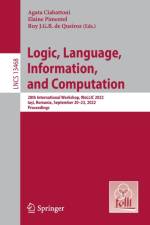
Edited in collaboration with FoLLI, the Association of Logic, Language and Information this book constitutes the refereed proceedings of the 28th Workshop on Logic, Language, Information and Computation, WoLLIC 2022, Iasi, Romania, in September 2022. The 25 full papers presented included with 8 extra abstracts, 5 invited talks and 3 tutorials were fully reviewed and selected from 46 submissions. The conference aims fostering interdisciplinary research in pure and applied logic.
This book constitutes the refereed proceedings of the 18th International Symposium on Web and Wireless Geographical Information Systems, W2GIS 2022, held in Konstanz, Germany, in April 2022.The 7 full papers presented together with 6 short papers in the volume were carefully reviewed and selected from 16 submissions. The papers cover topics that range from mobile GIS and Location-Based Services to Spatial Information Retrieval and Wireless Sensor Networks.
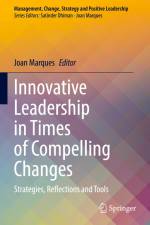
This book focuses on the need of leaders in professional and personal realms to understand the importance of innovative thinking to safeguard sustainability and enhance satisfaction and motivation among stakeholders in organizations. It provides professionals with a set of reflective stances, cautionary points, and roadmaps that enable them to do the right thing. From crisis management to spiritual practices, and from pro-social concepts to social responsibility and sustainability: the common denominator is a collective and concerted effort to develop leadership behaviors and strategies to safeguard generations to come.
This book provides an investor-friendly presentation of the premises and applications of the quantitative finance models governing investment in one asset class of publicly traded stocks, specifically real estate investment trusts (REITs). The models provide highly advanced analytics for REIT investment, including: portfolio optimization using both historic and predictive return estimation; model backtesting; a complete spectrum of risk assessment and management tools with an emphasis on early warning systems, risk budgeting, estimating tail risk, and factor analysis; derivative valuation; and incorporating ESG ratings into REIT investment. These quantitative finance models are presented in a unified framework consistent with dynamic asset pricing (rational finance). Given its scope and practical orientation, this book will appeal to investors interested in portfolio optimization and innovative tools for investment risk assessment.
This book deals with banking integrations, which are now becoming crucial not only because of the increased number of economic integrations, but also in view of the qualitative improvement of such banking integrations. It compares the European Union (EU), as the most successful union, which was able to move from a common financial market to the prime example of banking integration; the Banking Union; and the Eurasian Economic Union (EAEU) as a relatively young one but with several of the prerequisites for becoming an influential union, and which was established by five countries - the Russian Federation, Kazakhstan, Belarus, Armenia, and the Kyrgyz Republic - in 2015. The key research question is whether the single market in banking services or a banking union is an achievable goal or merely a utopia. In this regard, the book reveals the bottlenecks and obstacles that the EU and EAEU policymakers faced during the difficult process of establishing a single market and banking union. However, along with the problems of banking integration, it identifies many peculiarities of the harmonization of banking legislation among the EU Member States. Recognizing and acknowledging these peculiarities can be very beneficial for young unions and help to guide their integration processes. In particular, the book concludes that evolutionary (not revolutionary) harmonization is required in order for the EAEU to become a full-fledged union.
The book is presented as an Atlas where the map plays a fundamental role in the study of quality of life, as it shows its progression in Argentina from the 19th to the 21st Century. In the book, it can be observed how the concept has evolved along with the dimensions and variables that better represent its spatial distribution. This is one of the original points of the book: the temporal study of the living conditions of the argentine population, empirically and spatially, emphasizing their territorial representation.Although the book maintains the same socioeconomic dimensions (education, health and housing), the tour through the different chapters offers a historical window that allows the reader to know what the forms of information collection were like in different historical moments.This book is written for geographers and members of the scientific community interested in the study of the well-being of the population. It also allows us to observe the evolution of the quality of life from the 19th century to the 21st, so it may be of interest to historians as well.
This book constitutes the refereed proceedings of the 17th International Workshop on Security, IWSEC 2022, which took place as a hybrid event in Tokyo, Japan, in August/September 2022. The 12 full papers presented in this book were carefully reviewed and selected from 34 submissions. They were organized in topical sections as follows: mathematical cryptography; system security and threat intelligence; symmetric-key cryptography; post-quantum cryptography; advanced cryptography.
Abonner på vårt nyhetsbrev og få rabatter og inspirasjon til din neste leseopplevelse.
Ved å abonnere godtar du vår personvernerklæring.