














Gjør som tusenvis av andre bokelskere
Abonner på vårt nyhetsbrev og få rabatter og inspirasjon til din neste leseopplevelse.
Ved å abonnere godtar du vår personvernerklæring.Du kan når som helst melde deg av våre nyhetsbrev.

Wheat (Triticum L.), an annual herbaceous plant in Poacae (Gramineae) family, settles in the Triticeae (Hordeae) subfamily. The grasses (Poaceae Barnhart) are the fifth largest (monocotyledonous flowering) plant family and of great importance for human civilization and life. Cereal crops such as maize, wheat, rice, barley, and millet are the domesticated ones in the family. It is still the most vital economical plant family in modern times, providing food, forage, building materials (bamboo, thatch), and fuel (ethanol). Wheat has many accessions in national and international gene banks. The estimated number of wheats by FAO in 2010 is 856,000, and, followed by rice (774,000), and barley (467,000). However, the recent consumer's (misdirected) focus on gluten content and nutritional value urges scientists to reexamine their knowledge about wheat (i.e., origin, evolution, and general and special quality characteristics), as well as their wild relatives and landraces for newer possible genetic resources. Cultured or non-cultured ancestral wheats: einkorn, emmer, wild emmer, spelt, macha, and vavilovii are still limitedly grown on the higher areas in Turkey, Italy, Germany, Morocco, Israel, and Balkan countries. They are exploited mostly for their desired agronomic, and specific quality. In some cultures, wheat species are believed to be therapeutic, with bioactive compounds that reduce and inhibit stubborn illnesses such as diabetes, cancer, Alzheimer, and cardiovascular diseases. In this book, we summarize the importance of ancestral wheat species, and provide a prospect for their future with special considerations in terms of species conservation and improvement.
This book constitutes the refereed proceedings of the 14th International Conference on Mathematics of Program Construction, MPC 2022, held in Tbilisi, Georgia, in September 2022. The 9 revised full papers presented together with three invited papers were carefully reviewed and selected from 14 submissions. The papers deal with mathematical principles and techniques for constructing computer programs.
This remarkable new book is the first text dedicated to the topic of pharmacovigilance for herbal and traditional medicines. Taking a truly global perspective, this volume draws together contributions from a diverse group of experts, writing on current knowledge and practices in pharmacovigilance for herbal and traditional medicines, and on advances and innovation in monitoring the safety of this unique and complex category of products and preparations. In part one, the book discusses the current status of pharmacovigilance for herbal and traditional medicines, including the importance of natural products chemistry to harms, and its relevance in considering how pharmacovigilance for these products could be undertaken. Several other chapters discuss methodological approaches and ongoing challenges in pharmacovigilance for herbal and traditional medicines, including issues relating to nomenclature, coding and classification, and the nuances involved in causality assessment. Part two of the book focusses on pharmacovigilance for herbal and traditional medicines around the world, with chapters from authors in several different countries representing diverse historical, ethnic, cultural, social and political contexts. These chapters provide deeper insights and perspectives into spontaneous reporting for herbal and traditional medicines in those countries, and in the context of the local use, practice and regulatory landscape for these products. Part two also provides an overview and new analysis of international case safety reports for herbal medicines held in VigiBase (the World Health Organization's global database of individual case safety reports, maintained by the Uppsala Monitoring Centre).This book is aimed at pharmacists, doctors, nurses and other health professionals, herbal-medicine practitioners and organisations, herbal medicine and pharmaceutical industry personnel, pharmacovigilance specialists, medicines' regulators, health and social science researchers and academics, pharmacovigilance and health professional students, and students of herbal and traditional medicine, throughout the world. It is an extremely valuable resource for all individuals whose work touches the intersection between herbal medicines and pharmacovigilance, and it provides both an introduction to the topic and a deeper, comprehensive, contemporary account of the topic.
This book sheds light on the fundamental and innovative topics in information systems and their societal impact on individuals and organizations. It mainly focuses on the role of artificial intelligence in organizations, human-computer interaction, IS in education and industry, and IS security, privacy, and trust. The outcomes are expected to assist the decision-makers in formulating the required policies and procedures for using cutting-edge technologies.
During the early days of the COVID-19 health crisis, Fang Fang's Wuhan Diary provided an important portal for people around the world to understand the outbreak, local response, and how the novel coronavirus was impacting everyday people. But when news of the international publication of Wuhan Diary appeared online in early April of 2020, Fang Fang's writings became the target of a series of online attacks by "e;Chinese ultra-nationalists."e; Over time, these attacks morphed into one of the most sophisticated and protracted hate Campaigns against a Chinese writer in decades. Meanwhile, as controversy around Wuhan Diary swelled in China, the author was transformed into a global icon, honored by the BBC as one of the most influential women of 2020 and featured in stories by dozens of international news outlets.This book, by the translator of Wuhan Diary into English, alternates between a first-hand account of the translation process and more critical observations on how a diary became a lightning rod for fierce political debate and the target of a sweeping online campaign that many described as a "e;cyber Cultural Revolution."e; Eventually, even Berry would be pulled into the attacks and targeted by thousands of online trolls.This book answers the questions: why would an online lockdown diary elicit such a strong reaction among Chinese netizens? How did the controversy unfold and evolve? Who was behind it? And what can we learn from the "e;Fang Fang Incident"e; about contemporary Chinese politics and society? The book will be of interest to students and scholars of translation, as well as anyone with special interest in translation, US-Chinese relations, or internet culture more broadly.
This book provides readers with an overview of Cloud Computing, starting with historical background on mainframe computers and early networking protocols, leading to current concerns such as hardware and systems security, performance, emerging areas of IoT, Edge Computing, and healthcare etc. Readers will benefit from the in-depth discussion of cloud computing usage and the underlying architectures. The authors explain carefully the "e;why's and how's"e; of Cloud Computing, so engineers will find this book an invaluable source of information to the topic. This third edition includes new material on Cloud Computing Scalability, as well as best practices for using dynamic cloud infrastructure, and cloud operations management with cost optimizations. Several new examples and analysis of cloud security have been added, including ARM architecture and https protocol.Provides practical guidance for software developers engaged in migrating in-house applications to Public Cloud;Describes for IT managers how to improve their Cloud Computing infrastructures;Includes coverage of security concerns with Cloud operating models;Uses several case studies to illustrate the "e;why's and how's"e; of using the Cloud;Examples and options to improve Cloud Computing Scalability.
This book investigates compressive sensing techniques to provide a robust and general framework for network data analytics. The goal is to introduce a compressive sensing framework for missing data interpolation, anomaly detection, data segmentation and activity recognition, and to demonstrate its benefits. Chapter 1 introduces compressive sensing, including its definition, limitation, and how it supports different network analysis applications. Chapter 2 demonstrates the feasibility of compressive sensing in network analytics, the authors we apply it to detect anomalies in the customer care call dataset from a Tier 1 ISP in the United States. A regression-based model is applied to find the relationship between calls and events. The authors illustrate that compressive sensing is effective in identifying important factors and can leverage the low-rank structure and temporal stability to improve the detection accuracy. Chapter 3 discusses that there are several challenges in applying compressive sensing to real-world data. Understanding the reasons behind the challenges is important for designing methods and mitigating their impact. The authors analyze a wide range of real-world traces. The analysis demonstrates that there are different factors that contribute to the violation of the low-rank property in real data. In particular, the authors find that (1) noise, errors, and anomalies, and (2) asynchrony in the time and frequency domains lead to network-induced ambiguity and can easily cause low-rank matrices to become higher-ranked. To address the problem of noise, errors and anomalies in Chap. 4, the authors propose a robust compressive sensing technique. It explicitly accounts for anomalies by decomposing real-world data represented in matrix form into a low-rank matrix, a sparse anomaly matrix, an error term and a small noise matrix. Chapter 5 addresses the problem of lack of synchronization, and the authors propose a data-driven synchronization algorithm. It can eliminate misalignment while taking into account the heterogeneity of real-world data in both time and frequency domains. The data-driven synchronization can be applied to any compressive sensing technique and is general to any real-world data. The authors illustrates that the combination of the two techniques can reduce the ranks of real-world data, improve the effectiveness of compressive sensing and have a wide range of applications. The networks are constantly generating a wealth of rich and diverse information. This information creates exciting opportunities for network analysis and provides insight into the complex interactions between network entities. However, network analysis often faces the problems of (1) under-constrained, where there is too little data due to feasibility and cost issues in collecting data, or (2) over-constrained, where there is too much data, so the analysis becomes unscalable. Compressive sensing is an effective technique to solve both problems. It utilizes the underlying data structure for analysis. Specifically, to solve the under-constrained problem, compressive sensing technologies can be applied to reconstruct the missing elements or predict the future data. Also, to solve the over-constraint problem, compressive sensing technologies can be applied to identify significant elementsTo support compressive sensing in network data analysis, a robust and general framework is needed to support diverse applications. Yet this can be challenging for real-world data where noise, anomalies and lack of synchronization are common. First, the number of unknowns for network analysis can be much larger than the number of measurements. For example, traffic engineering requires knowing the complete traffic matrix between all source and destination pairs, in order to properly configure traffic and avoid congestion. However, measuring the flow between all source and destination pairs is very expensive or even infeasible. Reconstructing data from a small number of measurements is an underconstrained problem. In addition, real-world data is complex and heterogeneous, and often violate the low-level assumptions required by existing compressive sensing techniques. These violations significantly reduce the applicability and effectiveness of existing compressive sensing methods. Third, synchronization of network data reduces the data ranks and increases spatial locality. However, periodic time series exhibit not only misalignment but also different frequencies, which makes it difficult to synchronize data in the time and frequency domains.The primary audience for this book is data engineers, analysts and researchers, who need to deal with big data with missing anomalous and synchronization problems. Advanced level students focused on compressive sensing techniques will also benefit from this book as a reference.
This book provides a comprehensive discussion and new insights about linear optimization of content metrics to improve the automatic Evaluation of Text Summaries (ETS). The reader is first introduced to the background and fundamentals of the ETS. Afterward, state-of-the-art evaluation methods that require or do not require human references are described. Based on how linear optimization has improved other natural language processing tasks, we developed a new methodology based on genetic algorithms that optimize content metrics linearly. Under this optimization, we propose SECO-SEVA as an automatic evaluation metric available for research purposes. Finally, the text finishes with a consideration of directions in which automatic evaluation could be improved in the future. The information provided in this book is self-contained. Therefore, the reader does not require an exhaustive background in this area. Moreover, we consider this book the first one that deals with the ETS in depth.
The book is about exact space-time models of the gravitational fields produced by gravitational radiation. The authors' extensive work in the field is reviewed in order to stimulate the study of such models, that have been known for a long time, and to highlight interesting physical aspects of the existing models in some novel detail. There is an underlying simplicity to the gravitational radiation studied in this book. Apart from the basic assumption that the radiation has clearly identifiable wave fronts, the gravitational waves studied are directly analogous to electromagnetic waves. The book is meant for advanced students and researchers who have a knowledge of general relativity sufficient to carry out research in the field.
This book constitutes the proceedings of the 26th International Conference on Theory and Practice of Digital Libraries, TPDL 2022, which took place in Padua, Italy, in September 2022. The 18 full papers, 27 short papers and 15 accelerating innovation papers included in these proceedings were carefully reviewed and selected from 107 submissions. They focus on digital libraries and associated technical, practical, and social issues.
What made it possible for the human species to conquer the world, build a global digital economy, and still want more? What drives technological progress and economic growth in the long run and on a global scale? And how will technological progress, economic growth, and the overall prosperity of human civilization unfold in the future? This book sheds new light on these big questions by incorporating findings from physics, anthropology, psychology, history, philosophy, and computer science in a brand-new theory of economic growth. Looking back across the millennia, it identifies five major technological revolutions which have transformed humankind's capacity to process energy and information-the cognitive, agricultural, scientific, industrial, and digital revolutions-and characterizes the new avenues of economic development which they have opened while also exponentially accelerating growth.
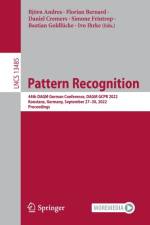
This book constitutes the refereed proceedings of the 44th DAGM German Conference on Pattern Recognition, DAGM GCPR 2022, which was held during September 27 - 30, 2022.The 37 papers presented in this volume were carefully reviewed and selected from 78 submissions. They were organized in topical sections as follows: machine learning methods; unsupervised, semi-supervised and transfer learning; interpretable machine learning; low-level vision and computational photography; motion, pose estimation and tracking; 3D vision and stereo; detection and recognition; language and vision; scene understanding; photogrammetry and remote sensing; pattern recognition in the life and natural sciences; systems and applications.
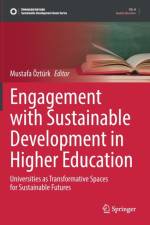
This edited volume analyzes cases of higher education programs engaging with sustainable development. Offering cases from across the globe that focus on the role of universities in promoting societal transformations and building sustainable futures, the volume specifically discusses how higher education institutions can educate for the Sustainable Development Goals (SDGs). As critical spaces for research, development, and innovation, higher education institutions are fundamental change agents for societal transformations. Their role in disseminating sustainability through different paths is undeniable, and it is worth discussing the dimensions that surround the concept of sustainability within universities. Considering the role of policy, curriculum, practice, teaching, research, and development paths in universities, this book looks at the contributions of higher education sector to our vision of sustainable development. This publication offers readers a chance to look at different higher education institutions' engagement with sustainable development through political, managerial, curricular and practical steps.
Cancer is the leading cause of death in the United States. The improvement of screening procedures and treatments have led to higher survival rates, and consequently to an increased number of individuals who fear that their cancer might come back.Fear of cancer recurrence (FCR) is defined as the fear, worry, or concern that cancer may come back or progress. FCR has been found to be the number one unmet need of cancer survivors. High levels of FCR are associated with greater psychological distress, impaired functioning, decreased quality of life, and increased medical consultations, psychotropic usage and health-care costs. It is therefore crucial to offer these patients an appropriate and effective treatment. The books first propose a theoretical model of FCR that identifies the five main targets of intervention in this program: 1) cognitive interpretation; 2) behavioural avoidance; 3) cognitive avoidance; 4) reassurance and control seeking; 5) intolerance of uncertainty. Then, each target is discussed and specific cognitive-behavioural therapy strategies are suggested that focus on each of them based on the best available empirical evidence for the treatment of anxiety disorders (e.g., generalized anxiety disorder) and cancer-related anxiety. This book will be of interest to clinicians working with cancer patients such as psychologists and other health care providers as well as cancer patients and survivors. Graduate students in clinical health psychology, and connecting disciplines such as psycho-oncology, psychiatry, nursing, social work, rehabilitation, spiritual care, and sexology might also find this text of value.
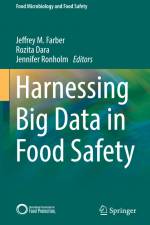
Big Data technologies have the potential to revolutionize the agriculture sector, in particular food safety and quality practices. This book is designed to provide a foundational understanding of various applications of Big Data in Food Safety. Big Data requires the use of sophisticated approaches for cleaning, processing and extracting useful information to improve decision-making. The contributed volume reviews some of these approaches and algorithms in the context of real-world food safety studies. Food safety and quality related data are being generated in large volumes and from a variety of sources such as farms, processors, retailers, government organizations, and other industries. The editors have included examples of how big data can be used in the fields of bacteriology, virology and mycology to improve food safety. Additional chapters detail how the big data sources are aggregated and used in food safety and quality areas such as food spoilage and quality deterioration along the supply chain, food supply chain traceability, as well as policy and regulations. The volume also contains solutions to address standardization, data interoperability, and other data governance and data related technical challenges. Furthermore, this volume discusses how the application of machine-learning has successfully improved the speed and/or accuracy of many processes in the food supply chain, and also discusses some of the inherent challenges. Included in this volume as well is a practical example of the digital transformation that happened in Dubai, with a particular emphasis on how data is enabling better decision-making in food safety. To complete this volume, researchers discuss how although big data is and will continue to be a major disruptor in the area of food safety, it also raises some important questions with regards to issues such as security/privacy, data control and data governance, all of which must be carefully considered by governments and law makers.
This book offers a multidisciplinary perspective on research and developments at the interface between industrial design, textile engineering and fashion. It covers advances in fashion and product design, and in textile production alike, reporting on smart and sustainable industrial procedures and 3D printing, issues in marketing and communication, and topics concerning social responsibility, sustainability, emotions, creativity and education. It highlights research that is expected to foster the development of design and fashion on a global and interdisciplinary scale. Gathering the proceedings of the 5th International Fashion and Design Congress, CIMODE 2022, held on July 4-7, 2022, in Guimaraes, Portugal, this book offers extensive information and a source of inspiration to both researchers and professionals in the field of fashion, design, engineering, communication as well as education.
This book, as the fourth volume, continues on ultra-high temperature materials with melting (sublimation or decomposition) points around or over 2500 (deg)C. In this quality the book has over-branched cross-links with the sections and tables of the previous Volumes I-III. Similarly to Volumes I-III, the book includes a thorough treatment of the physical and chemical properties of ultra-high temperature materials, namely such as W semi- and monocarbides, and continues the description of refractory carbides, which was begun from Volume II of the series.The book will be of interest to researchers, engineers, postgraduate, graduate and undergraduate students alike. The readers are provided with the full qualitative and quantitative assessment, which is based on the latest updates in the field of fundamental physics and chemistry, nanotechnology, materials science, design and engineering.
This book constitutes the refereed proceedings of the 16th International Conference on Simulation of Adaptive Behavior, SAB 2022, held in Cergy-Pontoise, France, in September 2022.The 17 papers presented in this volume were carefully reviewed and selected from 23 submissions. They were organized in topical sections as follows: Embodiment; Brain-Inspired Control, Adaptation, and Learning; Bio-inspired Vision and navigation; Affective and Social Cognition and Collective Intelligence.
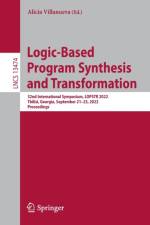
This book constitutes the refereed proceedings of the 32nd International Symposium on Logic-Based Synthesis and Transformation, LOPSTR 2022, which was held during September 21-23, 2022. The 8 full papers were selected from 17 submissions and cover different aspects of logic-based program development, all stages of the software life cycle, and issues of both programming-in-the-small and programming-in-the-large.
This book aims to provide a comprehensive and timely review of new findings in motoneuron research. Recent findings have revealed that motoneurons are more complex and have more extensive functions than previously imagined. Some of the molecular and genetic pathways that orchestrate the development of motoneurons have been discovered, as have the mechanisms responsible for the selective innervation of muscles by specific pools of motoneurons. These novel findings are revolutionizing ideas about the function of motoneurons and have important implications for motoneuron disease. Chapters from several of the foremost figures in the field are included in this book and will emphasize how basic science is the engine driving the discovery of novel treatments for degenerative motoneuron diseases. Cutting edge developments in the use of pluripotent stem cells to correct motoneuron disease will be also be covered. This book would be useful to students of basic motoneuron physiology, locomotor behavior and motor control. This book would also be of interest to professional neuroscientists, neurologists, and neurosurgeons.
Every organization faces the challenge of competing in the digital economy. An increasingly dynamic environment requires more flexible and resilient organizations. The spread of the COVID-19 pandemic revolutionized dormant concepts and standards, requiring innovative approaches to bring forth new scenarios. Redesigning the work environment is an issue that cuts across both academic and practical levels and involves reorganizing traditional business models.This book explores the potential of different approaches to work organization and proposes solutions to improve collaboration and efficiency in the work environment, while enabling a better balance between personal and professional life. The book includes an analysis of the public sector. By illuminating advantages and disadvantages, the research results contribute to discussion in the public organizations field, with the aim of proposing new strategic paradigms for sustainable and resilient future work environments.
This book focuses on the implications of digitalisation in the mobility service industry. Based on an analysis of more than 450 survey responses, it explores and assesses mobility in the age of digitalisation. The content covers both changes in the relationship between the company and its customers and a potential paradigm shift among leading companies. The findings suggest that a shift from traditional mobility management to a more customer-centred management perspective is both widely accepted and increasingly necessary. Nevertheless, the inclusion of services that are not primarily concerned with overcoming spatial distances is considered to be less attractive.Given its scope, the book will be of interest to researchers and professionals who are involved in digitalisation in the mobility service industry.
This practical, insightful title is a must read for anyone interested in or recently appointed to a leadership role in an academic medical center. Taking the Lead: A Guide for Emerging Leaders in Academic Medical Centers represents the highly accomplished authors' more than 60 years of collective insights about leadership and leading effectively in an academic medical center environment. The authors present creative and highly applicable themes synthesized from their knowledge, career experiences, unique reflections, practice, mistakes, and observations of successful (and not so successful) leaders. The result is a book of leadership wisdom - a wealth of ideas, concepts, and insights to inform the reader's career journey and to become the best leader they can be. Organized in five parts, this work examines the successful leadership transition in the unique (and sometimes perplexing) academic medical center environment. Informal, conversational in tone, and often engagingly humorous, Taking the Lead: A Guide for Emerging Leaders in Academic Medical Centers represents a concise and invaluable introductory read for the next generation of leaders, as well as a helpful resource for experienced healthcare leaders.
Last-mile delivery in cities, where the main problems are the traffic situation and ensuring access to customers' homes while maintaining their privacy, poses a substantial logistical challenge. This book explores how the service area of mobility, especially last-mile delivery, can be improved and smartified. It demonstrates how a design science method and a transdisciplinary approach have been used to create a traffic area analysis tool that can accommodate the uncertainty and incompleteness of geospatial data; a linguistic traffic merging tool; and a customer classifier. In terms of developing the optimization artifacts, the socio-economic and logistical aspects of cities were considered and fuzzy logic and nature-inspired swarm intelligence (fuzzy ant colony optimization) were applied as basic principles. Pursuing a transdisciplinary approach, the book offers both practical know-how from the industry and theoretical findings, making it a valuable asset for researchers and practitioners in the fields of mobility and logistics.
This book constitutes the refereed proceedings of the 16th International Conference on Software Architecture, ECSA 2022, held in Prague in September 2022. The 9 full papers and 6 short papers were carefully selected from 47 submissions. In the Research Track, 11 full papers presented together with 5 short papers were carefully reviewed and selected from 58 submissions. The papers are organized in topical sections as follows: components, APIs and interface management; architecting for data-driven systems; microservices and middleware; architecture modeling, design and decision making; architecture reconstruction and recovery.
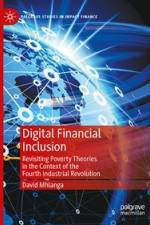
This book is unique in that it challenges scholarly views on financial inclusion and poverty reduction while also relating financial inclusion and poverty reduction to the Fourth Industrial Revolution. The book deviates from the usual method of analyzing financial inclusion, which relies on bank accounts or microcredit as success criteria, and instead discusses how the Fourth Industrial Revolution is facilitating digital financial inclusion. With a five-fold goal, this book investigates both past and present readings and understandings of poverty and financial inclusion. To begin, it provides a thorough introduction to the Fourth Industrial Revolution and financial inclusion in the context of the Fourth Industrial Revolution. Second, the book dives quite extensively into the theories of financial inclusion in the context of the Fourth Industrial Revolution. Third, the book reconstructs the theory of financial inclusion, moving from traditional to digital financial inclusion, highlighting the role of digital financial inclusion in the transition from an informal financial money market to a formal financial system. The fourth goal is to evaluate the tools and effects of digital financial inclusion on poverty. Finally, it provides case studies of digital financial inclusion and the future of digital financial inclusion in emerging and developing countries. This book will be of interest to academics, students and practitioners in a range of disciplines, including finance, development economics, and consumer economics.
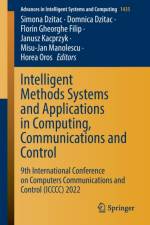
The book contains 37 papers presented at the ninth edition of the International Conference of Computers, Communications and Control-ICCCC-2022 held in Oradea and Baile Felix, Romania. A balanced selection of both methodological and application-oriented papers has been made to reflect several recent worldwide trends and results. The book is organized into five sections: a) integrated solutions in computer-based control, b) advanced control systems integrating computers and communications, c) soft computing including fuzzy system approach, d) decision making and support systems, and e) trustworthy and green design. The study of the papers contained in the book is useful for researchers, consultants, and postgraduate students in computer science and design, applied informatics, control systems, and industrial engineering. The book is also used as auxiliary material for student-level courses such as artificial intelligence, computational intelligence, and decision support systems.
This book constitutes the refereed proceedings of the 15th International Conference on Intelligent Computer Mathematics, CICM 2022, held in Tbilisi, Georgia, in September 2022. The 17 full papers, 1 project/ survey paper, 4 short papers, and 2 abstracts of invited papers presented were carefully reviewed and selected from a total of 37 submissions. The papers focus on theoretical and practical solutions for these challenges including computation, deduction, narration, and data management.
This book constitutes revised selected papers from the thoroughly refereed proceedings of the International Workshop on Coordination, Organizations, Institutions, Norms, and Ethics for Governance of Multi-Agent Systems XIV, COINE 2021, held in London, UK, May 3, 2021. The 9 full papers included in this book were carefully reviewed and selected from 12 submissions. They were organized in topical sections as follows: Invited talk; conceptual frameworks architectures for collaboration and coordination; and modelling and understanding social behaviour using COINE technologies.
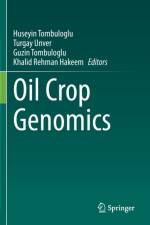
Plants are an important source of fats and oils, which are essential for the human diet. In recent years, genomics of oil biosynthesis in plants have attracted great interest, especially in high oil-bearing plants, such as sesame, olive, sunflower, and palm. Considering that, genome sequencing projects of these plants have been undertaken with the help of advanced genomics tools such as next generation sequencing. Several genome sequencing projects of oil crops are in progress and many others are en route. In addition to genome information, advanced genomics approaches are discussed such as transcriptomics, genomics-assisted breeding, genome-wide association study (GWAS), genotyping by sequencing (GBS), and CRISPR. These have all improved our understanding of the oil biosynthesis mechanism and breeding strategies for oil production.There is, however, no book that covers the genomes and genomics of oil crops. For this reason, in this volume we collected the most recent knowledge of oil crop genomics for researchers who study oil crop genomes, genomics, biotechnology, pharmacology, and medicine. This book covers all genome-sequenced oil crops as well as the plants producing important oil metabolites. Throughout this book, the latest genomics developments and discoveries are highlighted as well as open problems and future challenges in oil crop genomics. In doing so, we have covered the state-of-the-art of developments and trends of oil crop genomics.
Abonner på vårt nyhetsbrev og få rabatter og inspirasjon til din neste leseopplevelse.
Ved å abonnere godtar du vår personvernerklæring.