













Gjør som tusenvis av andre bokelskere
Abonner på vårt nyhetsbrev og få rabatter og inspirasjon til din neste leseopplevelse.
Ved å abonnere godtar du vår personvernerklæring.Du kan når som helst melde deg av våre nyhetsbrev.

This book covers a wide range of topics that illustrate the various functions of autophagy in stem cells and offers insights on the mechanisms by which autophagy can regulate stem-cell self-renewal and facilitate specific differentiation programs. Stem cells are unique cells present in most multicellular animals and are essential for their survival. They have two unique properties: the ability to self-renew and the ability to differentiate into one or more cell types. These characteristics of stem cells have found immense therapeutic potential in regenerative medicine. Autophagy is a crucial membrane trafficking pathway that is essential for maintaining cellular homeostasis that involves sequestration of non-functional proteins, protein aggregates and damaged organelles in double-membraned vesicles called autophagosomes, which are subsequently targeted to the lysosome for degradation. The primary aim of this book is to provide knowledge of recent developments in our understanding of the role of autophagy in stem cells, including germline stem cells.Autophagy is considered a promising target for many diseases. Significant efforts are being developed to identify specific modulators of autophagy, which will aid in designing combinatorial therapeutic strategies that will allow significant improvements in regenerative medicine.
This book constitutes the refereed proceedings of the 13th IFIP WG 5.5/SOCOLNET Advanced Doctoral Conference on Computing, Electrical and Industrial Systems, DoCEIS 2022, held in Caparica, Portugal, during June-July 2022.The 22 full papers presented were carefully reviewed and selected from 48 submissions. The papers present selected results produced in engineering doctoral programs and focus on technological innovation for industry and service systems. The papers are organized into the following topical sub-headings: Smart Systems Thinking; Cyber-physical Systems; health-related Digitalization; Electric Systems and Machines; Smart Devices; and Control and Digital Platforms.
This volume represents a comprehensive state-of-the-art picture of family business and entrepreneurship issues in countries belonging to the Gulf Cooperation Council. It provides major theoretical and empirical evidence which depicts the current processes in each GCC country including problems, faced by family business owners and entrepreneurs, such as succession, financial constraints, and conflicts. The chapters offer recommendations to policy makers on how to improve the general business environment and encourage potential investors, researchers, academicians, and professionals to be more involved in the region. The book is an outcome of a long-lasting endeavor and includes contributions from highly reputed authors and experts from the region and abroad.
This book examines the interpretation of the risk-based approach (RBA) and its application across the banking industry. It explores the ways conflicting risk interpretation and deconstruction of money laundering risk have unintended consequences across the banking industry. Furthermore, it offers a theoretical framework that can be adopted and implemented by risk practitioners to address money laundering (ML) risks. The interpretation and application of the RBA influences the way money laundering risk is perceived, presented, and managed, often resulting in misalignment among stakeholders. Moreover, AML practitioners interpret money laundering (ML) risk as an entity that can be contained, largely in ignorance of the fact that ML risk is self-referential.The book therefore addresses complex inter-system feedback phenomena that lead to de-risking and re-risking, and offers a new ML risk communication framework on this basis. It will be of value to researchers and also to stakeholders within financial institutions, financial intelligence units and regulators in the fight against money laundering.
This book constitutes the proceedings of the 23rd International Conference on Formal Engineering Methods, ICFEM 2022, held in Madrid, Spain, in October 2022. The 16 full and 4 short papers presented together with 1 doctoral symposium paper in this volume were carefully reviewed and selected from 41 submissions. The papers cover for research in all areas related to formal engineering methods, such as verification and validation, software engineering, formal specification and modeling, software security, and software reliability.
This anthology examines how to cultivate human flourishing in the present-day boundary-less work environment. Anchored in the moral and spiritual dimension of well-being, it draws upon several allied fields such as workplace wellness in business and psychology. It utilizes findings from positive psychology, social psychology, organizational neuroscience, quantum physics, organizational behavior, and the world's contemplative wisdom traditions to support the case for workplace flourishing. Chapters cover such themes as analyzing the cause of workplace disengagement and pathways to employee engagement; self-transformation as a prelude to transform organizations; and mindfulness as framework to enhance human flourishing. Research shows that organizations with higher levels of employee engagement routinely out-perform those with lower employee engagement. This book provides valuable insights into why employee well-being is such a powerful driver of employee performance and engagement and advances scholarship on how organizations can enhance workplace well-being and fulfillment.
This book constitutes the refereed proceedings of the 34th International Conference on Advanced Information Systems Engineering, CAiSE 2022, which was held in Leuven, Belgium, during June 6-10, 2022.The 31 full papers included in these proceedings were selected from 203 submissions. They were organized in topical sections as follows: Process mining; sustainable and explainable applications; tools and methods to support research and design; process modeling; natural language processing techniques in IS engineering; process monitoring and simulation; graph and network models; model analysis and comprehension; recommender systems; conceptual models, metamodels and taxonomies; and services engineering and digitalization.
This book constitutes the refereed proceedings of the 22nd International Conference on Runtime Verification, RV 2022, held in Tbilisi, Georgia, during September 28-30, 2022. The 12 regular papers and 10 short papers presented in this book were carefully reviewed and selected from 40 submissions. The RV conference is concerned with all aspects of monitoring and analysis of hardware, software and more general system executions. Runtime verification techniques are crucial for system correctness, reliability, and robustness; they provide an additional level of rigor and effectiveness compared to conventional testing, and are generally more practical than exhaustive formal verification.
This book constitutes selected papers presented during the First International Conference on Bangabandhu and Digital Bangladesh, ICBBDB 2021, held in Dhaka, Bangladesh, in December 2021. Due to the COVID-19 pandemic the conference was partly held online. The 16 papers presented were thoroughly reviewed and selected from the 90 submissions. They present research in the areas of artificial intelligence, machine learning, image processing, blockchain technology, human-computer interaction, etc.
This book proposes a radical change in communication strategies about environmental problems, advocating for more active and emotionally engaging methods that drive people to action. Based on new theoretical developments and research, the book provides a new framework for designing such communication strategies and suggests practical implementations of these ideas for practitioners, policy-makers, and scientists.Among the topics discussed: The psychology of change and why disruptive communication is necessary Virtual reality technologies used to communicate complex ideas Reflections on the value of science fiction and climate fiction in addressing environmental issues Analyzing the impact of youth climate activismDisruptive Environmental Communication provides an innovative new framework for designing effective communication strategies to address large-scale environmental problems, challenging the assumption that environmental problems can be communicated and handled through non-disruptive methods.
This thesis presents significant new observations of nuclear wobbling, and thus expands our understanding of nuclear triaxiality and its prevalence in the nuclear chart. Triaxial nuclear shapes are a very rare phenomena and their experimental identification often relies on two unique signatures - nuclear wobbling motion and chiral rotation. While nuclear chirality is a well-studied phenomenon, experimental observations of wobbling nuclei are rather limited. With the identification of 135Pr and 187Au as wobblers, this work establishes triaxiality to be a general phenomenon present in different regions of the nuclear chart, irrespective of any particular spin or deformation. A major focus of this work is the detailed investigation of the different kinds of wobbling modes. Depending on the geometry of the nuclear system, wobbling can be classified into two types - longitudinal and transverse. This work has, for the first time, reported evidence of the possible coexistence of both forms of wobbling in a single nucleus. Another important result reported in this work is the very first observation of co-existing chiral and wobbling modes in the 135Pr nucleus. This thesis details the experimental methods that led to this breakthrough, along with pertinent theoretical interpretations.
This book gathers contributions from a broad range of jurisdictions, written by practitioners and academics alike, and offers an unparalleled comparative view of key issues in competition law, intellectual property and unfair competition law, with a specific focus on the use of personal data. The first part focuses on the role of competition law in shaping the digital economy. It discusses the use of personal data, the market power of platforms, the assessment of free services, and more broadly the responsibility of dominant companies in the smooth functioning of the digital economy. In turn, the second part sheds light on how the conduct of influencers, native advertising and the use of AI for marketing purposes can be controlled by the law, focusing on the use of personal data and the impact of behavioral advertising on consumers. In this regard, the book brings together the current legal responses across a number of European and other countries, all summarized and elaborated on in the form of two international reports.The LIDC is a long-standing international association that focuses on the interface between competition law and intellectual property law, including unfair competition issues.
"e;Can one hear the shape of a drum?"e; This striking question, made famous by Mark Kac, conceals a precise mathematical problem, whose study led to sophisticated mathematics. This textbook presents the theory underlying the problem, for the first time in a form accessible to students.Specifically, this book provides a detailed presentation of Sunada's method and the construction of non-isometric yet isospectral drum membranes, as first discovered by Gordon-Webb-Wolpert. The book begins with an introductory chapter on Spectral Geometry, emphasizing isospectrality and providing a panoramic view (without proofs) of the Sunada-Berard-Buser strategy. The rest of the book consists of three chapters. Chapter 2 gives an elementary treatment of flat surfaces and describes Buser's combinatorial method to construct a flat surface with a given group of isometries (a Buser surface). Chapter 3 proves the main isospectrality theorems and describes the transplantation technique on Buser surfaces. Chapter 4 builds Gordon-Webb-Wolpert domains from Buser surfaces and establishes their isospectrality.Richly illustrated and supported by four substantial appendices, this book is suitable for lecture courses to students having completed introductory graduate courses in algebra, analysis, differential geometry and topology. It also offers researchers an elegant, self-contained reference on the topic of isospectrality.
This two-volume set of LNAI 13551 and 13552 constitutes the refereed proceedings of the 11th CCF Conference on Natural Language Processing and Chinese Computing, NLPCC 2022, held in Guilin, China, in September 2022.The 62 full papers, 21 poster papers, and 27 workshop papers presented were carefully reviewed and selected from 327 submissions. They are organized in the following areas: Fundamentals of NLP; Machine Translation and Multilinguality; Machine Learning for NLP; Information Extraction and Knowledge Graph; Summarization and Generation; Question Answering; Dialogue Systems; Social Media and Sentiment Analysis; NLP Applications and Text Mining; and Multimodality and Explainability.
This book describes Sicily's unique and varied karst features, discussing the notable geographical areas, their lithology and genesis and, in a number of cases, their value as geosites to be preserved for scientific or tourism purposes. The rich variety of Meso-Cenozoic outcropping rocks in Sicily make the island highly significant in terms of the geological history of the Mediterranean area.The soluble rocks (limestones and gypsum), widely present on the island, play an important role in shaping and continuously altering the landscape, both in the reliefs with spectacular fluviokarst cayons and suggestive gorges, and below ground where there is a wide range of speleogenically and speleologically important caves.
This book constitutes the refereed proceedings of the 20th International Conference on Software Engineering and Formal Methods, SEFM 2022, which took place in Berlin, Germany, in September 2022. The 19 full and 3 short papers included in this book were carefully reviewed and selected from 62 submissions. They were organized in topical sections as follows: software verification; program analysis; verifier technology; formal methods for intelligent and learning systems; specification and contracts; program synthesis; temporal logic; and runtime methods.
The aim of this volume is to foster more sustainable business models through financial markets. To that end, it is necessary to know the main global challenges facing financial markets and their impact on creating sustainable value in business models of enterprises in the context of sustainable adaptation. The book focuses on assessing the decision criteria adopted by financial markets in the process of transaction risk valuation, in terms of the presence of Environmental, Social, and Governance (ESG) criteria, and by assessing the impact of including these criteria in the risk assessment process by financial markets in business decisions, leading as a consequence to building new value in the form of a sustainable business model.The book presents global ESG risks facing the financial markets, and discusses how ESG risks are managed and monitored, and how financial markets can measure and operationalize extra-financial risks in its assessment process. The book also analyses ESG risk implications and influences on company behavior, and the actions that companies should take considering the ESG assessment requirements of financial markets. Finally, it provides a comprehensive, structured, and systematic view of how financial markets and companies should adapt and improve their business models. The book provides unique challenges for investors, companies, financial markets, and for our society as a whole, advancing traditional risk management approaches to address global risks.
This book constitutes the refereed proceedings of the 23rd International Conference on Knowledge Engineering and Knowledge Management, EKAW 2022, held in Bolzano, Italy, in September 2022. The 11 full papers presented together with 5 short papers were carefully reviewed and selected from 57 submissions The previous event in the series, EKAW 2020, introduced a special theme related to "e;Ethical and Trustworthy Knowledge Engineering."e; This theme is still very relevant in 2022, and thus has remained one of the core topics of the conference.The conference concerned with all aspects about eliciting, acquiring, modeling and managing knowledge, and the construction of knowledge-intensive systems and services for the semantic web, knowledge management, e-business, natural language processing, intelligent information integration, and much more.
From early 2020 for a period of two years at the end of which this book was written, air transport suffered unprecedented setbacks due to the COVID-19 pandemic. Although the pandemic may eventually fizzle out into another flu like occurrence, the restraint with which air transport services were offered would remain with us for a while with some practices being sustained, particularly those pertaining to public health. One of the main areas of air transport that was and will be affected significantly by the changed circumstances - is facilitation - a subject that is regulated by the Chicago Convention of 1944 and its Annex 9. This book looks in depth at the Annex as it will be applied in a post pandemic world, against its legal, socio-political, and economic impacts, addressing the Standards of the Annex on clearance of aircraft; entry and departure of passengers; and the carriage of cargo. It also discusses some critical aviation events in 2020 and 2021 that occurred as they relate to facilitation of air transport. Some of the key areas discussed are the role of ICAO; issues of public health as they relate to air transport; security of travel documents; smuggling of persons; digital technology and rights of the passenger; unruly passengers; carriage of disabled passengers; relief flights and repatriation flights; and facilities at airports.
Nowadays, online technologies are the core of most fields of engineering and the whole society and are inseparable connected for example with Internet of Things & Industrial Internet of Things (Industry 4.0), Online & Biomedical Engineering, Data Science, Machine Learning, and Artificial Intelligence, Cross & Mixed Reality, and Remote Working Environments. to name only a few.Since the first REV conference in 2004, we tried to focus on the upcoming use of the Internet for engineering tasks and the opportunities as well as challenges around it. Consequently, the motto of this year's REV2022 was "e;Artificial Intelligence and Online Engineering"e;.In a globally connected world, the interest in online collaboration, teleworking, remote services, and other digital working environments is rapidly increasing. In response to that, the general objective of this conference is to contribute and discuss fundamentals, applications, and experiences in the field of Online and Remote Engineering, Virtual Instrumentation and other related new technologies like Cross Reality, Data Science & Big Data, Internet of Things & Industrial Internet of Things, Industry 4.0, Cyber-Security, and M2M & Smart Objects. Another objective of the conference is to discuss guidelines and new concepts for engineering education in higher and vocational education institutions, including emerging technologies in learning, MOOCs & MOOLs, and Open Resources.REV2022 was the 19th in a series of annual events concerning the area of Online Engineering. It has been organized in cooperation with The British University in Egypt (BUE), Cairo, as a hybrid event from February 28 until March 02, 2022.
This book blends multiple research studies, historical and current events, reflective teaching examples, and guidance for LGBTQ+ inclusion and queer pedagogy in elementary schools. It is divided into three sections to guide the readers from a broad understanding of the hxstories of LGBTQ+ discriminations, rights, and some communities' resistance to LGBTQ+ children, teachers, and curriculum to a focused invitation into the author's own reflections, teaching, and discussions with children about LGBTQ+ literature and topics. The volume provides hxstories, theoretical and methodological inquiry, resources, and encouragement for teacher-researchers ready to engage LGBTQ+-inclusion and queer literacy pedagogy in their classrooms, schools, and communities.
This book offers a comprehensive approach to the assessment of fire hazards of electrical cables. The first part of the book describes division of cables, main parameters of electrical cables, and fault scenarios of cables leading to fire or occupant injuries. The traditional approach to fire hazards of electrical cables assessment is also described in the first part. The second part of the book is focused on the creation and description of a new approach to fire hazard assessment of electrical cables. The new approach is based on the assessment of both ignition parameters of electrical cables and the impact of their fires on the surrounding area. The ignition parameters include critical heat flux, ignition temperature, and critical electrical current. The impact of cable fires on the surrounding area is expressed by the released heat, toxicity of combustion products (determined by the amount of released carbon oxides and oxygen consumed), and visibility (determined by the smoke extinction area). Newly created approach is practically illustrated on specific types of cables (power cables classified to B2ca and Fca reaction to fire class) in this book. The book is intended mainly for academics in the fields of both fire protection engineering and electrical engineering. Besides that, the professionals in fire safety will find valuable information concerning impact of electrical cables on the safety of occupants and structures during fire in the book. In addition, the book sheds light on the issue of fire safety of electrical cables for the professionals in both electrical and power engineering. Last but not least, the book is appropriate also for students in the fields of fire, electrical, and power engineering in bachelor, master, and Ph.D. degree.
This book provides a comprehensive overview of current biosurfactant research and applications. Public awareness of environmental issues has increased significantly over the last decade, a trend that has been accompanied by industry demands for climate-friendly and environmentally friendly renewable raw materials. In the context of household products, biosurfactants could potentially meet this demand in the future due to their low ecotoxicity, excellent biodegradability, and use of renewable raw materials. The diversity of this class of molecules, which has only been marginally tapped to date, offers only an inkling of their future application potential. However, there are two main obstacles to their widespread commercial use on the growing surfactant market: the lack of attractive and competitive production technologies, and the limited structural diversity of commercially available biosurfactants. Addressing both of these core issues, this book will provide readers with a deeper understanding of the role of biosurfactants, including future opportunities and challenges.Chapter "e;Environmental Impacts of Biosurfactants from a Life Cycle Perspective: A Systematic Literature Review"e; is available open access under a Creative Commons Attribution 4.0 International License via link.springer.com.
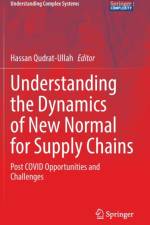
This book provides research results and shares experiences in the area of supply chain management. It addresses topics such as risk reduction of lesser marginal profits, disrupted supply chain management, and potential points of business failure. This book explores the "e;new normal"e; of the business supply chain. The didactic approach informs global enterprises on how to deal with the most significant issues in the current supply chain management. The book shows an in-depth analysis of post-COVID opportunities and challenges and acts as an initiative for readers to understand the risks, opportunities, and concerns resulting from the pandemic situation and is a key driver for business management among industry professionals and enterprises. Readers will learn new insights and procedures to better manage multitier supply chains, predictability, and estimation of binding capacity. The book details modeling and technology-based customer demand and response management solutions. New techniques, methods, and perspectives dealing with the estimation, acceleration or deceleration, and flexibility of logistics capacity are particularly emphasized throughout the manuscript. Real-world cases dealing with various aspects of the new normal for supply chains are analyzed. The book is useful for industry professionals and enterprise firms in business management to effectively understand risks, opportunities, and concerning the pandemic situation.
This monograph gives the reader an up-to-date account of the fine properties of real-valued functions and measures. The unifying theme of the book is the notion of nonmeasurability, from which one gets a full understanding of the structure of the subsets of the real line and the maps between them. The material covered in this book will be of interest to a wide audience of mathematicians, particularly to those working in the realm of real analysis, general topology, and probability theory. Set theorists interested in the foundations of real analysis will find a detailed discussion about the relationship between certain properties of the real numbers and the ZFC axioms, Martin's axiom, and the continuum hypothesis.
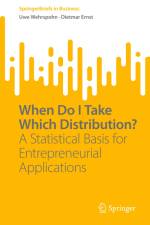
This book provides the statistical basis for quantitative risk management by presenting and explaining the most important distributions. Distributions describe the occurrence and impact of a risk. They are a prerequisite for risk aggregation, risk analysis and risk assessment as required by the German revision standards IDW PS 340, StaRUG and FISG.This book portrays the distributions that are fundamental for enterprise risk management and shows when and how they are used. These include the Bernoulli distribution, the binomial distribution, the Poisson distribution, the uniform distribution, the triangular distribution, the PERT distribution, the modified PERT distribution, the trapezoidal distribution, the custom distribution, the normal distribution, the lognormal distribution, the Weibull distribution, the expert distribution, the poly distribution and the compound distribution. Furthermore, the book explains how the parameterisation of the distributions can be done via expert estimates or algorithmic calibration.
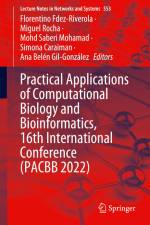
This book is suitable for researchers and practitioners in biology, medicine and health sciences and bioinformatics. The success of bioinformatics and computational biology in recent years has been driven by research through computational tools and techniques that are essential for data analysis in modern biology and medicine.Systems biology is a related research area that has been replacing the reductionist view that dominated biology research in the last decades, requiring the coordinated efforts of biological researchers with those related to data analysis, mathematical modelling, computer simulation and optimization. The accumulation and exploitation of large-scale databases prompt new computational technology and for research into these issues. In this context, many widely successful computational models and tools used by biologists in these initiatives, such as clustering and classification methods for gene expression data, are based on computer science/ artificial intelligence (CS/AI) techniques. In fact, these methods have been helping in tasks related to knowledge discovery, modelling and optimization tasks, aiming at the development of computational models so that the response of biological complex systems to any perturbation can be predicted.This proceedings of the 16th International Conference on Practical Applications of Computational Biology and Bioinformatics (PACBB), held in L'Aquila (Italy) from July 13 to 15, 2022, contains ten original contributions of authors from many different countries (Bahrain, Canada, France, Italy, Portugal, Saudi Arabia, Spain, and UK) and different subfields in bioinformatics and computational biology.It is also suitable for artificial intelligence researchers interested in exploring applications in biology and health sciences and computational models.
This book presents contributions to the 50th Annual Conference of the Operations Research Society of South Africa (ORSSA), which was jointly hosted with the African Federation of Operations Research Societies (AFROS) at North-West University in Potchefstroom, South Africa from 12 to 15 September, 2021. Focusing on innovative case studies and recent applications of Operations Research models and algorithms in African countries, each chapter highlights findings emerging from the countries in question and explains the lessons learned. As such, the book offers an up-to-date overview of Operations Research practices and developments in Africa. AFROS is a "e;not for profit"e; organization that aims to promote Operations Research in Africa. Its affairs are regulated by an Executive Committee consisting of representatives/alternates of all its member societies. The members of the Federation undertake to co-operate in the advancement of knowledge, interest and education in Operations Research by appropriate means, particularly the exchange of information, the holding of meetings and conferences, and the awarding of prizes.
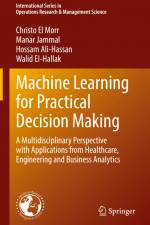
This book provides a hands-on introduction to Machine Learning (ML) from a multidisciplinary perspective that does not require a background in data science or computer science. It explains ML using simple language and a straightforward approach guided by real-world examples in areas such as health informatics, information technology, and business analytics. The book will help readers understand the various key algorithms, major software tools, and their applications. Moreover, through examples from the healthcare and business analytics fields, it demonstrates how and when ML can help them make better decisions in their disciplines.The book is chiefly intended for undergraduate and graduate students who are taking an introductory course in machine learning. It will also benefit data analysts and anyone interested in learning ML approaches.
This book offers a snapshot of the latest research and developments in road and railway vehicle dynamics. Gathering peer-reviewed contributions to the 27th Symposium of the International Association of Vehicle System Dynamics (IAVSD), held online on August 17-19, 2021, from Saint Petersburg, Russia, it offers extensive information for both researchers and professionals in the field of ground vehicle dynamics, control and design. It covers cutting-edge methods and solutions for solving ground vehicle system dynamics-related problems, concerning control and monitoring, performance, safety and braking of road and rail vehicles, including electric and autonomous ones. Further, it reports on significant advances in vehicle design, and important applications to improve ride comfort. Overall, the book provides academics and professional with a timely reference guide on theories and methods to understand, analyze and improve vehicle stability and dynamics in a broad range of different operating conditions. Chapter "e;Experimental Validation of a Semi-physical Modelling Approach of the Influence of Tyre Rotation on the Vertical Tyre Force Transmission and Tyre Kinematics"e; is available open access under a Creative Commons Attribution 4.0 International License via link.springer.com.
Abonner på vårt nyhetsbrev og få rabatter og inspirasjon til din neste leseopplevelse.
Ved å abonnere godtar du vår personvernerklæring.