










Gjør som tusenvis av andre bokelskere
Abonner på vårt nyhetsbrev og få rabatter og inspirasjon til din neste leseopplevelse.
Ved å abonnere godtar du vår personvernerklæring.Du kan når som helst melde deg av våre nyhetsbrev.

The book aims to explain the factors that brought about a high degree of similarity between American and Canadian foreign and security policies during the Afghanistan intervention. Specifically, it seeks to explain why, despite their different positions in the international distribution of power, the United States and Canada embraced similar counterinsurgency (COIN) strategies from 2005/2006 to 2011. During this time, the United States and Canada fought against insurgent groups, sought to maintain stabilized areas by mentoring Afghan forces, and invested in infrastructure and governance. These goals, which corresponded to the 'clear,' 'hold,' and 'build' COIN components, entailed sending troops and civilian officials to a war zone and committing financial resources.
This book constitutes refereed proceedings of the 10th Ecuadorian Conference on Information and Communication Technologies, TICEC 2022, held in Manta, Ecuador, in October 2022.The 20 full papers were carefully reviewed and selected from 150 qualified submissions. The papers cover a great variety of topics, such as wireless communication, immersive environments, artificial intelligence, data mining, neural networks, augmented reality, cyberphysical systems, telemedicine, cybersecurity, software architecture, data processing, software development, and others. The contributions are divided into the following thematic blocks: ICT's Applications; Data Science; Software Development.
This book reports on fundamental research, cutting-edge technologies and industrially-relevant applications in biomedical engineering. It covers methods for analysis, modeling and simulation of biological systems, reporting on the development and design of advanced biosensors, nanoparticles and wearable devices. It covers applications in disease monitoring and therapy, tissue engineering, sport and rehabilitation, and telehealth. It also reports on engineering methods for improving and monitoring medical service, and on advanced robotic applications. Gathering the proceedings of the XLV Congreso Nacional de Ingenieria Biomedica (CNIB2022), organised by the Mexican Society of Biomedical Engineering, this book offers a timely snapshot on technologies and methods in bioengineering, and on challenges related to their practical implementation in the health sector.
This book constitutes the refereed proceedings of the 4th Multidisciplinary International Symposium on Disinformation in Open Online Media, MISDOOM 2022, held in October 2022. The 7 full papers and 3 short papers were carefully reviewed and selected from 17 full/short paper submissions. The papers focus on health and climate change misinformation, social bots and comment moderation, information seeking and diffusion, misinformation detection, and user perception-based trust models.
This book contains the refereed proceedings of the 16th International Conference on Knowledge Management in Organizations, KMO 2022, held in Hagen, Germany, in July 2022. The 24 full papers and 5 short papers accepted for KMO 2022 were selected from 61 submissions and are organized in topical sections on: knowledge transfer and sharing; knowledge and organization; knowledge and service innovation; industry 4.0; information and knowledge systems; intelligent science; AI and new trends in KM.
This book offers a critique of the present status of the concept of causality in the social sciences. "e;The Causality Syndrome"e; consists of a belief in causal studies as more important than other studies, a narrow definition of causality, and rules of thumb regarding how to make causal claims. The book argues that the present dominance of this syndrome has considerable downsides and presents a challenge to social science. The book dissects the many interconnected ideas which undergird this syndrome and offers an intellectual home for advanced students, researchers and others who are concerned about the present dominance of The Causality Syndrome. The book critically discusses whether "e;causality"e; deserves the central position in social science that its advocates desire. The text shows how methodological rules about causal inference are used to protect causal studies from critique, even in situations where these rules are not followed. It is argued that institutionalization of these rules as symbols of good and trustworthy social science is highly problematic and comes with a price. One of the casualties of causality is that there is less motivation to study complex and pressing issues in society which do not lend themselves to causal study designs. The sections are short. The argument unfolds in a lively, engaged form with examples from many fields, including public health, evaluation and organizational studies. The case examples include classical experiments as well as contemporary research, e.g. studies of the effectiveness of restrictions targeting the spread of coronavirus.
This book discusses in an accessible way how emerging globalizing processes are setting the stage for new forms of social and political struggle in Latin America, with increased involvement of multilateral and foreign actors, and impacts of global political populism and populist social media. These are opening up new strategies and opportunities for activists, and offer new arenas of contestation for international organizations. The book analyzes the struggles of select marginalized groups, specifically the urban poor, indigenous groups, women's and LGBTQ groups, and the vulnerable middle classes. Each case is examined in the context of a distinct struggle for citizenship, identity, inclusion, and or the rule of law. The study offers a broad historical analysis of the region through the context of these struggles. It tackles some of the most pressing issues surrounding the current politics of Latin America, including identity politics, cultural appropriation, social mobilization and protest, neoliberal reform, reproductive rights and sexual autonomy, corruption, the influence of religion and patriarchy, crime and social justice, inequality and poverty, the informal economy, and urban exclusion. In doing so, it details not only how these are not new struggles, but also how they have evolved over time. In the contemporary period, the book explores how the actors as well as character of their struggle are changing through a globalized interchange of ideas and processes. The book covers a wide geographical area in Latin America, with a particular focus on countries with Spanish or Portuguese colonial backgrounds, and is for researchers, students and laypersons interested in new globalizing forces affecting Latin American society and polity.
This book constitutes the proceedings of the 20th International Conference on Practical Applications of Agents and Multi-Agent Systems, PAAMS 2022, held in L'Aquila, Italy in July 2022.The 37 full papers in this book were reviewed and selected from 67 submissions. Another 10 demonstrations papers were selected from 11 submissions are presented here as short papers. The papers deal with the application and validation of agent-based models, methods, and technologies in a number of key applications areas, including: advanced models and learning, agent-based programming, decision-making, education and social interactions, formal and theoretic models, health and safety, mobility and the city, swarms and task allocation.
Comprised exclusively of clinical cases, this concise, practical casebook provides clinicians and surgeons with current reconstructive techniques for complicated manifestations of foot and ankle injuries as a result of trauma, neuromuscular disease and deformity. Presenting unique cases in forefoot, midfoot, rearfoot, and ankle surgery, it is sensibly divided into six sections: forefoot maladies, the varus foot and ankle, the valgus foot and ankle, Charcot neuropathy, tendinopathies, and ankle joint revision. Each section demonstrates the surgical techniques chosen in each case, supported by generous, detailed surgical and radiographic slides and diagrams. A consistent chapter format, outlining the case presentation, diagnosis, management, and pearls and pitfalls, ensures its utility and accessibility.Pragmatic and reader-friendly, Challenges in Foot and Ankle Reconstruction Surgery: A Case-based Approach is an excellent resource for foot and ankle surgeons, podiatrists and all clinical staff treating these common yet challenging conditions.
This book explores the ways in which dynamics of Islamophobia and neoliberalism shape the schooling experiences of minority Muslim students in Sydney primary, public and independent schools. The author examines the issues at macro, meso and micro level.At the global systemic level, the book discusses the politics of naming Muslims and racialised governmentality within a capitalist neoliberal context. At the institutional level, it provides an insight into the Living Safe Together policy and explains how it can potentially provide space for teachers to abuse their authority or power in schools over minority Muslim students, within a wider discursive context shrouded by national security discourses, 'homegrown' terrorism and deradicalisation. Finally, at the individual level, drawing on the voices of teachers and Muslim students, the book highlights how Islamophobic discourse was reinforced through pedagogical practices, and how Muslim students resisted these discourses by speaking back to power.
This book explores the relationship between (post)truth and subjectivity by focusing on social media as a site of digital subjectification. These days, truth is cheap. Anyone can claim it. Indeed, most do - impudently and without any recourse to facts or objective reality. Truth-claims today are nothing but power grabs, employed in the permanent popularity contest that our culture and politics have become. Correspondingly, our very sense of reality is perpetually uprooted. Post-truth sets us adrift. Navigating by smartphones, we pursue endless mirages, coming to wonder whether the shoreline itself is a myth. The book examines the ways in which different digital practices - such as influencing, trolling and digital activism - operate as technologies of the subject, shaping how we relate to ourselves, others and the world. It argues that social media facilitates the progressive eclipsing of our subjective (dis)positions by the economic imperative. Positioning post-truth as the outcome of unbridled economicization, it exposes the true costs of its supremacy. The critical reflections on the relationship between digital subjectification and the social offered by this book will be of relevance to academics and students working in the fields of sociology, media and cultural studies, politics, and philosophy.
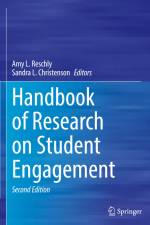
The second edition of the handbook reflects the expanding growth and sophistication in research on student engagement. Editorial scope and coverage are significantly expanded in the new edition, including numerous new chapters that address such topics as child and adolescent well-being, resilience, and social-emotional learning as well as extending student engagement into the realm of college attendance and persistence. In addition to its enhanced focus on student engagement as a means for promoting positive youth development, all original chapters have been extensively revised and updated, including those focusing on such foundational topics related to student engagement as motivation, measurement, high school dropout, school reform, and families.Key areas of coverage include:Demography and structural barriers to student engagement.Developmental and social contexts of student engagement.Student engagement and resilience.Engaging students through effective academic instruction and classroom management.Social-emotional learning and student mental health and physical well-being.Student engagement across the globe, languages, and cultures.The second edition of the Handbook of Research on Student Engagement is the definitive resource for researchers, scientist-practitioners and clinicians as well as graduate students in such varied fields as clinical child and school psychology, social work, public health, educational psychology, teaching and teacher education, educational policy, and all interrelated disciplines.
This book addresses the issue of one of the most visible and debated currents in contemporary radical Islam. It sheds light on the history, the fundamental principles, and the political and religious translations of Salafism and explains current events involving Salafist actors in an objective and dispassionate manner. The author explains with precision the different contemporary Salafist mobilizations by illustrating them with specific cases while shedding light on the main debates related to this mode of understanding of the Muslim religion, such as its potential role in triggering certain forms of violence, the way to compare it to other fundamentalist versions in other religions, or the way to describe, in terms of social sciences, the main concepts and discourses that can be observed in this current of Islam today.
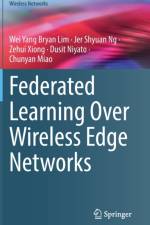
This book first presents a tutorial on Federated Learning (FL) and its role in enabling Edge Intelligence over wireless edge networks. This provides readers with a concise introduction to the challenges and state-of-the-art approaches towards implementing FL over the wireless edge network. Then, in consideration of resource heterogeneity at the network edge, the authors provide multifaceted solutions at the intersection of network economics, game theory, and machine learning towards improving the efficiency of resource allocation for FL over the wireless edge networks. A clear understanding of such issues and the presented theoretical studies will serve to guide practitioners and researchers in implementing resource-efficient FL systems and solving the open issues in FL respectively.
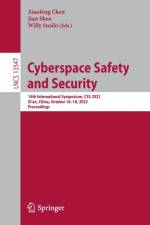
This book LNCS 13547 constitutes the proceedings of the 14th International Symposium on Cyberspace Safety and Security, CSS 2022, held in Xi'an, China, in October 2022.The 26 revised full papers presented were carefully reviewed and selected from 104 initial submissions. The papers focus on Cyberspace Safety and Security, such as authentication, access control, availability, integrity, privacy, confidentiality, dependability and sustainability issues of cyberspace.
This brief provides a comprehensive introduction on the flow-induced instabilities (e.g., the pressure fluctuations and the vibrations) of the reversible pump turbines (RPTs) in the pumped hydro energy storage power stations (PHSEPSs) in China based on long-term field tests. The pressure fluctuations and the vibrations of several RPTs in China under different operational conditions are analysed in detail to reveal their generation mechanisms and propagation characteristics. The book presents advanced signal analysis and processing methods which are used for obtaining the time-frequency information and for finding the internal correlations between several types of signals. Advanced artificial intelligence algorithms are adopted for understanding the effective fault diagnosis and the identification of different flow patterns. The book overviews the fundamentals of the RPTs and the signal analysis methods, while it demonstrates that the analysis results of the pressure fluctuation and vibration data may be employed for the calibration of numerical simulations and the comparisons of model tests. It is primarily targeted to researchers and engineers working on the fields of condition monitoring and fault diagnosis of hydraulic machineries.
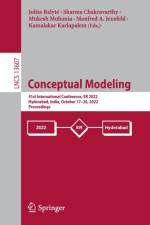
This book constitutes the refereed proceedings of the 41st International Conference on Conceptual Modeling, ER 2022, held in Hyderabad, India, in October 2022. The 19 full and 11 short papers were carefully reviewed and selected from 82 submissions. The papers are organzed in the following topical sections: foundations of conceptual modeling; ontologies and their applications; applications of conceptual modeling; data modeling and analysis; business process; quality and performance; security, privacy and risk management; goals and requirements.
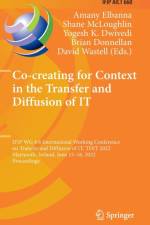
This volume, IFIP AICT 660, constitutes the refereed proceedings of the IFIP WG 8.6 International Working Conference "e;Co-creating for Context in Prospective Transfer and Diffusion of IT"e; on Transfer and Diffusion of IT, TDIT 2022, held in Maynooth, Ireland, during June 15-16, 2022.The 19 full papers and 10 short papers presented were carefully reviewed and selected from 60 submissions. The papers focus on the re-imagination of diffusion and adoption of emerging technologies. They are organized in the following parts:
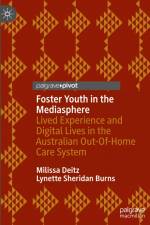
This book considers the impact of digital media and technology on lived experience for young people in foster care. While the extent and intricacies of foster care-known as out-of-home care (OOHC) in Australia, where this study takes place-are not widely understood by the general public, youth in care might struggle to construct a personal identity that goes beyond reflecting the stereotypes and stigma by which they are often recognised. In today's digital environment, media can play a significant role in any individual's developing sense of self, identity, and belonging. Deitz and Sheridan Burns examine OOHC through the lens of networked media environments and investigate the conditions that encourage belonging and resilience in order to establish the role that digital technology can play in supporting those conditions for individuals, family networks, and the care sector.
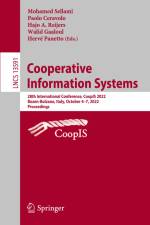
This volume LNCS 13591 constitutes the proceedings of the International Conference on Cooperative Information Systems, CoopIS 2022, collocated with the Enterprise Design, Operations and Computing conference, EDOC 2022, in October 2022 in Bozen-Bolzano, Italy. The 15 regular papers presented together with 5 research in progress papers were carefully reviewed and selected from 68 submissions. The conference focuses on technical, economical, and societal aspects of distributed information systems at scale. As said, this 28th edition was collocated with the 26th edition of the Enterprise Design, Operations and Computing conference, EDOC 2022, and its guiding theme was "e;Information Systems in a Digital World"e;.
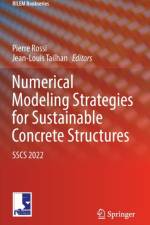
This volume highlights the latest advances, innovations, and applications in the field of sustainable concrete structures, as presented by scientists and engineers at the RILEM International Conference on Numerical Modeling Strategies for Sustainable Concrete Structures (SSCS), held in Marseille, France, on July 4-6, 2022. It demonstrates that numerical methods (finite elements, finite volumes, finite differences) are a relevant response to the challenge to optimize the utilization of cement in concrete constructions while checking that these constructions have a lifespan compatible with the stakes of sustainable development. They are indeed accurate tools for an optimized design of concrete constructions, and allow us to consider all types of complexities: for example, those linked to rheological, physicochemical and mechanical properties of concrete, those linked to the geometry of the structures or even to the environmental boundary conditions. This optimization must also respect constraints of time, money, security, energy, CO2 emissions, and, more generally, life cycle more reliably than the codes and analytical approaches currently used. Numerical methods are, undoubtedly, the best calculation tools at the service of concrete eco-construction. The contributions present traditional and new ideas that will open novel research directions and foster multidisciplinary collaboration between different specialists.
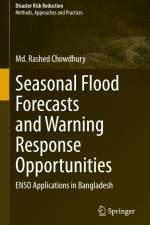
This book explores the feasibility of using El Nino-Southern Oscillation (ENSO)-based forecasts and early warning systems to prevent losses from floods and droughts in Bangladesh. Despite advances in short-range flood forecasting and information dissemination systems in Bangladesh, the present system is less than satisfactory. This is due to short lead-time products, outdated dissemination networks, and lack of direct feedback from the end-user. One viable solution is to produce long-lead seasonal forecasts-the demand for which is significantly increasing in Bangladesh- and disseminate these products through appropriate channels. As observed in other regions, the success of seasonal forecasts, in contrast to short-term forecasts, depends on consensus among the participating institutions. Therefore, the primary objective of the book is to revisit and modify the framework of an ideal warning response system for issuance of consensus seasonal flood forecasts in Bangladesh. The book discusses issues related to the 5-stage Flood Forecasts, Warning, and Response System (FFWRS) and emphasizes the role of the seasonal 'Climate Outlook Forum (COF)' in Bangladesh. The book also identifies ways to improve forecasting and early warning systems by utilizing ENSO-based climate data and models, and discusses a comprehensive and participatory approach to seasonal flood hazard management in Bangladesh.Several successful case examples of ENSO-based seasonal forecasts and early warning systems from other ENSO-sensitive regions have been documented. The primary audience includes academics and students, government policymakers, engineers, and business leaders.
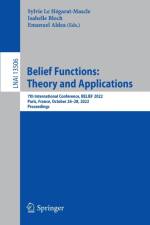
This book constitutes the refereed proceedings of the 7th International Conference on Belief Functions, BELIEF 2022, held in Paris, France, in October 2022.The theory of belief functions is now well established as a general framework for reasoning with uncertainty, and has well-understood connections to other frameworks such as probability, possibility, and imprecise probability theories. It has been applied in diverse areas such as machine learning, information fusion, and pattern recognition.The 29 full papers presented in this book were carefully selected and reviewed from 31 submissions. The papers cover a wide range on theoretical aspects on mathematical foundations, statistical inference as well as on applications in various areas including classification, clustering, data fusion, image processing, and much more.
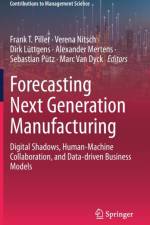
Manufacturing companies have just begun to implement the concepts of the Fourth Industrial Revolution (Industry 4.0) on a larger scale. Still, this area is characterized by a rapid pace of technological change, blurring boundaries between physical, digital, and biological systems, and a quickly changing growing political, economic, and social environment -- leading to high uncertainty in decision making and many questions about the future development in this field. To provide guidance and inspiration for managers and academics on the future of digital manufacturing systems, this book presents the results of an extensive Delphi study on next-generation manufacturing systems, with a projection period of up to 2030. We analyzed almost 2000 quantitative estimations and more than 600 qualitative arguments from a large panel of industrial and academic experts from Europe, North America, and Asia. The book describes each of the 24 projections in detail, offering current case study examples and related research, as well as implications for policymakers, firms, and individuals. The empirical results also allowed us to build scenarios for the most probable future along the dimensions of governance, organization, capabilities, and interfaces from both a company-internal and an external (network) perspective.
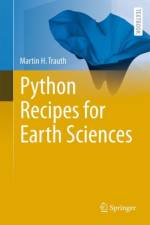
Python is used in a wide range of geoscientific applications, such as in processing images for remote sensing, in generating and processing digital elevation models, and in analyzing time series. This book introduces methods of data analysis in the geosciences using Python that include basic statistics for univariate, bivariate, and multivariate data sets, time series analysis, and signal processing; the analysis of spatial and directional data; and image analysis. The text includes numerous examples that demonstrate how Python can be used on data sets from the earth sciences. The supplementary electronic material (available online through Springer Link) contains the example data as well as recipes that include all the Python commands featured in the book.
This book shows latest research on the role Artificial inelegance in enabling IoT to evoke IoI, and how IoI flourish inside technologies like social media platforms, social networks: communities of practice/interest, to assure a globally sustainable unit where humans integrate with machines to collaboratively share ideas and solve complex problems. Such a book holds several benefits. It will reveal theoretical practical, and managerial implications through discussions that will embrace a wide array of technologies focused on the role of AI enabled IoT to evoke IoI. EAMMIS 2022 was organized by the Bridges Foundation in cooperation with Coventry University, UK on the 10th and 11th of June 2022. EAMMIS 2022 theme was From the Internet of Things to the Internet of Ideas: The role of Artificial Intelligence. The papers presented at the conference provide a holistic view of AI and its applications, IOT and the IOI which will help societies to better use and benefit from AI, IOT and IOI to develop future strategies and actions.
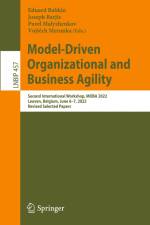
This book constitutes the proceedings of the Second International Workshop on Model-Driven Organizational and Business Agility, MOBA 2022, which took place in Leuven, Belgium, in June 2022.MOBA was launched with the purpose of fetching scientific rigor into the agile practice within an entire enterprise, especially focusing on the role of models and modeling.The 10 papers presented in this volume were carefully reviewed and selected from 22 submissions. They cover topics like business intelligence, agile business rules, agile software development, adaptive domain-specific interfaces, or reconfigurable software architectures.
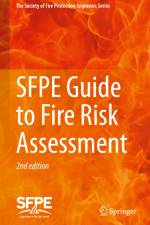
The SFPE Guide to Fire Risk Assessment provides guidance to qualified practitioners in developing, selecting, and using fire risk assessment methodologies for the design, construction, and operation of buildings, facilities, or processes. It also addresses fire risk acceptability, the role of fire risk assessment and fire risk management in the fire safety design process, and associated communication/ monitoring of fire risk.The guide Includes a new flow chart that outlines the risk assessment process. It also includes new information related to:Risk PerceptionF-N curvesRisk communicationResidual risk managementRisk monitoringSensitivity analysisThe guide also provides clear guidance on conducting qualitative and quantitative analysis. It also uses examples that reinforce topics discussed.
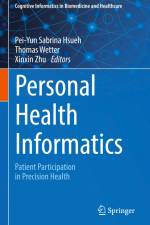
This book clarifies consumer and personal health informatics and their relevance to precision medicine and healthcare applications. Personal Health Informatics covers a broad definition of this emerging field, with individuals not simply consuming health but as active participants, researchers and designers in the healthcare ecosystem. The world of health informatics is constantly changing given the ever-increasing variety and volume of health data, care delivery models that shift from fee-for-service to value-based care, new entrants in the ecosystem and the evolving regulatory decision landscape. These changes have increased the importance of the role of patients in research studies for understanding work processes and activities, and the design and implementation of health information systems. Therefore, personal health informatics now provide research tools and protocols to engage within individual contexts when developing solutions, which can improve clinical practice, patient engagement and public health. Personal Health Informatics offers a snapshot of this emerging field, supported by the methodological, practical, legal and ethical perspectives of researchers and practitioners. In addition to being a research reader, this book provides pragmatic insights for practitioners in designing, implementing and evaluating personal health informatics in healthcare settings. It represents an excellent reader for students in all clinical disciplines and biomedical and health informatics to learn from the case studies provided in this emerging field.
This book helps transform the awareness of the anticipatory perspective into actionable methods for practitioners of medicine. It provides guidance for those who design new means and methods inspired by epigenetics, in particular to those who advance sustainable alternatives.
Abonner på vårt nyhetsbrev og få rabatter og inspirasjon til din neste leseopplevelse.
Ved å abonnere godtar du vår personvernerklæring.