

















Gjør som tusenvis av andre bokelskere
Abonner på vårt nyhetsbrev og få rabatter og inspirasjon til din neste leseopplevelse.
Ved å abonnere godtar du vår personvernerklæring.Du kan når som helst melde deg av våre nyhetsbrev.

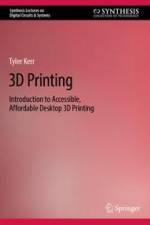
This book is an introduction to the wide and varied world of 3D printing-an incredible technology used across an ever-growing list of industries. As 3D printing continues to skyrocket in popularity, it's increasingly important to understand how these machines work and how to apply 3D printing technology to personal and professional interests. More important still, this book highlights how surprisingly easy 3D printers can be to use, even for readers who don't consider themselves particularly tech-savvy.This book provides a comprehensive overview of 3D printing for first-time users. The text introduces some of the most popular types of 3D printing technology available, as well as some of the most exciting and compelling applications across industry today. The content dives deeply into one of the most popular and widely accessible 3D print technology on the market: fused deposition modeling (FDM) 3D printing. The reader will learn basic FDM 3D printer anatomy, software settings, as well as the tips and tricks to master your own FDM 3D printer. The book provides a firm understanding of what FDM 3D printing excels at, its current limitations, and how to troubleshoot and overcome some of the most common 3D printing problems. The book then provides some 'STEAM-building' cross-disciplinary challenges and applications for the reader to complete at home.This book is for novice readers who might be early in their 3D printing journey. For those looking to learn more about introductory 3D printing and curious about how to get started, this is an excellent place to start. By the end of the book, the reader should have all the understanding and tools necessary to start 3D printing with confidence.
This book examines the ways that brothels are managed under decriminalisation in New Zealand. New Zealand decriminalised sex work in 2003 with the passage of the Prostitution Reform Act, making it the first country to do so. Decriminalisation situates brothels as 'businesses like any other' and creates a legislative platform for better working conditions for sex workers. Nevertheless, we have limited understanding of how brothels are managed in New Zealand. Drawing on interviews with brothel operators and sex workers, this book explores how the law is understood and implemented, how brothel operators position their businesses, and how they seek legitimacy in a historically stigmatised sector. It also examines the rules and norms by which operators manage their businesses and the possibilities for sex workers to consent to commercial sexual services in the context of neoliberal norms of work and of managers who expect them to be professionalised, responsibilised and productive.
This volume constitutes selected papers presented during the Second International Conference on Intelligent Systems and Pattern Recognition, ISPR 2022, held in Hammamet, Tunisia, in March 2022. Due to the COVID-19 pandemic the conference was held online. The 22 full papers and 10 short papers presented were thoroughly reviewed and selected from the 91 submissions. The papers are organized in the following topical sections: computer vision; data mining; pattern recognition; machine and deep learning.
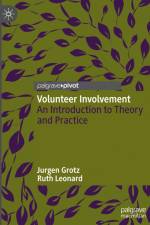
This book provides a comprehensive overview of the latest theory and practice for volunteer involvement. It represents a milestone for knowledge of how and why volunteers become involved and will be essential reading for practitioners, policy makers and funders. Offering exercises and examples from practice, it introduces concepts for understanding volunteers' agency and for critically assessing ways in which those who seek to involve volunteers can respond to rapidly changing environments. The authors draw on a combination of theoretical perspectives and practical experiences to develop approaches based on individuals and community strengths and assets, underlining the need for conviviality, respect and enjoyment in volunteer involvement.
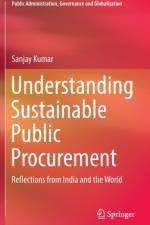
This book explores the development of sustainable public procurement (SPP) as a strategic policy instrument to support decoupling of economic growth from environmental degradation and enhancing social well-being. Offering an in-depth case study of India's SPP implementation trajectory, it discusses the challenges of integrating sustainability criteria into purchasing decisions, and examines policy choices and best practices to address them. It investigates the legislative, institutional, and governance framework for SPP in India, and identifies priority actions to accelerate wider uptake of SPP policy and practices. Furthermore, the book highlights the evolving role of SPP policies in response to emerging global mega trends, such as international trade, low carbon economy, circular economy, and Industry 4.0. Given its scope, this book appeals to scholars of economics, public administration, and environmental and social sciences, as well as to policymakers, practitioners, and advocates interested in steering transformational changes towards mainstreaming sustainable procurement practices in developing economies at the desired scale."e;This book comes at the right time to compensate for the lack of in-depth works on the origins, nature and reality of the implementation of sustainable purchases."e;- Farid Yaker, Programme Officer, Sustainable Public Procurement, Economy Division, UNEP, Paris, France. "e;...If you are a procurement or sustainability professional anywhere in the world, please read this book. It will change the way you think and feel about your profession."e;- Shaun McCarthy OBE, Chair, Supply Chain Sustainability School, London, UK & Director, Action Sustainability, London, UK
This monograph provides a state-of-the-art, self-contained account on the effectiveness of the method of boundary layer potentials in the study of elliptic boundary value problems with boundary data in a multitude of function spaces. Many significant new results are explored in detail, with complete proofs, emphasizing and elaborating on the link between the geometric measure-theoretic features of an underlying surface and the functional analytic properties of singular integral operators defined on it. Graduate students, researchers, and professionals interested in a modern account of the topic of singular integral operators and boundary value problems - as well as those more generally interested in harmonic analysis, PDEs, and geometric analysis - will find this text to be a valuable addition to the mathematical literature.
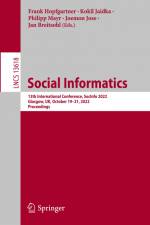
This book constitutes the refereed proceedings of the 13th International Conference on Social Informatics, SocInfo 2022, which took place in Glasgow, UK, during October 19-21, 2022. The 22 full papers, 8 short papers, and 4 late breaking papers included in this book were carefully reviewed and selected from 102 submissions. The deal with topics ranging from information-system design on social concepts to analyzing complex social systems using computational methods or explore socio-technical techniques using social sciences methods.
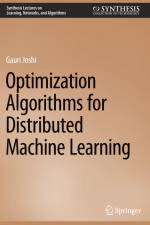
This book discusses state-of-the-art stochastic optimization algorithms for distributed machine learning and analyzes their convergence speed. The book first introduces stochastic gradient descent (SGD) and its distributed version, synchronous SGD, where the task of computing gradients is divided across several worker nodes. The author discusses several algorithms that improve the scalability and communication efficiency of synchronous SGD, such as asynchronous SGD, local-update SGD, quantized and sparsified SGD, and decentralized SGD. For each of these algorithms, the book analyzes its error versus iterations convergence, and the runtime spent per iteration. The author shows that each of these strategies to reduce communication or synchronization delays encounters a fundamental trade-off between error and runtime.
This book published in the Clinical Cases in Dermatology series is a concise practical guide designed to facilitate the clinical decision-making process in the management of leprosy and its complications. It provides insightful reviews of a number of common and rare cases of leprosy. With an extensive review of the clinical aspects of the disease, the later chapters focus on a particular case and emphasize how to make an appropriate choice when deciding which diagnostic tool or management strategy would be most suitable. Potential complications are detailed and management tips provided to enable the reader to develop a deep understanding of how to approach the care of these patients within their day-to-day clinical practice.Clinical Cases in Leprosy concisely covers how to approach diagnosing and managing patients with leprosy. It represents an ideal up-to-date resource for all practitioners who encounter the condition as part of their day-to-day practice or if this is a rare occurrence.
This Palgrave Pivot argues for the significance of allegory in Enlightenment writing. While eighteenth-century allegory has often been dismissed as an inadequate form, both in its time and in later scholarship, this short book reveals how Enlightenment writers adapted allegory to the cultural changes of the time. It examines how these writers analyzed earlier allegories with scientific precision and broke up allegory into parts to combine it with other genres. These experimentations in allegory reflected the effects of empiricism, secularization and a modern aesthetic that were transforming Enlightenment culture. Using a broad range of examples - including classics of the genre, eighteenth-century texts and periodicals - this book argues that the eighteenth century helped make allegory the flexible, protean literary form it is today.
Important world institutions, such as the United Nations (UN), the World Health Organization (WHO), the International Energy Agency (IEA), and the Organization for Economic Co-operation and Development (OECD), have publicly recognizing the highly interconnected nature of our world and therefore the relevance of systemic thinking and cybernetics as leading knowledge foundations to deal with the complexity of economic, social, and environmental issues. This recognition was the driving force of the Internet discussions held by participants to the World Organisation of Systems and Cybernetics 18th Congress, which last September 27 to 29(WOSC 2021). More than ever we needed to debate and develop current ontological, epistemological, and methodological approaches to the understanding of the future of humanity.WOSC organized this event in collaboration with the Russian Academy of Sciences (RAS). Scientists of this Academy together with scientists from all over the world made contributions to improving communications beyond particular nation states and regions toward the clarification of global issues like governance, health, education, technology, art, and others. Our aim in WOSC 2021 was bringing together scientists and researchers to collaborative debates at all levels from local communities to global societies. At the end of the Congress, scientists were invited to submit contributions to this Springer Nature book, along the following four themes: firstly, philosophical and methodological foundations for the development of the systems approach and cybernetics; secondly, the cybernetics of society, ecology and governance; thirdly, digital technologies and physical realities merging into a hybrid reality , and fourthly, the transdisciplinarity of systems sciences and cybernetics applied to the further development of knowledge areas, such as education, embodiment of social policies, and the arts. About 25 contributions were accepted for publication in this book. We see this as one of WOSC's important contribution to the scientific community around the world.
This volume is the first book-length study of hooks in popular music. Hooks - those memorable musical moments for listeners such as a riff or catchy melodic phrase - are arguably the guiding principle of much modern popular music. The concept of the hook involves aspects of melody, rhythm, harmony, production, lyrical and cultural meaning - and how these interact within a song's topline and backing track. Hooks are also inherently related to the human capacities for memory and attention, and interact with our previous experiences with music. Understanding hooks in popular music requires a new interdisciplinary approach drawing from popular music studies, pop musicology, and music psychology, and this book draws from each of these disciplines to understand the hooks present in a broad range of popular music styles from the last thirty years.
This book tells the story of Agent Orange, its usage and the policies that surround it. Agent Orange contains a contaminant known as TCDD. It was the most widely used defoliant from 1965 - 1970 and became one of three major tactical herbicides used in Vietnam. More than 45 major health studies were conducted with Vietnam veterans from the United States, Australia, New Zealand, and Korea seeking a relationship between veterans' health and TCDD. Allegations of birth defects in the families of Vietnam veterans and the Vietnamese represented a case study in propaganda and deliberate misinformation by the government of Vietnam. The Policies of the US Government implemented by Congress and the Department of Veterans Affairs (DVA) identified 17 recognized associated presumptive diseases that failed the tests of "e;cause and effect"e; and common sense. This book tells the story of Agent Orange, its usage, the health studies and those policies from a diverse range of perspectives, delving into science, statistics, history, policy and ethics. It is of interest to scholars engaged in history, political and social philosophy and ethics.
This book provides an integrative interdisciplinary view of how intellectual and moral virtues are understood in two separate practices, science and music. The authors engage with philosophical and psychological accounts of virtue to understand scientists' and musicians' understandings of intellectual and moral virtues. They present empirical evidence substantiating the MacIntyrean claim that traditions and practices are central to understanding the virtues."e;
Longer term thinking and new approaches to development and prosperity have never been more urgently required. Since 2020, the precarity of the global economy, links between ecological destruction and public health and disparities in levels of exposure and vulnerability to systemic disruption have all been thrown into stark relief. In this book the authors put forward a series of principles on which economic and development policy for the post-Covid era should be developed. These are outlined as five 'pillars' through which to (re-)build a shared prosperity in the aftermath of the Covid-19 global shock. The five pillars are an ecological prosperity (pillar one), a decarbonized economy (pillar two), a shared (cost) burden (pillar three), a transformative social sustainability (pillar four) and a just resilience (pillar five). The book provides a framework through which policymakers, decision-makers, politicians, community groups and the corporate sphere might begin to consider, map out, and plan for just transitions in their domains.
The recent shift in labour markets has heightened the demand for alternative work arrangements. Virtual reality (VR) technology plays a significant role in this transition, with remote work as efficient as work performed from an organization's own office space. This book explores the impact of immersive VR technology on the new virtual workspace. Specifically, it examines how VR can enable employees to overcome the distractions associated with working from home, increase their visibility on team projects, build stronger relationships with co-workers, reduce feelings of isolation due to social distancing, and facilitate their engagement in collaborative work processes. It also explores the limitations of two-dimensional, computer-mediated communication tools for flexible working arrangements. It, thus, offers theoretical foundations for future research on office digitalization and subsequent applications of VR technology on office work. It also features the analysis of two dozen problem-centered expert interviews with creators and executives of leading productivity VR tools that enable the remote collaboration between knowledge workers.
This book constitutes the refereed proceedings of the 15th IFIP WG 11.8 World Conference on Information Security Education, WISE 2022, held in Copenhagen, Denmark, in June 2021. The 8 papers presented were carefully reviewed and selected from 17 submissions. The papers are categorized into the following topical sub-headings: Securing the Fourth Industrial Revolution through Programming; Cybersecurity in the Fourth Industrial Revolution: Charting the Way Forward in Education; and Real-World Cybersecurity-Inspired Capacity Building.
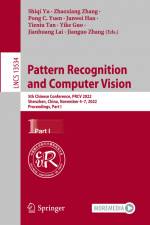
The 4-volume set LNCS 13534, 13535, 13536 and 13537 constitutes the refereed proceedings of the 5th Chinese Conference on Pattern Recognition and Computer Vision, PRCV 2022, held in Shenzhen, China, in November 2022.The 233 full papers presented were carefully reviewed and selected from 564 submissions. The papers have been organized in the following topical sections: Theories and Feature Extraction; Machine learning, Multimedia and Multimodal; Optimization and Neural Network and Deep Learning; Biomedical Image Processing and Analysis; Pattern Classification and Clustering; 3D Computer Vision and Reconstruction, Robots and Autonomous Driving; Recognition, Remote Sensing; Vision Analysis and Understanding; Image Processing and Low-level Vision; Object Detection, Segmentation and Tracking.
This book introduces the notion of an effective Kan fibration, a new mathematical structure which can be used to study simplicial homotopy theory. The main motivation is to make simplicial homotopy theory suitable for homotopy type theory. Effective Kan fibrations are maps of simplicial sets equipped with a structured collection of chosen lifts that satisfy certain non-trivial properties. Here it is revealed that fundamental properties of ordinary Kan fibrations can be extended to explicit constructions on effective Kan fibrations. In particular, a constructive (explicit) proof is given that effective Kan fibrations are stable under push forward, or fibred exponentials. Further, it is shown that effective Kan fibrations are local, or completely determined by their fibres above representables, and the maps which can be equipped with the structure of an effective Kan fibration are precisely the ordinary Kan fibrations. Hence implicitly, both notions still describe the same homotopy theory. These new results solve an open problem in homotopy type theory and provide the first step toward giving a constructive account of Voevodsky's model of univalent type theory in simplicial sets.
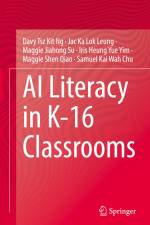
Artificial Intelligence is at the top of the agenda for education leaders, scientists, technologists and policy makers in educating the next generation across the globe. Beyond applying AI in daily life applications and educational tools, understanding how to learn and teach AI is increasingly important. Despite these emerging technology breakthroughs, AI learning is still new to educators especially to K-16 teachers. There is a lack of evidence-based studies that inform them about AI learning, including design principles for building a set of curriculum content, and pedagogical approaches as well as technological tools. Teaching AI concepts and techniques from programming languages and developmentally appropriate learning tools (e.g., robotics, serious games, software, intelligent agents) across different education levels emerged in recent years. The primary purpose of this book is to respond to the need to conceptualize the emerging term "e;AI literacy"e; and investigate how to teach and learn AI in K-16 education settings.This book examines different aspects of learning artefacts, pedagogies, content knowledge and assessment methods of AI literacy education, from theoretical discussions to practical recommendations for curriculum and instructional design. An exhaustive summary of current evidence with examples is illustrated in this book, as well as cutting-edge research that serves as an AI literacy model for different countries' contexts. Part I, "e;Conceptualizing AI literacy"e;, provides a detailed discussion on the development of the concepts and frameworks on AI literacy education, discusses the differences and similarities between AI in education (AIED) and AI literacy education, and illustrates the reasons why K-16 students need to learn AI. These concepts are brought together in Part II, "e;K-16 AI literacy education"e; to further summarize the pedagogies, learning content, learning tools and assessment methods to inform K-16 educators how to design their AI instruction at each education level. After that, part III "e;AI literacy for instructional designers"e; explores how instructional designers (i.e., AI developers and teachers) prepare themselves to become ready to design developmentally appropriate tools, platforms, services and curricula to empower students with AI literacy skills.
The videogame series Mass Effect is a remarkable rarity not only for being an original science-fictional franchise of recent vintage that has risen to such prominent commercial and critical success in popular culture but also for pushing the canonical boundaries of how science fiction as a genre will be experienced and understood in the future. This book analyzes the significance of the game for an understanding of the evolving SF genre and articulates an explanatory framework to limn its landmark reception in videogame history. This book both synthesizes the burgeoning body of scholarship on Mass Effect for a readership unfamiliar with either the game or the critical conversation on its salient importance, while simultaneously, for readers already invested in the science-fiction and videogame scholarship, mounting an extended inquiry as to why Mass Effect has served as such a representative milestone in videogame and genre history. The book should appeal to veteran science-fiction and videogame scholars and students as well as a wide variety of fans, consumers, gamers, and general readers.
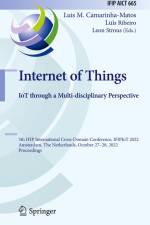
This book constitutes the refereed post-conference proceedings of the Fifth IFIP International Cross-Domain Conference on Internet of Things, IFIPIoT 2022, held in Amsterdam in October 2022.The 20 full papers presented were carefully reviewed and selected from 36 submissions. The papers are organized in the following topical sections: IoT for Smart Villages, Security and Safety, Smart Home, Development, Engineering, Machine Learning, and Applications.
This book reports on the latest scientific achievements on robot kinematics provided by the prominent researchers participating in the 18th International Symposium on Advances in Robot Kinematics ARK2022, organized in the University of the Basque Country, Bilbao, Spain. It is of interest to researchers wanting to know more about the latest topics and methods in the fields of the kinematics, control and design of robotic systems. The book brings together 53 peer-reviewed papers. These cover the full range of robotic systems, including serial, parallel, flexible mechanisms, and cable-driven manipulators, and tackle problems such as: kinematic analysis of robots, robot modelling and simulation, theories and methods in kinematics, singularity analysis, kinematic problems in parallel robots, redundant robots, cable robots, kinematics in biological systems, flexible parallel manipulators, humanoid robots and humanoid subsystems.
This book uses a rich data set, from individuals whose background profiles statistically predict strong cultural non-participation, to explore the most salient lifestyles and symbolic boundaries drawn in these potentially disengaged groups.The book departs from a theoretical framework in which cultural practices and cultural participation in their most visible and tangible form are seen as manifestations of cultural capital and power, to show empirically that people and groups dubbed passive in many policy documents and scholarly research are actually relatively active, both in terms of traditional cultural participation and different kinds of social and anthropological understandings of participation.
This book constitutes the refereed proceedings of the 15th International Conference on Scalable Uncertainty Management, SUM 2022, which was held in Paris, France, in October 2022.The 19 full and 4 short papers presented in this volume were carefully reviewed and selected from 25 submissions. Besides that, the book also contains 3 abstracts of invited talks and 2 tutorial papers. The conference aims to gather researchers with a common interest in managing and analyzing imperfect information from a wide range of fields, such as artificial intelligence and machine learning, databases, information retrieval and data mining, the semantic web and risk analysis.The chapter "e;Defining and Enforcing Descriptive Accuracy in Explanations: the Case of Probabilistic Classifiers"e; is licensed under the terms of the Creative Commons Attribution 4.0 International License.
This book constitutes the proceedings of the 20th International Conference on Software and Systems Reuse, ICSR 2022, held in Montpellier, France in June 2022. The 7 full papers and 2 short papers included in this book were carefully reviewed and selected from 29 submissions. The papers were organized in topical sections named: Code Recommendations and Ruse; Learning and Reuse; Evolution and Reuse; Quality, Longevity and Reuse.
This book addresses the place of religious knowledge in religion, particularly within Christianity. The book begins by examining the difference between the general concepts of knowledge and belief, the relation between faith and knowledge, and reasons why belief as faith, and not knowledge, is central to the Abrahamic religions.The book explores the ambivalence about religious knowledge within Christianity. Some religious thinkers explicitly accepted and sought religious knowledge, as did St. Thomas Aquinas, while others, notably Soren Kierkegaard, cast knowledge and seeking it as incompatible with faith. The book also examines two antithetical religious intuitions about knowledge, both at home in the Christian tradition. For one, faith requires a struggle with doubt. For the other, faith requires a certainty that excludes doubt. For the first, religious knowledge would destroy faith. For the second, religious knowledge is compatible with faith and completes it.Though the book focuses on the Christian tradition, it also considers other traditions, including a chapter on the place of religious knowledge in nontheistic religious traditions. The final chapter examines how coming to Wisdom as personified in the Jewish and Christian traditions may be distinct from attaining religious knowledge.
This book aims to introduce graduate students to the many applications of numerical computation, explaining in detail both how and why the included methods work in practice. The text addresses numerical analysis as a middle ground between practice and theory, addressing both the abstract mathematical analysis and applied computation and programming models instrumental to the field. While the text uses pseudocode, Matlab and Julia codes are available online for students to use, and to demonstrate implementation techniques. The textbook also emphasizes multivariate problems alongside single-variable problems and deals with topics in randomness, including stochastic differential equations and randomized algorithms, and topics in optimization and approximation relevant to machine learning. Ultimately, it seeks to clarify issues in numerical analysis in the context of applications, and presenting accessible methods to students in mathematics and data science.
This book explores the EU's approach to peacebuilding and questions the EU global role as crisis manager and capacity builder. It highlights the significant contributions of the EU to civilian peacebuilding and also critically evaluates the activities of the EU Common Security and Defence Policy (CSDP) within their rule of law and human rights peacebuilding missions. It draws on the author's twenty years of experience working on CSDP and EU defence matters including his research on EU police missions in Africa and Middle East. It exposes emergent tension between peacebuilding in its neighbourhood and security issues. It examines the practice of EU peacebuilding including performance of its missions and how deployed personnel can professionalise their diplomatic (mediation, negotiation and dialogue facilitation) capacity to fully realise the potential of missions and exploit opportunities for expanding the vision of peace. It formulates convincing policy recommendations for the future planning of EU external relations in post conflict environments and offers valuable insights into how to connect with people and communities in the aftermath of conflict.
This book focuses on nanomaterials with antibacterial properties. Antibacterial resistance is a growing concern that poses a serious threat to public health worldwide. This book looks at the fabrication, material's properties, and characterization of a range of metallic, bimetallic, and metal-oxide-based nanomaterials that can be exploited for their antimicrobial properties. A key focus of this book is its emphasis on 'green' synthesis of nanomaterials, as many conventional routes of nanomaterial fabrication do not fulfill key sustainability criteria in terms of their toxicity and lack of eco-friendliness. Additionally, this book introduces the application of nanoparticles to veterinary medicine. Given the ever-increasing global livestock population coupled with the emergence of drug-resistant pathogens of animal origin (bacterial, parasitic, and hemoprotozoa), the use of nanoparticles as antibacterial agents represents a paradigm shift in every aspect of veterinary care. Authored by scholars with combined expertise in nanomaterials and veterinary medicine, this book provides valuable information for researchers working on sustainable nanomaterials with antibacterial properties.
Abonner på vårt nyhetsbrev og få rabatter og inspirasjon til din neste leseopplevelse.
Ved å abonnere godtar du vår personvernerklæring.