























Gjør som tusenvis av andre bokelskere
Abonner på vårt nyhetsbrev og få rabatter og inspirasjon til din neste leseopplevelse.
Ved å abonnere godtar du vår personvernerklæring.Du kan når som helst melde deg av våre nyhetsbrev.

This volume addresses contemporary challenges, enabled by modern technology, that concern upholding freedom of speech where it conflicts with social rights, such as respect for private and family life, and with economic rights, such as the freedom to conduct business or the right to free movement.In today's networked world, technological shifts happen faster than most people even realize. Some of these shifts have made us all potentially powerful: media powerful. We used to sit in silence in front of newspapers and TV screens, and the world was explained to us by just a few sources. Today, thanks to the Internet, social media, and Web 2.0, we can not only share our own thoughts with everyone in a more self-determined way, but we can also take part in public debate and even co-shape it ourselves. Of course, the Internet is not a counter-design to the communication (power) structures of the past. Gains in communicative self-determination are threatened due to algorithmisation, platformisation, and value extraction from self-created private markets.At the same time, the empowerment of the individual challenges the old "e;grand speakers"e; who are suddenly detecting "e;fake news"e;, echo chambers, and filter bubbles everywhere on the Internet. Internet-based communication allegedly hinders us from the "e;one truth"e;; as if newspaper hoaxes, propaganda, and narrow-mindedness were an invention of the Internet. The current heated debate over "e;fake news"e;, copyright, and "e;upload filters"e; shows that we are unsure of how to deal with the newer and more complex phenomena of Internet-based speech. This is due in no small part to the fact that an important benchmark - our constitutional compass - is still firmly rooted in the past. Constitutions change far more slowly than technologies. Societal changes can drive constitutional changes; but what about normative content control?Today, there are already demands for "e;old-school clarity"e;: truth filters on social media platforms, horrendous sums of liability for platforms that encourage (overly)thorough cleaning up. However, it is equally true that private individuals "e;regulate"e;: they decide what is found on the Internet and who may post on a given platform. Accounting for all interests at play and striking a "e;fair"e; balance that avoids both a public and private over- and under-regulation is a complex matter. The authors of this volume not only provide reflections in their highly topical contributions, but also share their understanding of what constitutes a fair balance within the larger frame of freedom of speech in a digital age.
This book explores the potential contribution of cultural heritage in the enhancement of the territories, investigating the possibilities but also the criticalities involved in the process. Based on the knowledge process built on the Monasteries of Haghpat, Sanahin, Geghard and moreover, in the Upper Azat Valley in Armenia, the work suggests the development of an integrated design approach with interdisciplinary focus. The conservation of the Architectural Heritage of these sites is a priority for the identity safeguard but also to start virtuous processes able to ensure a sustainable development for places and communities. The objective of this work is the setting of pilot strategies and guidelines for the preservation and promotion of cultural heritage as an engine for a compatible and sustainable tourism development of the area, with tangible impact on social and economic development of the country. The work would benefit local authorities and communities, as well as researchers involved in these topics.
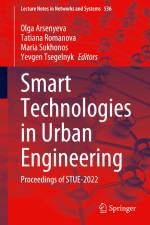
This book offers a comprehensive review of smart technologies and perspectives on their application in urban engineering. It covers a wide range of applications, from transport and energy management to digital manufacturing, smart city, environment, and sustainable development, providing readers with new ideas for future research and collaborations. This book presents select papers from the International Conference on Smart Technologies in Urban Engineering (STUE-2022), held to commemorate the 100th anniversary of the O.M. Beketov National University of Urban Economy in Kharkiv, Ukraine, on June 9-11, 2022. All the contributions offer plenty of valuable information and would be of great benefit to the experience exchange among scientists in urban engineering.
Depression is the leading cause of disability in the United States, and the traditional framework for managing depression within a psychiatry practice-i.e., a single psychiatrist treating a single patient for up to an hour per week-comes up painfully short at the level of serving the population even if it can be highly effective for individuals. At the same time, the non-systematic way in which most patients identify the need to see a specialty provider in behavioral health leaves many stranded, regardless of how complex their needs are. Primary care is now often considered the "e;de facto mental health system"e; in the United States, and primary care providers have been charged with the impossible task of making up for the dearth of psychiatric specialty providers and somehow correcting the many inequities in access to care that remain. Primary care providers shouldn't have to do this alone. Help can come in many forms, of course, and some primary care practices are lucky enough to have a consulting psychiatrist on-site, available to answer any questions that come up and see patients directly when they need an expert opinion. This is exactly what David S Kroll, MD, an Associate Vice Chair in the Department of Psychiatry at Brigham and Women's Hospital in Boston and an Assistant Professor at Harvard Medical School, does for a primary care practice that serves more than 17,000 patients with a wide range of medical, social, and psychiatric problems. But most primary care practices don't have this resource. This book replicates the expertise of a consulting psychiatrist in a concise volume that primary care providers can pull off their shelves whenever they have a question about managing depression. It ensures that no one has to do this on their own.Managing Depression in Primary Care contains fourteen chapters that anticipate the questions, problems, and practical challenges that are most likely to come up when managing depression in primary care. It covers the basic skills that are needed for treating depression when it occurs in a vacuum, but it also provides practical guidance on treating depression in the real world-where it will inevitably be complicated by other factors. It also covers important associated topics including suicide, substance use, and disability.
This book gives insights into the agricultural policies in several countries located in different continents. It is of interest to students, researchers, and policy and decision makers.Given the particularities of agriculture, agricultural policies are indispensable for an adjusted development of farms according to the strategic objectives of each country, namely the socio-economic and environmental ones. The question that often arises is whether the practical effects of the various policy measures are in accordance with their design and what is the effect of these policy instruments among many other causes of structural and technological change. The aim of this book is to describe the main agricultural policies that have been implemented in countries such as the United States of America, Brazil, China, India, South Africa, Australia, as well as the European Union. It also aims to analyse the real impact of these policies on the structural and technological changes of farms in the European Union. As its methodology, the book considers bibliometric analysis, literature review and statistical approaches.
Is unabated inflation the new normal? Inflation is back and here to stay. For companies, this means that the world in which they do business has fundamentally changed. This book examines inflation from multiple perspectives and offers actions and strategies for companies to cope with and manage it to ensure their survival. For businesses and consumers, it is not a question of eliminating inflation, but how to cope with it in order to suffer as little damage as possible. This includes not just price management, but also sales, finance, purchasing, cost management along with digitalization and innovation activities in equal measure. It also requires corporate cultural change, which if managed fast and successfully, the prospects of defeating inflation and thus ensuring the survival of the company are good.
This SpringerBrief introduces methodologies and tools for quantitative understanding and assessment of supply chain risk to critical infrastructure systems. It unites system reliability analysis, optimization theory, detection theory and mechanism design theory to study vendor involvement in overall system security. It also provides decision support for risk mitigation.This SpringerBrief introduces I-SCRAM, a software tool to assess the risk. It enables critical infrastructure operators to make risk-informed decisions relating to the supply chain, while deploying their IT/OT and IoT systems.The authors present examples and case studies on supply chain risk assessment/mitigation of modern connected infrastructure systems such as autonomous vehicles, industrial control systems, autonomous truck platooning and more. It also discusses how vendors of different system components are involved in the overall security posture of the system and how the risk can be mitigated through vendor selection and diversification. The specific topics in this book include: Risk modeling and analysis of IoT supply chains Methodologies for risk mitigation, policy management, accountability, and cyber insurance Tutorial on a software tool for supply chain risk management of IoT These topics are supported by up-to-date summaries of the authors' recent research findings. The authors introduce a taxonomy of supply chain security and discusses the future challenges and directions in securing the supply chains of IoT systems. It also focuses on the need for joint policy and technical solutions to counter the emerging risks, where technology should inform policy and policy should regulate technology development.This SpringerBrief has self-contained chapters, facilitating the readers to peruse individual topics of interest. It provides a broad understanding of the emerging field of cyber supply chain security in the context of IoT systems to academics, industry professionals and government officials.
This book constitutes the refereed proceedings of the 20th International Symposium on Automated Technology for Verification and Analysis, ATVA 2022, held in Beiging, China in October 2022. The symposium is dedicated to promoting research in theoretical and practical aspects of automated analysis, verification and synthesis by providing an international venue for the researchers to present new results. The 21 regular papers presented together with 5 tool papers and 1 invited paper were carefully reviewed and selected from 81 submissions.The papers are divided into the following topical sub-headings: reinforcement learning; program analysis and verification; smt and verification; automata and applications; active learning; probabilistic and stochastic systems; synthesis and repair; and verification of neural networks.
Clinical cases are a key component in modern medical education, assisting the trainee or recertifying clinician to work through unusual cases using best practice techniques. Exfoliative dermatitis, also known as "e;red man"e;, is an important discipline in this regard since it is a highly visual subject requiring the reader to describe often very subtle differences in the presentation of patients and define accurately the diagnostic and management criteria to base their clinical decision-making on.Clinical Cases in Exfoliative Dermatitis highlights evidence-based best practice through a multidisciplinary approach that is relevant to dermatologists, as well as pharmacologists and pathologists.
This volume constitutes selected papers presented at the First International Conference on Engineering Software for Modern Challenges, ESMoC 2021, held in Johor, Malaysia, in October 20-21, 2021.The 17 papers presented were thoroughly reviewed and selected from the 167 submissions. They are organized in the topical sections on software engineering; intelligent systems; software quality.
This book shows possible solutions to how a profitable energy supply can be implemented with almost no population resistance. Worldwide, more than 80 % of our energy needs are still covered by fossil fuels. Under these circumstances, can climate change still be stopped?Essential technologies for usage of wind energy with an emphasis on high-altitude wind utilization are presented. Airborne wind energy is one of the most promising technologies to enable a renewable energy turnaround in an economical way. The main problem of conventional renewable energy is the insufficient availability. To ensure a 100 % supply of renewable energy, enormous and very expensive storage capacities would have to be built up.How we can cover our entire energy needs (electricity, mobility and heat) in the future without fossil fuels, without risking the competitiveness of our economy, is shown in this book.
This book constitutes revised selected papers from the refereed proceedings of the 15th Colombian Congress on Advances in Computing, CCC 2021, held in Bogota, Colombia, during November 22-26, 2021.The 8 full papers and 2 short papers included in this book were carefully reviewed and selected from 47 submissions. They were organized in topical sections as follows: Artificial intelligence; educational informatics; and information systems.
This book constitutes the proceedings of the Second IAPR International Conference on Discrete Geometry and Mathematical Morphology, DGMM 2022, which was held during October 24-27, 2022, in Strasbourg, France.The 33 papers included in this volume were carefully reviewed and selected from 45 submissions. They were organized in topical sections as follows: discrete and combinatorial topology; discrete tomography and inverse problems; multivariate and PDE-based mathematical morphology, morphological filtering; hierarchical and Graph-Based Models, Analysis and Segmentation; discrete geometry - models, transforms, and visualization; learning based morphology to Mathematical Morphology; and distance transform.The book also contains 3 invited keynote papers.
This timely volume examines the conflict between human individual life and larger forces that are not controllable. Drawing on recent literature in phenomenological and existential psychology it calls for a more nuanced understanding of the human predicament. Focusing on the co-occurring crises of climate change and the COVID-19 epidemic, it explores the nature of widespread anxiety and the long-term human consequences. It calls for an expansion of current research that would include the arts and humanities for critical insights into how this essential conflict between humanity and nature may be reconciled.
This four-volume set LNCS 13701-13704 constitutes contributions of the associated events held at the 11th International Symposium on Leveraging Applications of Formal Methods, ISoLA 2022, which took place in Rhodes, Greece, in October/November 2022. The contributions in the four-volume set are organized according to the following topical sections: specify this - bridging gaps between program specification paradigms; x-by-construction meets runtime verification; verification and validation of concurrent and distributed heterogeneous systems; programming - what is next: the role of documentation; automated software re-engineering; DIME day; rigorous engineering of collective adaptive systems; formal methods meet machine learning; digital twin engineering; digital thread in smart manufacturing; formal methods for distributed computing in future railway systems; industrial day.
Despite successes of modern physics, the existence of dark energy and matter is indicative that conventional mechanical accounting is lacking. The most basic of all mechanical principles is Newton's second law, and conventionally, energy is just energy whether particle or wave energy. In this monograph, Louis de Broglie's idea of simultaneous existence of both particle and associated wave is developed, with a novel proposal to account for mass and energy through a combined particle-wave theory. Newton's second law of motion is replaced by a fully Lorentz invariant reformulation inclusive of both particles and waves. The model springs from continuum mechanics and forms a natural extension of special relativistic mechanics. It involves the notion of "e;force in the direction of time"e; and every particle has both particle and wave energies, arising as characteristics of space and time respectively. Dark matter and energy then emerge as special or privileged states occurring for alignments of spatial forces with the force in the direction of time. Dark matter is essentially a backward wave and dark energy a forward wave, both propagating at the speed of light. The model includes special relativistic mechanics and Schrodinger's quantum mechanics, and the major achievements of mechanics and quantum physics. Our ideas of particles and waves are not yet properly formulated, and are bound up with the speed of light as an extreme limit and particle-wave demarcation. Sub-luminal particles have an associated superluminal wave, so if sub-luminal waves have an associated superluminal particle, then there emerges the prospect for faster than light travel with all the implications for future humanity. Carefully structured over special relativity and quantum mechanics, Mathematics of Particle-Wave Mechanical Systems is not a completed story, but perhaps the first mechanical model within which such exalted notions might be realistically and soberly examined. If ultimately the distant universe become accessible, this will necessitate thinking differently about particles, waves and the role imposed by the speed of light. The text constitutes a single proposal in that direction and a depository for mathematically related results. It will appeal to researchers and students of mathematical physics, applied mathematics and engineering mechanics.
This book critically analyzes the current historical conjuncture of neoliberal capitalism with an eye to its emergent alternatives. Can democracy and capitalism thrive together? Is socialism a viable and a desirable alternative? What are the forms of emancipatory action and critical thought that can effectively chart a way forward?Focusing on nine "e;critical debates"e; it provides a uniquely comprehensive overview of the tensions, contradictions, and latent emancipatory potential of contemporary global capitalism. The specific debates are as follows: capitalism's relationship with democracy; privatization and governance of the commons; the financialization of capitalism; technology and the future of work; varieties of neoliberal capitalism; cosmopolitanism, international development, and human rights; feminist theory and social solidarity; sustainability and climate change; and theories of capitalist crisis.
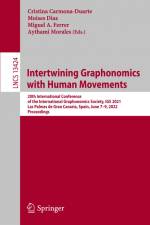
This book constitutes the proceedings of the 20th International Conference of the International Graphonomics Society, IGS 2021/2022. Originally planned to be celebrated in September 2021, due to the COVID-19 pandemic it was held in June 2022.The 36 full and 3 short papers presented at the conference were carefully reviewed and selected from 41 submissions and reviewed by a committee of 67 reviewers. Out of the 41 conferences, 26 papers were selected to be published in this proceedings. The program was comprised of 6 oral sessions on the following topics: historical documents, forensic handwriting examinations, handwriting learning and development, and motor control. One additional poster session included papers on all previous topics, and three special sessions included papers on neurodegenerative disorders.
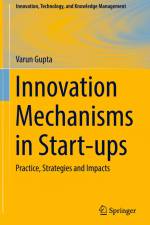
Innovation Mechanisms in Start-ups: Practice, Strategies and Impacts serves as a practical resource for startups looking for innovating their business models in domestic and global markets. This book's main objective is to describe the innovative business practices adopted by startups during the pandemic, with a special emphasis on value proposition innovation and business model innovation more generally. In order to promote open innovation, this book emphasizes the value of strategic alliances with academic libraries, peer startups, and freelancers. Additionally, using actual startup case studies, it was shown how important technological innovation is for gathering feedback, prototyping, and conducting both secondary as well as primary market research. Startups can utilize the technology evaluation and adoption frameworks as a useful reference when choosing a technology to embrace strategically. The need of regularly experimenting with new approaches, learning from mistakes, and enhancing current processes is also emphasized in this book. The ability to dispel falsehoods, capitalize on technological advancements, and form strategic alliances will be essential for innovation even in times of pandemic. This book links theoretical insights with practical experiences of startups amid the pandemic. With a perfect balance of empirical research and assessment study types, this book is a source of quick knowledge for entrepreneurs, academics and researchers on how to enhance a company's innovative capacities and success rates. The BMI-Pandemic 2.15 model, which is an expanded version of the Odyssey 3.14 model, is presented in this book which highlight 15 guidelines to follow in order to innovate business models in pandemics. This book is suitable for Entrepreneurs, Academicians, Researcher and Technologists.
This book constitutes the proceedings of the 9th International Conference on Algebraic Informatics, CAI 2022, held as virtual event, in October 27-29, 2022.The 2 abstracts, 3 full papers of invited speakers, and 12 contributed papers presented in this volume were carefully reviewed and selected from 17 submissions. The papers contain original and unpublished research; the topics of them lie in automata theory, cryptography, coding theory, DNA computation, computer algebra, and theory of software architectures.
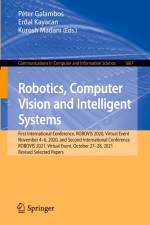
This volume constitutes the papers of two workshops which were held in conjunctionwith the First International Conference on Robotics, Computer Vision and Intelligent Systems,ROBOVIS 2020, Virtual Event, in November 4-6, 2020 and Second International Conference on Robotics, Computer Vision and Intelligent Systems,ROBOVIS 2021, Virtual Event, in October 25-27, 2021.The 11 revised full papers presented in this book were carefully reviewed and selectedfrom 53 submissions.
This book provides an update on the latest development in the field of microRNAs in cancer research with an emphasis on translational research. Since the early 2000s, microRNAs have been recognized as important and ubiquitous regulators of gene expression. Soon it became evident that their deregulation can cause human diseases including cancer. This book focuses on the emerging opportunities for the application of microRNA research in clinical practice. In this context, computer models are presented that can help to identify novel biomarkers, e.g. in circulating microRNAs, and tools that can help to design microRNA-based therapeutic interventions. Other chapters evaluate the role of microRNAs in immunotherapy, immune responses and drug resistance.Covering key topics on microRNAs in cancer research this book is a valuable resource for both emerging and established microRNA researchers who want to explore the potential of microRNAs as therapeutic targets or co-adjuvants in cancer therapies.
This book provides an accessible introduction to the foundations of machine learning and deep learning in medicine for medical students, researchers, and professionals who are not necessarily initiated in advanced mathematics but yearn for a better understanding of this disruptive technology and its impact on medicine. Once an esoteric subject known to few outside of computer science and engineering departments, today artificial intelligence (AI) is a widely popular technology used by scholars from all across the academic universe. In particular, recent years have seen a great deal of interest in the AI subfields of machine learning and deep learning from researchers in medicine and life sciences, evidenced by the rapid growth in the number of articles published on the topic in peer-reviewed medical journals over the last decade. The demand for high-quality educational resources in this area has never been greater than it is today, and will only continue to grow at a rapid pace.Expert authors remove the veil of unnecessary complexity that often surrounds machine learning and deep learning by employing a narrative style that emphasizes intuition in place of abstract mathematical formalisms, allowing them to strike a delicate balance between practicality and theoretical rigor in service of facilitating the reader's learning experience. Topics covered in the book include: mathematical encoding of medical data, linear regression and classification, nonlinear feature engineering, deep learning, convolutional and recurrent neural networks, and reinforcement learning. Each chapter ends with a collection of exercises for readers to practice and test their knowledge.This is an ideal introduction for medical students, professionals, and researchers interested in learning more about machine learning and deep learning. Readers who have taken at least one introductory mathematics course at the undergraduate-level (e.g., biostatistics or calculus) will be well-equipped to use this book without needing any additional prerequisites.
The book is a collection of high-quality peer-reviewed research papers presented at the 18th International Symposium of Organizational Sciences (SymOrg 2022) held in Belgrade, Serbia, from June 11 to June 14, 2022. The aim of the book is providing stimulative framework for readers to explore viable alternatives and indicate implications for the post-pandemic world. Researchers from academia and industry present their original work focusing on different aspects of sustainable management and digital transformation including blockchain technology, business analytics, e-business, innovation, digital operations and logistics management, financial industry, public administration, lean business systems, digital transformation projects, human resources, marketing and communication, and quality and standardization. The chapters are useful for industry experts, research institutions, universities, and all others who share a common interest in contemporary organizational sciences.
This book presents novel observational evidence toward detecting and characterizing the products of massive, interacting binary stars. As a majority of massive stars are born in close binary systems, a large number of so-called massive binary interaction products are predicted to exist; however, few have been identified so far. Based on observations with the largest telescopes around the world, equipped with state-of-the-art instrumentation, this book helps to remedy this situation. In her outstanding PhD-thesis Julia Bodensteiner identifies a new class of post-interaction binaries in a short-lived phase just briefly after the initially more massive star has been stripped of part of its envelope. She further provides new evidence for the Be phenomenon to largely result from binary interactions. These results represented a new and testable prediction for the evolution of these stars and opened up a new way forward for identifying hundreds of post-interaction products.Finally, using the MUSE integral field spectrograph at the Very Large Telescope in Chile, the author presents a novel spectroscopic campaign focusing on the 40 Myr-old star cluster NGC 330 in the Small Magellanic Clouds. Combined with photometric observations from the Hubble Space Telescope, the MUSE data allow to characterize the entire massive star population of NGC 330, revealing their multiplicity properties and rotational velocities and providing unique observational constraints on their (binary) evolution history. This is made possible by the developments of novel numerical methods allowing to extract star spectra from the MUSE integral field spectroscopic data and to characterize their properties by the simultaneous comparison of MUSE spectroscopy and Hubble photometry with atmospheric models.This book is a partly re-written version of the author's thesis offering a highly readable coherent text presenting not only new insights into the properties of binary interaction products but also giving students an excellent introduction into the field.
This book constitutes the refereed proceedings of five International Workshops held as parallel events of the 18th IFIP WG 12.5 International Conference on Artificial Intelligence Applications and Innovations, AIAI 2022, virtually and in Hersonissos, Crete, Greece, in June 2022: the 11th Mining Humanistic Data Workshop (MHDW 2022); the 7th 5G-Putting Intelligence to the Network Edge Workshop (5G-PINE 2022); the 1st workshop on AI in Energy, Building and Micro-Grids (AIBMG 2022); the 1st Workshop/Special Session on Machine Learning and Big Data in Health Care (ML@HC 2022); and the 2nd Workshop on Artificial Intelligence in Biomedical Engineering and Informatics (AIBEI 2022).The 35 full papers presented at these workshops were carefully reviewed and selected from 74 submissions.
This book focuses, in seven chapters, on the perspectives and solutions that different research groups offer to try to address problems related to SDG 14: Life Below Water. The different objectives developed in SDG 14 are treated independently, with an attempt to give a global vision of the issues. The mechanism used to select the book's content was through an Artificial Intelligence program, choosing articles related to the topics by means of keywords. The program selected those articles, and those that were not related to the topic or did not focus on SDG 14 were discarded by a subject matter expert. Obviously, the selection was partial and the entire subject is not covered, but the final product gives a very solid idea of how to orient ourselves to delve deeper into the topic of SDG 14 using published chapters and articles. The AI program itself selected the text of these contributions to show the progress in different topics related to SDG 14. This mode of operation will allow specialists (and non-specialists) to collect useful information for their specific research purposes in a short period of time. At a time when information is essential in order to move quickly by providing concrete answers to complex problems, this type of approach will become essential for researchers, especially for a subject as vast as SDG 14.
This book explores interesting possibilities of extracting information about quantum states from data readily obtained from experiments, such as tomograms and expectation values of appropriate observables. The procedures suggested for identifying nonclassical ei ects such as wave packet revivals, squeezing and entanglement solely from tomograms circumvent detailed state reconstruction. Several bipartite entanglement indicators are defined based on tomograms, and their ei cacy assessed in models of atom-field interactions and qubit systems. Tools of classical ergodic theory such as time series and network analysis are applied to quantum observables treated as dynamical variables. This brings out novel aspects involving dii erent time scales. The book is aimed at researchers in the areas of quantum optics and quantum dynamics.
Using a lens of mindfulness, this book explores how digital dependencies can displace attention and undermine attentional control, leading to experiences of stress and mindless involvement with digital technology. Using qualitative interviews with teachers and students of mindfulness programmes, the book explores the challenges and opportunities for reconciling digital interactions with mindful practice. A phenomenological analysis of participants' digital experiences shows three different imperatives (relating to digital capabilities, hyper-reality and algorithms), that can drive unconscious forms of interaction and encourage a delegation of attentional control that draws users away from the present moment. The book concludes by exploring the implications of these (extra-conscious) imperatives for understanding digital addiction. It also provides a set of guidelines for a digital approach to mindfulness practice that can encourage beneficial relationships with digital technology into the future.
This book explores key issues in relation to parole and public opinion, including the relevance of public opinion to parole boards decision-making and strategies for increasing public confidence in parole. It presents the findings of semi-structured interviews with 80 members of parole authorities in 12 jurisdictions, across Australia, New Zealand, Canada and Scotland. Unlike judicial processes, which are open to the public, there is little awareness of and research on the work of parole authorities. This book therefore shines a light on a little-understood, but hotly-contested, aspect of the criminal justice system. Specifically, it explores differences across the study jurisdictions and considers how parole authorities in the four study countries view public attitudes, as well as the role of the media in shaping public attitudes towards parole. The book also considers whether public reaction matters for parole board decision-making and the interplay between informing the public and offender reintegration. It explores a range of strategies which may improve public confidence in parole and therefore the criminal justice system more broadly. This includes consideration of the value, definition and possibility of public confidence. The authors then discuss both passive forms, such as parole authority websites, publication of decisions and social media, before examining active forms of engagement, including an information/liaison officer, roadshows and community fora.
Abonner på vårt nyhetsbrev og få rabatter og inspirasjon til din neste leseopplevelse.
Ved å abonnere godtar du vår personvernerklæring.